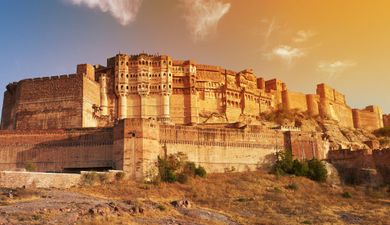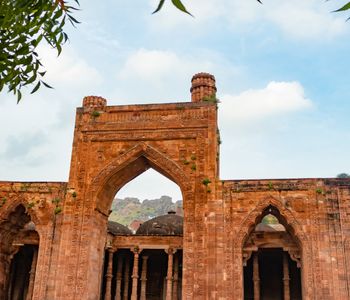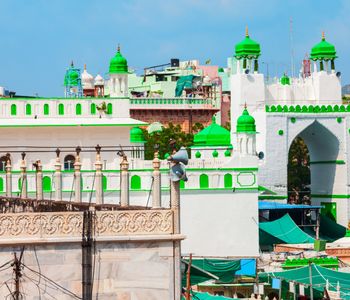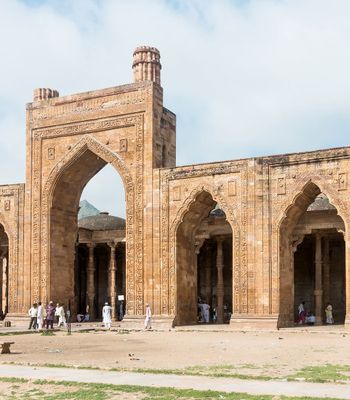
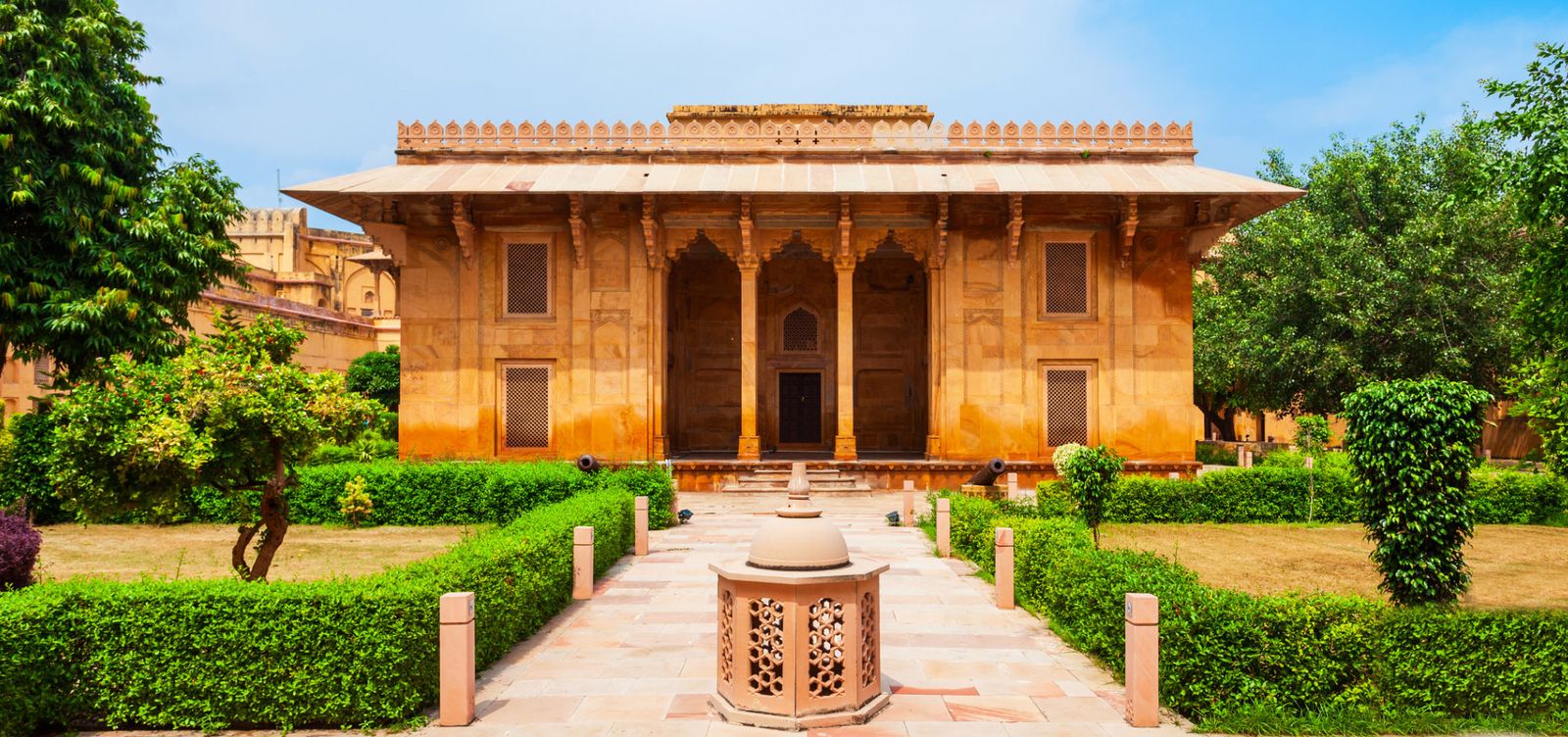
The Ajmer Government Museum occupies Akbar's Palace, a sixteenth-century fortress where the Mughal emperor once held court during his Rajasthan campaigns. That alone makes it unusual. Most museums occupy buildings designed to hold collections; this one occupies a building that is itself part of the collection. The thick sandstone walls, the wide central courtyard, the heavy arched gateways — they carry as much weight as anything displayed inside them.
You'll find it in the heart of old Ajmer, a short walk from the Dargah Sharif and a world away from the chaos outside its gates. The museum doesn't try to dazzle you. It doesn't need to. What it offers instead is something quieter and harder to come by: a chance to stand in the same chambers where Akbar received Sir Thomas Roe in 1616, and to walk among stone sculptures that predate the palace by a thousand years.
A Fortress That Became a Vault
Akbar built this palace in 1570, and for the next two centuries it served as a Mughal garrison and royal residence. The British later used it as a magazine, which is why some locals still call it the Magazine. Its conversion into a museum happened in 1908, under Lord Curzon's archaeological reforms, and the place has been quietly accumulating Rajasthan's leftover history ever since.
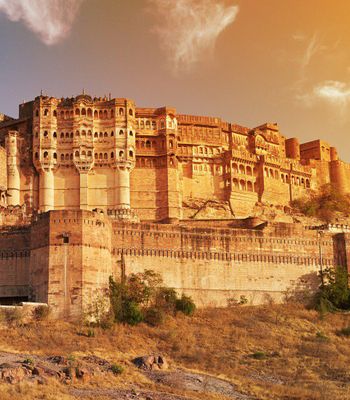
The building is built like it means business. Bastions at each corner, a massive double gateway, and walls thick enough to suggest the architects expected trouble. They were usually right.
Stone That Outlived Empires
The sculpture gallery is the real reason to come. Black schist figures of Hindu and Jain deities line the corridors, many of them excavated from sites across the Ajmer region — Pushkar, Arthuna, Bhinmal, places most visitors will never reach. Some date back to the eighth century, their features softened by a thousand years of weather and worship.
One sculpture stops most people. A standing Vishnu, carved from dark stone, with the kind of expression that seems to follow you around the room. The detail in the jewellery — the necklaces, the armlets, the crown — is precise enough that you can see the sculptor's confidence in every line.
There are Jain Tirthankaras here too, seated in meditation, their faces unweathered by emotion. The contrast between the Hindu deities, alive with gesture and ornament, and the Jain figures, still and inward, tells you something about how these two traditions imagined the sacred.
Blades, Scripts, and the Things Kings Left Behind
The armoury section holds what you'd expect — swords, daggers, shields, a few muskets — but pay attention to the curved Rajput tulwars. The hilts are worked in patterns that turn killing tools into ornaments. Whether that's a comfort or a disturbance depends on your mood.
Inscriptions in Sanskrit, Persian, and Prakrit fill another room. Stone slabs covered in script most visitors can't read, but the museum's labels do a serviceable job of translating the essentials. Land grants. Temple dedications. The occasional boast of a forgotten king. Reading them feels like eavesdropping on people who assumed they'd be remembered forever and were only half right.
The Courtyard Where Akbar Held Court
Step into the central courtyard and the museum opens up. This is where the Mughal emperor met visiting nobles, including the English ambassador Sir Thomas Roe, sent by James I to negotiate trade rights for the East India Company. Roe spent months here. He wrote it all down in his journal — the heat, the protocol, the strange feeling of being a small player in a very large game.
Stand in the middle of the courtyard at midday and the sandstone glows. The walls hold the heat the way they've held it for four and a half centuries. You can hear the city just beyond the gates — horns, voices, the call to prayer from a nearby mosque — but inside, everything slows.
Small Coins, Old Paper, Quiet Rooms
The coin collection deserves more attention than it usually gets. Mughal silver rupees, Sultanate copper, even older punch-marked coins from the Mauryan period. Each one a small economic ghost. The display cases are dimly lit and a little dated, but the coins themselves don't need help.
The manuscript section holds Persian and Arabic texts, some illustrated, some plain. The paper is yellowed, the ink still dark. There's a copy of the Quran here that's worth lingering over, even if you can't read a word of the calligraphy. The discipline in the script is its own kind of devotion.
Before You Go
The museum opens from 10 in the morning until 4:30 in the afternoon, and stays closed on Fridays. Entry costs are modest — a few rupees for Indian citizens, slightly more for foreign visitors — and there's no real need to book ahead. Crowds are rarely a problem. You might have entire rooms to yourself, which is part of the charm.
Photography rules shift, so ask at the entrance. Some galleries permit cameras, others don't, and the staff are firm but reasonable. Plan on spending about ninety minutes inside, longer if you read the labels carefully.
How to Find It
The museum sits a short rickshaw ride from Ajmer Junction railway station, and walking distance from the Dargah Sharif if you don't mind navigating the narrow lanes of the old city. Most visitors combine it with a morning at the dargah and an afternoon at Ana Sagar Lake. That's a sensible itinerary.
If you're staying in Pushkar, the museum is roughly fifteen kilometres away by road, easily reached by taxi or local bus. The drive cuts through the Nag Pahar hills, which are worth a glance out the window.
Why It Matters
The Ajmer Government Museum isn't trying to compete with the big collections in Delhi or Jaipur. It doesn't have the budget, and it doesn't pretend otherwise. What it has is location, history, and a collection that punches above its weight if you're willing to slow down and look properly.
Come here for the building first, the sculptures second, and the strange feeling third — the one you get standing in a Mughal courtyard surrounded by Hindu gods and Persian inscriptions, realising that this country has been remixing itself for a very long time.
Skip it if you only have an hour in Ajmer. Give it a morning if you have one. The museum rewards patience and punishes hurry, which is probably how Akbar would have wanted it.