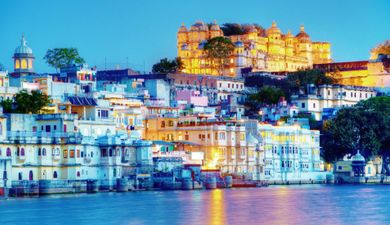
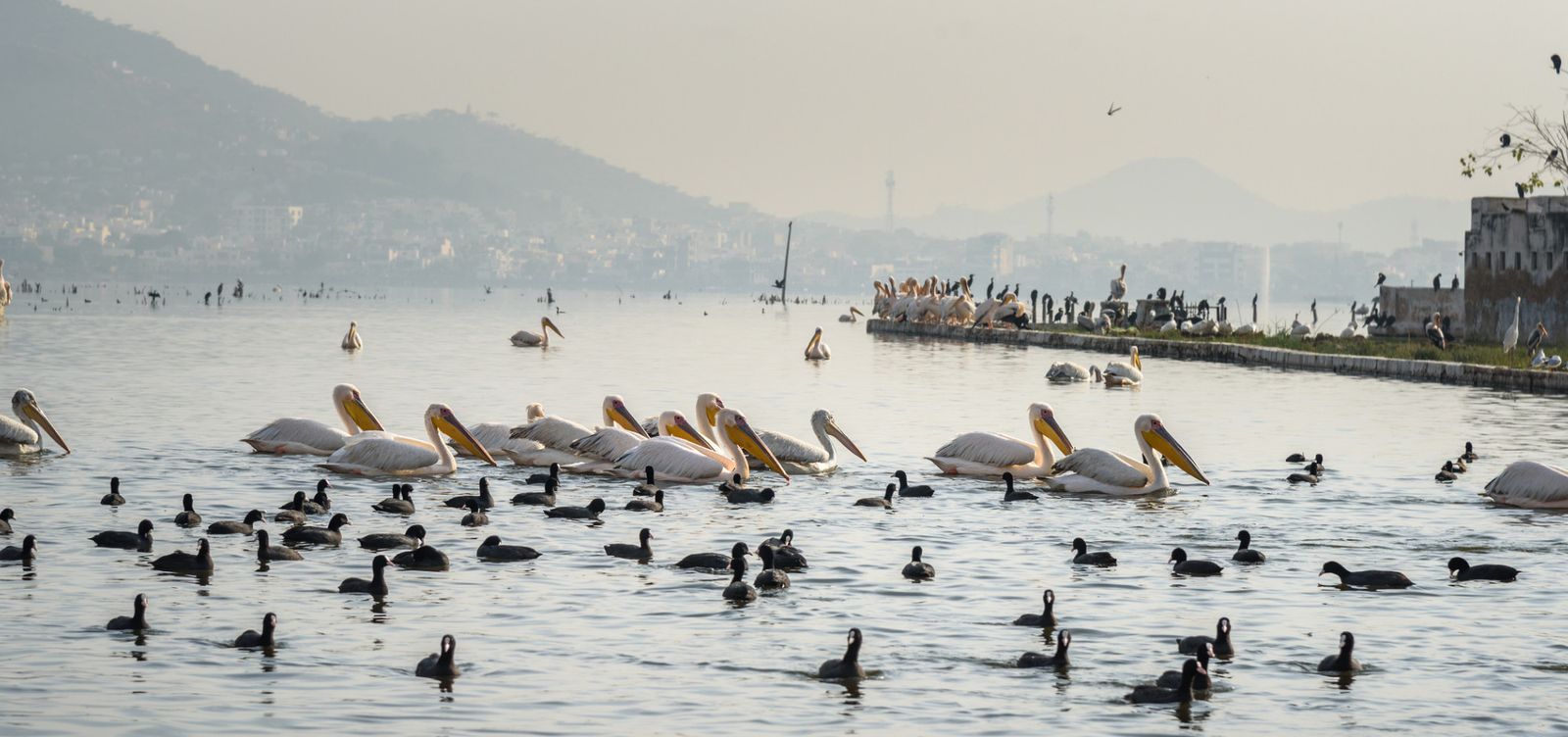
Anasagar Lake doesn't announce itself. You arrive expecting another municipal water body and instead find an artificial lake built in the 12th century by Anaji Tomar — grandfather of the warrior-king Prithviraj Chauhan — that still anchors the city of Ajmer eight hundred years later. The water shifts colour through the day: pewter at dawn, hammered silver by noon, then a strange dusty rose when the sun drops behind the Aravalli foothills. Pedal boats bob near the eastern bank. Pigeons rise in great clattering waves from the marble pavilions. Somewhere a chai-wallah is shouting prices, and somewhere else a group of teenagers is taking selfies on the embankment wall. This is not a pristine lake. It is a working one — woven into the daily rhythm of a Rajasthani city that has been drinking from it, praying beside it, and arguing across it for centuries.
A King's Reservoir, A Mughal's Afterthought
The story starts with Anaji Tomar, who dammed a Luni River tributary in the 12th century to create a reservoir for his growing capital. He gave the lake his name — Ana Sagar, the sea of Ana — and walked away.
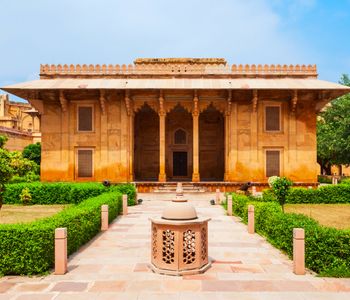
Then the Mughals arrived, and the lake got an upgrade. Emperor Jahangir built a garden on its banks — the Daulat Bagh — sometime in the early 1600s. His son Shah Jahan, the same man who would later commission the Taj Mahal, added five marble pavilions along the embankment in the 1630s. These are the Baradaris, and they remain the lake's defining feature.
Walk along the embankment today and you can run your hand across the same marble. It's weathered now, veined with grey, chipped at the corners where decades of monsoons and millions of fingertips have left their mark. But the proportions are intact. Shah Jahan's architects understood scale the way a musician understands silence.
What the Pavilions Are Actually For
Most visitors photograph the Baradaris and move on. That's a mistake. Sit inside one for twenty minutes — preferably the central pavilion in the late afternoon — and you'll understand why they were built.
The open arches frame the lake in sections, like a series of paintings. Wind moves through the structure from every direction, which is precisely the point: a baradari, by definition, has twelve doors. Shah Jahan built these as summer retreats, places where royal women could catch the breeze coming off the water without exposing themselves to the city. The cooling effect still works. On a 40-degree May afternoon, the temperature inside drops noticeably. The marble does the work.
Look up at the carved ceilings. Most of the original inlay is gone, but the geometry remains — interlocking stars and hexagons that catch the light differently depending on where you stand.
The Unkempt Garden and the Long Way Round
The garden behind the pavilions is called Daulat Bagh, and it isn't particularly well maintained. The grass is patchy. The fountains run only sometimes. Local families spread blankets in whatever shade they can find, and vendors push carts of roasted chana and cucumber slices dusted with chaat masala.
None of this is curated. That's its charm.
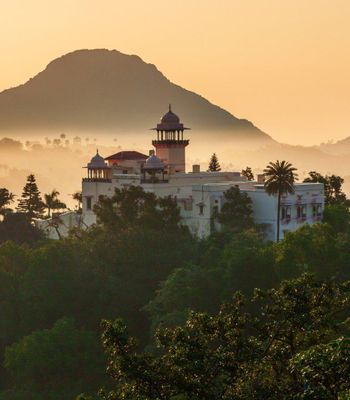
The full walking path around Anasagar Lake stretches roughly 13 kilometres, though most visitors cover only the western embankment where the pavilions are. If you have the time and the right shoes, walk further. The northern shore is quieter, scattered with small temples and the occasional washerman beating clothes against flat stones. On the southern side, you'll see the long ridge of the Aravalli hills rising behind the city, with Taragarh Fort visible on a clear day, perched on its rocky outcrop like an afterthought from the gods.
Boats, Balloons, and the Twelve-Minute Gold
Yes, you can hire a boat. The boating point is on the western side, near the main entrance to Daulat Bagh. Pedal boats and motorboats are both available, and the operators will quote you a price that you should absolutely negotiate. Forty minutes on the water is more than enough.
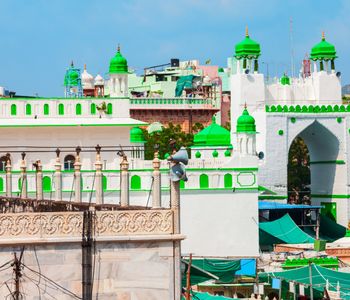
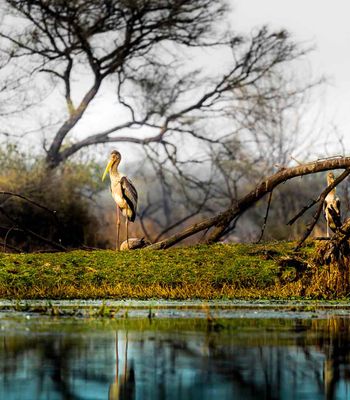
The view from the middle of the lake is the one most photographs miss. From here, the pavilions look small and the city looks vast — a low sprawl of pale buildings climbing into the hills, punctuated by the green domes of the Dargah Sharif a few kilometres away. Pelicans drift past in formation during winter. Kingfishers dart from the embankment walls.
Sunset is the obvious time to visit, and yes, it's crowded. Go anyway. The light here does something specific to Rajasthani sandstone and Mughal marble — a warm, almost edible gold that lasts about twelve minutes. Photographers know this. So do couples. So do the dozens of small boys selling balloons.
The Pilgrim's Pause
Most travellers come to Ajmer for the Dargah of Khwaja Moinuddin Chishti — the 13th-century Sufi shrine that draws pilgrims from across South Asia and beyond. Anasagar Lake sits less than two kilometres from the Dargah, and the relationship between the two is more meaningful than the map suggests.
Pilgrims often come to the lake before or after visiting the shrine. They sit on the embankment. They feed the fish. They make phone calls to family members back home. The lake serves as a kind of decompression chamber — a place to gather yourself before entering the intensity of the Dargah, or to recover from it afterwards.
If you're here as a tourist rather than a pilgrim, recognising this gives the lake a different texture. You're not just looking at water. You're sharing a centuries-old waiting room.
The Stuff You Actually Need to Know
Anasagar Lake is open to the public throughout the day, and there is no entry fee to walk along the embankment or sit inside the Baradaris. Daulat Bagh has a small entry charge that varies, and boating is priced separately.
The best months to visit are between October and March, when daytime temperatures hover in a civilised range. April through June is brutal — expect 40 degrees and above — and the marble pavilions, while cooling, can only do so much. The monsoon arrives in July and lifts the lake levels dramatically; the surrounding hills turn briefly green, which is a sight worth seeing if your timing aligns.
Ajmer is well-connected by rail to Delhi, Jaipur, and Jodhpur. The lake is a short auto-rickshaw ride from the station. Drivers will know it by name.
Wear comfortable shoes. Bring water. Don't expect signage that explains what you're looking at — there isn't much, and what exists is often faded or in Hindi only. Read about the lake before you arrive, and the marble will speak for itself.
Why It Lingers
Anasagar Lake won't appear on most "top experiences in India" lists, and it shouldn't try to. It's too lived-in, too unpolished, too embedded in the daily life of an ordinary Rajasthani city. But that's exactly why it matters. You're walking on stones laid by Shah Jahan's masons while a chai-wallah pours you a glass for ten rupees and the sun sets over the same water that has reflected eight hundred years of Indian history. Few places give you that combination so quietly. Come for an afternoon. Stay for the evening.