The first thing you notice isn't the gold. It's the sound. A low, continuous current of Sanskrit chants, copper bells, bare feet on wet marble, and the murmured "Har Har Mahadev" that passes between strangers like a password. Kashi Vishwanath Temple sits a few hundred metres from the Ganges in the oldest continuously inhabited city on earth, and it doesn't ease you in. It pulls you straight into the centre of something. Devotees believe a single visit here, paired with a dip in the river, can break the cycle of rebirth. That's not a marketing line. That's the entire reason millions arrive every year, often once in a lifetime, often weeping when they finally see the lingam.
Gold That Wasn't Always Gold
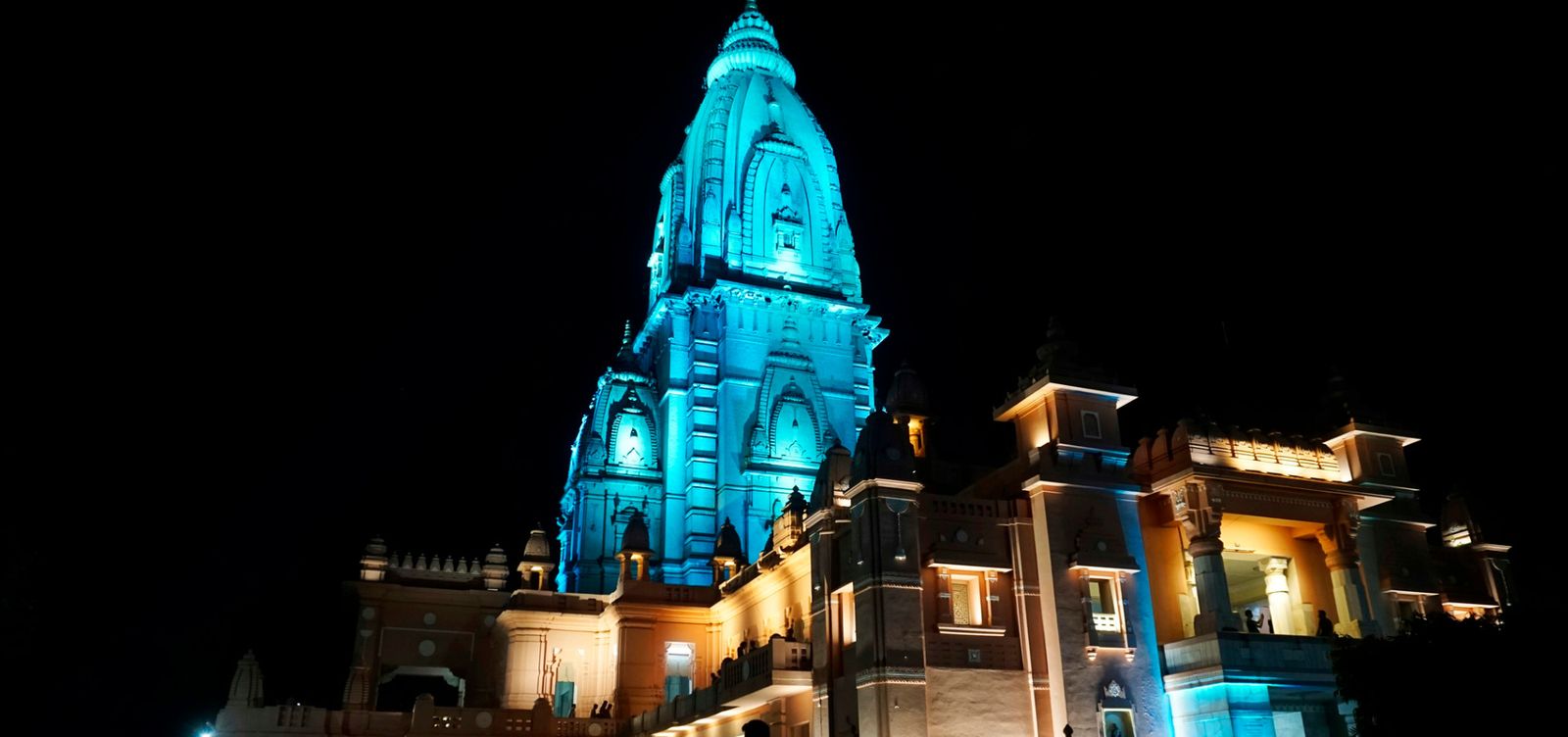
The shikhara — the towering spire above the sanctum — wears roughly 800 kilograms of gold, gifted by Maharaja Ranjit Singh of Punjab in 1835. On a bright morning, it catches the sun like a small fire above the rooftops of the old city. You can spot it from boats on the Ganges if you know where to look, though the surrounding alleys have grown so tight and tall that, from the ground, it disappears until you're nearly beneath it.
The current temple was rebuilt in 1780 by Ahilyabai Holkar, the Maratha queen of Indore, after Aurangzeb demolished the earlier structure in 1669 and built the Gyanvapi Mosque on the site next door. Both buildings still stand, side by side, separated by a barrier and centuries of contested history. You don't have to dig for this story. It's right there.
The Lingam at the Centre of Everything
Inside the sanctum sits a black stone Shiva lingam, around 60 centimetres tall, set in a silver altar. This is the Vishwanath jyotirlinga — one of twelve self-manifested shrines of Shiva scattered across India, and arguably the most important of them. Pilgrims pour Ganges water, milk, and bel leaves over it. The floor is permanently slick. Priests work with the brisk efficiency of people who have done this ten thousand times, because they have.
You won't get long. On a quiet morning, maybe thirty seconds. On a festival day, you'll be moved through in under ten. Don't expect contemplation. Expect compression — a brief, intense, slightly disorienting encounter that you'll spend the rest of the day unpacking.
The Corridor That Changed Everything
For most of its modern history, reaching the temple meant threading through the Vishwanath Gali — a knot of lanes barely wide enough for two people to pass, lined with flower sellers, sweet shops, sadhus, cows, and the occasional motorbike that had no business being there. Claustrophobic. Theatrical. Unforgettable.
In 2021, the Kashi Vishwanath Dham corridor opened, clearing a wide stone plaza between the temple and the Ganges at Lalita Ghat. Roughly 300 buildings were demolished to create it. Some pilgrims love the new approach — the openness, the river view, the dignified scale. Others miss the chaos. Both reactions are reasonable. The corridor has made the temple easier to reach and harder to feel surprised by.
What to Expect at the Gate
Security and What You Can Bring
Security is tight. Phones, cameras, leather items, bags, and anything electronic must go into lockers near the entrance. You'll pass through metal detectors and a pat-down. Bring only what you need: your offering, a wallet for the locker fee, and patience.
Dress Code and Custom
There isn't a strict written dress code, but modest clothing is expected. For men entering the inner sanctum during certain aartis, a dhoti is required — rentable or purchasable nearby. Women generally wear a sari or salwar kameez. Shorts and sleeveless tops will get you turned around.
The Queues
The general darshan queue moves slowly but steadily. A paid Sugam Darshan ticket, available online through the temple's official portal, lets you skip much of the wait — useful if you're short on time or visiting during peak season. Don't buy "fast track" access from touts in the lanes. It rarely ends well.
The Five Aartis
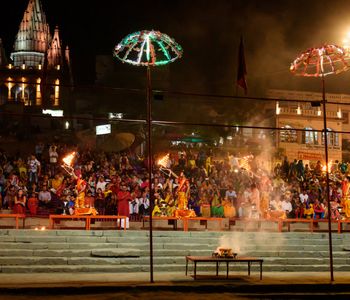
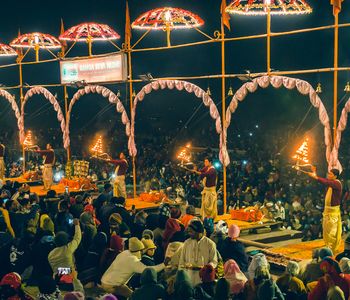
The temple performs five daily aartis, and timing your visit around one changes the entire experience. The Mangala Aarti before dawn (around 3 a.m.) is the most coveted — requires advance booking, and the atmosphere inside is electric in a way that's hard to describe to someone who hasn't been. The Sapta Rishi Aarti in the evening, performed by seven priests in choreographed sequence, is the most visually striking. Bells, conches, oil lamps, smoke. You watch through a railing, packed shoulder to shoulder, and somehow it works.
If you can only attend one, choose the evening aarti. If you can attend two, add the morning. Sleep is overrated in Varanasi anyway.
Beyond the Sanctum
The complex holds several smaller shrines — to Vishnu, Kaal Bhairav, Avimukteshwara, and others — and most pilgrims circle through them before leaving. There's also the Gyanvapi well in the courtyard, which features in several origin stories about the temple's destruction and rebuilding. The water is considered sacred and remains a focus of devotion despite its complicated history.
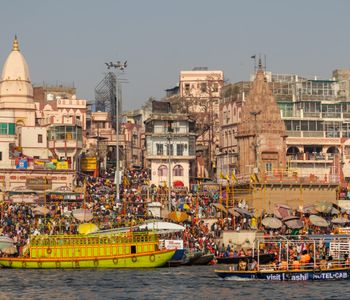
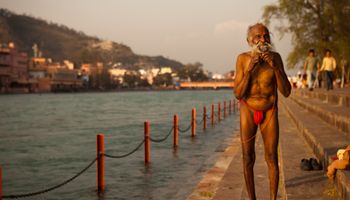
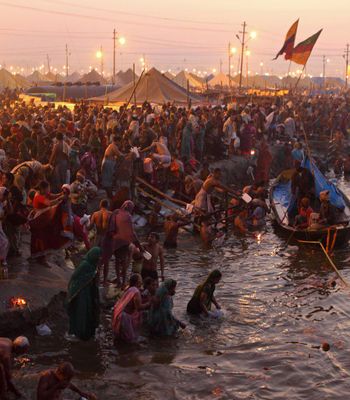
Step out onto the corridor plaza afterwards and walk down to Lalita Ghat. The Ganges is right there, brown and broad and crowded with boats. Many pilgrims complete their visit with a dip, or at least a splash of water on the head. The temple and the river were always meant to be experienced together. The new corridor just made it harder to forget that.
Practical Notes Worth Knowing
The temple is open from around 2:30 a.m. to 11 p.m. with brief closures between aartis. Non-Hindus are technically not permitted inside the main sanctum, though policies have shifted at various points and the rule is inconsistently enforced. Ask before assuming either way.
October through March is the comfortable season — cooler air, clearer light, manageable crowds outside of Mahashivratri and Dev Deepawali. May heat in Varanasi is genuinely brutal, often pushing past 45 degrees. The monsoon brings humidity that clings to your skin and floods the lower ghats.
The nearest railway station is Varanasi Junction, about 15 minutes away by auto-rickshaw. Lal Bahadur Shastri International Airport sits roughly 25 kilometres outside the city. From either, the last stretch to the temple is on foot — vehicles can't enter the old city's core.
Why It Stays With You
Most temples impress you. Kashi Vishwanath unsettles you, in the best possible way. It's loud, crowded, occasionally frustrating, and not particularly comfortable. But it's also one of the few places left in the world where faith is not a performance or a heritage exercise — it's the entire operating system of the surroundings. People are here because they believe something profound is happening. Stand inside long enough, and you start to understand why they've been coming for at least a thousand years, and why they'll keep coming long after you've gone home.