Smoke rises here at every hour. It has done so for centuries, perhaps millennia, and it will continue tomorrow and the day after that. Manikarnika Ghat is where Hindus come to die — or more precisely, where they come to be burned after dying, sending their souls toward moksha, the release from the endless cycle of rebirth. This is not a sight for everyone. There is no museum here, no ticket booth, no gift shop hawking miniatures. What you'll find instead is the most honest piece of theatre on Earth: human mortality, performed daily, beside a river older than memory.
The Burning Ground That Never Sleeps
You smell Manikarnika before you see it. Sandalwood, ghee, woodsmoke — the scent thickens through the alleys of the old city as you near the Ganges. Then the lanes spit you out onto stone steps, and there it is: pyres stacked on terraces, men in white moving with rehearsed calm, bamboo stretchers being lowered toward the water.
The fires burn around the clock. Locals will tell you, with a kind of weary pride, that the flames here have not been extinguished in hundreds of years. Whether that's literally true is beside the point. The ghat functions. Day and night, bodies arrive wrapped in cloth — orange for women, white for men — carried on shoulders through the labyrinth of Varanasi, chanted toward the river one final time.
Most visitors arrive bracing themselves to feel disturbed. What surprises them is how matter-of-fact it all is. Death, in this place, is not hidden behind curtains or buried in suburbs. It is craft, ritual, and labour.
Why Hindus Choose to End Here
To understand the ghat, you have to understand what Varanasi means in Hindu cosmology. The city is believed to be the home of Lord Shiva, and dying within its boundaries — particularly here, at Manikarnika — is said to break the cycle of reincarnation. The soul is liberated. The wheel stops turning.
The name Manikarnika itself comes from a legend involving Shiva and his consort Parvati. The story shifts depending on who's telling it — a dropped earring, a lost jewel, a well dug by Vishnu — but the essence holds: this patch of riverbank is considered the most auspicious place on the subcontinent to surrender the body.
Families travel for days carrying their dead. The elderly sometimes arrive while still alive, taking rooms in nearby lodges built specifically for those waiting to die. It sounds grim on paper. In practice, it carries a quiet dignity that's hard to articulate until you've seen it.
What You Actually See
The cremation grounds occupy a stepped section of the riverbank, blackened from generations of fires. Stacks of wood — neem, mango, sandalwood — tower behind the pyres, weighed out and sold by the kilo. The cost of a cremation depends on the wood you choose. Sandalwood is the most expensive and considered the most sacred. Many families cannot afford it and use cheaper varieties, mixed with a few ceremonial pieces.
The Doms manage everything. This community has handled cremations at Manikarnika for generations, and the role passes from father to son. They light the fires using a flame said to have been kept burning continuously at the ghat for centuries. The eldest male relative of the deceased shaves his head, dresses in white, and circles the pyre five times before applying the torch.
A cremation takes about three hours. The skull is cracked at the end — a ritual act believed to release the soul. The ashes are swept into the Ganges, and the next family steps forward.
The Etiquette of Witnessing
This is the part most travel writing dodges. Manikarnika is not a tourist attraction in the conventional sense, and behaving like it is one will earn you contempt — or worse, an aggressive demand for "donations" from the touts who circle visitors here.
Photography is strictly forbidden. Don't try to be clever about it. Cameras have been thrown into the river. Phones have been smashed. The families burning their dead deserve the same privacy you would want for your own. Watch. Reflect. Leave the lens in your bag.
You will likely be approached by men claiming to collect money for the "hospice" or for "wood for poor families." Some of these requests are legitimate; many are not. A polite refusal is acceptable. If you want to contribute genuinely, ask your guesthouse to direct you to a verified charity.
Dress modestly. Speak quietly. Stand on the upper terraces or take a small boat onto the river — both offer respectful vantage points without intruding on the rituals themselves.
Finding Your Way Through the Old City
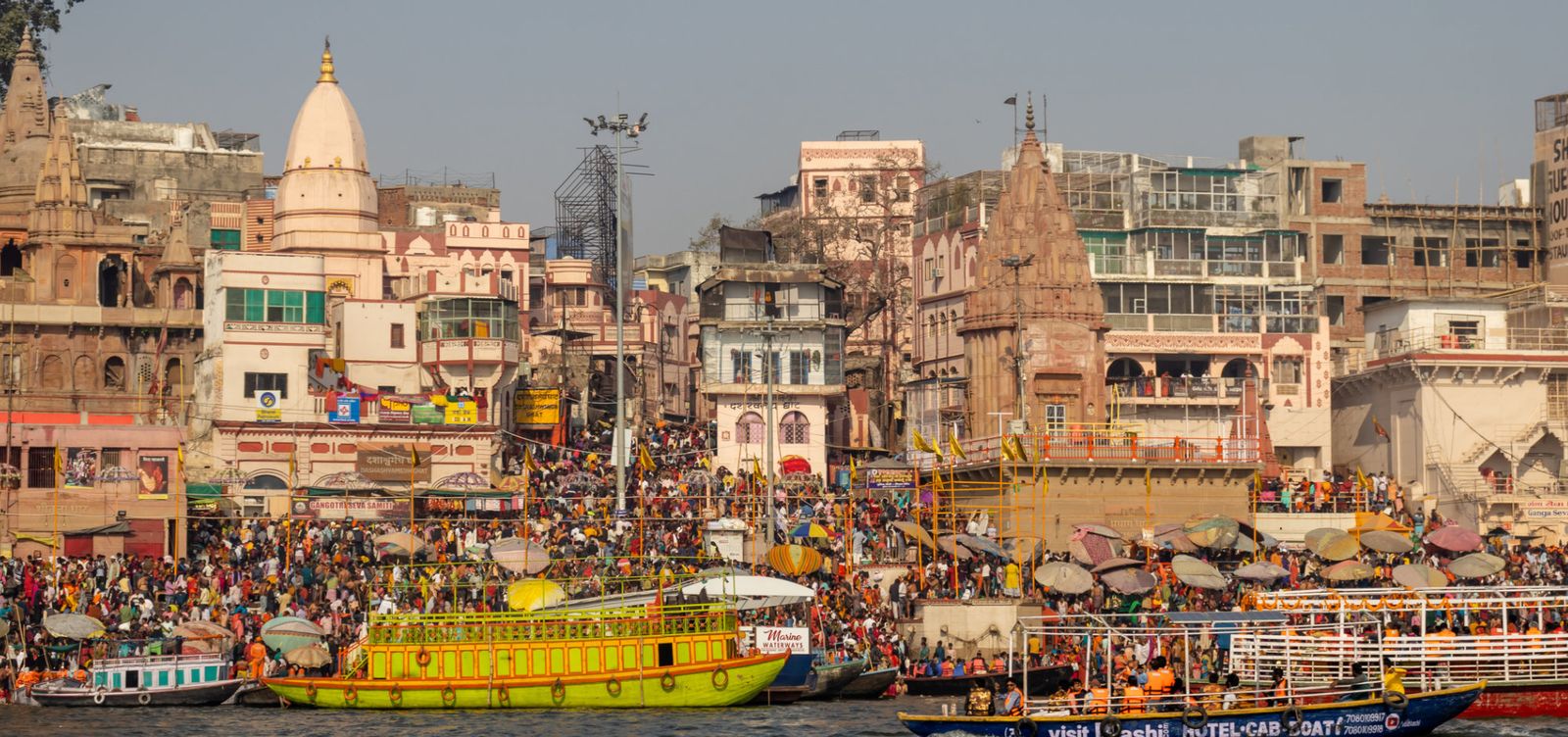
Manikarnika sits roughly in the middle of Varanasi's ghats, on the western bank of the Ganges. There's no direct road. Vehicles cannot reach it. You walk, navigating the narrow lanes of the old city — past tea stalls, sleeping cows, and walls painted with the faces of gods.
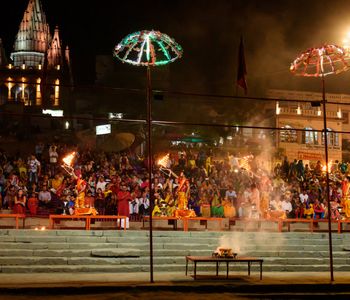
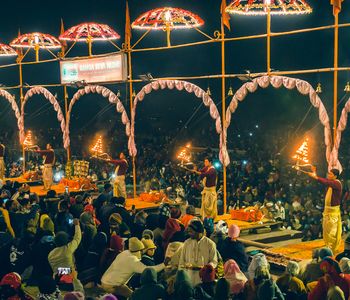
The easiest approach is from Dashashwamedh Ghat, the busy main ghat where the evening Ganga Aarti ceremony is held. From there, walk north along the riverside steps for about ten minutes. You'll know you're close when the air changes.
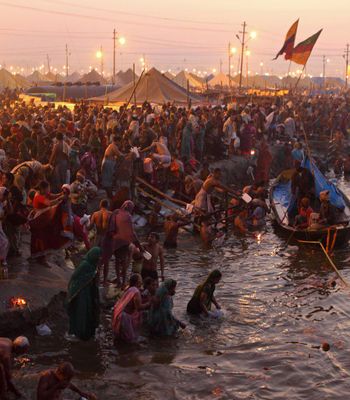
Alternatively, hire a rowboat from Assi Ghat or Dashashwamedh and approach from the water. The river view gives you both distance and perspective. Early morning, just after sunrise, the smoke catches the first light in a way that no photograph could capture honestly even if you were allowed to take one.
When to Come, and What to Expect of Yourself
The ghat operates twenty-four hours a day, every day of the year. There is no closed season, no day off. Cremations happen during festivals, monsoons, and the brutal heat of May when temperatures push past forty-three degrees Celsius.
The best times to come are early morning, between five and seven, or late evening after sunset. The light is softer, the crowds thinner, and the contrast between the river and the fires more striking. Avoid the middle of the day — the sun is punishing and the smoke hangs low.
Bring water. Wear closed shoes; the stones can be slick with ash and worse. Give yourself an hour, perhaps two. Most visitors find they need less time than they expected, and more silence afterward than they planned for.
The Reason It Stays With You
Manikarnika Ghat doesn't ask for your reverence. It doesn't perform for visitors or soften itself for foreign eyes. It simply continues — fire after fire, family after family, century after century — the most unflinching meditation on mortality that any place on Earth still offers. You won't leave with photographs. You won't leave with souvenirs. What you'll carry instead is harder to name and impossible to lose: the memory of watching, for an hour or two, the oldest human story being told without metaphor. Few places change you. This one might.