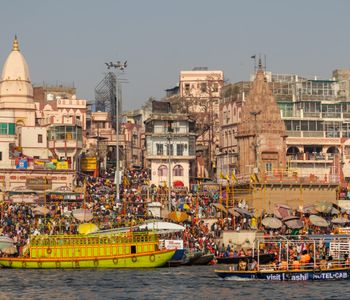
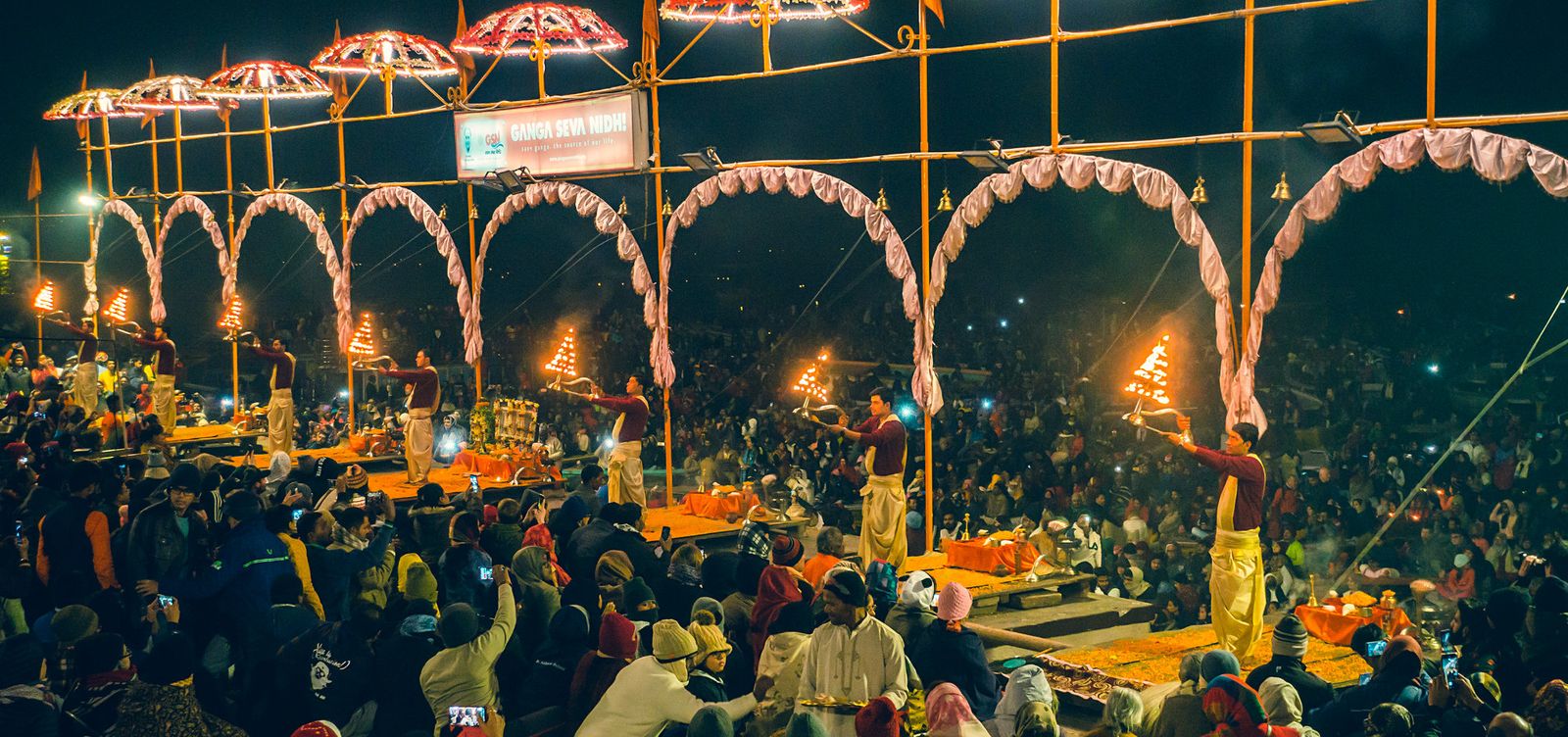
By six in the evening, the stone steps are already filling. Pilgrims press shoulder to shoulder with backpackers, sadhus in saffron rearrange their robes, and boatmen call up from the Ganges with prices that drop the longer you ignore them. Dashashwamedh Ghat is the loudest, most crowded, most relentlessly alive stretch of riverfront in Varanasi — and that's exactly the point. This isn't a place for quiet contemplation. It's a place where a city of three thousand years performs itself nightly, and you, whether you came for it or not, become part of the audience. Come early, stay late, and resist the urge to keep checking your phone. The river demands your full attention.
Where Brahma Once Sacrificed Ten Horses
The name itself is a story. Dasha means ten, ashwa means horse, medh means sacrifice. Hindu tradition holds that Lord Brahma performed the Dashashwamedh yajna here, offering ten horses to welcome Lord Shiva to the city. Believe the myth or read it as poetry — either way, the ghat carries the weight of that founding gesture.
It's also among the oldest ghats in Varanasi, rebuilt and reinforced over centuries by various rulers, most notably the Maratha queen Ahilyabai Holkar in the eighteenth century. What you walk on today isn't ancient stone but the accumulated effort of pilgrims, kings, and municipal workers keeping pace with a river that rises high enough every monsoon to swallow the lower steps entirely.
The Ritual That Stops the City Every Evening
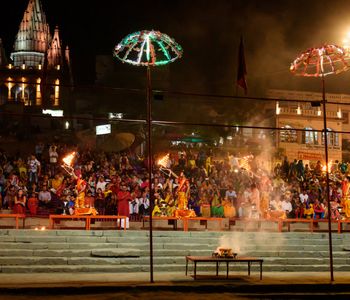
Ganga Aarti is the reason most travellers come, and it's worth the crush. Just after sunset, seven young priests in matching dhotis take their positions on raised platforms along the ghat. They lift brass lamps stacked with flame, swing them in slow, deliberate arcs, and chant in unison while bells clang and conch shells sound across the water.
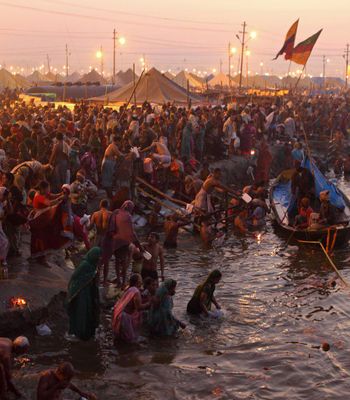
The crowd can run into the thousands. Some sit on the steps. Others float in wooden boats anchored just offshore, their lamps reflecting in the river like a second sky. The whole ceremony lasts about forty-five minutes, and if you've arrived less than an hour beforehand, you'll be standing somewhere far back, watching through the gap between two strangers' heads.
The smart move is to hire a boat. For a few hundred rupees, you'll drift just metres from the action, the priests glowing against the dark river, the music carrying across the water with an eerie clarity it never has on land.
A Working Riverbank, Not a Monument
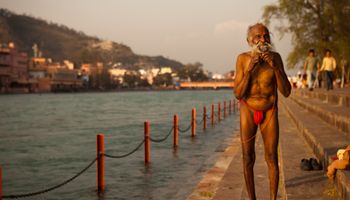
What separates Dashashwamedh from any temple complex or fort is that it's still doing its job. Pilgrims wade waist-deep into the Ganges at dawn, cupping water in their palms, whispering prayers, releasing marigolds. A priest under a bamboo umbrella applies tilak to a forehead. A barber shaves a mourner's head bald. Somewhere downstream, smoke rises from Manikarnika, where the dead are still burning.
Walk the entire stretch and you'll never see a velvet rope or a "do not touch" sign. The trade-off is that you'll also dodge cow dung, persistent flower-sellers, and the occasional aggressive monkey. This isn't curated heritage. It's a riverbank that happens to be sacred to a billion people.
The Boat Ride You Should Actually Take
Most travellers do the evening ride for aarti, which is fine, but the dawn one is the ride that stays with you. Push off at 5:30, when the river is still grey and the city is just clearing its throat. Bathers descend the steps in small groups. Mist hangs over the water. The first sun catches the tops of the ghats — Manikarnika, Scindia, Munshi — turning them gold one by one.
Negotiate hard. The first price quoted will be two or three times what you should pay. A rowboat for an hour, shared with a few others, runs around 150 to 300 rupees per person if you're patient. Motorboats are faster, louder, and worse.
Choosing Your Boatman
Walk past the first three or four who approach you. The ones who chase hardest charge most. Look for an older man with a quieter pitch — he's been doing this long enough to know the river and the ghats by name. Ask him to row past Manikarnika slowly, but don't photograph the cremations. People are grieving. The boatmen will tell you the same.
What to Watch For
From the water, the city reads like a textbook in northern Indian architecture. Crumbling havelis lean toward the river, their balconies hung with drying laundry. Maharajas' palaces sit beside cheap pilgrim guesthouses. Carved stone elephants flank doorways no one uses anymore. Bring a long lens if you have one. Bring patience either way.
The Practical Stuff Nobody Tells You
The ghat sits in the heart of old Varanasi, about a fifteen-minute walk from Godowlia Chowk, which is as close as any vehicle will get you. The lanes leading in are narrow, motorbike-clogged, and impossible to navigate by car. Walk. Watch where you step. Keep your bag in front of you in the densest crowds — not because the place is unsafe, but because it's tight and full of pickpockets working the aarti audience.
Dress modestly. Shoulders covered, legs covered to at least the knee. You'll be removing your shoes if you step onto certain platforms, so wear something easy to slip off. There are shoe-minders who charge ten or twenty rupees to watch them. Pay it.
The ghat is open at all hours, technically, but the two times worth your attention are sunrise and the evening aarti. Midday is brutal in summer — temperatures climb past 40 degrees — and the steps offer no shade. Plan your visit between October and March if you can. November mornings, with the mist still rising and the river running clean and cool, are as close to the postcard version of Varanasi as you'll ever get.
Why You'll Come Back
Dashashwamedh Ghat doesn't try to impress you. It's too busy being itself — sacred, chaotic, exhausting, and utterly indifferent to whether you understand it. Most travellers leave overwhelmed on the first visit and find themselves walking back the next morning, and the morning after that. Something about the rhythm pulls you in: the bells, the river, the smoke, the marigolds floating downstream toward a horizon you can't quite see. You won't photograph it well. You won't explain it cleanly when you get home. You'll just know you were there, on the steps, while the city carried on doing what it has done for three thousand years.