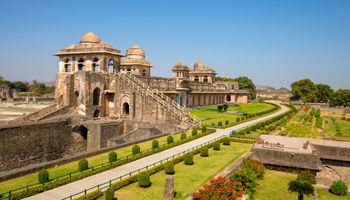
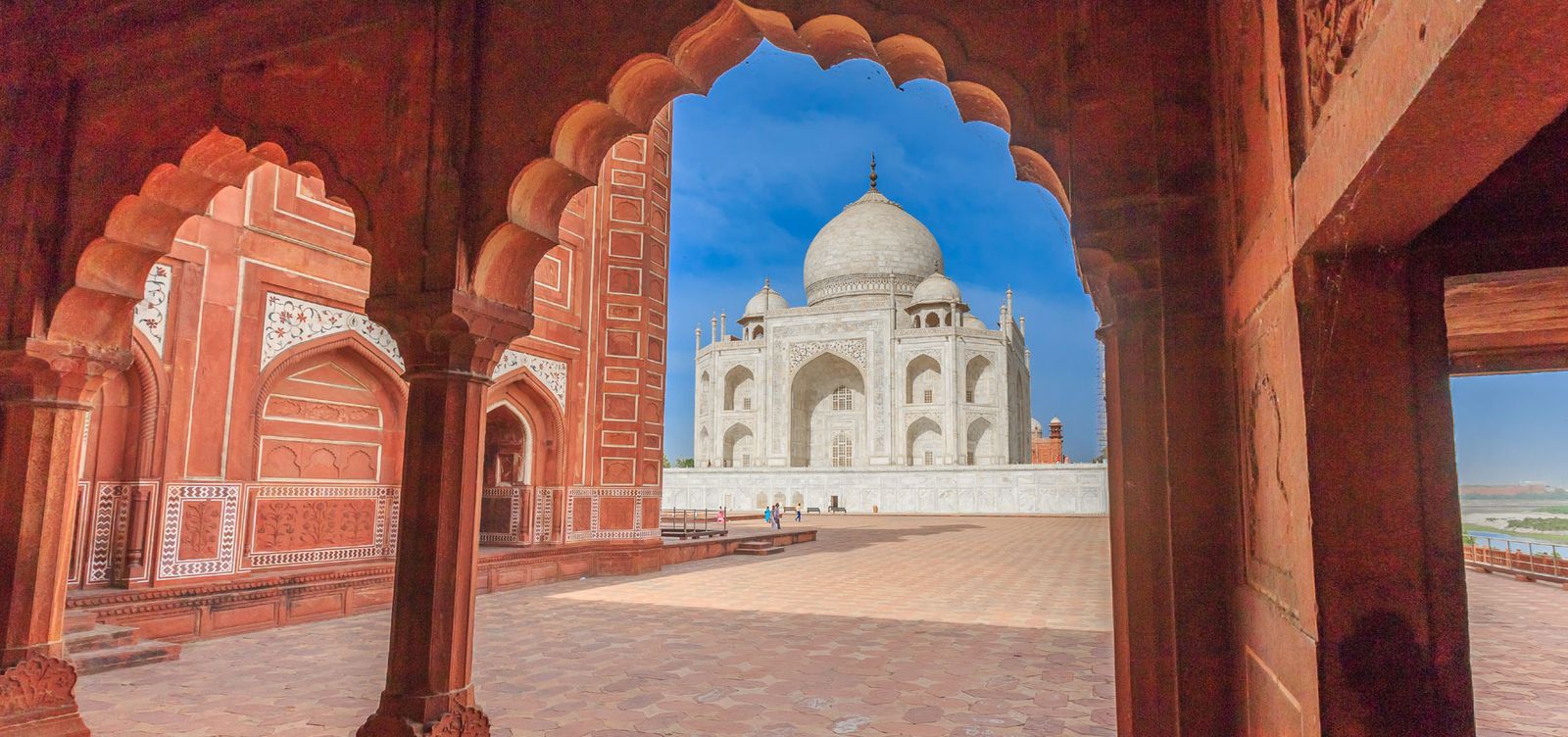


The first thing you notice about Agra isn't the Taj Mahal. It's the weight of the air — heavy with diesel smoke, marigold garlands, and something older, something that clings to the sandstone like a memory refusing to fade. This is a city that has been capital, conquest, and afterthought, sometimes within the same century.
Long before Shah Jahan stacked white marble into the world's most famous love letter, Agra was already ancient. Its story runs back through Hindu epics and Buddhist travelers, through the ambitious sultan who dragged a capital here in 1504, through Mughal emperors who built and destroyed with equal grandeur. It survived Persian invasions, Maratha warlords, Jat chieftains, and British administrators who stripped it for parts.
What follows is that full arc — not the sanitized version from tourist placards, but the messy, layered, occasionally brutal history of a city that shaped an empire and then watched that empire dissolve around it. Agra's past doesn't sit quietly behind velvet ropes. It argues with itself at every intersection.
Before the Marble and the Minarets
Long before anyone dreamed of domed mausoleums along the Yamuna, Agra was already old. The epic Mahabharata references this stretch of the Yamuna plain as Agrevana — the edge of the forest — a name that suggests wilderness rather than empire. Whether the identification is mythological shorthand or genuine geographic memory, it tells you something: people have been marking this ground for millennia.
The earliest credible historical mention comes from the Greek geographer Ptolemy, who in the second century CE recorded a settlement he called Agra. It sat at a strategic bend of the Yamuna, where the river slowed enough to allow easy crossing — a detail that would determine the city's fate for the next two thousand years. Control the crossing, control the trade route. Every power that rose in northern India understood this arithmetic.
For centuries, Agra existed in the margins of larger kingdoms. The Rajputs held it, lost it, held it again. It never became a capital, never accumulated the religious prestige of Varanasi or the political gravity of Delhi. Instead it functioned as a garrison town, a waypoint, a place armies passed through on their way to somewhere more important. The soil was rich, the river reliable, and the location commanded access to both the Gangetic plain and the routes south toward Malwa. That combination made it valuable without making it famous.
What's striking is how little physical evidence survives from these pre-Mughal centuries. Walk through Agra today and nearly everything you see dates from the sixteenth century onward. The older city was built in perishable materials — mudbrick, timber, thatch — and it simply dissolved back into the earth. Agra's ancient past isn't hidden. It's gone.
The Sultan Who Gave Agra a Second Life
Before 1504, Agra was little more than a provincial settlement along the Yamuna — strategically useful but politically forgettable. Then Sikandar Lodi, the Delhi Sultanate's restless and calculating ruler, made a decision that would reshape the subcontinent's geography of power. He moved his capital from Delhi to Agra, and nothing about the city was ever the same again.
The move wasn't sentimental. Sikandar needed a base closer to the rebellious Rajput kingdoms and the fertile Gangetic plain, where both threats and revenues concentrated. Agra's position on the Yamuna offered natural defense and trade access in a single package. Delhi had grown stale with court intrigue; Agra offered a clean slate.
What Sikandar built here wasn't grand in the way the Mughals would later define grandeur, but it was functional and deliberate. He constructed mosques, gardens, wells, and administrative buildings, transforming the settlement into something that could credibly house a sultanate. His court attracted poets and scholars — Sikandar himself was a patron of Persian literature, even as he proved ruthless in consolidating territory across northern India.
Here's what's easy to overlook: the Mughals didn't discover Agra. They inherited it. When Babur defeated Ibrahim Lodi at Panipat in 1526, the city he claimed was already a functioning capital with established infrastructure, trade routes, and political significance. Sikandar Lodi had done the unglamorous groundwork.
He died in 1517 and was buried not in Agra but in Delhi, at the Lodi Gardens — a quiet irony for a man who spent his last thirteen years trying to escape Delhi's shadow. Yet his real monument isn't a tomb. It's the city he willed into importance, the one the Mughals would later dress in marble and make immortal.
When Conquerors from the North Planted Gardens in the Dust
Babur didn't much care for Agra. He said so himself. In the Baburnama, his brutally honest memoir, the first Mughal emperor described Hindustan as a land of "no good horses, no good dogs, no grapes, muskmelons, or first-rate fruits." The heat appalled him. The flatness bored him. And yet, after defeating Ibrahim Lodi at Panipat in 1526, he chose Agra as his seat of power — largely because it was already one.
What Babur did love was gardens. A man raised among the terraced orchards and rushing streams of Fergana, in present-day Uzbekistan, he immediately set about reshaping Agra's landscape to soothe his own homesickness. The Aram Bagh — the Garden of Relaxation — is believed to be the first Mughal garden on Indian soil. Its geometric channels and symmetrical layout introduced a Persian horticultural language that would define Mughal aesthetics for two centuries. The garden still exists on the eastern bank of the Yamuna, though centuries have worn its edges soft.
Babur's reign lasted only four years. His son Humayun inherited an empire that was enormous and deeply unstable. The Afghan warlord Sher Shah Suri drove Humayun out of India entirely in 1540, and Agra changed hands without ceremony. For fifteen years, Humayun wandered — through Sindh, through Rajputana, through Persia — absorbing influences that would later reshape Mughal art and architecture when he finally reclaimed Delhi and Agra in 1555.
He barely had time to enjoy it. Humayun died the following year after falling down his library stairs. It's a death almost too absurd to be tragic. But his brief restoration set the stage for something extraordinary: the reign of his thirteen-year-old son, Akbar, who would transform Agra from a provincial capital into the center of the known world.
A Dynasty Plants Its Flag — and Its Gardens
Babur didn't much care for Agra. He said so himself. The first Mughal emperor, fresh from conquering Ibrahim Lodi at the Battle of Panipat in 1526, rode into the city expecting grandeur and found dust, heat, and a landscape he considered graceless. In his memoirs, the Baburnama, he complained about the lack of running water, the absence of decent fruit, and the general aesthetic failure of Hindustan compared to his beloved Central Asian homeland. Most conquerors celebrate their new possessions. Babur wrote a critical review.
Yet he stayed. And rather than simply ruling from the existing Lodi-era fortress, he set about reshaping the city to match his own sensibility. His most telling contribution was the Aram Bagh — a Persian-style garden laid out on the banks of the Yamuna with flowing water channels, symmetrical pathways, and terraced levels designed to evoke the paradise gardens of Kabul and Samarkand. It was an act of homesickness disguised as urban planning, and it introduced a landscape philosophy that would define Mughal architecture for the next two centuries.
Babur's son Humayun inherited both the empire and its fragility. His reign was a study in interrupted ambition — he held Agra, lost it to Sher Shah Suri in 1540, and spent fifteen years in exile before reclaiming the throne just months before his death in 1556. Agra under Humayun was less a seat of power than a revolving door. The city passed between rulers like a disputed inheritance, each one leaving marks but no monuments of lasting consequence.
Still, the seed Babur planted mattered. His gardens established Agra as a canvas for imperial vision. Everything that followed — every minaret, every marble inlay — grew from that first dissatisfied emperor deciding he could do better.
The Emperor Who Preferred Gardens to Battlefields
Jahangir inherited Agra in 1605 not as a conqueror but as a connoisseur. Where his father Akbar had been a builder of systems — legal codes, administrative frameworks, an entire city at Fatehpur Sikri — Jahangir turned his attention to the finer grain of things. He was obsessed with nature, with the precise markings on a bird's wing, with the way light moved through carved marble screens. Under his rule, Agra didn't expand so much as it deepened.
His court painters produced some of the most psychologically acute portraiture the subcontinent has ever seen. Mughal miniatures from this period show faces with real worry lines, real fatigue, real cunning — not the idealized masks of earlier traditions. Jahangir demanded accuracy over flattery, a rare quality in a man who held absolute power. He commissioned studies of individual flowers and animals with the rigor of a European naturalist, decades before such practices became fashionable in the West.
The gardens mattered as much as the palaces. Jahangir saw landscape design as a philosophical act — water channels represented paradise, terraced plantings imposed human order on wild earth. Ram Bagh, along the Yamuna, became a testing ground for these ideas, and the garden tradition he nurtured would eventually find its fullest expression in the grounds surrounding the Taj Mahal, built by his son.
Yet Jahangir's refinement coexisted with volatility. He struggled with opium and alcohol for much of his reign, and his wife Nur Jahan wielded extraordinary political influence — effectively governing the empire during his periods of incapacity. Agra's cultural golden age, in other words, was presided over by an aesthete who was frequently too impaired to rule. The art survived him. The contradictions defined him.
A Grief So Grand It Became Marble
Shah Jahan inherited an empire at the peak of its wealth, and he spent that wealth like a man possessed. He was possessed — by architecture, by spectacle, and eventually by a sorrow that would reshape the skyline of Agra forever. When his wife Mumtaz Mahal died in 1631 during the birth of their fourteenth child, the emperor's response was not private mourning. It was construction on an almost incomprehensible scale.
Twenty thousand workers labored for over two decades. White Makrana marble arrived from Rajasthan on bullock carts. Jade came from China, turquoise from Tibet, lapis lazuli from Afghanistan, sapphires from Sri Lanka. The inlay work alone — tiny stones cut and fitted into marble with a precision that still confounds modern craftsmen — represents a kind of obsessive devotion that blurs the line between love and madness. Stand close to the cenotaphs inside, and you'll notice the pietra dura flowers have individual petals, each a separate stone, some no larger than a grain of rice.
But Shah Jahan's ambitions ran beyond a single tomb. He transformed Agra Fort's interior, replacing much of the red sandstone with white marble and mirrored halls. The Moti Masjid, the Diwan-i-Khas, the Musamman Burj — these weren't additions. They were declarations of aesthetic supremacy. He also began constructing an entirely new capital at Shahjahanabad, modern-day Old Delhi, which drained both attention and treasure from Agra.
The irony cuts deep. Shah Jahan spent his final eight years imprisoned in Agra Fort by his own son, Aurangzeb, gazing across the Yamuna at the tomb he'd built for the woman he loved. The view from the Musamman Burj is still the most quietly devastating sight in all of India.
The Emperor Who Turned His Back on Agra
Aurangzeb didn't destroy Agra. He did something worse — he ignored it. When he seized the throne in 1658 after imprisoning his own father Shah Jahan in the Agra Fort, the city's golden age didn't end with a bang. It ended with a slow, quiet withdrawal of attention, like a patron walking out of a theater mid-performance.
Shah Jahan spent his final eight years as a prisoner in his own fortress, gazing across the Yamuna at the marble mausoleum he'd built for his wife. The irony was exquisite and cruel. Aurangzeb, austere and suspicious of extravagance, had no interest in continuing Agra's legacy as an imperial showpiece. He shifted the capital to Delhi, then later operated largely from the Deccan, consumed by decades of grinding military campaigns in the south that would ultimately exhaust the empire's treasury and patience.
Agra became an afterthought. The grand ateliers that had produced miniature paintings and inlaid marble work lost their imperial patronage. Artisans scattered. The court poets and musicians followed the money elsewhere. A city that had been the gravitational center of one of the world's wealthiest empires found itself demoted to a provincial garrison town within a single generation.
Aurangzeb's policies — the reimposition of the jizya tax on non-Muslims, the destruction of certain Hindu temples — also fractured the social fabric that had held Agra's diverse population together under his predecessors. Resentment bred rebellion. The Rajputs, the Sikhs, the Marathas — enemies multiplied faster than Aurangzeb could suppress them. By the time he died in 1707, exhausted and isolated in the Deccan, the empire he'd fought so ruthlessly to control was already fracturing beyond repair. Agra would bear the consequences for a century.
When Warlords and Farmers Fought Over an Empire's Bones
By the early eighteenth century, Agra had become a prize passed between hands that could barely hold it. The Mughal grip loosened not with a single blow but through a long, unglamorous unraveling — and into that vacuum stepped two forces nobody in Babur's court could have imagined inheriting the city: Maratha confederates from the Deccan and Jat chieftains from the surrounding countryside.
The Jats struck first. Under Maharaja Suraj Mal, who ruled from his fortress at Bharatpur, Jat forces captured Agra Fort in 1761. Suraj Mal was no mere raider. He governed with surprising pragmatism, and his soldiers stripped Mughal monuments not out of spite but practical economics — marble and semi-precious stones from royal gardens were repurposed for Jat palaces in Deeg and Bharatpur. The irony is sharp: peasant-warrior dynasties literally dismantling imperial grandeur to build their own.
The Marathas, meanwhile, treated Agra as a strategic chess piece in their wider contest with the Afghans and the remnants of Mughal authority. Control of the city changed hands repeatedly through the 1770s and 1780s, each transition marked less by grand sieges than by negotiated surrenders and shifting alliances. Mahadji Scindia, the most formidable Maratha general of his era, eventually brought Agra under his control, using the Mughal emperor in Delhi as a puppet to legitimize his authority.
What's striking about this period is how little either power invested in Agra itself. The city that had been the seat of an empire became a garrison town, valued for its walls rather than its culture. No great buildings rose. No poets were patronized. Agra endured — diminished, fought over, waiting without knowing it for its next transformation under entirely foreign rulers arriving from the sea.
The Empire That Replaced an Empire
The British didn't conquer Agra so much as inherit it. By 1803, when Lord Lake's forces defeated the Marathas at the Battle of Delhi, Agra was already a diminished capital — its fort scarred by successive occupations, its gardens overgrown, its political relevance a fading memory. The East India Company absorbed it into the North-Western Provinces with the bureaucratic efficiency of men who saw territory as a ledger entry.
What followed was a strange kind of reinvention. The British turned Agra Fort into a garrison, filling Shah Jahan's marble halls with ammunition stores and barracks. During the Uprising of 1857, the fort served as a refuge for European residents who barricaded themselves inside while the city erupted around them. The irony was thick — a Mughal emperor's palace protecting the men who had dismantled Mughal sovereignty.
Colonial administrators reshaped the city's infrastructure with railroads, cantonments, and civic buildings that sat awkwardly beside Mughal sandstone. They also, somewhat accidentally, began the preservation of the Taj Mahal. Lord Curzon's restoration efforts in the early 1900s stripped away bazaar stalls that had crowded the complex's entrance and replanted its gardens in a version of their original layout. Whether this was reverence or possession dressed as care remains a fair question.
Agra never regained its old political stature under the British. The provincial capital shifted to Allahabad in 1858, and the city settled into a quieter role — administrative outpost, military station, and increasingly, a destination for foreign travelers who came specifically to see the monument the Mughals had left behind. The empire changed. The marble endured.
Agra doesn't need you to love it. It doesn't perform. The Yamuna still runs sluggish and grey past the marble ghats, auto-rickshaws still honk their way through intersections that obey no visible logic, and the petha sellers still press samples into your hands whether you want them or not. But stand inside the Taj Mahal's main chamber at dawn, when the marble holds the cold of the night before and the inlaid stones catch the first angled light, and you'll understand why Shah Jahan bankrupted an empire for grief. Walk the Red Fort's corridors where Mughal power consolidated and crumbled within the same walls. This city doesn't prettify its contradictions — it simply outlasts them. Go before you think you're ready. Agra rewards the traveler who shows up without a script.