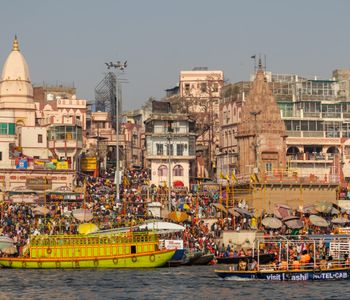
At the southern edge of Varanasi, where the Assi rivulet once met the Ganges before the city reduced it to a trickle, sits the ghat that most visitors save for last and most pilgrims start with. Assi Ghat is the quieter cousin of Dashashwamedh — less theatrical, less crowded, and somehow more honest about what Varanasi actually is. You come here for sunrise. You stay for the strange, unhurried rhythm that the rest of the old city never quite allows. A boatman will offer you a ride before you've finished your chai. You'll probably say yes. Most people do.
What sets Assi apart isn't grandeur — it's pace. While the central ghats perform for the cameras, this one keeps doing what it has always done, mostly for itself.
Where Two Rivers Almost Meet
The name comes from the Assi, a stream so diminished now that you could miss it entirely if no one pointed it out. In the Puranas, this confluence is sacred — the place where the goddess Durga is said to have flung her sword after slaying the demons Shumbha and Nishumbha. The sword carved the riverbed. The river took her name.
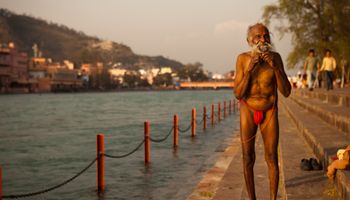
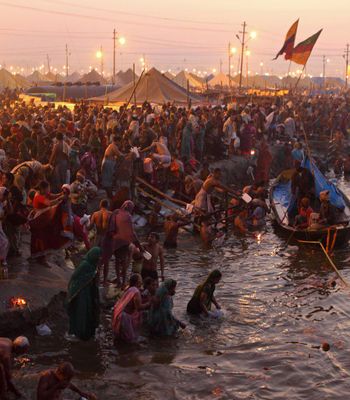
You won't find much riverbed left to admire. What you'll find is a peepal tree at the water's edge, a Shiva lingam beneath it, and a small but constant trickle of pilgrims performing the ritual bath before paying their respects. The lingam is unremarkable to look at. That's rather the point. In Varanasi, the holiest things tend to be the plainest.
The Morning Belongs to Subah-e-Banaras
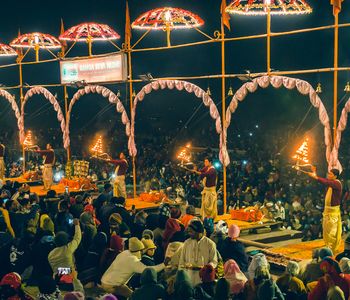
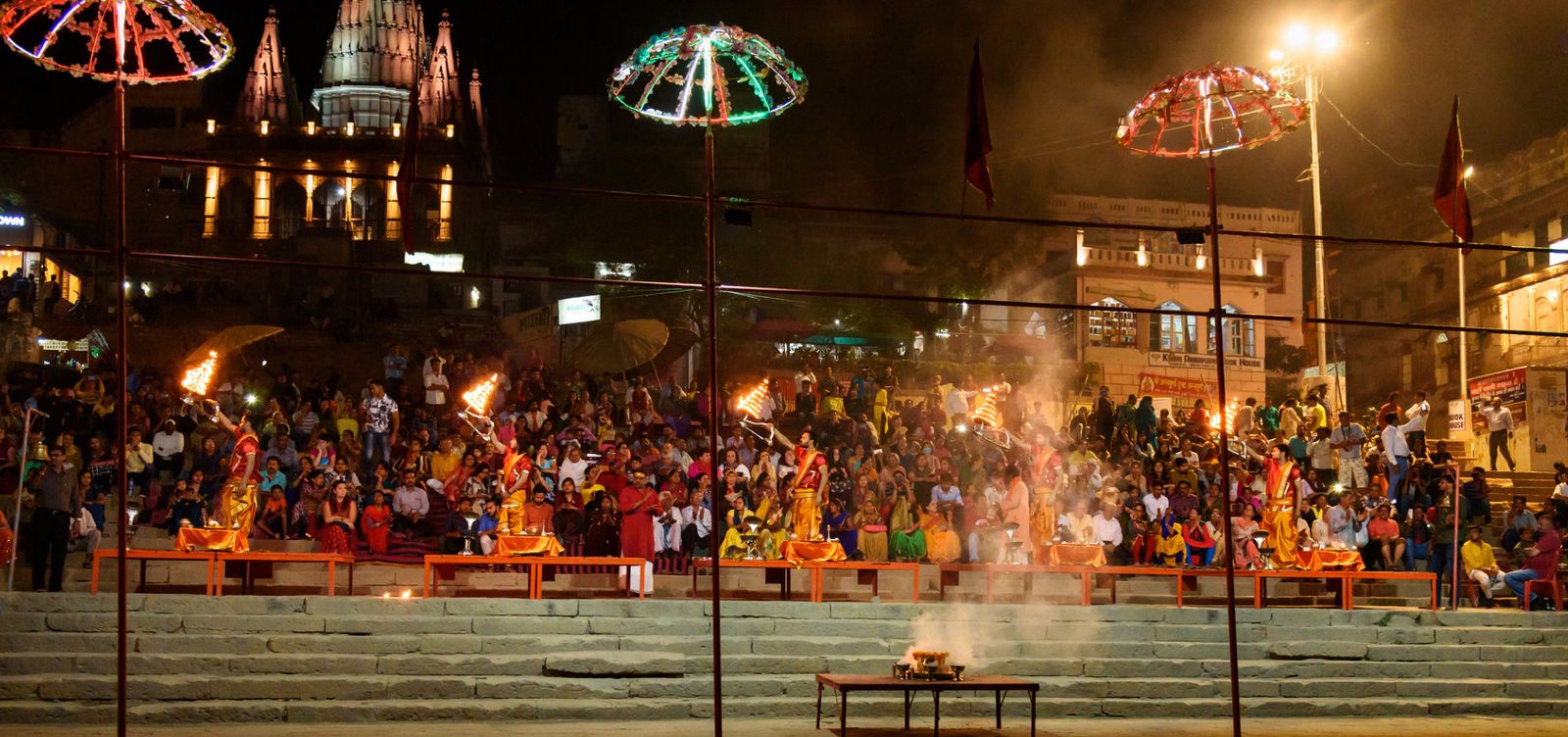
If you wake for one thing in this city, wake for this. The Subah-e-Banaras ceremony begins around 5 a.m., and unlike the louder, fire-swinging evening aarti at Dashashwamedh, the morning ritual at Assi feels closer to a concert than a spectacle.
Priests in saffron perform the aarti to the rising sun. Classical musicians follow — sitar, tabla, sometimes a vocalist whose voice carries clean across the water. Yoga practitioners unfurl mats on the stone steps. The light shifts from charcoal to rose to gold in about forty minutes, and the whole eastern bank turns the colour of warm sandstone.
It's choreographed, yes. It's also genuinely beautiful, which is a harder trick than it sounds.
The Boatmen, the Bargain, and the View
You will be approached. Repeatedly. The boatmen at Assi are persistent without being aggressive — a distinction that matters here. A sunrise row up the Ganges, past Tulsi Ghat and Harishchandra Ghat and onwards toward the burning ghats of Manikarnika, is the single best orientation you can give yourself in this city.
Settle on a price before you step in. The going rate fluctuates with the season and your apparent foreignness, but somewhere between 500 and 1000 rupees for an hour is fair. Ask for a rowboat, not a motorboat. The silence matters. So does the slow arrival of the city as it reveals itself ghat by ghat, each with its own century, its own purpose, its own colour of stone.
You'll pass cremations from a respectful distance. Don't photograph them. Your boatman will tell you the same.
A Neighbourhood, Not Just a Step
What surprises first-time visitors is that Assi Ghat is also a neighbourhood — one that functions almost like a small, self-contained quarter of the city. The lane leading down to the river is lined with bookshops, instrument repair shops, juice stalls, and the kind of cafes that serve banana pancakes alongside thalis without apology.
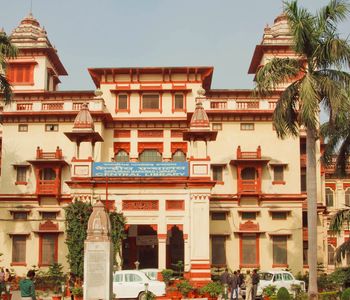
Banaras Hindu University is a short auto-rickshaw ride away, which means students drift through. So do long-term yoga and Sanskrit scholars, who tend to stay for months and develop strong opinions about where to find the best lassi. Pizzeria Vaatika Cafe, right on the ghat, has one of the most coveted terraces in the city — half the foreign visitors in Varanasi seem to end up there at some point, watching the river over a wood-fired pizza that has no business being this good.
Where to Eat and Linger
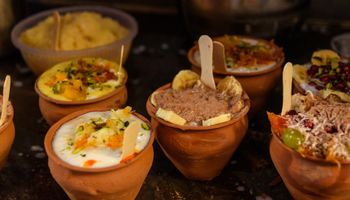
Try Open Hand for coffee and a slower morning. Try the chai stalls along the lane for something more honest — five rupees, served in a clay cup you smash on the ground when you're done. Pizzeria Vaatika for the view. The kachori stalls near the main entrance for a breakfast that costs less than a postcard.
What to Bring
A scarf or shawl if you're visiting between November and February — the mornings on the river are colder than you expect. Sturdy sandals you don't mind getting wet. Small notes for the boatmen, the chai sellers, the occasional ash-streaked sadhu who may ask for a few rupees in exchange for a blessing you didn't request but probably won't refuse.
The Conspiratorial Quiet of Late Morning
Late morning empties the ghat in a way that feels almost conspiratorial. The pilgrims have gone. The tourists are still asleep or drifting through Sarnath. From about 10 a.m. until late afternoon, Assi belongs to dhobis pounding laundry against the stones, to children playing cricket on the wide upper platform, to old men reading newspapers in the shade of the peepal tree.
This is the best time to actually sit. Not photograph, not perform a ritual, not negotiate a boat — just sit. Varanasi rewards stillness in a way few cities do.
Getting There Without Losing Your Patience
Assi sits at the southern end of the ghats, about three kilometres from Dashashwamedh and roughly six from Varanasi Junction railway station. An auto-rickshaw from the station should cost between 150 and 250 rupees depending on your bargaining stamina. From the airport, expect to pay around 800 rupees for a prepaid taxi, with the journey taking close to an hour.
You can also walk the ghats from Dashashwamedh, which takes about 45 minutes and is one of the great urban walks anywhere in the world. You'll pass cremation grounds, palace ruins, painters at work on faded frescoes, and at least one cow who has clearly chosen her steps with care. Do it at least once.
The Ghat That Stays With You
Varanasi divides travellers. Some never settle into its noise, its smoke, its insistence on confronting death in broad daylight. Others find that something here recalibrates them, and they end up returning for years. Assi Ghat is often where that second group started — at sunrise, in a wooden boat, watching a city wake up the same way it has woken up for centuries. Come early. Stay longer than you planned. Let the morning do its work. You won't be the first traveller to discover that the quietest ghat in Varanasi is the one that keeps calling you back.