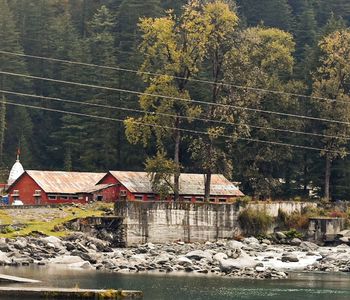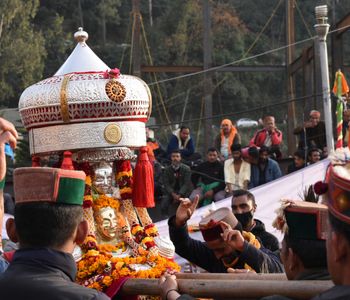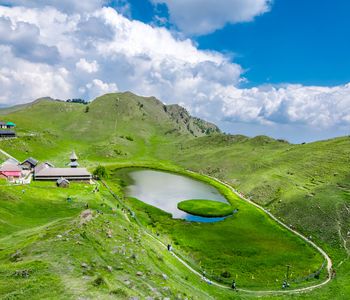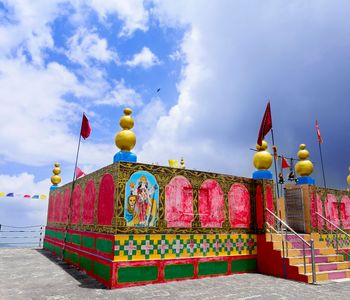
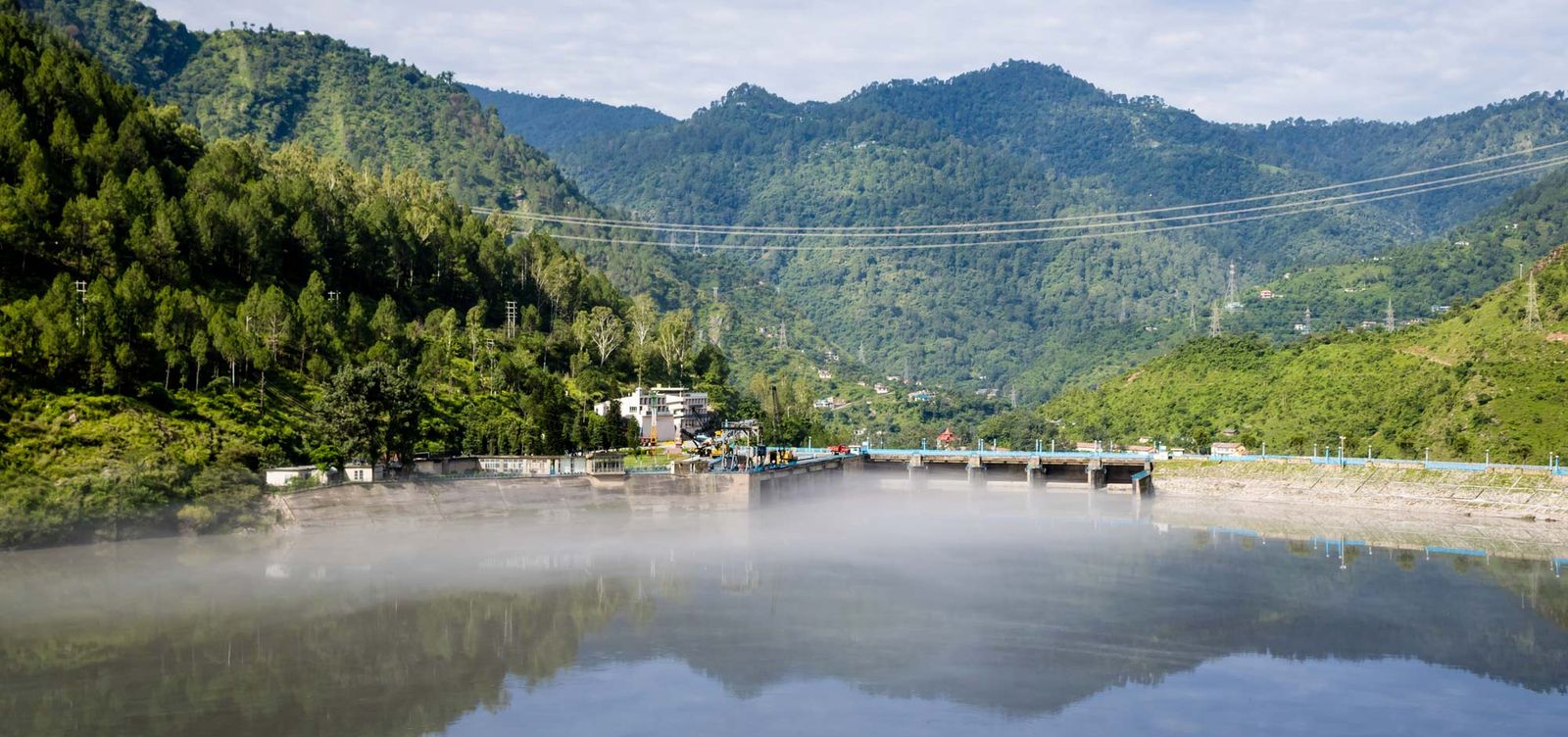
A thunderous rush of water reverberating off mountain walls, growing louder with every curve of the highway — and then, suddenly, there it is. Pandoh Dam, a 76-meter wall of earth and ambition holding back the mighty Beas River, its turquoise reservoir gleaming against a backdrop of forested Himalayan slopes. Completed in 1977 along the Manali-Chandigarh highway in Mandi district, this hydroelectric giant isn't just a pit stop between destinations. It's the kind of place that makes you pull over, step out into the cool mountain air, and simply stand there, humbled.
The Lifeline Behind the Landmark
Pandoh Dam didn't rise from the riverbed just to look beautiful — though it certainly does that. It forms the beating heart of the Beas-Sutlej Link Project, one of India's boldest river-interlinking feats, conceived in the 1960s and brought to life over more than a decade of relentless construction.
Here's what makes it remarkable: surplus water from the Beas gets diverted through a staggering 38-kilometer tunnel system carved straight through the mountains, feeding into the Sutlej River and powering the Dehar Power Plant with a capacity of nearly 990 megawatts. That's enough electricity to light up entire cities.
But the impact stretches far beyond Himachal Pradesh. The redirected water irrigates farmlands across the plains of Punjab and Rajasthan, sustaining millions of livelihoods. So while you're admiring the view from the roadside, know this — you're looking at a structure that quietly keeps Northern India running.
A Wall of Earth That Commands Respect
Unlike the sleek concrete faces of typical gravity dams, Pandoh Dam has a different personality entirely. It's an earth-fill embankment — broad, sloped, almost organic in the way it merges with the surrounding hillsides. The engineers chose wisely, nestling the structure where the valley narrows naturally, letting the landscape do some of the heavy lifting.
At its base, massive spillway gates stand ready to unleash the Beas when monsoon waters come surging in. When they open, the spectacle is visceral — white torrents exploding through the gates, mist billowing upward, the ground beneath your feet vibrating with raw hydraulic power.
Turn your gaze upstream, and the mood shifts completely. The reservoir stretches out in serene stillness, its surface a mirror of sky and green ridgelines. From the roadside viewpoint, you can trace the full arc of this engineering story — the dam, the quiet water behind it, and the tunnel entrances that whisk the Beas on its underground journey toward the Sutlej basin.
Where the Mountains Steal the Scene
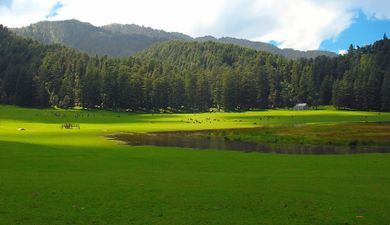
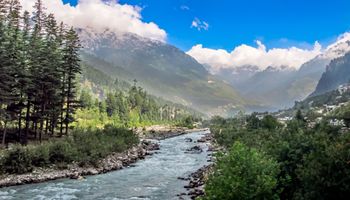
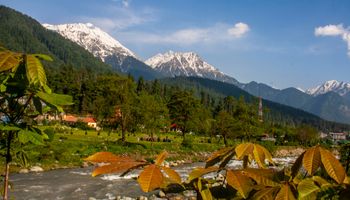
Even without the dam, this stretch of the Beas Valley would stop you in your tracks. The river runs glacier-cold from the upper Kullu Valley, rushing over stones with that crystalline clarity you only find at altitude. Tall deodar and pine trees blanket the hillsides, their resinous scent sharpening the mountain air.
Feathers, Petals, and Quiet Wonders
Bring binoculars if you can. The dense forest canopy around Pandoh shelters Himalayan bulbuls, iridescent kingfishers, and raptors that ride the thermals above the reservoir in slow, watchful circles. Spring transforms the riverbanks into a wildflower canvas — bright yellows and purples pushing through rocky soil, defiant and gorgeous.
Larger wildlife keeps its distance deeper in the forest, but the ecosystem here feels refreshingly undisturbed. Find a flat rock by the water's edge, sit still for ten minutes, and the valley reveals itself — birdsong layered over the river's murmur, a breeze carrying the scent of pine resin and damp earth. It's the kind of quiet that recalibrates your whole nervous system.
A Reservoir That Never Looks the Same Twice
Winter strips the water level down, exposing pale rocky shorelines and turning the reservoir into a glass-smooth mirror — perfect for that moody, mist-over-water photograph at dawn. Monsoon season flips the script entirely, filling the reservoir to its brim until the spillway gates crack open and the dam transforms into a roaring, mist-drenched spectacle.
Photographers, take note: early morning is your golden hour here. Soft light catches the water's surface while ribbons of fog lift slowly from the valley floor. It's fleeting and extraordinary — arrive early or miss it entirely.
Where Every Bend in the River Beckons
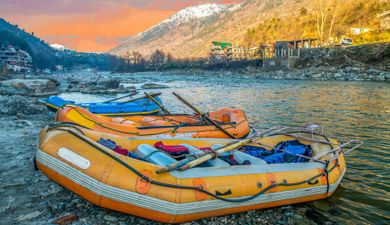
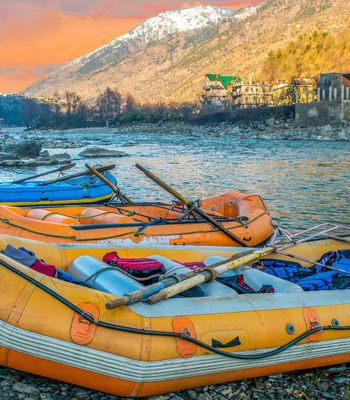
The dam itself rewards lingering gazes more than adrenaline, but the Beas downstream has other plans for you. The stretch between Pandoh and Aut is a white-water rafting playground, with rapids ranging from gentle enough for first-timers to pulse-quickening for those who've gripped a paddle before. Local operators run excursions year-round, adjusting difficulty with the season's water flow.
Most travelers pull over for twenty minutes — a few photos, a stretch of the legs, a steaming cup of chai from one of the roadside vendors whose kettles never seem to cool. That sweet, cardamom-laced warmth in your hands while cold river air brushes your face? Pure highway bliss.
Should you want more than a quick stop, the town of Mandi waits just 20 kilometers away, packed with ancient temples, bustling markets, and comfortable overnight stays.
Getting There Without the Guesswork
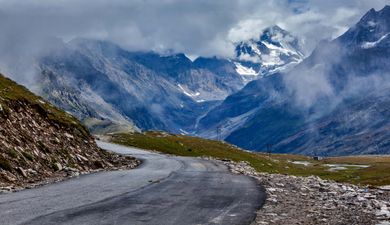
You can't miss Pandoh Dam — it sits right on National Highway 21, the artery connecting Chandigarh to Manali. From Mandi, you're looking at roughly 30 minutes of smooth, well-maintained highway driving. Coming from Kullu? About an hour heading south, with enough scenic curves to keep even the most restless passengers glued to their windows.
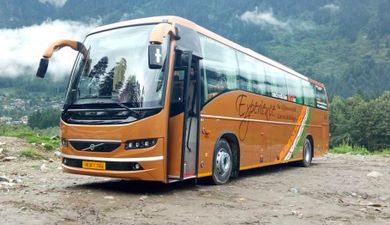
Buses run frequently along this route via the Himachal Road Transport Corporation — just tell the conductor where you're headed, and you'll be dropped within steps of the viewpoint. A private taxi from Mandi or Kullu gives you the freedom to linger at multiple overlooks along the way, which is honestly how this road deserves to be traveled.
Bhuntar Airport in Kullu sits about 60 kilometers away for those flying in, while the nearest major railway station at Joginder Nagar is roughly 55 kilometers distant.
When to Go — And Why Each Season Tells a Different Story
March through June delivers the classic experience: warm days, clear Himalayan skies, and hillsides draped in every shade of green. Ideal for photography and unhurried roadside contemplation.
July to September is when the dam flexes its muscles. Monsoon rains swell the Beas, the reservoir surges to capacity, and the spillway gates open with earth-shaking force. The spectacle is unforgettable — just respect the wet mountain roads and drive carefully.
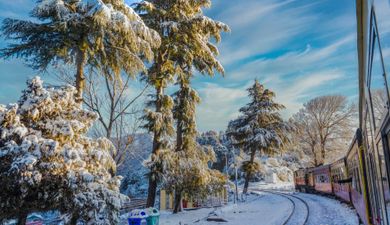
October through February wraps the valley in a biting chill, especially after sundown. But the tradeoff is extraordinary: crystalline visibility, frost-edged mornings, and almost no crowds. You might have the viewpoint entirely to yourself, which is a rare kind of luxury in Himachal Pradesh.
No entry fee applies at the highway viewpoint, regardless of season. The dam is open to every traveler, every budget, every kind of curiosity.
Don't Just Drive Past — Linger a Little Longer
Most people give Pandoh Dam a quick twenty minutes between Mandi and Manali. That's a shame, because this place rewards patience. Walk the roadside slowly — every fifty meters offers a slightly different angle on the reservoir, a new frame for the mountains behind it. If conditions allow, scramble closer to the river's edge where the sound of moving water drowns out everything else.
Then point your wheels toward Mandi, often called the "Varanasi of the Hills." The Bhootnath Temple and the Triloknath Temple along the Beas riverbank carry centuries of devotion in their stone walls, and the town's narrow lanes hum with a spiritual energy that perfectly counterbalances the dam's industrial grandeur.
Combine both stops in a single day, and you'll walk away with something rare — a sense of this region's full character, where ancient faith and modern engineering share the same river, the same mountains, and the same extraordinary sky.