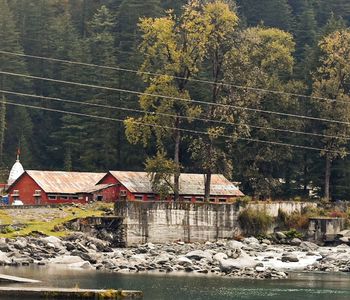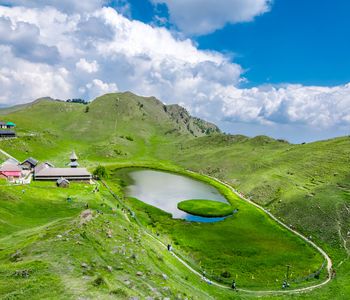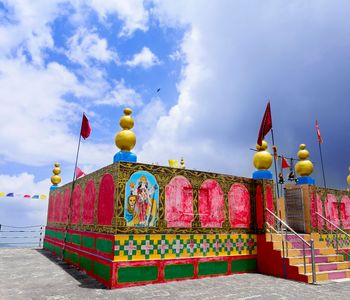
High above the Mandi district in Himachal Pradesh, at roughly 10,000 feet, sits a temple that most maps forget. Kamrunag Temple demands a five-kilometer trek through dense oak and rhododendron forest before it reveals itself — a small stone shrine beside a dark, still lake that locals believe is bottomless. For centuries, devotees have tossed gold, silver, and coins into this water as offerings to the deity Kamrunag. None of these treasures have ever been recovered. The lake simply swallows them. Whether this speaks to the water's actual depth or to a reverence so absolute it keeps human greed at bay, the effect is the same: an alpine lake glittering with centuries of faith just beneath its surface, untouched.
A God Who Chose the Mountain
Hindu mythology ties Kamrunag to the Mahabharata. According to local tradition, Kamrunag was originally a Yaksha — a nature spirit — who fought alongside the Pandavas during the great war. When the battle ended, he wanted solitude. The gods pointed him to this remote peak in what is now Himachal Pradesh, where he settled beside the lake and became its eternal guardian.
That origin story shapes everything about how people behave here. Nobody treats Kamrunag Temple as a destination. It's closer to visiting someone's home — offerings are personal, prayers are murmured rather than broadcast, and the atmosphere carries the quiet gravity of a private audience rather than a public ceremony.
What surprises most is the absence of any priestly hierarchy. A single pujari tends the shrine. The rituals are spare — flowers, incense, a handful of coins dropped into the lake. There's no ticket counter, no queue management, no amplified chanting. The mountain enforces its own discipline.
The Trek That Earns the Temple
You don't drive to Kamrunag. You walk. The trek begins near Rohanda, a small settlement accessible by road from Mandi town. From there, the trail climbs steadily through forest that shifts from pine to broadleaf as you gain altitude. In spring, rhododendrons blaze in violent reds along the path, and the air thickens with damp earth and wild herbs — a green, loamy scent that clings to your clothes.
Five kilometers doesn't sound far. But the elevation gain is relentless, and the trail narrows in places to a muddy single track that demands your full attention. Budget two to three hours for the ascent, depending on your fitness and how often the views stop you cold. Because they will. About halfway up, the tree cover breaks and the entire Mandi valley opens below — terraced fields stitched together in pale green, river threads catching the light, distant snow peaks sharp against the sky.
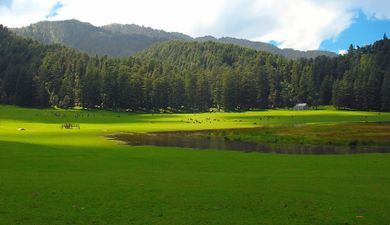
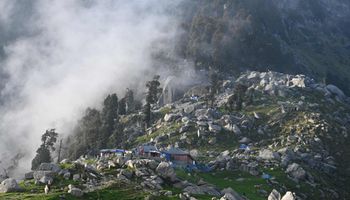
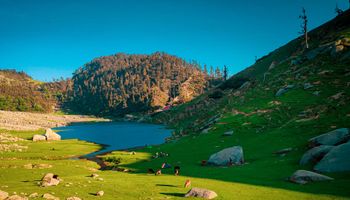
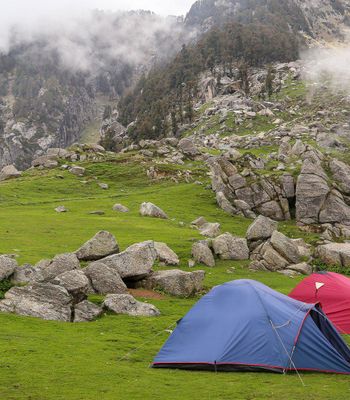
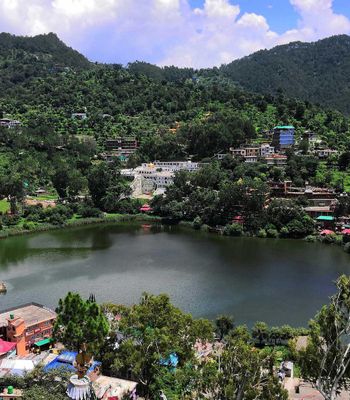
The final approach flattens into a meadow, and then the lake appears. It's smaller than you expect, perhaps 200 meters across, its surface dark and unreflective even in full sun. The temple sits at one end, modest in every dimension — stone walls, a slate roof, a few prayer flags snapping in the wind. After the effort of the climb, the simplicity feels exactly right.
The Lake Nobody Empties
Here's the thing about Kamrunag that resists rational explanation: the treasure in the lake is real, and everyone knows it's there. Gold ornaments, silver pieces, and coins accumulated over hundreds of years rest somewhere beneath that dark water. Yet no one takes them. The state government has occasionally discussed the lake's contents, and each time, local opposition has been fierce enough to kill the conversation dead.
This isn't superstition alone — though the belief that disturbing the offerings invites catastrophe runs deep. It's also a matter of identity. The lake and its untouched wealth represent something the community refuses to monetize. In a region where temple trusts elsewhere count donations in ledgers and bank accounts, Kamrunag's riches simply vanish into water. The devotion is literal and irreversible.
Stand at the lake's edge and you'll see it happen. A gold ring, a few coins, a silver bangle — they arc through the air and disappear with a small, swallowed sound. Nobody watches to see where they land. Nobody marks the spot. The giving is the point, not the accounting.
When the Mountain Opens Its Doors
Kamrunag Temple is seasonal. Snow seals the trail from roughly November through March, making the shrine inaccessible for nearly half the year. The practical window runs from April to October, with June through September drawing the heaviest foot traffic — partly because of favorable weather, partly because a large fair takes place here in mid-June during the Jyeshtha Purnima festival.
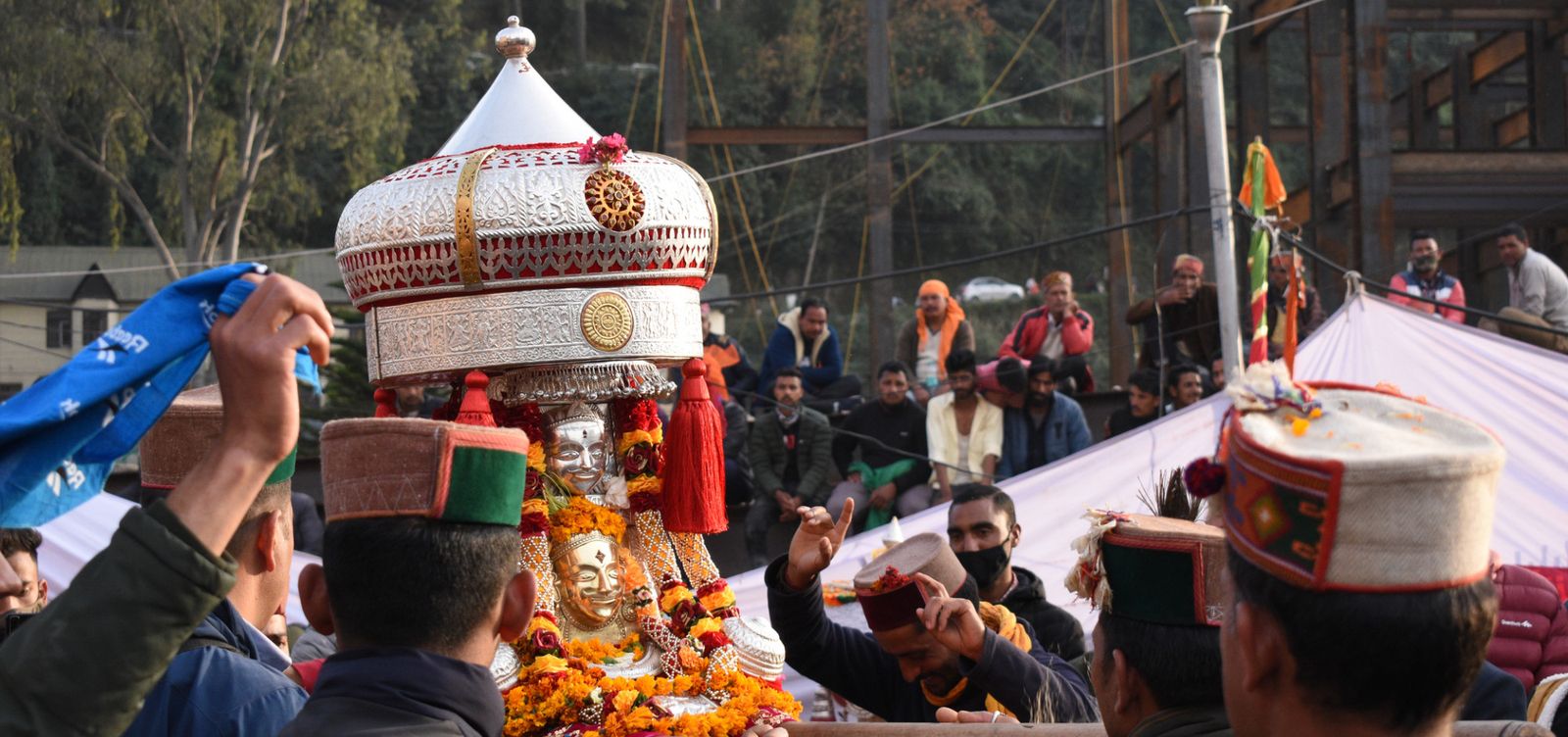
During the fair, hundreds of devotees make the climb in a single day, and the meadow around the lake transforms into a temporary encampment. Smoke rises from cooking fires, bhajans drift across the water, and the otherwise solitary shrine hums with collective energy. If you want the contemplative version of Kamrunag, avoid the festival entirely. If you want to understand what this place means to the people who worship here, the festival is the only honest time to come.
Mornings offer the clearest skies and the most forgiving hiking temperatures. Start early from Rohanda — by 7 a.m. if possible — and you'll reach the temple before the midday clouds roll in. Afternoons at this altitude bring mist and light rain with stubborn regularity, which makes the descent slippery and the views nonexistent.
Getting There Without Getting Lost
Mandi town is your base. From there, hire a taxi or catch a local bus toward Kataula, then continue to Rohanda. The road is mountain-standard — narrow, winding, and occasionally contested by livestock who feel no urgency about your schedule. Allow two to three hours for the drive from Mandi, depending on road conditions and your driver's relationship with gravity.
There's no accommodation at the temple, though basic camping is possible near the meadow if you carry your own gear. Most trekkers return to Rohanda or Mandi the same day. Bring water, snacks, and a rain layer regardless of what the forecast promises. At 10,000 feet, weather changes its mind without consulting anyone.
No entry fee exists. The temple operates on offerings alone — which seems fitting for a shrine whose entire philosophy revolves around giving without expectation of return.
A Place That Resists the Camera
Kamrunag Temple doesn't photograph well. The shrine is too small, the lake too dark, the meadow too ordinary in a flat image. What makes this place extraordinary lives in the accumulation — the thin air that sharpens every sound, the cold clarity of the water, the knowledge that centuries of gold rest just below where you're standing, and that no one will ever retrieve it. Some places earn their power through architecture or scale. Kamrunag earns it through restraint. The mountain asks you to climb. The lake asks you to give something away. And in return, you get a silence that stays with you long after the trail drops back into the trees.