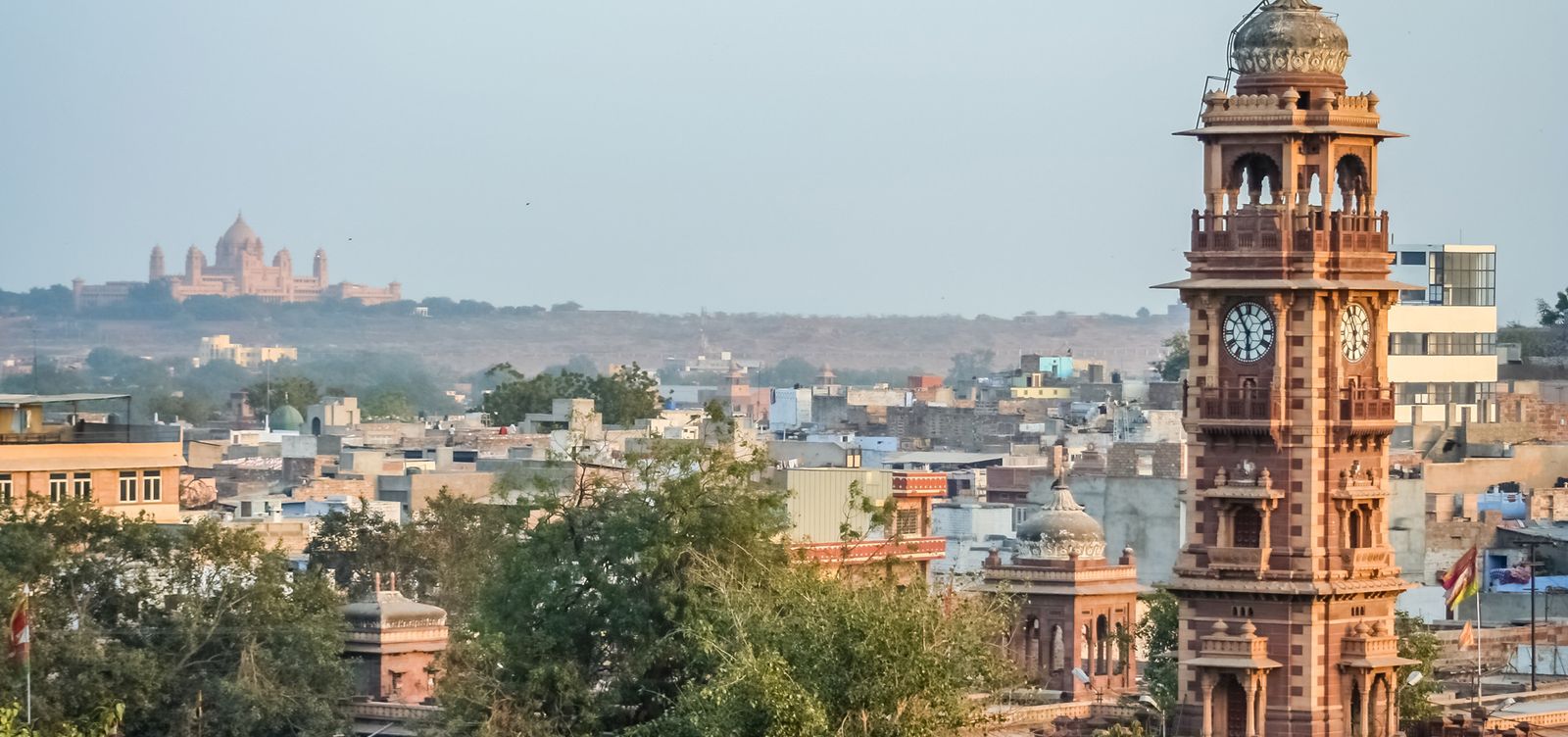
The clock strikes noon and a thousand voices rise in unison — vendors hawking silver bangles, a chai wallah clanging his steel cups, a grandmother haggling over turmeric. At the center of it all stands the Ghanta Ghar, Jodhpur's beloved Clock Tower, presiding over this glorious commotion the way it has for more than a century. Built in the late 19th century by Maharaja Sardar Singh, this honey-gold sandstone tower isn't just a landmark — it's the beating pulse of the Blue City's oldest, most electrifying bazaar. And stepping into its orbit feels like plunging headfirst into everything that makes Rajasthan utterly irresistible.
A Clock That Gave Time to an Entire City
In the late 1800s, owning a clock was a privilege reserved for Jodhpur's elite. Maharaja Sardar Singh changed that with a single, bold stroke of civic ambition — he built one for everyone. The Ghanta Ghar rose above the city's rooftops as a public timepiece, a gift to every spice trader, textile weaver, and street sweeper who needed to mark the hours of their day.
What began as a timekeeper quickly became something far deeper. Markets sprouted organically around its base like roots spreading from a great tree, and the tower evolved into the natural epicenter of Jodhpur's commercial and social life. Generations of families in the surrounding bazaar trace their livelihoods back to those early years — the same stalls, the same trades, passed down through bloodlines like heirlooms.
Today, more than a century of footsteps, festivals, and whispered bargains have soaked into the tower's stones. You can almost feel that accumulated history humming beneath your fingertips when you touch its warm sandstone walls.
Sandstone, Sunlight, and Rajput Grandeur
That first glimpse stops you mid-stride. The Ghanta Ghar rises in layered tiers of golden sandstone — the same luminous stone that gives all of Jodhpur its sun-drenched glow. Catch it in late afternoon light and the entire tower seems to burn amber, each carved arch and pillared walkway casting long, dramatic shadows across the market below.
Arched openings punctuate multiple levels, echoing classic Rajput design with an elegance that feels both regal and approachable. High above the fray, the clock face itself gazes out over the rooftops — still ticking, still faithful, still keeping time for a city that has transformed around it.
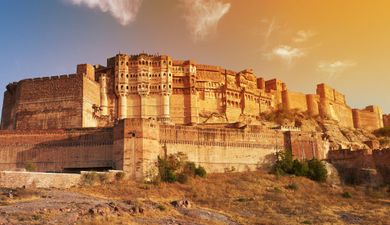
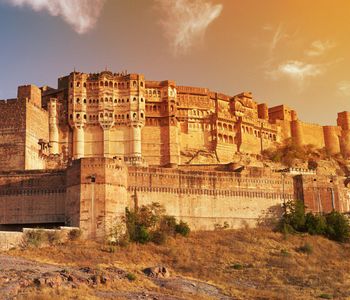
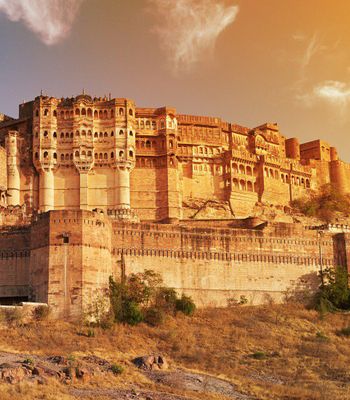
Look closely and you'll notice subtle details that betray the tower's era: hints of colonial-era British design woven into the traditional Rajasthani framework. During the late 19th century, many Indian rulers blended these influences, and the Ghanta Ghar stands as a fascinating artifact of that transitional moment — neither fully Rajput nor fully Victorian, but something uniquely its own. It may not rival the sheer enormity of Mehrangarh Fort looming on the cliffs above, but its proportions feel exactly right for its role as the commercial heart of old Jodhpur.
Sardar Market: A Sensory Storm You'll Never Want to Leave
Step away from the tower in any direction and the bazaar swallows you whole. Sardar Market radiates outward from the Ghanta Ghar like spokes on a wheel — narrow, crowded lanes buzzing with a thousand simultaneous conversations, each alley devoted to its own specialty, each turn revealing something new and completely mesmerizing.
Treasures Hiding Down Every Lane
One alleyway erupts in color: bolts of bandhani fabric — Rajasthan's legendary tie-dye cloth — cascading from hooks in every shade of magenta, indigo, and marigold. Turn a corner and you're surrounded by silver jewelry glinting under bare bulbs, then leather goods, hand-painted pottery, delicate miniature paintings propped against weathered walls.
This isn't a sanitized tourist showroom. These are working artisans and multi-generational traders selling authentic Rajasthani handicrafts at real-world prices. You'll find souvenirs here that actually mean something — pieces with stories stitched, hammered, and dyed right into them.
Eat Like Jodhpur Eats
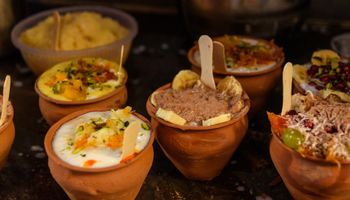
Forget the tower for a moment — the food alone is worth the trip. The air around the Ghanta Ghar hangs thick with the sizzle and smoke of deep-frying pyaaz ki kachori, those crispy, golden onion pastries that Jodhpur claims as its own. Nearby, vendors plunge bright green chilies stuffed with spiced potato into bubbling batter for mirchi vada — one bite delivers a crunch, then heat, then a slow, savory warmth that lingers on your tongue.
Sweet shops stack gleaming trays of mawa kachori while someone nearby pours makhania lassi into tall steel glasses — that impossibly creamy, saffron-laced yogurt drink that feels like liquid silk and rescues you from the Rajasthani sun. Honestly, you could spend an entire afternoon grazing from stall to stall and still not taste everything.
Embracing the Beautiful Chaos
Fair warning: this is no manicured marketplace. Auto rickshaws squeeze past handcarts, pedestrians dodge each other with practiced grace, and yes — the occasional cow wanders through with the calm authority of someone who owns the place. That's precisely the point. Sardar Market is thrillingly, unapologetically real.
For the smoothest experience, arrive in the morning when vendors are still arranging their displays and soft, early light washes across the sandstone. Afternoons swell with larger crowds, especially on weekends and during festival seasons. And when it comes to prices, bargain with a grin — shopkeepers expect it, enjoy it, and respect visitors who engage with warmth and good humor.
Where the City's Soul Comes to Gather
No building in Jodhpur carries quite the same emotional weight for locals. The Ghanta Ghar is where friends say "meet me at the tower" — the default gathering spot, the place everyone knows. During Diwali, flickering oil lamps and strings of lights transform the surrounding lanes into a river of gold. Come Holi, clouds of pink, purple, and orange powder billow through the market while drums pound and strangers embrace like old friends.
Even on ordinary days, the tower anchors the old city in a way that transcends architecture. Lost in Jodhpur's labyrinthine alleys? Look up. The Ghanta Ghar is visible from countless vantage points across the neighborhood, a reliable compass point that guides you back to familiar ground whenever the Blue City's winding streets spin you around.
Everything You Need to Know Before You Go
You'll find the Ghanta Ghar in the very heart of old Jodhpur, just south of mighty Mehrangarh Fort. Because it's a public landmark — not a gated monument — there's no entry fee. Simply walk up, walk around, and soak it in. Sardar Market shops generally open around 9 a.m. and wind down by 9 p.m., though hours shift with the seasons and individual vendors' whims.
Finding Your Way There
From most Jodhpur hotels, an auto rickshaw or taxi will deliver you straight to the tower's doorstep. Staying in the old city? Walk — it's faster and far more rewarding than sitting in the snarl of market traffic. Those arriving from Jodhpur railway station face only about two kilometers, a quick 10- to 15-minute ride depending on congestion.
When the Magic Is at Its Peak
Jodhpur's desert summers are punishing — temperatures can rocket past 110°F from May through July, turning any outdoor excursion into an endurance test. Visit between October and March instead, when cooler temperatures and crystalline skies make wandering the bazaar a genuine pleasure. Early mornings reward you with elbow room and gentle light; late afternoons bathe the tower in that legendary golden-hour glow that turns every photograph into a postcard.
Stretch the Day: What's Waiting Nearby
The Ghanta Ghar's central location makes it a perfect launchpad. After the bazaar has thoroughly dazzled you, walk uphill toward Mehrangarh Fort and watch the entire Blue City unfold beneath your feet — a sea of indigo cubes stretching to the horizon. Or wander a few minutes on foot to Toorji Ka Jhalra, a beautifully restored stepwell whose geometric depths feel almost hypnotic in the midday light.
When your legs demand a break, slip into one of the rooftop cafes perched above the market. Order a masala chai — hot, sweet, fragrant with cardamom and ginger — and watch the whole magnificent circus play out below: the swirl of color, the hum of commerce, the steady tick of a clock that has counted Jodhpur's hours for more than a hundred years. This isn't just a stop on your itinerary. It's the place where you finally understand what makes the Blue City feel so alive.