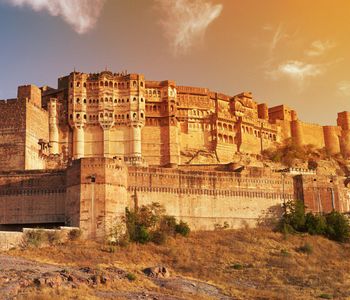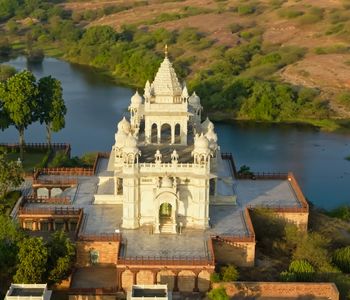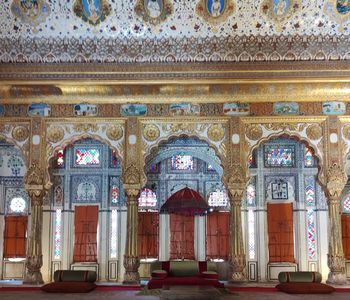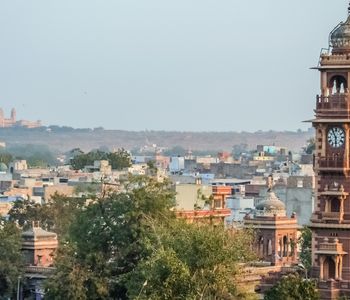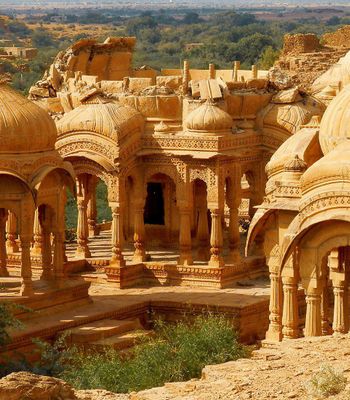
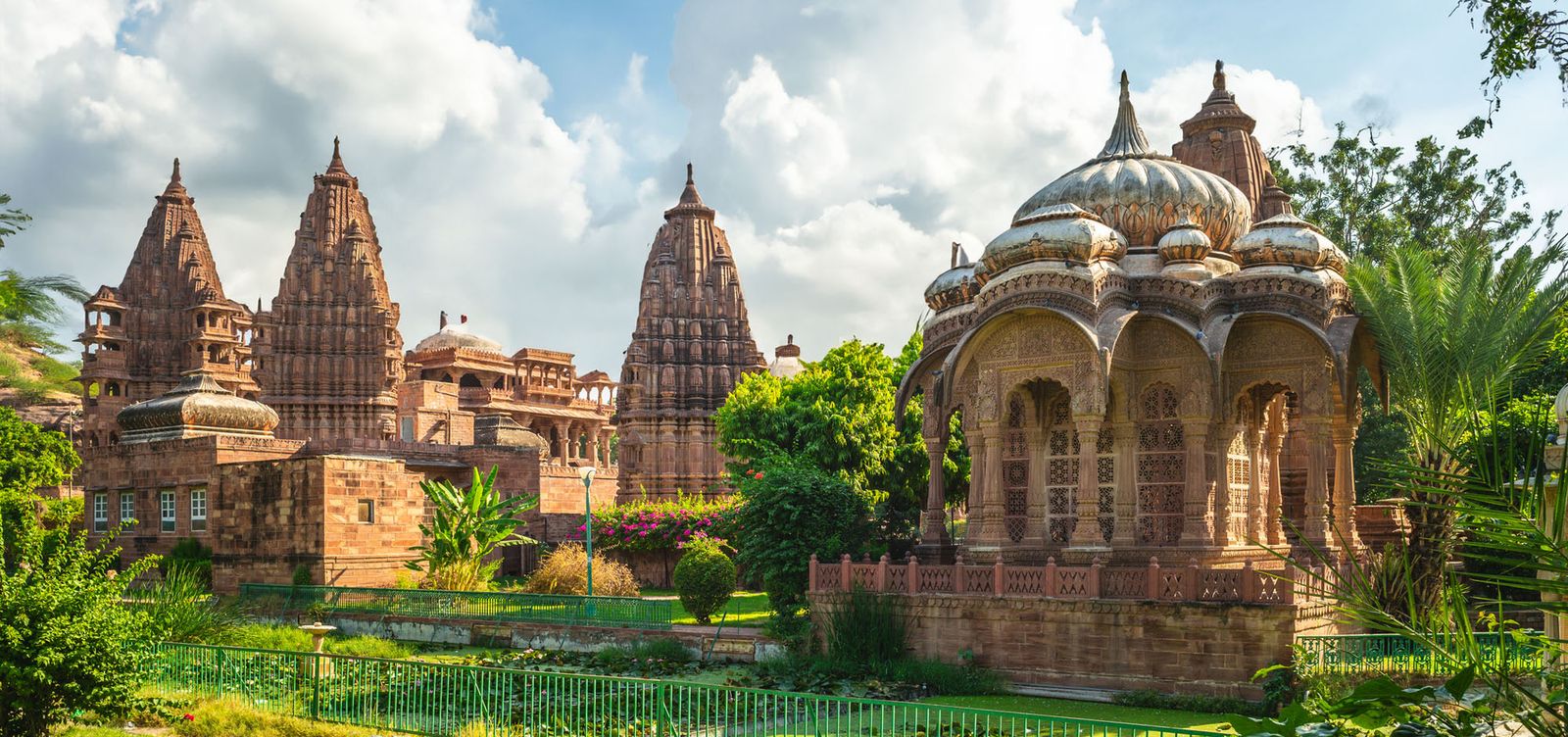
A row of towering red sandstone spires rises from the earth like a forgotten city of kings — not a fort, not a palace, but a sacred grove of royal memorials hidden beneath a canopy of ancient trees. Welcome to Mandore Garden, a sprawling memorial complex just 9 kilometers north of Jodhpur's chaotic heart, where the Rathore dynasty honored its rulers for centuries. Once the capital of the mighty Marwar kingdom, this site feels less like a cemetery and more like an open-air museum carved from stone and softened by time. No entry fee. No jostling crowds. Just centuries of history unfolding beneath the shade of banyan trees and the chatter of langur monkeys overhead. If you've already conquered Mehrangarh Fort, Mandore Garden is your next essential stop — quieter, wilder, and just as soul-stirring.
Before Jodhpur, There Was Mandore
Centuries before Jodhpur even existed, Mandore was the seat of power for the entire Marwar kingdom. The Gurjara-Pratihara dynasty planted roots here as early as the 6th century, forging a political stronghold that would shape Rajasthan's destiny for generations.
Control changed hands many times until the Rathore clan swept in under Rao Chunda in 1381, claiming Mandore as their own. For nearly a hundred years, every major decision governing the desert empire radiated from this very ground.
Then came Rao Jodha in 1459, who founded a new capital — Jodhpur — perched on higher, more defensible terrain. But Mandore never lost its grip on the Rathore soul. Successive rulers returned here for their final rites, commissioning elaborate cremation memorials that transformed the old capital into hallowed ground. That unbroken thread of devotion is what makes walking through Mandore feel different from any other historic site in Rajasthan — you're treading on the dynasty's origin story.
Temples for the Dead: The Extraordinary Royal Cenotaphs
Forget everything you know about Rajasthani memorials. The dewals at Mandore Garden don't follow the familiar chhatri blueprint — those graceful domed pavilions scattered across the state. Instead, these cenotaphs soar skyward in the form of Hindu temples, their red sandstone spires erupting from the ground like frozen flames.
Run your eyes over the intricate carvings and you'll spot deities, warriors, and ornamental flourishes so detailed they seem impossible to have been chiseled by hand. The most breathtaking cenotaph belongs to Maharaja Ajit Singh, an early 18th-century ruler whose multi-tiered memorial represents the pinnacle of Marwar's artistic ambition. Nearby, the cenotaph of Maharaja Jaswant Singh commands its own reverence — massive in scale, exquisite in its stonework.
Here's what makes the experience truly special: because different rulers commissioned their own memorials across several centuries, each structure carries subtle stylistic shifts. Linger long enough and you can read the evolution of Rajput architecture simply by moving from one dewal to the next — a visual timeline carved in sandstone.
Folk Heroes in Living Color and a Shrine to 330 Million Gods
Tucked into a rock wall at the garden's edge, the Hall of Heroes stops you mid-step. Larger-than-life painted figures — folk heroes and deities pulled straight from Rajasthani legend — stand in individual alcoves carved directly into the stone. Streaks of bright vermillion, cobalt, and ochre still cling to their forms, defiant against centuries of sun and monsoon. Some of the paintwork has faded, yes, but that weathered quality only deepens their power.
Stroll a short distance further and you'll reach the Shrine of 330 Million Gods, where an entire rock face erupts with carved and painted figures representing the vast Hindu pantheon. The style echoes the Hall of Heroes, yet the sheer spiritual density of this wall — figure upon figure, deity upon deity — creates something altogether more overwhelming. Both sites sit in the open air, so natural light plays across the carvings throughout the day. Arrive in the early morning hours, though, when soft golden sunlight catches every brushstroke and shadow, and you'll understand why photographers linger here well past their intended schedule.
Where Ancient Trees Cool the Desert Air
Step beneath the garden's canopy and the temperature drops instantly — a small miracle in Jodhpur's punishing heat. Massive neem, banyan, and flowering trees stretch their limbs overhead, casting pools of deep shade across pathways that wind between weathered sandstone boulders.
You'll hear the langur monkeys before you see them — rustling through the branches, leaping between trees, occasionally padding along the footpaths with an air of total ownership. They're generally calm, but keep your snacks tucked away and bags zipped. The garden's rocky terrain adds a wonderful sense of adventure: narrow corridors carved between boulders open suddenly onto sunlit clearings where cenotaphs appear like apparitions.
Families will find plenty of space for kids to scramble and explore. Shaded benches are scattered throughout, perfect for catching your breath while the sounds of birdsong and rustling leaves replace the honking traffic you left behind in Jodhpur.
An Ancestral Heartbeat Still Beating
For the people of Jodhpur and the broader Marwar region, Mandore Garden isn't simply a tourist attraction — it's a living connection to the founding era of the Rathore dynasty. Local festivals periodically fill the grounds with ceremonies, music, and gatherings that honor a heritage stretching back over six centuries.
Don't skip the Government Museum tucked inside the garden complex. It's small but surprisingly rich, housing sculptures, inscriptions, and artifacts unearthed from the Mandore area — some dating all the way back to the Gurjara-Pratihara period. Even 30 minutes here fills in the historical gaps between the monuments outside, connecting the dots between dynasties and giving the stones a deeper voice. You'll walk back out and see the cenotaphs with entirely new eyes.
Everything You Need to Know Before You Go
No Ticket Required
Entry is completely free — one of the best deals in all of Rajasthan. The garden opens daily from 8 a.m. to 8 p.m., giving you a generous window to explore. Budget two to three hours to comfortably wander the cenotaphs, both shrines, and the museum without rushing.
When the Weather Is on Your Side
Jodhpur's desert summers can push temperatures well above 110°F — brutal for outdoor sightseeing. Visit between October and March, when cooler, drier weather makes the experience infinitely more pleasant. If a summer visit is unavoidable, arrive right at opening to catch the mildest temperatures and the thinnest crowds.
Finding Your Way There
From central Jodhpur, the drive takes roughly 20 to 30 minutes. Auto rickshaws and taxis are everywhere and remain the easiest option — just negotiate the fare before hopping in. Ride-sharing apps work well too; the garden is clearly mapped. Public buses run this route for budget-minded travelers. Since Mandore Garden sits along a main road, even asking a local for directions will get you there without a wrong turn.
Fuel Up Before or After
Vendors near the garden entrance sell chai, snacks, and bottled water — enough to keep you going. For a proper meal, head back into Jodhpur's city center where restaurants serve everything from fiery laal maas to crispy pyaaz ki kachori. Restroom facilities exist on the premises, though carrying hand sanitizer and tissues is a wise move.
Dedicate a morning or a lazy afternoon to this place and you'll walk away with something Jodhpur's blockbuster attractions can't always offer — the feeling of having discovered something quietly magnificent. Towering cenotaphs catch the light while painted gods watch from their stone alcoves. Monkeys chatter in the branches above as the scent of neem leaves drifts through air that feels centuries old. Whether architecture, history, or simple tranquility draws you here, Mandore Garden rewards you in ways that linger long after you've left its shade.