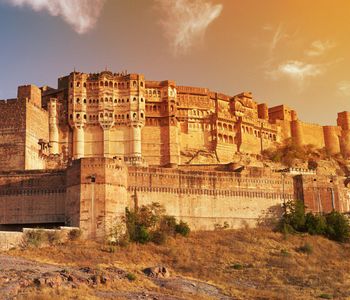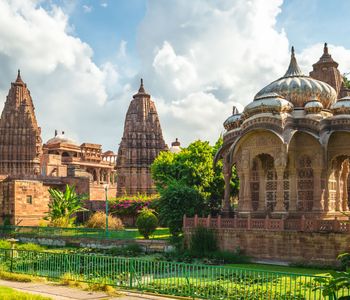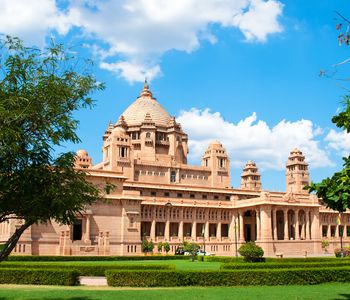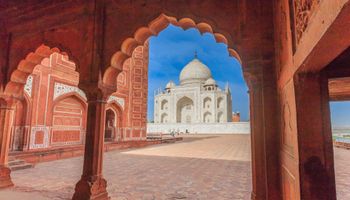
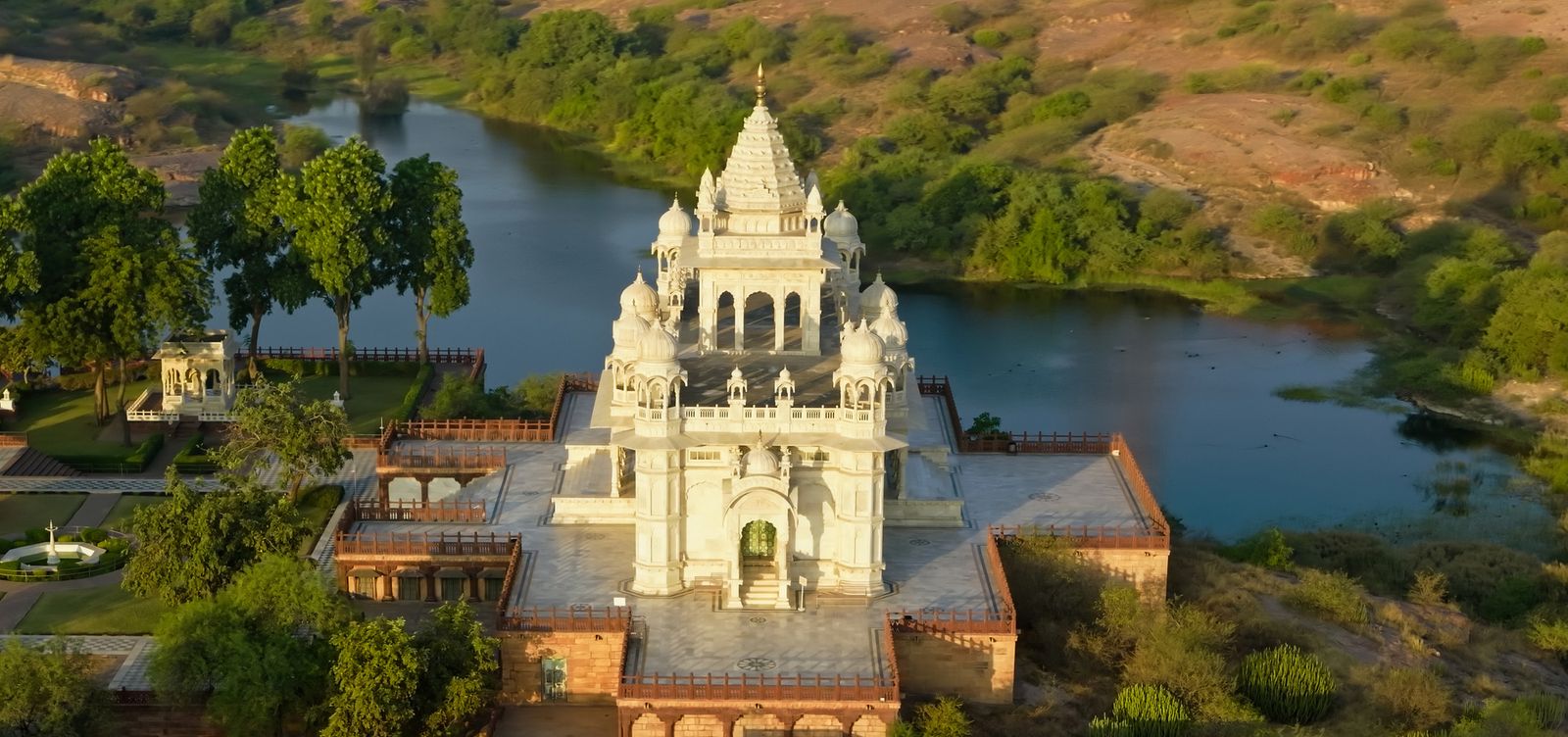
The marble seems to breathe in the early morning light. Thin, polished sheets of white stone catch the first golden rays and release a soft, honeyed glow — as if the building itself is waking up. This is Jaswant Thada, a luminous cenotaph perched on a rocky hillside just below the mighty Mehrangarh Fort in Jodhpur, Rajasthan. Built in 1899 from intricately carved white marble, it's often called the "Taj Mahal of Marwar," and the moment you see it shimmering against the dusty blue cityscape below, you'll understand why.
While Jodhpur's towering fortresses command attention with sheer muscle, Jaswant Thada seduces with grace. It whispers where others roar. Constructed as a memorial to Maharaja Jaswant Singh II, this elegant monument doubles as a small museum housing royal portraits — a quiet portal into the Rathore dynasty's storied past. Come for the architecture, linger for the sweeping panoramas, and leave carrying something unexpected: a sense of stillness that's rare in Rajasthan's most vibrant cities.
A Son's Tribute Carved in Stone
Grief and devotion built this place. In 1899, Maharaja Sardar Singh commissioned the cenotaph to honor his father, Maharaja Jaswant Singh II — the 33rd Rathore ruler of Jodhpur and a leader whose progressive reforms had modernized the region's infrastructure and championed social change throughout the late 19th century. The depth of public respect he earned demanded more than an ordinary memorial.
Over the decades that followed, Jaswant Thada became the official cremation ground for the Marwar royal family. Additional cenotaphs rose across the grounds, each honoring a different member of the dynasty. What began as one son's tribute slowly transformed into a sacred site commemorating generations of rulers — an open-air chronicle of power, loyalty, and lineage etched into marble and memory.
Where Marble Glows Like Candlelight
Step close and run your eyes along the surface. The marble here isn't merely white — it's translucent. Thin, polished sheets of stone were layered so precisely that sunlight doesn't just bounce off them; it sinks in and radiates back out, giving the entire structure an ethereal, almost molten warmth. Visit during golden hour and the effect is otherworldly, as though the cenotaph is lit from within.
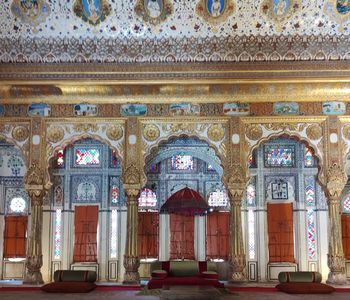
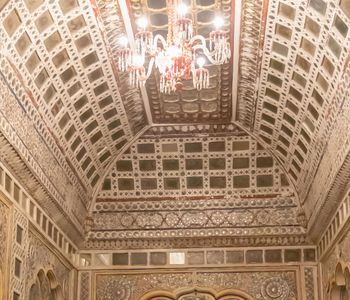
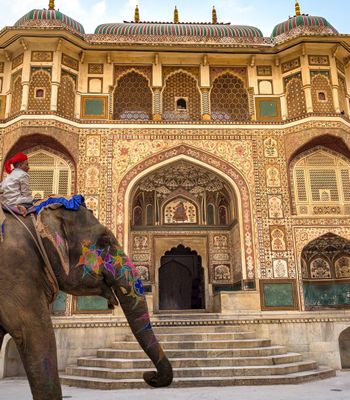
Every inch rewards a closer look. Delicate floral motifs spiral across walls, geometric patterns repeat with hypnotic precision, and latticed jali screens fracture the harsh Rajasthani sun into soft, dappled mosaics on the interior floors. These screens aren't just decorative — they funnel cool breezes through the structure, a brilliant marriage of beauty and function perfected by Rajasthani artisans centuries ago.
Domes That Crown the Desert Sky
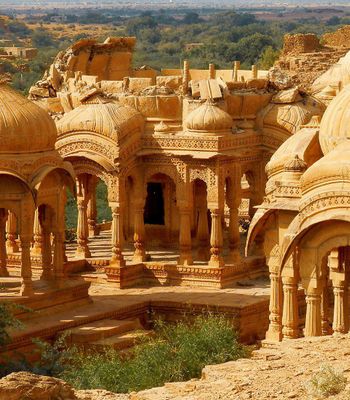
Above the main cenotaph, tiered domes rise in layers of traditional Rajput elegance. Multi-tiered canopies called chhatris cap the structure, adding vertical drama to its already striking silhouette. Smaller cenotaphs dot the surrounding grounds, each built in a different period yet maintaining a remarkable visual harmony with the whole.
Linger at the carved pillars and arched doorways. Trace the stonework with your gaze and you'll begin to sense the staggering patience behind every chisel mark — the hours, the hands, the devotion encoded in marble.
Faces of a Dynasty on the Walls
Duck inside the main structure and the atmosphere shifts. Cool air replaces the outdoor heat, and the walls come alive with vivid royal portraits — rulers of the Marwar dynasty rendered in rich pigments, dressed in formal regalia, each face a chapter in the region's sprawling history. Armor, ceremonial swords, court attire, jeweled turbans — every detail in these paintings speaks to the era it captures.
Photographs and written accounts fill in the gaps, documenting pivotal moments in Marwar's political and cultural timeline. The collection is compact enough to absorb in a single, unhurried pass through the interior. Don't let the modest footprint fool you, though — the historical weight packed into these rooms far exceeds their square footage.
Reflections, Birdsong, and the Blue City Below
Outside, the grounds unfold like a secret garden. A small lake sits beside the complex, its surface so still on windless mornings that the white cenotaph appears twice — once in marble, once in water. It's one of Jodhpur's most photographed scenes, and standing there in the quiet, you'll understand why people pause for ten, fifteen, twenty minutes, just watching the light shift.
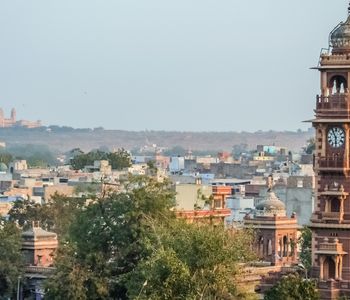
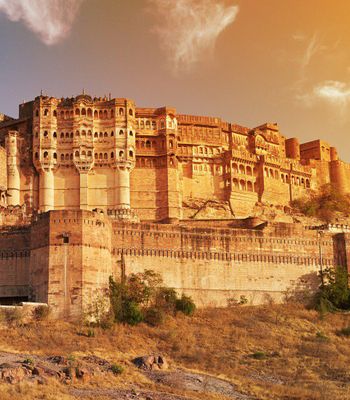
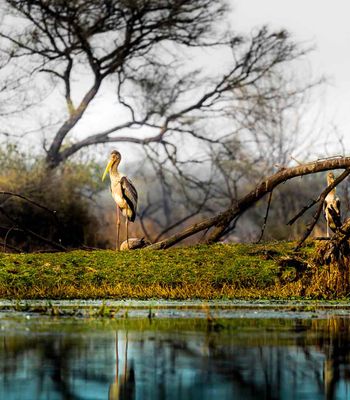
Landscaped pathways wind through native shrubs and flowering desert plants, their fragrance subtle but present in the dry air. Birds congregate near the lake — egrets, kingfishers, parakeets — turning a heritage visit into an unexpected birdwatching session. Climb to an elevated point on the grounds and the reward multiplies: below you, the blue-washed houses of Jodhpur spill across the landscape like a watercolor; above, the massive sandstone walls of Mehrangarh Fort loom against the sky. Photographers, bring your wide-angle lens. You'll need it.
More Than Monument — A Living Thread to the Past
For Jodhpur's residents, Jaswant Thada isn't a tourist checkbox. It's a place of quiet reflection, a tangible connection to the city's founding bloodline. Families visit on weekends. Elderly men sit on stone benches and gaze across the valley. There's a reverence here that you feel before you fully understand it.
Knowing that the memorial honors a ruler who fought for modernization and social welfare adds a powerful dimension to the experience. Walk through the complex with this context and the cenotaph transforms — from beautiful architecture into something deeper, an embodiment of an entire era's values and aspirations carved into luminous stone.
Everything You Need Before You Go
Jaswant Thada opens daily from 9 a.m. to 5 p.m. Entry costs approximately 15 rupees for Indian nationals and around 30 rupees for international visitors, though it's wise to verify current prices before your trip. Separate camera fees may apply if you plan to photograph the interiors.
Finding Your Way There
Sitting just a short distance downhill from Mehrangarh Fort, the cenotaph is an easy reach from Jodhpur's city center. Hail an auto rickshaw or taxi — nearly every driver knows the route without needing directions. Already exploring Mehrangarh? A pleasant 10-to-15-minute walk down a paved road delivers you straight to Jaswant Thada's entrance. Local buses serve nearby stops as well, though the final stretch involves an uphill walk.
When the Light and Weather Align
October through March brings the most forgiving temperatures for wandering the outdoor grounds. Jodhpur's summer heat can soar past 110°F — brutal for any sustained time outside. Arrive early in the morning to explore before tour groups fill the pathways, or time your visit for late afternoon, when the sinking sun paints the marble in shades of amber and rose. That light alone is worth rearranging your schedule for.
Most travelers spend 30 minutes to an hour taking in the full complex. Pair it with a visit to Mehrangarh Fort and you've built a half-day itinerary covering two of Jodhpur's most essential landmarks. Set aside the time. Beyond the Blue City's thundering forts and bustling bazaars, Jaswant Thada offers something rarer — a place where white marble hums with history, still water doubles the sky, and the world, for a few perfect minutes, goes quiet.