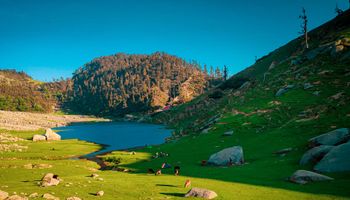
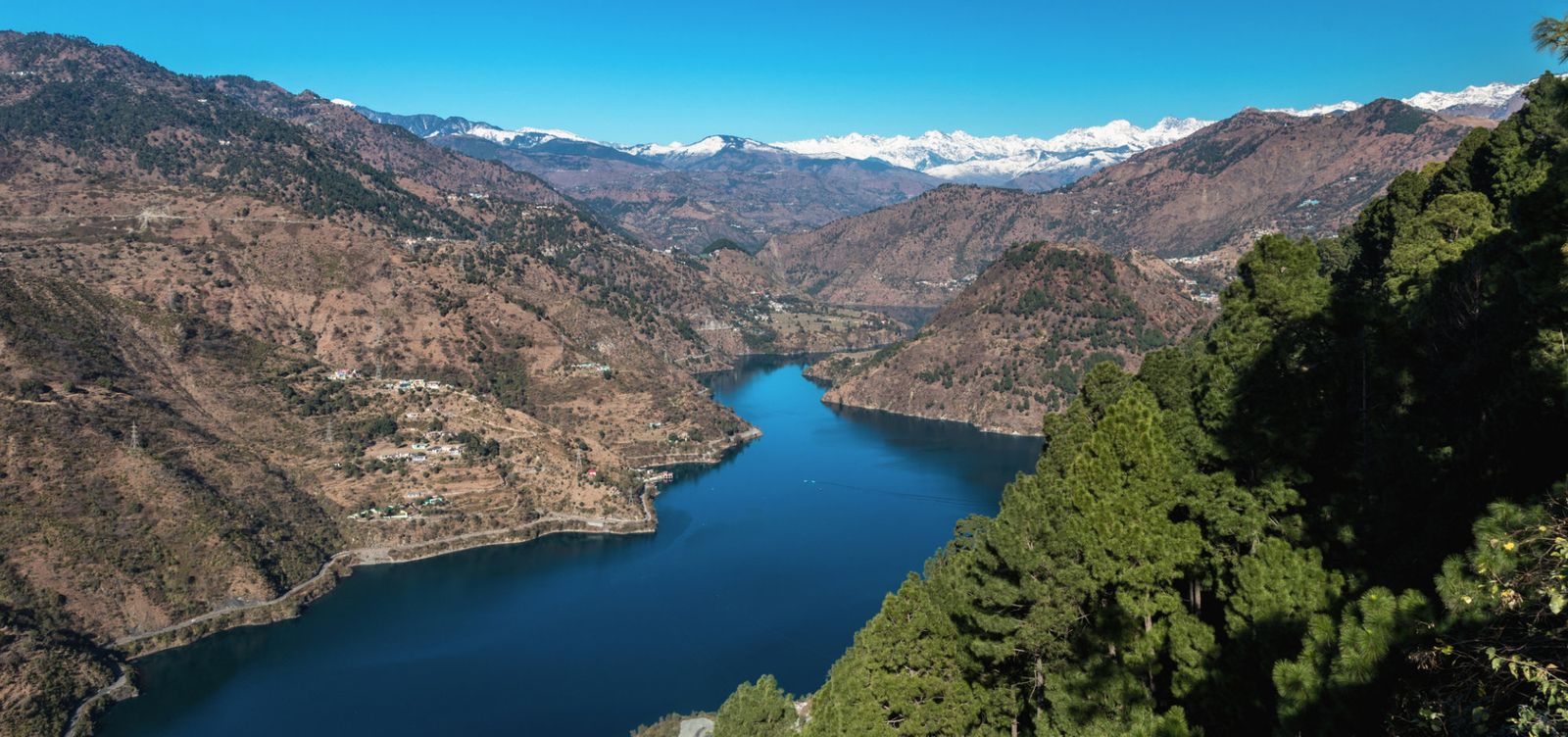
Chamera Lake didn't exist before 1994. That fact stops people mid-sentence. What reads as a natural feature of the Chamba Valley — a wide reservoir of deep blue-green water pressed between deodar-covered hills — is actually a byproduct of the Chamera Dam, thrown across the River Ravi to generate hydroelectric power. The dam created the reservoir, and the reservoir, almost as an afterthought, created one of the few genuine reasons to linger near Dalhousie instead of treating it as a waypoint to somewhere else.
The lake sits roughly 25 kilometers from Dalhousie's town center, spread across the valley floor at about 1,700 feet. The air runs noticeably warmer than in Dalhousie proper. And the silence — punctured only by water slapping against the hull of a rented boat — is the kind you don't realize you've been starved of until it finally arrives.
An Engineered Accident of Beauty
A hydroelectric project becoming a scenic destination has a faintly comic quality. Yet Chamera Lake earns it. The dam is a 140-meter-high concrete gravity structure churning out roughly 540 megawatts for Himachal Pradesh's grid. Behind it, the dammed Ravi pooled into a lake so improbably photogenic that the government eventually decided to develop it for recreation rather than abandon it to the engineers.
The water's color tells you the time of day. Early morning, before sun clears the ridgeline, it holds a dark, almost mineral green. By noon, direct light pushes it into a turquoise so bright it looks retouched in photographs — but isn't. Late afternoon brings a moody slate blue. And when clouds tumble over the hills, which they do constantly between July and September, the whole surface goes pewter, heavy and still.
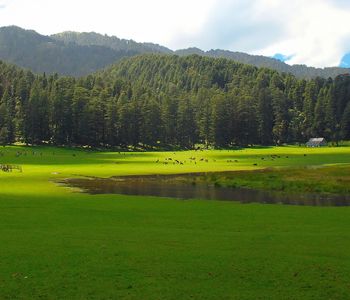
It's a man-made body of water that behaves, visually, like something geological. The surrounding Himalayan foothills, thick with pine and deodar cedar, reveal nothing of the lake's recent birth. Only the dam wall itself, visible from certain angles on the southern shore, breaks the illusion.
On the Water, Not Just Beside It
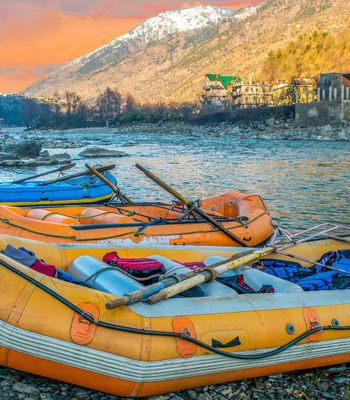
Most people come here for boating, and for once the experience doesn't disappoint the expectation. The Himachal Pradesh Tourism Development Corporation runs a modest fleet of speedboats and paddleboats from a small jetty on the western bank. Speedboats cost a few hundred rupees for a short ride. Paddleboats let you find your own rhythm across the calmer inlets.
The speedboats swing you close to the dam itself, where the scale of that concrete wall becomes properly unnerving from water level — you feel the engineered weight of it in your chest. Paddleboats are better if you want to drift into the reservoir's quieter arms, where the water narrows between hillsides and the only sound is your oar breaking the surface.
Here's what nobody tells you: Chamera Lake is better on a weekday in the shoulder season than on a cloudless weekend in peak summer. Through May and June, the jetty fills with families from Punjab fleeing the plains heat, and the speedboats churn the shallows into a frothy mess. Show up on a Tuesday in late September or early October, and you'll have whole stretches of the lake to yourself. The post-monsoon light cuts sharper, too, and the surrounding hills carry that freshly rinsed green that only weeks of unrelenting rain can produce.
The Road Down
From Dalhousie, the drive takes about an hour along a winding descent through pine forest and small villages. The route passes through Chamba town, which deserves a stop on its own if you haven't already given it one. Most travelers hire a taxi from Gandhi Chowk, and drivers know every landmark along the way — including a few hairpin turns that demand your complete, undivided respect if you're behind the wheel yourself.
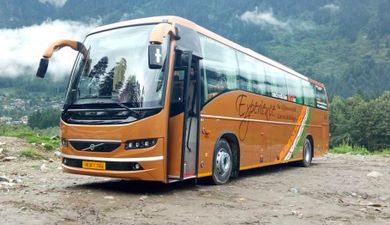
Auto rickshaws aren't built for this distance. A private taxi or a rented car with a driver remains the only sensible option. Some budget travelers catch a local bus from Dalhousie to Chamba and arrange onward transport from there — cheaper, but slower and less predictable. If you're coming from Pathankot, the nearest major railhead, the drive runs about three hours through the Ravi gorge. That route is dramatic enough to justify the journey even without a lake waiting at the end of it.
What the Shoreline Actually Looks Like
The small settlement near the jetty amounts to a handful of tea stalls and snack vendors turning out samosas, maggi, and chai in paper cups. Don't expect restaurants or anything resembling a developed waterfront. The food is roadside. The seating is plastic chairs under corrugated tin roofs. The chai is usually excellent, because it has to be — nobody's coming back for the furniture.
A short walk from the jetty, the terrain opens into patches of uneven ground where families lay out picnic blankets. The grass slopes toward the water, so choose your spot with care if you're setting down plates. A few vendors rent fishing rods, though the catch-and-release policy and sparse fish population mean this is more meditation than angling.
The dam itself is sometimes accessible for closer inspection, though security restrictions shift and you should check with local authorities before approaching the structure. When access is permitted, standing on the dam wall and looking back across the full length of the reservoir delivers the best sense of the lake's true scale — far larger than any single vantage point on shore suggests.
When to Go, What to Bring
Boating operations typically run from 9 a.m. to 5 p.m., though hours can contract during monsoon season when water levels rise and the current near the dam intensifies. There's no formal entry fee for the lake area, but boating charges apply and vary by vessel type. Carry cash. Card machines don't exist here.
The best months are March through June and September through November. Monsoon brings heavy rain that can make the access road unpredictable and occasionally treacherous. Winter visits are possible but cold — temperatures near the lake drop to single digits Celsius in January. The water looks spectacular under winter light, though, if you can tolerate the bite in the air.
Allow half a day, including the drive from Dalhousie. There isn't enough at the lake to warrant an overnight stay nearby. But pair it with a morning in Chamba town, and you've got a full, unhurried day away from Dalhousie's hill-station orbit.
A Lake That Earned Its Own Story
Chamera Lake has no ancient temple on its banks, no mythological origin, no centuries of pilgrimage layered into its soil. It's barely three decades old, born from concrete and engineering calculations. And yet it has already become one of the most quietly persuasive stops in the Chamba Valley — a place where the Himalayas and human infrastructure arrived at an unlikely truce. Bring a flask of tea, rent a paddleboat, and give yourself an afternoon on water that, by every rational measure, shouldn't be this beautiful. It won't explain itself. It doesn't need to.