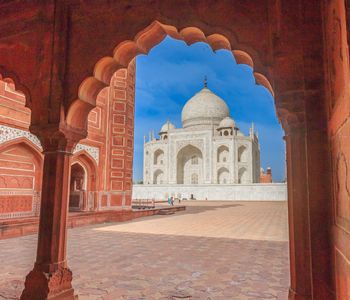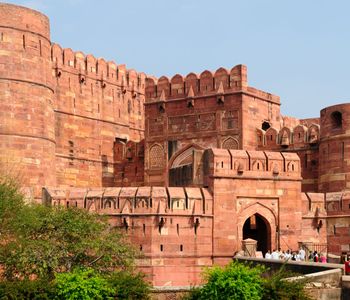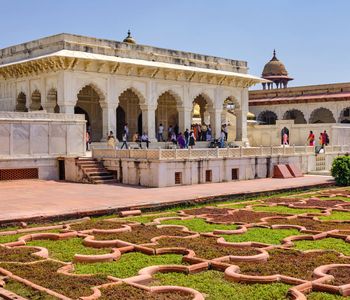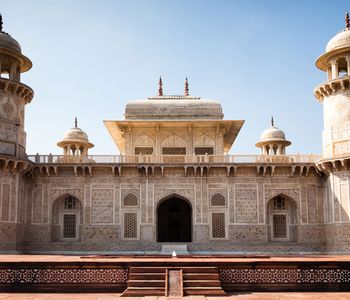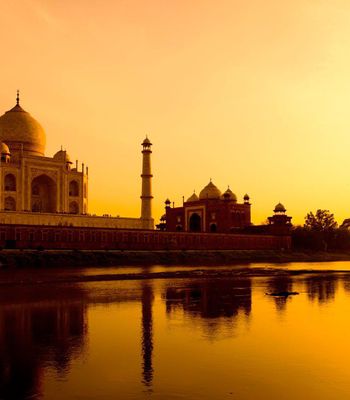
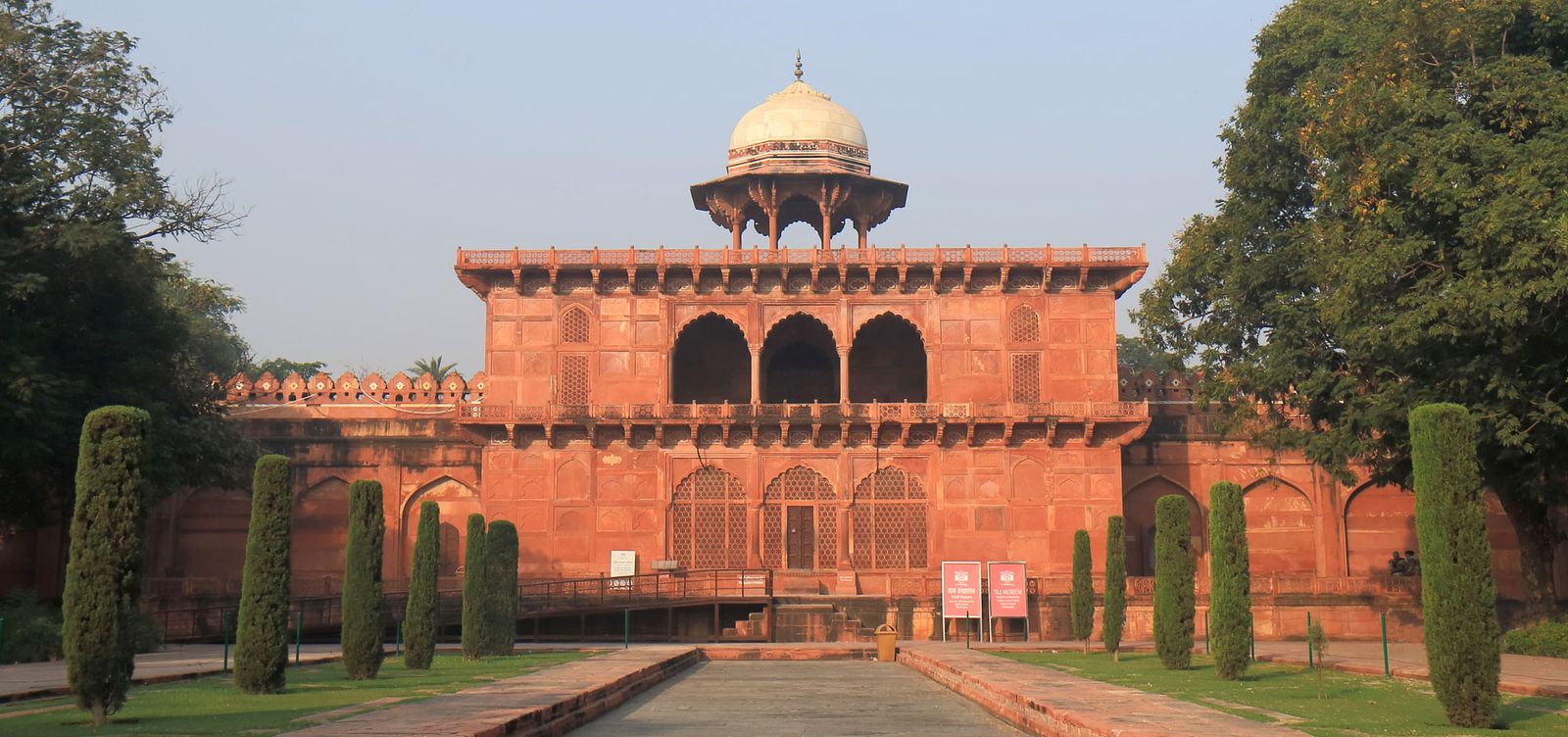
Every year, millions of visitors pass through the western gate of the Taj Mahal complex, crane their necks upward at that white marble dome, snap photographs until their phone batteries die, and then leave. Most never notice the modest red sandstone building sitting quietly to the west of the main mausoleum. That building is the Taj Museum, and it holds something the Taj Mahal itself cannot offer — context. Without it, you're simply looking at a beautiful building. With it, you begin to understand the obsessive grief that built one.
Housed inside what was originally the western rest house of the Taj complex, this small museum was established in 1982 by the Archaeological Survey of India. It doesn't demand much of your time — an hour at most — but what it returns in understanding is disproportionate to its size. The collection is tight, curated, and surprisingly personal.
Where Architecture Becomes Biography
The museum's ground floor opens with what matters most: the original architectural drawings and plans used during the Taj Mahal's construction. These aren't reproductions. They're period documents that reveal how Shah Jahan's vision was translated into marble and mathematics over twenty-two years, beginning in 1632. Every line carries the precision of Mughal draftsmanship — the obsessive symmetry that governed each arch and minaret rendered in ink before it was ever rendered in stone.
Nearby, a collection of farmans — royal decrees issued by Shah Jahan — sits behind glass. These administrative orders directed materials, labor, and finances toward the project. Reading them strips away the romance entirely. The Taj Mahal wasn't just a love story. It was a colossal bureaucratic undertaking involving twenty thousand workers, a thousand elephants, and supply chains stretching from Rajasthan to Sri Lanka.
Old coins from the Mughal period fill an adjacent case, their inscriptions still legible. They ground the monument in economics rather than mythology — a quiet reminder that somebody had to pay for all that pietra dura inlay work.
The Weapons Tell a Different Story
What catches most visitors off guard is the collection of Mughal-era weapons displayed on the upper level. Swords, daggers, and firearms from the seventeenth century sit alongside armor fragments. Their presence feels incongruous at first — why house instruments of war inside a monument to love?
But the Mughal emperors were military rulers before they were romantic figures. Shah Jahan expanded his empire through conquest and suppression. The cenotaph-inlaid paradise garden outside was commissioned by the same hand that ordered sieges. These weapons don't diminish the Taj Mahal's emotional power. They complicate it. And complication is always more interesting than simplicity.
Several of the blades feature gold inlay work so fine it rivals the decorative panels on the mausoleum itself. Mughal craftsmen applied the same artistic rigor to a sword hilt as they did to a marble screen. That consistency reveals something essential about the culture — beauty wasn't a thing you reserved for sacred spaces. You carried it into battle.
An Empire Shrunk to Inches
The museum's most delicate treasures are its Mughal miniature paintings. Executed on handmade paper with pigments derived from crushed minerals and plant dyes, these works depict Shah Jahan, Mumtaz Mahal, and various court scenes with an intimacy that marble cannot achieve. In one portrait, Mumtaz Mahal's expression carries a stillness that feels startlingly human — not the idealized empress of legend, but a woman sitting for a painter who knew he'd better get it right.
Shah Jahan appears in several miniatures wearing emerald-studded turbans and holding roses, the Mughal symbol of divine love. His posture is rigid, imperial. Yet the fact that he commissioned a mausoleum of this scale for his wife — who died giving birth to their fourteenth child in 1631 — suggests a private devastation the court painters couldn't fully capture. No formal pose can contain that kind of loss.
Gold and silver coins bearing Shah Jahan's likeness supplement the paintings. Together, they build a portrait of a man defined equally by power and grief.
The Building Itself Deserves a Glance
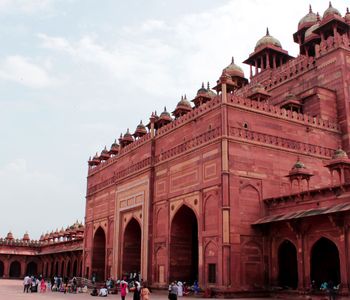
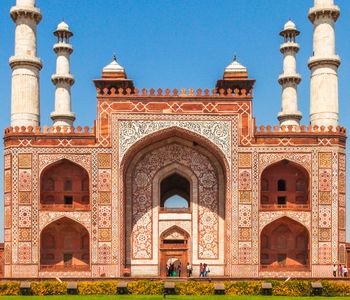
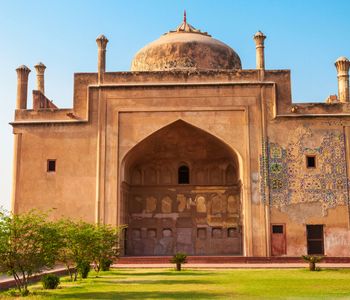
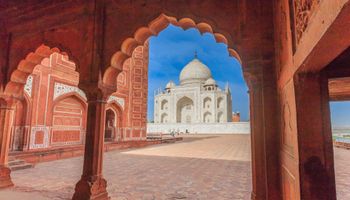
Before you step inside, pause. The red sandstone structure mirrors the jawab, or answer building, on the eastern side of the Taj complex. Its arched facade and recessed alcoves follow the same Mughal architectural grammar as the larger monuments surrounding it. Against the blinding white marble of the mausoleum, this building's warm sandstone feels grounded — almost conversational where the Taj is declamatory.
Inside, the galleries are small and naturally lit. There's no air conditioning, and during Agra's summer months — when temperatures regularly exceed forty degrees Celsius — the stone walls do only so much. Winter visits, between November and February, are far more bearable. The low ceilings and compact rooms create a closeness that contrasts sharply with the vast open plaza outside, and that shift in scale is part of what makes the museum work. After the Taj's enormity, you need a space that asks you to look closely instead of up.
Getting Through the Door
The Taj Museum doesn't charge a separate entry fee. Your ticket to the Taj Mahal complex covers access. Indian citizens pay fifty rupees, while foreign nationals pay eleven hundred rupees — a significant gap, though the fee includes the entire complex. The museum opens at sunrise and closes at sunset, matching the Taj Mahal's own hours. It remains closed on Fridays.
Because most visitors fixate on the mausoleum, the museum rarely feels crowded. Early afternoon tends to be the quietest, as tour groups cluster around the reflecting pool for photographs. Use that window. You'll have the galleries largely to yourself, which means you can actually linger over the miniature paintings without someone's elbow crowding your peripheral vision.
Reach the complex via auto rickshaw or prepaid taxi from Agra Cantonment railway station, roughly six kilometers away. The eastern gate, accessible from Shilpgram, typically has shorter queues than the western entrance. Once inside, the museum sits to your left as you face the mausoleum.
What You Carry Out
The Taj Museum doesn't compete with the monument outside. It can't, and it doesn't try. What it does — quietly, in a handful of small rooms — is transform the Taj Mahal from a postcard into a story. You walk out knowing the names behind the marble, the politics behind the poetry, and the bureaucracy behind the beauty. That knowledge rearranges the way you look at the dome when you step back into the sunlight.
Give it an hour. The Taj Mahal will still be there when you emerge — but you won't be quite the same person looking at it.