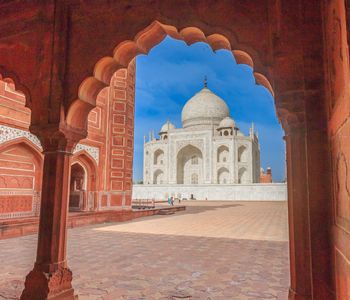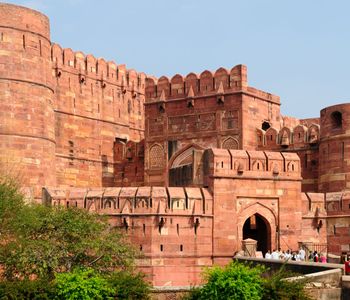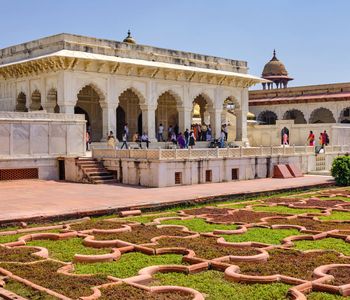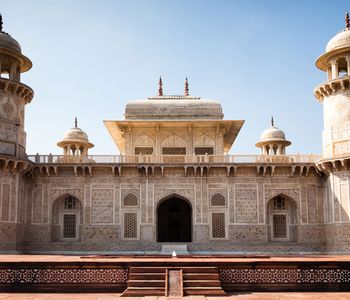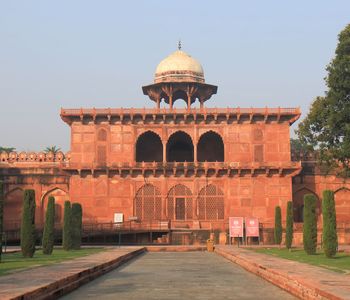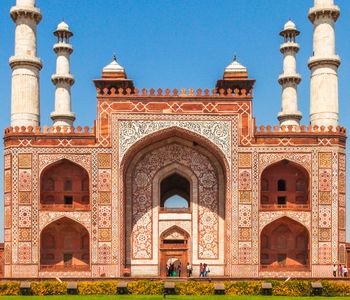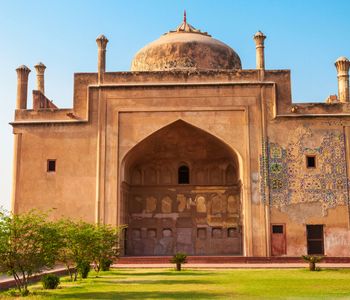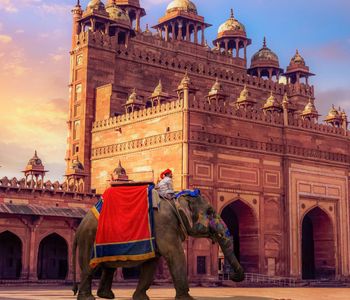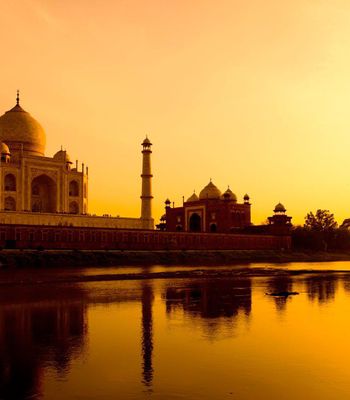
Every visitor to Agra tilts their head toward the Taj Mahal, and almost nobody looks the other way. That's a mistake. Barely three kilometers from the world's most photographed tomb, the Jama Masjid of Agra stands in a wide courtyard paved with red sandstone, its three marble domes catching the same Yamuna River light that gilds the Taj at dawn. Built in 1648 by Shah Jahan — the same emperor responsible for that more famous monument — this mosque was dedicated not to a lover's memory but to his favorite daughter, Jahanara Begum. It carries none of the Taj's romantic mythology and attracts a fraction of its foot traffic. That absence of crowds is precisely what makes it worth your time.
A Father's Gift in Sandstone and Marble
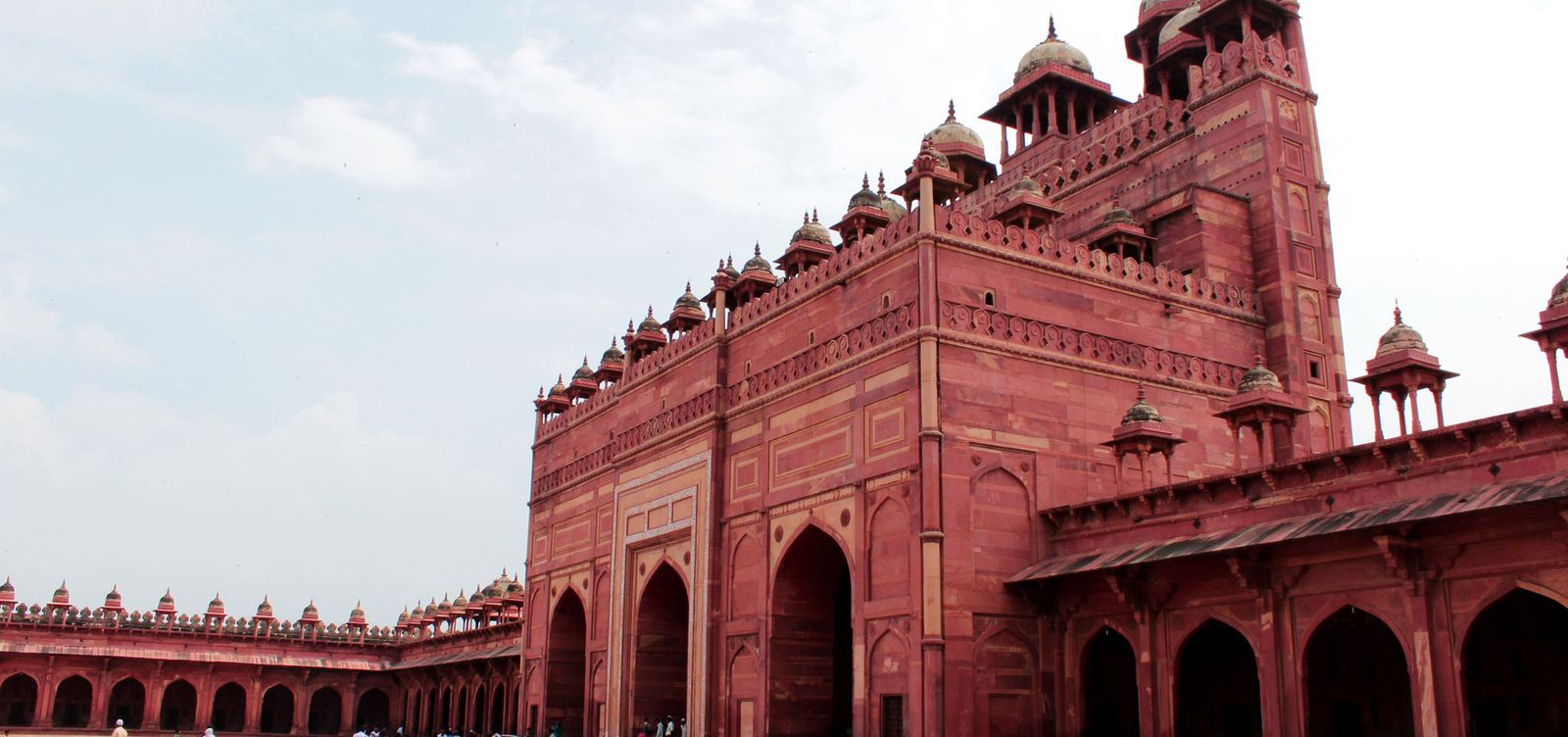
Shah Jahan had an empire's resources at his disposal, and he spent them freely on Jahanara. Construction began in 1648 and finished within a few short years — a remarkably brisk timeline for Mughal-era architecture of this scale. The mosque's bones are the same red sandstone quarried from Rajasthan that defines so much of Agra's imperial skyline, but the three bulbous domes crack that ruddy monotony wide open with white marble inlaid in zigzag patterns.
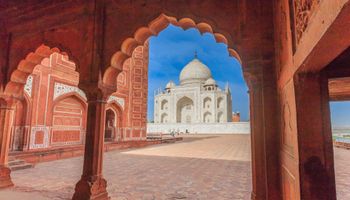
Study the central dome. Its proportions echo the Taj's famous silhouette, though in miniature and with more geometric restraint. Shah Jahan clearly had a visual vocabulary he returned to again and again — pointed arches, lotus-petal finials, octagonal minarets — but here the effect feels less ceremonial, more personal. This was a working mosque, not a mausoleum. People came to pray, not to grieve.
What the Walls Actually Tell You
Step through the eastern gateway and the courtyard opens before you, wide enough to hold thousands of worshippers during Friday prayers. The floor is large sandstone slabs arranged in a grid, each one slightly uneven from centuries of monsoon seasons and human footfall. At the center, a raised ablution tank allows worshippers to wash before prayer — a practical feature most visitors walk straight past without a second glance.
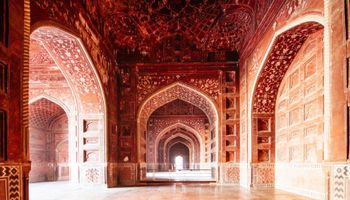
The prayer hall occupies the western wall. Its facade is a series of arched openings that pull cool air through the interior even on Agra's most brutal summer afternoons. Inside, Quranic inscriptions run along the walls in a disciplined hand, the calligraphy carved rather than painted. This distinction matters more than it seems. Painted text fades in a generation; carved text outlasts dynasties. Shah Jahan, who watched his own father's monuments deteriorate, understood the difference.
Here's what most guides won't mention: the mosque's floor plan follows a traditional five-bay design, with the central bay slightly wider than its flanking counterparts. This asymmetry is deliberate. It draws the eye — and the worshipper's body — toward the mihrab, the niche indicating the direction of Mecca. Architecture doing theology's work, quietly and without announcement.
Living Prayer, Not a Museum Piece
Unlike many of Agra's Mughal landmarks, the Jama Masjid remains an active place of worship. On Fridays, the courtyard fills with men kneeling in rows that extend well beyond the prayer hall's capacity. The muezzin's call still echoes from the minarets five times daily, a sound that competes with the honking traffic of the old city below — and somehow wins.
This active religious function shapes the visitor experience in ways that matter. You aren't walking through a relic. The marble floor beneath the domes carries the warmth of bodies that knelt there an hour ago. Incense mingles with the scent of attar — the concentrated perfume oil sold in shops lining the streets outside. During Ramadan, the mosque becomes the spiritual center of Agra's Muslim community, and the atmosphere after iftar, when the day's fast is broken, carries an energy that no heritage plaque can replicate.
Respect is non-negotiable here. Remove your shoes before entering the courtyard. Women should carry a scarf to cover their heads. Dress modestly — bare shoulders and short hemlines will earn you uncomfortable stares and possibly a polite refusal at the gate. These aren't arbitrary rules. They're the terms of entry into someone else's sacred space, and you'll want to honor them.
The Streets That Lead You There
The mosque sits in the Kinari Bazaar area of old Agra, and the surrounding streets deserve their own hour. Narrow lanes radiate outward, crammed with shops selling petha — Agra's crystallized pumpkin sweet that tastes considerably better than it sounds — alongside leather goods, embroidered fabrics, and the ubiquitous marble inlay work that references Mughal craftsmanship at varying levels of quality. Eat at one of the small stalls near the mosque's eastern gate. The chaat vendors here have been perfecting their recipes for generations, and a plate of aloo tikki for a few rupees will tell you more about Agra than any five-star hotel restaurant can.
The approach on foot is part of the experience. Auto rickshaws can get you close, but the final stretch requires walking through lanes too narrow for anything wider than a bicycle. This compression — the tight streets suddenly releasing into the mosque's vast courtyard — is an architectural experience in itself. It was almost certainly intentional. The Mughals understood the drama of thresholds.
Getting There and Getting In
The Jama Masjid sits roughly three kilometers from the Taj Mahal and about two kilometers from the Agra Fort. An auto rickshaw from either landmark costs a modest fare, though bargaining is expected. If you're staying in the Taj Ganj area, you can walk to the mosque in about thirty minutes, passing through commercial streets that grow progressively older and more densely packed as you approach.
Entry is free for worshippers and visitors alike, though donations are welcome and help maintain the structure. The mosque opens early for the Fajr prayer before dawn and remains accessible until the Isha prayer in the evening. Non-Muslim visitors should avoid Friday afternoon prayer times unless they're comfortable standing quietly at the courtyard's edges.
The best time to visit is early morning on a weekday, when the courtyard is nearly empty and the sandstone glows in low-angled light. Agra's winters, from November through February, offer the most comfortable temperatures for unhurried exploration. Summer heat regularly exceeds 40 degrees Celsius, and the unshaded courtyard becomes genuinely punishing by midday.
The Quieter Monument Wins
Agra's tragedy is that most people arrive, photograph the Taj Mahal, and leave. The Jama Masjid asks for nothing and advertises less. It simply stands where it has stood for nearly four centuries, doing exactly what it was built to do. Shah Jahan gave the Taj Mahal to the world. He gave the Jama Masjid to his daughter, and through her, to a community that still uses it every single day. That continuity — stone and faith persisting together — is harder to photograph than a white dome reflected in a long pool, but it's no less extraordinary. Walk across the courtyard at dawn, when only a handful of worshippers are present and the sandstone is cool under your bare feet, and you'll understand why.