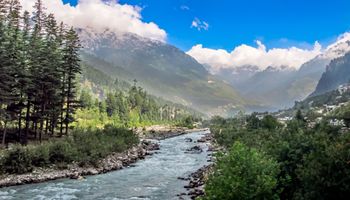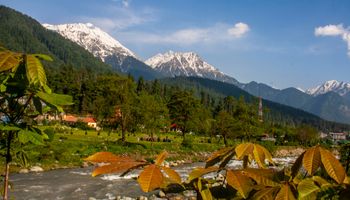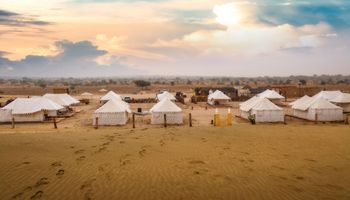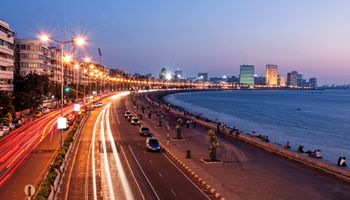


The sandstone walls of Hampi glow a different shade of amber depending on when you arrive — molten gold in December, washed pale by monsoon rains in August, almost hostile under the May sun. Same ruins, entirely different experience. This is the thing about India's heritage sites that most travel guides gloss over: the month you show up changes everything.
India has forty UNESCO World Heritage Sites and hundreds more that deserve the designation. They span desert forts, coastal temples, Himalayan monasteries, and jungle-swallowed stupas — each governed by wildly different climates. Visiting the Ajanta Caves in peak monsoon means slippery trails and fog-eaten views. Arriving at Fatehpur Sikri in June means you and the sun are the only ones stupid enough to be there.
This guide breaks down India's heritage calendar month by month, accounting for weather, crowds, and that harder-to-quantify factor — when a place actually feels alive versus when it's just enduring the season. Because timing isn't a detail. It's the whole trip.
The Difference Between Seeing a Monument and Feeling It
I once stood at the Taj Mahal in late May. The marble was so hot it burned through my socks — they make you remove your shoes — and the haze was so thick the minarets dissolved into a white sky like a half-finished watercolor. Three months later, a friend visited in early November. Her photos looked like they belonged to a different building entirely: sharp edges, cool blue light, the reflection pool actually reflecting something. Same monument. Two different planets.
India's heritage sites don't exist in a vacuum. They exist in weather, in crowd density, in the quality of light at a particular hour in a particular season. A sandstone temple tells one story under the flat glare of a June afternoon and an entirely different one when November's low sun catches every groove and shadow. Timing isn't logistics. It's the gap between endurance and wonder.
Then there's the human element. Hampi in December feels like a vast, meditative ruin — the kind of place where silence still means something. Hampi during a holiday weekend becomes a parking lot with mythology. The sites themselves don't change, but your ability to actually stand still, look up, and absorb what centuries of hands built — that changes dramatically depending on when you show up.
Heat, rain, fog, crowds, festivals — each variable reshapes what a visit actually feels like on the ground. India doesn't do anything in moderation. When it's hot, it's punishing. When it rains, rivers appear where paths used to be. Planning around these realities isn't overthinking. It's the single most useful thing you can do before booking a flight.
Five Climates, One Country — And They Don't Negotiate
India doesn't have weather. It has weathers — plural, simultaneous, and often contradictory. The same week in July that turns Rajasthan's Mehrangarh Fort into a furnace sends sheets of rain across the Western Ghats so dense you can't see the Ajanta cave entrances from twenty feet away. Planning a heritage trip here without understanding the climate zones is like packing one outfit for both a sauna and a swimming pool.
The northern plains — home to the Taj Mahal, Fatehpur Sikri, and the Red Fort — swing between scorching summers that push past 45°C and winters cold enough for fog to delay trains. The Himalayan zone, where Dharamshala's monasteries and the Great Himalayan National Park sit, operates on an entirely different calendar, with snow closing roads from December through March. Further west, Jaisalmer's golden sandstone havelis bake under relentless sun for eight months of the year.
Coastal heritage sites play by monsoon rules. Hampi, on Karnataka's Deccan plateau, becomes genuinely uncomfortable between April and June but turns green and atmospheric once the rains arrive — though slippery boulder paths are a real consideration. The churches of Old Goa face a similar split: pleasant from November to February, swampy and mosquito-heavy by May.
The south behaves differently again. Mahabalipuram's shore temples catch both the southwest and northeast monsoons, which means two distinct wet seasons instead of one. Most travelers don't account for that second round of rain hitting Tamil Nadu in October and November, precisely when the rest of India is drying out and cooling down. This is the kind of overlapping pattern that separates a transcendent morning at Khajuraho from a miserable one.
Twelve Months, Twelve Invitations to Different Stone
India's heritage sites refuse a single schedule, and that's precisely what makes planning interesting. A temple that gleams in February can feel like a steam room in May. The fort you'd skip in July becomes extraordinary when monsoon clouds stack behind its ramparts, turning the whole scene into something no photographer could stage.
The logic is straightforward but rarely stated plainly: match the site to the season, not the other way around. Rajasthan's sandstone complexes demand dry winter air — not just for comfort, but because desert light between November and February does things to Jaisalmer's walls that border on alchemy. Meanwhile, Hampi's boulder-strewn ruins actually benefit from the post-monsoon months when the Tungabhadra runs full and the surrounding scrubland turns an almost unbelievable green.
What most itineraries get wrong is treating "peak season" as a universal window. December might be ideal for the Taj Mahal, but it's also when fog along the Yamuna can erase the building entirely until 10 a.m. The same month works brilliantly for Mahabalipuram, where the Bay of Bengal breeze keeps the Shore Temple complex cool and the winter light falls low across the carved granite panels.
Think of the calendar as twelve separate invitations, each pointing toward different corners of the subcontinent. Some months open doors that are functionally closed the rest of the year — Mandu's Afghan-influenced ruins during August rains, for instance, or Konark's Sun Temple in October when the humidity finally breaks along the Odisha coast. The sections ahead lay this out month by month, so you can stop guessing and start booking with actual confidence.
Winter's Last Gift and Spring's First Blaze
January in Rajasthan is as close to perfect as the subcontinent gets. The air at Amber Fort carries a dry chill at dawn, and by midday you're comfortable in a single layer, wandering the mirror-work corridors of Sheesh Mahal without a bead of sweat. Hampi peaks now too — the boulder-strewn landscape along the Tungabhadra River stays in the low thirties, and the granite ruins of the Vijayanagara Empire glow almost copper in the slanted light.
February belongs to Agra. Not because the Taj Mahal needs a calendar invitation, but because the haze that chokes the Yamuna in December lifts just enough to see the minarets sharply from across the river at sunrise. The crowds are thick, yes. Go on a Wednesday. Fewer tour buses.
March shifts the map south and east. Konark's Sun Temple on the Odisha coast sits in a narrow window — warm but not yet brutal, with the Bay of Bengal breeze taking the edge off afternoons. The erotic carvings on the temple's wheels deserve slow study, and you won't get that luxury when it's forty-three degrees in May. Pattadakal and Badami in northern Karnataka work beautifully now too, before the Deccan Plateau turns volcanic.
April is the last honest month for most of North India. Fatehpur Sikri, Akbar's abandoned sandstone capital near Agra, still functions in early April if you start at first light and retreat by noon. Khajuraho's temples demand the same discipline — the sculpted figures look extraordinary in sharp morning shadow, but by two o'clock you'll care more about shade than Chandela dynasty craftsmanship.
The rule is simple. Each week after mid-March, your comfortable window shrinks by roughly an hour. Plan accordingly, or the heat plans for you.
When the Rains Roll In — And the Crowds Roll Out
May in Rajasthan hits like opening an oven door. Temperatures at Chittorgarh Fort push past 45°C, and the sandstone radiates heat long after sunset. This is when smart travelers head north. Ladakh's Buddhist monasteries — Hemis, Thiksey, Alchi — become accessible as snow retreats from the passes, and the high-altitude air stays cool and dry through August. The Hemis Festival in late June or early July transforms the monastery courtyard into a swirl of masked dancers and droning horns, a spectacle you'd never witness in peak tourist months.
June brings the southwest monsoon crashing into the Western Ghats, and here's the counterintuitive part: that's exactly when you should visit. The rock-cut caves at Ajanta come alive during monsoon. Waterfalls cascade down the horseshoe-shaped gorge, the surrounding hills turn an almost violent green, and the painted murals inside feel more atmospheric when rain drums against the basalt outside. Visitor numbers drop by more than half. You'll have entire cave halls to yourself.
July and August belong to the northeast. Kaziranga's one-horned rhinos are off-limits during floods, but Majuli — the river island in Assam's Brahmaputra — pulses with Vaishnavite culture year-round, and the monsoon light gives its satras (monasteries) a moody, cinematic quality. Meanwhile, Hampi in Karnataka gets brief, dramatic downpours that cool the boulder-strewn landscape without washing out your plans entirely. The Virupaksha Temple's granite corridors stay dry, and the Tungabhadra River swells to something genuinely impressive.
Monsoon travel demands flexibility — a delayed train, a waterlogged path, a cancelled ferry. But the reward is experiencing these sites stripped of performance, returned to something closer to solitude. That trade-off isn't for everyone. It should be.
When the Rains Bow Out and the Light Turns Gold
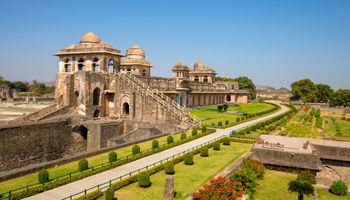
September is a gamble — and that's precisely why it rewards those willing to take it. The monsoon is retreating but hasn't quite finished its work, and heritage sites across western and central India wear a freshly washed clarity that vanishes by October. Mandu in Madhya Pradesh, that sprawling plateau of Afghan-influenced ruins, turns impossibly green in late September, its baobab trees fat with moisture, the Jahaz Mahal reflecting in rain-swollen lakes with a symmetry that feels almost staged.
October belongs to Rajasthan. The furnace has finally been switched off. Jaisalmer's sandstone fort glows amber in the slanting autumn light, and you can walk its ramparts without feeling like you're being slowly cooked. The Jantar Mantar in Jaipur — Jai Singh's obsessive collection of astronomical instruments — becomes genuinely pleasant to study when you're not squinting through sweat.
November is when South India opens up. Hampi's boulder-strewn landscape, those surreal granite formations holding Vijayanagara temple ruins, hits its stride as temperatures drop to the mid-twenties. The Vittala Temple's musical pillars ring clearer when you're not competing with monsoon winds. Over in Tamil Nadu, the Chola temples at Thanjavur and Darasuram stand sharper against cooler skies, their thousand-year-old granite carvings demanding slow, unhurried attention.
December draws crowds, but strategically. While Agra and Delhi fill up with holiday travelers, the churches of Old Goa remain comparatively quiet midweek, their Baroque facades luminous in the dry coastal air. Pattadakal in Karnataka, often overshadowed by Hampi, offers an uninterrupted conversation with Chalukyan architecture that you simply can't have in peak-season chaos. The best heritage experiences in December happen where most tourists aren't looking.
What Nobody Mentions Until You're Standing at the Gate
Book your accommodation near the heritage site itself, not in the nearest big city. Staying in Agra rather than commuting from Delhi saves you three hours of highway monotony — and lets you reach the Taj Mahal gate at 6 a.m., when the marble actually glows pink and the crowds haven't yet calcified into a wall of selfie sticks.
Carry cash. Most ASI (Archaeological Survey of India) ticket counters still don't accept cards reliably, and the nearest ATM at places like Hampi or Mandu can be a 20-minute auto ride away. Indian heritage sites charge significantly less for domestic visitors, but foreign nationals should budget for the higher tier — at major monuments, that difference can be tenfold.
Hire local guides at the site entrance rather than through your hotel. They're cheaper, often more knowledgeable, and the money stays in the community that actually lives beside these ruins. The freelance guide at Fatehpur Sikri who showed me Birbal's house knew stories that no audio tour ever will.
Footwear matters more than you think. Temples require bare feet on sun-scorched stone; fort complexes demand serious grip on uneven steps. Pack both sandals you can slip off quickly and shoes that won't betray you on a rain-slicked laterite staircase in Daulatabad.
Check for local holidays and restricted days before locking dates. The Taj Mahal closes every Friday. Certain temples restrict entry during festivals — not because they're unwelcoming, but because the sheer density of devotees makes sightseeing impossible. A five-minute search saves you from staring at a locked gate. And photograph your ticket — cell reception inside thick Mughal walls is nonexistent, and guards do ask for proof.
India's heritage sites breathe differently in monsoon mist than in winter light. A temple that overwhelms you in April's furnace becomes contemplative in December's soft morning chill. Timing isn't a detail — it's the difference between enduring a place and actually feeling it.
Print this list. Pin it to your wall. Let it shape your year. Book the flight to Hampi in January, save Darjeeling's hill railways for October, and give yourself Khajuraho under a cool February sky. These aren't checkboxes on a bucket list — they're encounters that shift something inside you, but only if the season is right.
India has been here for millennia. It'll wait for you. Just don't make it wait in the wrong month.