

I've spent enough time in Himachal Pradesh to know it doesn't perform for anyone. The mountains don't pose. The villagers don't fawn. The monks don't smile on cue. You either meet the place on its terms or you don't meet it at all. And that, somehow, is exactly the point.
What follows isn't a brochure. It's twelve honest reasons this strip of the Indian Himalayas — running from the apple belt of Kinnaur to the moonscape of Spiti, from the Tibetan exile capital to the deodar forests above Shimla — deserves a serious slot on your travel calendar. Some of it will surprise you. Some of it might inconvenience you. None of it will bore you.
#1 The Geography That Refuses to Behave
Spiti is the one that ruins you for other landscapes. A cold desert sitting at over 12,000 feet, all ochre cliffs and white-stupa villages and a river the colour of old turquoise. No trees. Barely any people. The silence has weight to it, like something you could pick up and put in your pocket.
Rohtang Pass is the more famous postcard — the gateway between Manali and Lahaul — and frankly, it's overrun in summer. Go early, before the day-tripper convoys clog the switchbacks, and the snowfields above the pass still feel like the edge of the world they used to be. By afternoon, it's a parking lot with a view.
The Great Himalayan National Park, tucked into the Kullu district, is where I'd send anyone who actually wants to walk into the range rather than photograph it from the road. It's a UNESCO site, you need a permit, and the trails are real trails — not the manicured paths you find elsewhere. Snow leopards live here. You will not see one. That's not the point.
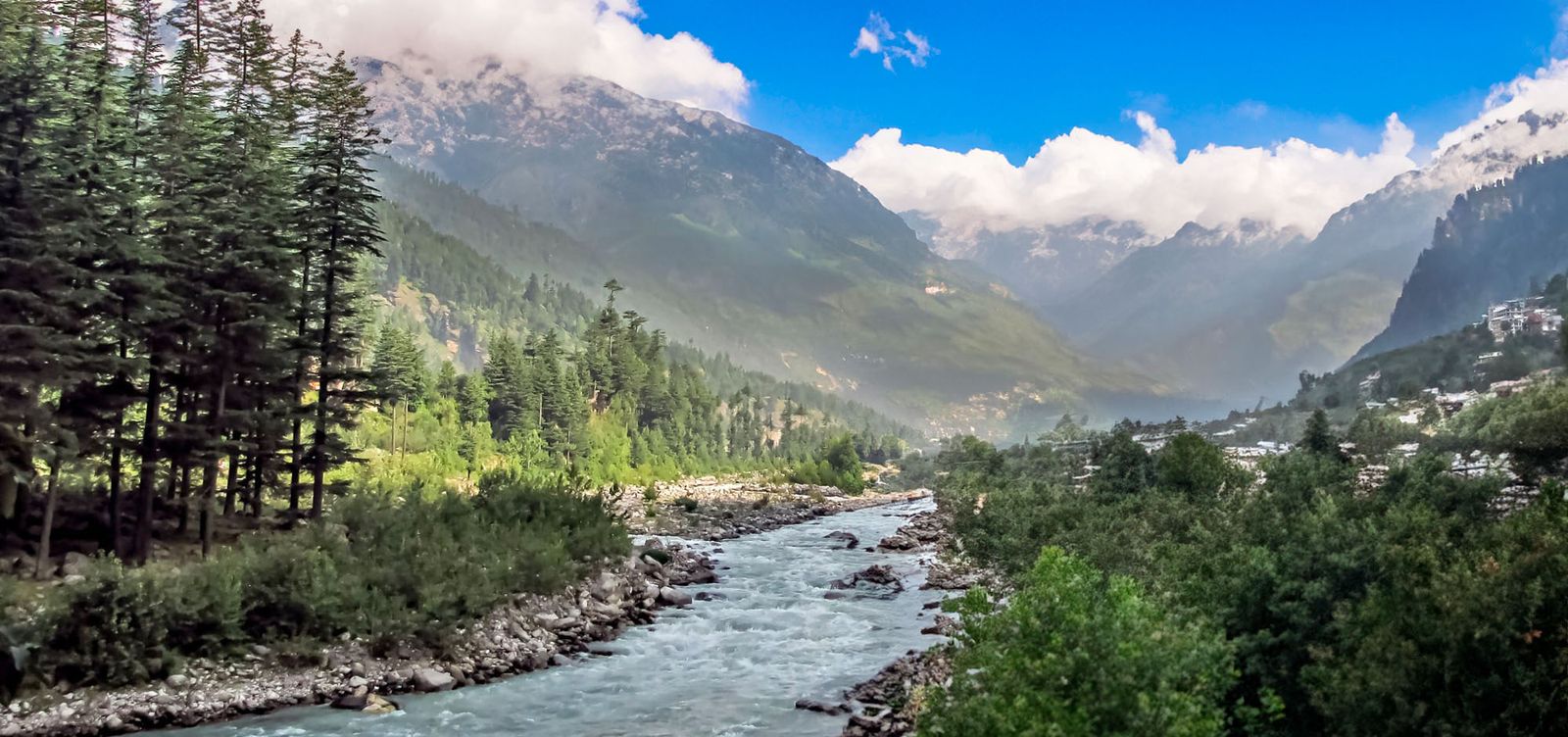
What ties all three together is scale. Himachal doesn't do gentle. The valleys are deep, the passes are high, and the weather shifts so fast that the mountain you photographed at breakfast may have vanished into cloud by lunch.
#2 Where the Sky Becomes the Playground
Bir Billing is the reason paragliding pilots from Europe spend their summers in a town most Indians can't find on a map. It's one of the highest paragliding launches in the world, and the thermal conditions through the Dhauladhar foothills are reliable in ways that pilots talk about with religious seriousness. You jump off Billing at around 8,000 feet and land in Bir, twenty-odd minutes later, with your knees shaking and your ego rearranged.
Solang Valley, just above Manali, does winter skiing on slopes that won't impress anyone who's skied Verbier — but that's not really the point. The point is learning to ski for a fraction of what it costs anywhere else, with instructors who are patient, blunt, and excellent. Beginners do well here. Experts find it short.
The Beas, ripping through Kullu, is where the white-water rafting happens — graded sections from gentle Class II to genuinely sporting Class IV during peak flow. Pirdi to Jhiri is the standard run, and it's worth doing in May or June when the snowmelt gives the river its proper personality.
The unexpected truth about adventure sports here is that the operators are mostly tiny, locally-run outfits rather than slick international brands. This is good and bad. The prices are honest. The safety standards vary. Ask around before you book.
#3 The Valleys That Don't Want You Yet
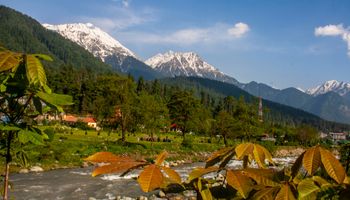
Chitkul is the last inhabited village before the Tibetan border on the Indian side, and it knows it. Wooden houses with slate roofs. Wheat drying on flat terraces. A river running so clear and so cold that washing your hands in it counts as a religious experience. There's no real reason to do anything in Chitkul except sit and let the altitude work on you.
Tirthan Valley, on the edge of the Great Himalayan National Park, has been quietly becoming the sophisticated alternative to Manali for the last decade. Trout fishing, river-side cottages run by people who left Delhi to run river-side cottages, and a deliberate absence of the loud party scene that defines other valleys. I like it more than I should.
Kheerganga is the trek everyone's heard of and most do badly. Twelve kilometres up from Barshaini, ending at hot springs at 9,700 feet where you soak your aching legs and watch the stars come out. Go in shoulder season. The peak-summer crowds turn the meadow into a music festival.
Barot is the one almost nobody talks about. A trout-fishing hamlet in the Mandi district, reached by a road that genuinely tests your nerves, with a single main street and a river that hums all night through the open windows of the guesthouses. Stay two nights. You'll want a third.
#4 Old Gods, Older Stones
Hidimba Devi Temple in Manali is a four-tiered wooden pagoda from the 1500s, built around a cave where a demoness from the Mahabharata is said to have meditated. The cedars around it are enormous. Go at dawn. By ten, it's a selfie scrum.
Jwala Ji, near Kangra, is one of the Shakti Peethas, and the flames at the altar are natural — they emerge from fissures in the rock and have, by all accounts, been burning continuously for centuries. Even sceptics find it disquieting. The temple complex itself is busy, loud, and unromantic in the way real pilgrim sites usually are.
Key Monastery, perched above the Spiti River like something painted onto the cliff, is the visual shorthand for the entire region. It's a working Gelugpa monastery housing about 250 monks, and if you stay overnight in the guest rooms — basic, freezing, unforgettable — you can sit in on the morning chants. The sound carries down the valley.
Triund isn't a temple, but the trek up from Mcleod Ganj has become a kind of secular pilgrimage. Nine kilometres, a ridge at 9,300 feet, and the Dhauladhar wall right in your face when you arrive. Camp overnight if the weather's holding. Most don't, and most regret it.
#5 A Train That Behaves Like a Memory
The Kalka–Shimla railway is 96 kilometres long, climbs 1,500 metres, passes through 102 tunnels, and was built by the British in 1903 so the ruling class could escape the Delhi summer. UNESCO listed it in 2008. It still runs daily. It is, without exaggeration, one of the great train journeys left in the world.
Book the Shivalik Deluxe Express if you want padded seats and a window that opens properly. Take the slower passenger train if you want to share peanuts with a grandmother from Solan and have your camera spotted by a child who's never tired of the same tunnels.
The trick is to do it in October. The monsoon has just lifted, the deodar forests are washed clean, and the light through the windows turns honey-coloured by late afternoon. Summer is hot at the Kalka end. Winter risks closure.
What surprised me, the first time, was how unromantic the carriages actually are — narrow, dated, sometimes grubby. The romance is entirely outside the window. The little wooden stations with their colonial-era nameboards. The viaducts curving over green nothing. The way the train sighs into Barog station for a tea break and nobody is in any hurry to get back on.
Don't make it the centrepiece of your trip. Make it the prologue.
#6 The Lhasa That Lhasa Lost
Dharamshala — and specifically the upper village of McLeod Ganj — has been the seat of the Tibetan government-in-exile since 1960. The Dalai Lama lives here when he isn't travelling. You can attend his public teachings, which fill the main temple complex with monks in maroon, Western Buddhists in earnest silence, and Tibetans who have walked here from places they will never see again.
McLeod itself is a mess of momo stalls, prayer-flag shops, and cafes serving better coffee than you'd expect. It can feel touristy. It is touristy. But step into the Tsuglagkhang Complex on a quiet morning, walk the kora path around it, spin the prayer wheels, and the place reorganises itself into something more serious.
Spiti's monasteries are the other Tibet — the one without the politics, the one that's been continuously practising for a thousand years. Tabo Monastery, founded in 996 AD, is the oldest continuously functioning Buddhist monastery in the Himalayas. Its mud walls hide murals that art historians compare to Ajanta. Bring a torch. The lighting is deliberately minimal.
Dhankar Monastery clings to a crumbling cliff above the confluence of the Spiti and Pin rivers, and one of the unsettling pleasures of visiting is knowing it might not survive another major earthquake. That sense of impermanence is, of course, very much the point.
#7 What the Mountains Eat
Himachali food is wildly under-appreciated, partly because it rarely leaves the state. Sidu is the place to start — a steamed wheat-flour bread leavened with yeast, stuffed with poppy seeds or walnut paste, eaten with ghee and dal. It's heavy. It's meant to be. People here do hard physical work in thin air.
Dham is the traditional festive meal, served on leaf plates, cooked by a hereditary caste of cooks called botis. Rajma in mustard oil, mash dal, kadhi, sweet rice, jaggery. Vegetarian, slow-cooked, and structured — you eat the courses in a specific order. Try to be invited to one. Wedding season is your best chance.
Tudkiya Bhath is a Chamba speciality — a one-pot rice dish layered with lentils, potatoes, yogurt, and a precise hit of spice. It tastes like the kind of food that was invented for cold evenings and has never needed updating.
Then there are the apples. Himachal grows about a quarter of India's apples, mostly in Kinnaur and the upper Shimla belt. Buy them roadside in September, straight from the orchards above Kotgarh, where the Reverend Samuel Stokes planted the first American saplings in 1916. They're crunchier and more acidic than anything you'll find in a supermarket. You'll eat three before you remember you meant to save them.
#8 Mountains That Don't Demand a Mortgage
Here's the unfashionable truth: Himachal is still cheap. Not Southeast Asia cheap, but cheap enough that a fortnight here costs less than a long weekend in most European capitals. Homestays in villages like Nako, Kalga, or Jibhi run anywhere from 800 to 2,500 rupees a night with meals included, and the meals are usually the best part.
The backpacker corridor runs Kasol–Tosh–Kheerganga–Manali, and yes, it can feel like a single long hostel by mid-season. But if you walk twenty minutes off the main drag in any of these places, the prices halve and the conversations get interesting.
Kasol has reinvented itself so many times — Israeli backpacker outpost, hippie cliché, now something more crowded and less coherent — that I'd argue it's worth one night, not five. Use it as a launchpad for Malana, Rasol, or the Parvati Valley villages further upstream, where the rates drop and the scenery improves in equal measure.
State buses are the genuine budget weapon. HRTC runs reliable, slow, eye-wateringly cheap services across almost every motorable road in the state, including the high-altitude routes into Spiti. A seat from Manali to Kaza will cost you a tenth of what a shared taxi charges. You'll lose ten hours and gain a story.
Avoid the high season — May, June, December — if money matters. Shoulder months halve everything.
#9 Four Seasons, All Sharp
Himachal does seasons properly. None of that mild, hedging Mediterranean nonsense — here, summer means deodar shade and meadow flowers, winter means snow up to your waist in the upper villages, and monsoon turns every roadside cliff into a waterfall.
April to June is the classic escape window, when the plains are burning at 45 degrees and Shimla is sitting comfortably at 20. The lower valleys are green. The high passes are just opening. The crowds are real but manageable if you avoid weekends.
July and August are monsoon, and this is the controversial bit: I love Himachal in the rain. The hillsides are saturated, the rivers are loud and angry, the apple orchards at their most theatrical. Landslides do happen — Kinnaur and the Manali–Leh road close intermittently — so build flexibility into your plans and avoid the riskiest routes.
September and October are objectively the best months. The skies clear, the harvest is in, the apples are everywhere, and the photographers come out of hiding.
December through February is for snow-seekers and serious travellers only. Manali gets snowed in. Spiti becomes nearly inaccessible — you can reach Kaza from Shimla via Kinnaur if the road is open, and you'll have the entire moonscape to yourself, but the cold is genuine. Minus 25 at night isn't unusual. Pack accordingly. Lie to your mother about where you're going.
#10 The Roads That Earn Their Reputation
The Manali–Leh highway is 490 kilometres of high-altitude theatre — five passes above 4,800 metres, including the brutal Tanglang La, and a moonscape near Pang that doesn't look like anywhere on this planet. Open only from late May to early October. Do it on a Royal Enfield if you can ride, in a sturdy SUV if you can't, and never in a hurry.
The Spiti circuit — Shimla to Kinnaur to Kaza and back via Manali — is the more rewarding loop if you only have one in you. It changes climate zones four times. You start in pine forest, climb through apple country, hit cold desert at Nako, cross the Spiti River, and finish over Kunzum La into the green of Lahaul. Ten days minimum. Two weeks is better.
Shimla to Kinnaur on the old Hindustan-Tibet Road is, by some measures, one of the most dangerous routes in the world. The cliff-cut sections near Tarang and Pangi are unnerving in the literal sense — you will white-knuckle the door handle. The Sutlej runs in a gorge so deep below that it's silent from the road.
The thing nobody tells you is how slow the driving is. Average speeds are 25 kilometres an hour, sometimes less. Plan accordingly. The roads aren't a means to the place. They are the place.
#11 Skies the Cities Have Forgotten
Spiti at night is a thing I think about often. The altitude — over 4,000 metres in Kibber or Komic — combined with the desert dryness and the near-total absence of light pollution gives you a sky that physically hurts to look at. The Milky Way is so bright it casts shadows. Astrophotographers come here to do work they cannot do anywhere else in India.
Chandratal — the Moon Lake — sits at 4,300 metres in Lahaul, reached by a brutal track that opens for maybe four months a year. The lake changes colour through the day: turquoise at noon, indigo at dusk, mercury-black under the stars. Camps near the lake have been restricted in recent years to protect the ecology, so you'll likely sleep a few kilometres away and walk in at sunrise. Do it.
Kasol and the Parvati Valley do a more accessible version of camping — riverside tents within earshot of the rapids, bonfires, hash smoke drifting through pine. It's a younger, louder scene. The stars are dimmer than Spiti's but the company is more entertaining, depending on your mood.
Bring a real sleeping bag, not the cotton-lined nonsense the cheaper outfits provide. Bring layers. Bring a small bottle of whiskey. Bring fewer photographs in your head than you think — the sky tends to demolish your expectations and replace them with something you didn't know to want.
#12 The People Who Run This Place
Himachalis are, by reputation, the most welcoming people in northern India. By experience, this turns out to be largely true, with the important caveat that their warmth isn't performative. Nobody is going to perform a welcome dance for you. What you get instead is something quieter — a cup of chai pressed into your hand at a bus stop, directions explained twice because the first explanation was too fast, a stranger walking you the last five hundred metres to your guesthouse because the sign is hard to spot.
The homestay culture here is genuinely the best way to travel. Families in villages like Nako, Langza, Pangi, Sojha, and Shoja open spare rooms, feed you what they're eating, and let you exist at their pace. You'll learn more about the place over one breakfast than over a week of guided tours.
Kullu Dussehra is the festival to plan a trip around — seven days in October, when over 200 village deities are carried in palanquins to Kullu's Dhalpur ground to pay respects to Lord Raghunath. The hillsides empty into the town. The drums don't stop. It's chaotic, religious, social, and slightly overwhelming, which is exactly the right register.
The deeper truth is this: Himachal works because Himachalis still live in it. It isn't a museum. It's a region of working farms, working monasteries, working markets. Treat it that way and it opens up. Treat it like a backdrop and you'll see exactly that.
Go Before You Talk Yourself Out of It
Himachal Pradesh is not a destination you tick off. It's a place you keep going back to, in different seasons, by different roads, until you realise you've quietly let it become part of your interior weather. Some trips are about the sights. This one is about the altitude — literal and otherwise.
Start small if you must. A week in Tirthan. A few days on the toy train and in Shimla. But the real Himachal — the Spiti, the high passes, the silent villages, the sky that ruins city skies for you forever — is waiting at the end of a longer, harder, better road. Block out three weeks. Take the bus when you can. Eat the sidu. Sleep with the window open. The mountains are not going anywhere, but you should.