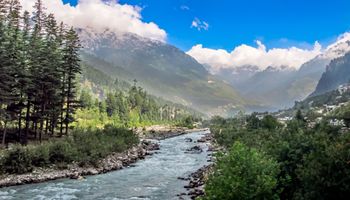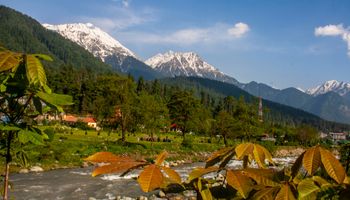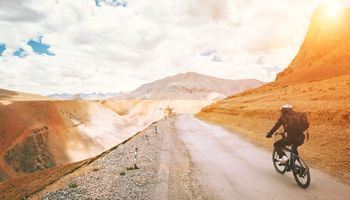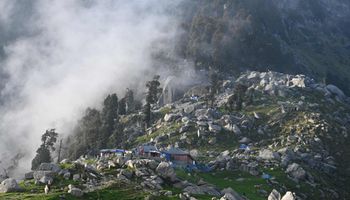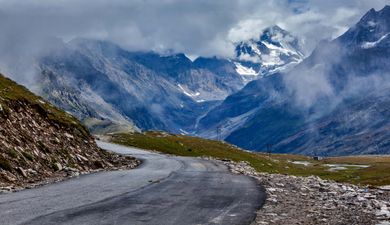
The road to Kaza breaks you a little before it lets you in. Most people arrive one of two ways, and both punish you — up through the Kinnaur gorges where the tarmac keeps vanishing under landslides, or over the Rohtang and Kunzum passes from Manali, all dust, scree, and river crossings where the road simply gives up. Then the valley widens, the Spiti River braids across a grey floodplain, and Kaza appears — a scatter of flat-roofed houses and a gompa's white walls against mountains the colour of old bone. You've reached the administrative heart of Spiti, and your lungs already know it. At around three thousand six hundred metres, the air here is thin enough that a flight of stairs leaves you winded on the first day.
Spiti means "the middle land," caught between Tibet and India, and Kaza feels exactly that — a Tibetan Buddhist world flying an Indian flag, closer in spirit to Lhasa than to the rest of Himachal. Prayer flags snap in a wind that never fully stops. In every shop and kitchen the Dalai Lama's photograph watches from the wall. And the whole cold desert is empty in a way that takes a few days to stop feeling like loneliness and start feeling like relief.
A Town Split by a River and a Century
Kaza has two halves, and the gap between them is worth noticing. Old Kaza clings to the higher ground, a knot of narrow lanes, mud-brick homes, and the local monastery, where life runs on rhythms that predate the road. New Kaza sits below, along the river — the bus stand, the government offices, the guesthouses and cafés that have sprung up to catch the summer traffic.
Spend an evening walking between them. In New Kaza you'll find travellers comparing notes over ginger-lemon-honey tea and plates of thukpa. Climb into Old Kaza and the tourists thin out, replaced by women hauling water, children chasing a football down an alley, and the smell of woodsmoke as dinner gets going.
Monasteries That Sit Where They Shouldn't
The monasteries are the reason many people come, and the most famous of them, Key Gompa, is a short drive up the valley. It stacks upward on a conical hill like something dreamed rather than built, room piled on room, whitewashed walls climbing to a summit chapel. It has stood for centuries, survived fires, floods, and Mongol raids, and monks still live and study inside.
Go early, before the day-trippers. A young monk may wave you up to the roof, where the whole Spiti Valley opens out — the river far below, the barley terraces, the ranges folding away toward Tibet. Inside, the prayer halls are dim and close, thick with the smell of butter lamps and old wood, the walls crowded with thangkas gone dark with age.
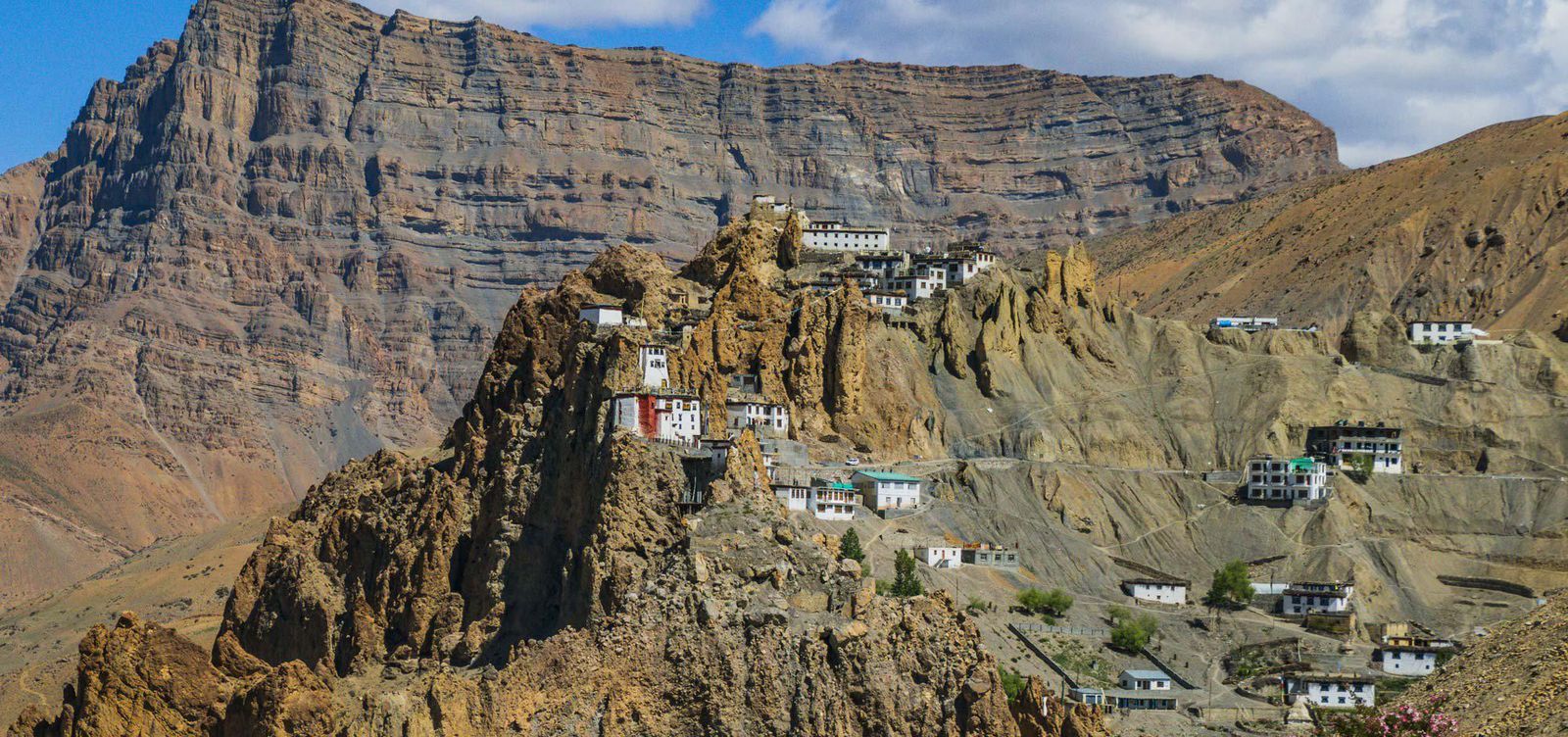
Komic, up a rough track from Kaza, claims to be among the highest inhabited villages reachable by road, its monastery perched where you'd think nothing could survive. Down the valley, Dhankar sits on a crumbling spur between the Spiti and Pin rivers, its old gompa hanging over a drop so sheer it makes your palms sweat. Hike above it to the glacial lake if your legs and lungs agree.
Fossils in the Fields and Mail from the Roof of the World
Here's the counterintuitive thing about this barren place — some of it grows the sweetest peas in India. Around Kibber and the higher villages, the short, fierce summer produces green peas and barley that get trucked all the way to the plains. The land looks dead. It isn't.
Kibber and its neighbour Langza are where Spiti's oddities cluster. A large golden Buddha sits above Langza with his back to the mountains, and the fields around him are studded with marine fossils — this whole plateau was once seabed, lifted skyward when the Himalayas rose. Children appear from nowhere to press an ammonite into your hand for a few rupees.
Then there's Hikkim, home to what's billed as the world's highest post office. You can send a postcard from over four thousand metres, and the man behind the counter has been stamping mail here for decades. It's a gimmick. Send one anyway — there's a genuine pleasure in imagining it wobbling down these roads to somewhere warm and ordinary.
Where the Snow Leopard Hides
The mountains around Kibber are among the places where you might, with luck and patience, glimpse a wild snow leopard. In the depths of winter, when the blue sheep descend to lower slopes and the leopards follow to hunt them, serious trackers come to sit for days on freezing ridges, spotting scopes trained on the mountainside. Most go home having seen ibex and lammergeiers wheeling overhead and nothing more.
You don't need to chase leopards to feel the wildness. The whole valley is walking country — up to Komic, out across the plateau to Langza, along the Pin Valley where a national park protects the ibex and the snow leopard. The trails go unmarked and the silence is enormous. Bring water, go slow, and let the altitude set your pace.
The Short Window and the Long Winter
Kaza runs on a brutal calendar. From roughly late May to early October the passes are open, the guesthouses are lit, and the town breathes. Come July and August you'll share the roads with motorcyclists and jeep convoys chasing the same stretch of high desert. That's the trade-off for a valley this striking.
Winter shuts everything down. The Manali road closes under snow, temperatures crash far below freezing, and Kaza is reachable only by the long, treacherous Kinnaur route — if at all. Those who stay burn through stockpiled fuel and food and wait out months of white silence. Ask about it and you'll get a shrug, as though enduring a Spiti winter were nothing worth mentioning.
Why the Middle Land Holds You
Kaza asks for patience and gives it back with interest. The roads will rattle your bones, the altitude will flatten you on arrival, and the amenities are thin — this is not a place for anyone who needs comfort close at hand. Acclimatise slowly. Drink more water than feels reasonable. Give yourself days, not hours.
Do that, and something shifts. You'll find yourself watching the light move across the fossil hills, drinking sea-buckthorn tea in a mud-walled kitchen, standing on a monastery roof while a bell sounds somewhere below. The valley strips away the noise you didn't know you were carrying.
Come for the monasteries and the moonscape. Stay for the strange, high stillness that settles into you and won't quite leave. Kaza sits at the far edge of where the road goes, and that's precisely the point.