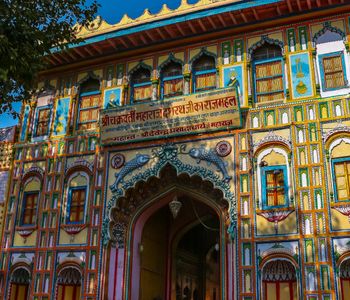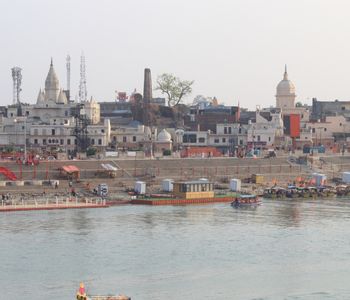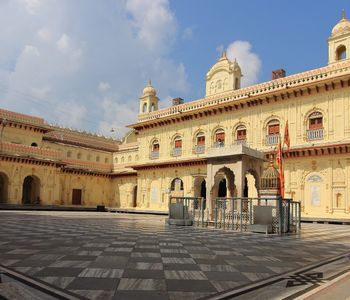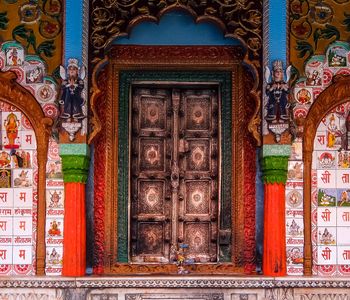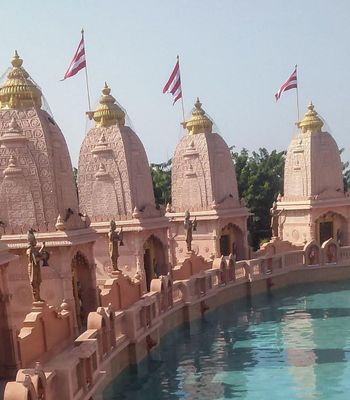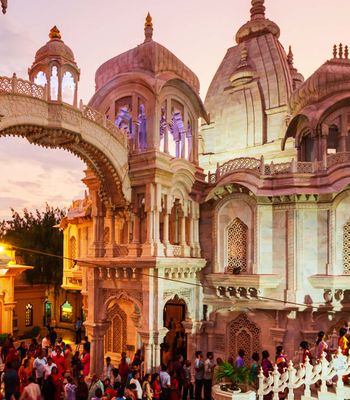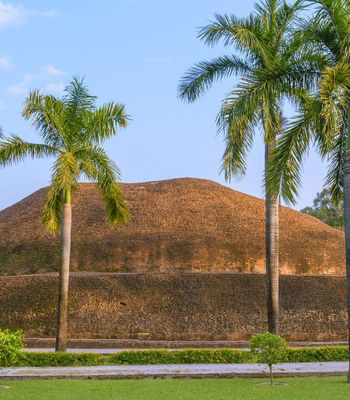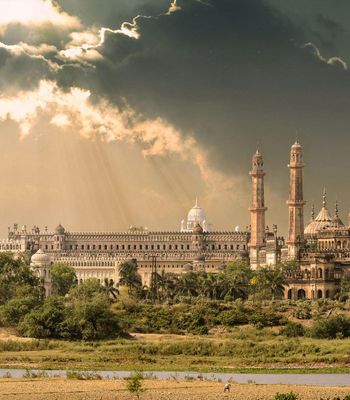
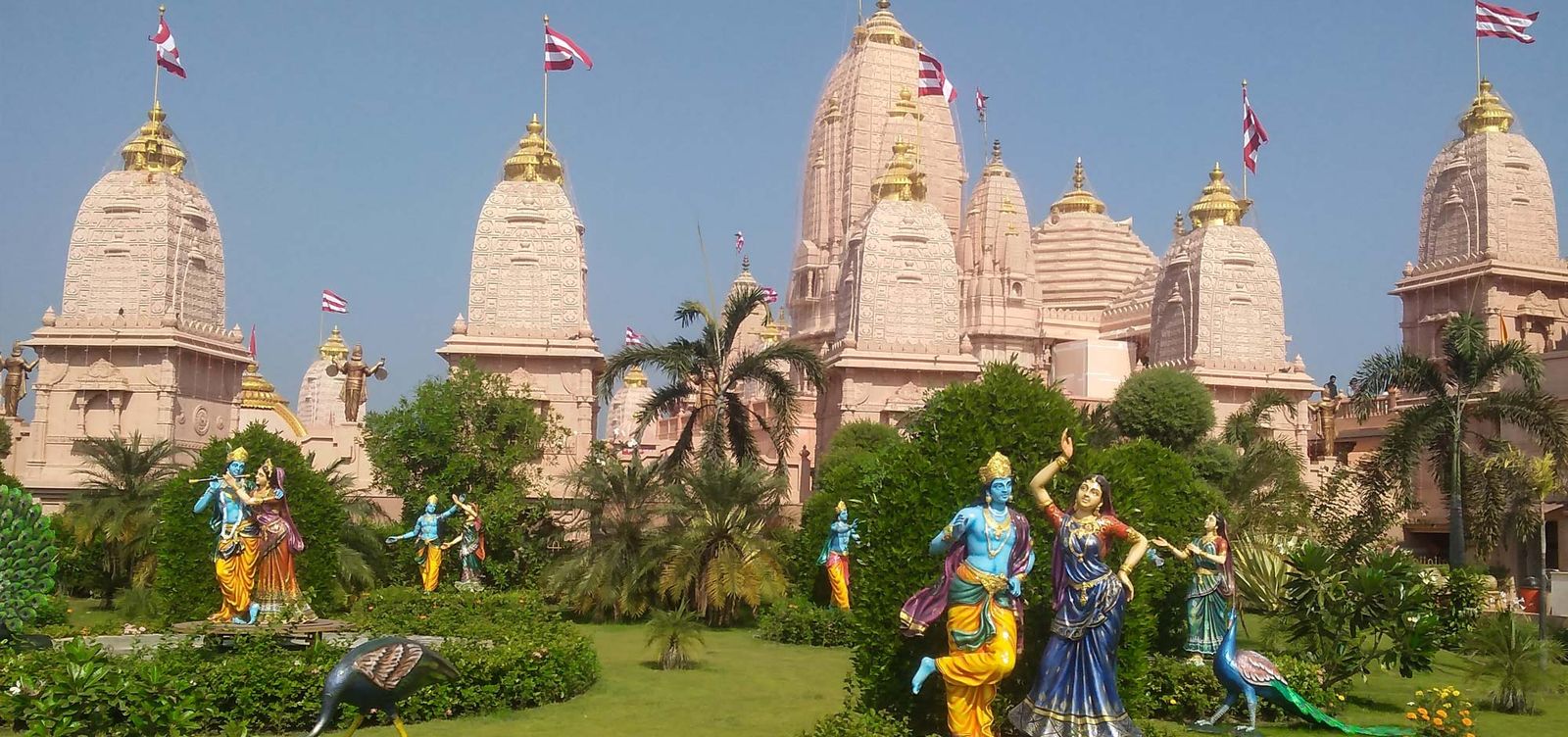
The stone here is new, but the ground beneath it is not. Shri Ram Janma Bhoomi sits in the middle of Ayodhya, a town on the Sarayu river in Uttar Pradesh, on a spot Hindus hold to be the birthplace of Ram — one of the most worshipped figures in the entire tradition. For decades the site was a courtroom fixture, a political fault line, a name that arrived in the news attached to conflict. Now it is a temple. A vast one, built in pink Bansi Paharpur sandstone, its spires rising over a town that has waited generations to see them.
Come knowing what you're walking into. This is not a quiet ruin. It is a living faith, freshly housed, and it draws crowds that can run into the hundreds of thousands on a single day.
A Temple Built to a Vanished Blueprint
The complex follows the Nagara style, the northern Indian temple form defined by its curvilinear towers and tiered mandapas. The main structure runs three storeys high, carried on rows of carved sandstone pillars — each one worked with figures from the epics, gods and dancers and floral scrollwork cut deep into the stone.
What surprises most visitors is the absence of steel and iron in the core construction. The builders leaned on interlocked stone and traditional joinery, a method meant to give the structure a lifespan measured in centuries rather than decades. Run your hand along a pillar and you feel the tool marks. Nothing here is machine-smooth.
The sanctum holds the idol of Ram Lalla — Ram as a child. It sits deep inside, and the architects aligned the whole structure to a single moment: on Ram Navami, the festival marking Ram's birth, sunlight is channelled through the building to strike the idol's forehead at noon. The alignment works once a year. The crowd that comes to witness it is immense.
The Long Road to the Doorstep
The history here is not gentle. The site was contested for centuries, the subject of one of the longest-running legal disputes in Indian memory. It ended in 2019, when the Supreme Court handed the land over for a temple. The building you see was consecrated in January 2024, in a ceremony broadcast live nationally.
That weight sits over the whole complex. People arrive having watched this ground argued over their entire lives. For many, stepping through the gate is not sightseeing. It is the closing of something that stayed open far too long.
You'll notice it in the faces. Older pilgrims, especially, move slowly, taking it in as though checking it's real.
Inside the Line for Ram
Security is heavy, and it starts well before the temple. Phones, bags, and cameras stay outside, cleared through lockers and checkpoints before you reach the inner complex, so travel light and expect to move slowly. On festival days the queues stretch longer than anything you've likely stood in.
Once inside, the crowd flows in a managed line past the sanctum for darshan, the ritual viewing of the deity. You don't linger at the idol. A guard's gesture will hurry you along if you slow. The glimpse is brief. But the collective hush of thousands of people all wanting the same thing is its own experience — a charged stillness inside all that motion.
The wider precinct is calmer. Landscaped pathways, seating, and open sandstone courtyards give you room to breathe once you're past the sanctum. Sit for a while. The temple looks different from every angle, and the light does real work on the pink stone as the day turns.
The Town That Grew Around a Name
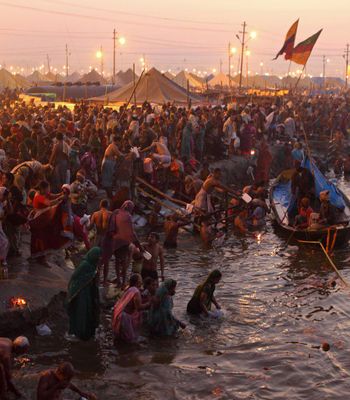
Ayodhya is not just the temple. The town is old, layered with other shrines and ghats stepping down to the Sarayu, and the river is worth your time. At dusk the ghats fill with lamps, priests perform the evening aarti, and the water carries the reflected fire downstream.
Hanuman Garhi, a fort-like temple to Hanuman set on a rise reached by a steep flight of steps, sits a short distance away and predates the new construction by a long way. Locals will tell you to visit Hanuman first, out of respect — the monkey god is Ayodhya's guardian, and custom holds you greet him before Ram. Follow the local order even if you don't believe a word of it. It tells you more than any guidebook.
The streets around the temple have transformed. Approach roads are still being laid, cement drying in the sun beside guest houses that opened before their upper floors were finished. Vendors work the pavements with prasad and garlands and small brass idols. The whole town has the look of a place remaking itself around a single point of gravity, and not yet done.
When to Come, and How to Survive It
The plains of Uttar Pradesh punish visitors from April through June, with temperatures that turn a queue into an ordeal. The winter months, roughly November to February, are the sensible choice — cool mornings, bearable afternoons, and light that flatters the sandstone.
Avoid the major festivals unless the crowd is the point. Ram Navami, in spring, and Diwali both draw enormous numbers, and Ayodhya's Diwali on the ghats — with lamps lit in their hundreds of thousands along the water — has become a spectacle in its own right. Extraordinary to see. Also shoulder-to-shoulder for hours.
Reach the temple early. The gates open in the morning, close during the midday hours, and reopen in the afternoon, so check the current darshan timings before you go, as they shift with the season and the festival calendar. Dress modestly, and wear something you don't mind walking barefoot in — footwear comes off well before the sanctum.
A Place That Refuses Neutrality
There's no pretending this is an ordinary temple visit. The building is new, the faith around it ancient, and the ground it stands on carries more history than any single structure can hold. Some visitors come in devotion, some in curiosity, some simply to see what all the years of headlines produced.
Stand in the courtyard as the afternoon light warms the pink stone, watch the endless line of pilgrims shuffle toward the sanctum, and you feel the particular thing this place does — it makes a very long wait feel, at last, like an arrival.