At dawn the Saryu runs the colour of weak tea, and the priests are already at work. You hear them before you see them — the clang of a brass bell, a conch blown long and low, the slap of wet cloth against stone as a bather wrings out his dhoti. Saryu Ghat in Ayodhya sits on the bank of a river Hindus hold as sacred as the Ganges, though it never draws the same crowds or the same postcards. This is a working riverfront, and the pilgrims who come mean it.
Ayodhya claims to be the birthplace of Rama. The river below has been carrying the town's prayers, ashes, and marigolds for longer than anyone can prove.
Where the River Does the Talking
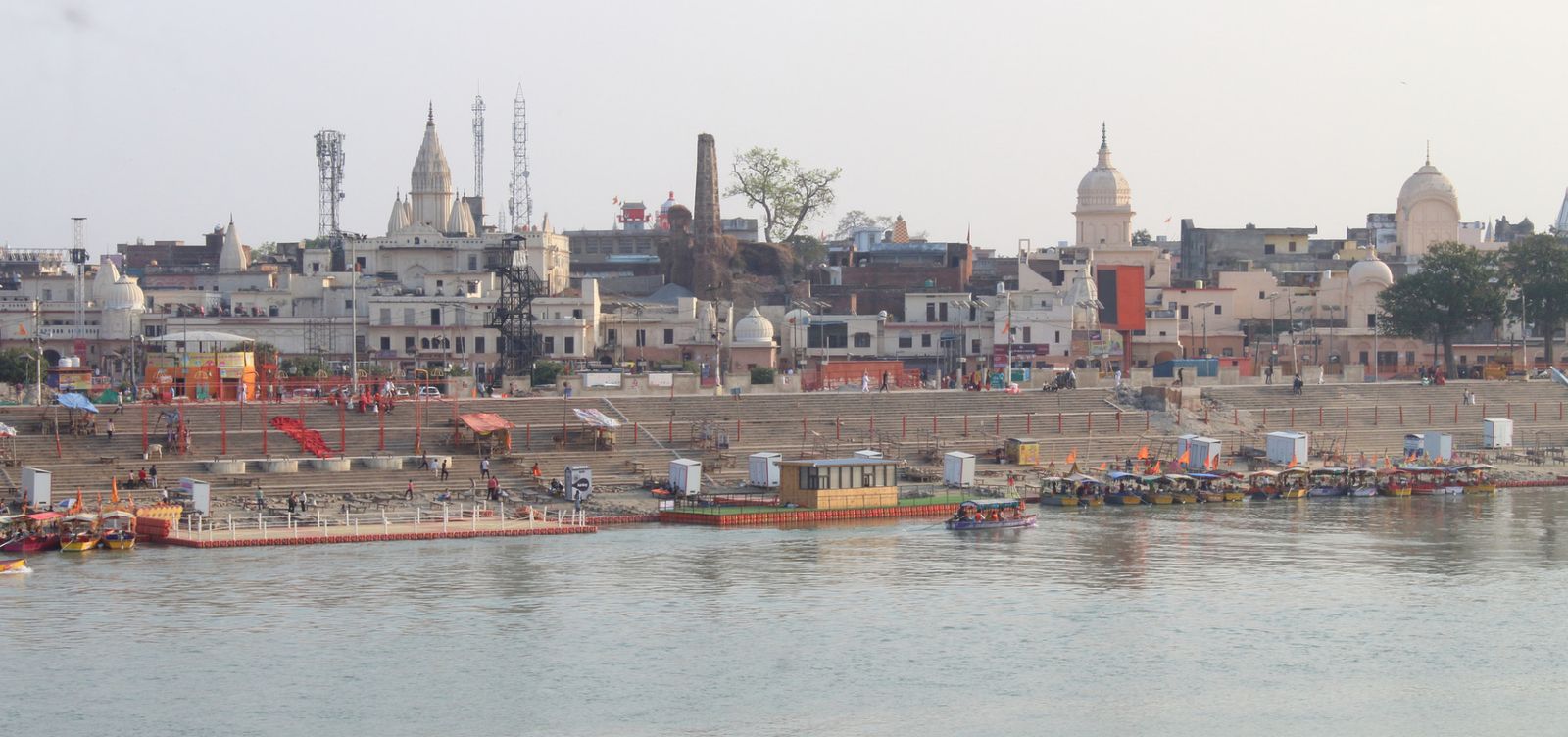
A broad flight of steps descends into the Saryu, and at first glance the scene looks ordinary — grey stone, a few painted shrines, boats nudging the bank. Sit for twenty minutes and it stops looking ordinary.
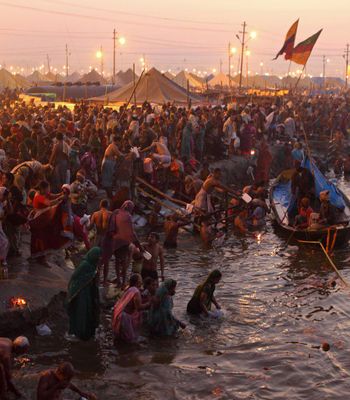
Men in loincloths wade waist-deep and cup the water over their heads three times, lips moving. Women set tiny leaf boats afloat, each holding a flame and a fistful of petals, and watch them drift until the current swallows the light. Near the water's edge a barber shaves the head of a mourner, slow and unhurried, the razor scraping in silence while the man stares at the river — a rite for the dead that has nothing to do with vanity.
Nobody performs for you here. The devotion is unselfconscious, which is exactly what makes it worth watching.
Rama's River, Not Just a Backdrop
The Saryu runs straight through the story of Rama, and Ayodhya wears the connection openly. Tradition holds that Rama walked into these waters at the end of his earthly life. Pilgrims come to bathe believing the river washes away sin, and I'd argue the water isn't a backdrop to the epic so much as a character in it — though that's my reading, not scripture.
You can see what the belief leaves behind. The lower steps are dark and slick where thousands of oiled hands and heads have polished the stone smooth, and marigold pulp collects in the cracks, trodden to a paste the colour of rust.
The town around the ghat has changed fast, with a vast new temple to Rama rising nearby and the roads widened to carry the pilgrims it draws. The riverfront has been cleaned up and rebuilt in stretches, and some of it feels freshly poured. But the river underneath is the same one, indifferent to the concrete on its banks.
The Aarti After Dark
Come back at sunset for the Saryu Aarti, the evening fire ceremony held at the water's edge. Priests in saffron robes take up brass lamps stacked with flames — heavy, tiered things that take real strength to swing — and move them in slow arcs above the river while drums build behind them.
The smoke smells of camphor and ghee, and the bells come in hard as the crowd presses close and chants, the whole reflected mass of fire trembling on the black water below.
It's smaller and less choreographed than the famous aarti at Varanasi, and that works in its favour. You can get close. You can actually see the priests' faces rather than a wall of raised phones. When the lamps go up against the darkening sky, the effect isn't staged grandeur — it's something rawer, and it lands harder for it.
The View the Town Was Built For
Boatmen work the bank all day, and a short crossing costs little. From midstream, Ayodhya spreads along the shore in low tiers of temples and steps, the ghat busy with the small dramas of the faithful, the whole town suddenly legible in a way it never is from the crush of the steps.
Bargain before you climb in — fix the price and the length of the trip, and don't be surprised when the quoted rate doubles on a festival day.
The best moment isn't the far bank. It's the turn back, when the boatman cuts the engine and lets you drift, and the sound of the town's bells reaches you clean across the water with nothing in between.
Winter Mornings and the Diwali Crush
The winter months, roughly November to February, are the kindest — cool mornings, tolerable afternoons, and light that softens the stone. Summers are brutal, the plains baking well past forty degrees, and the monsoon swells the Saryu until parts of the lower steps vanish underwater.
Festival days transform the place. Diwali is the big one — Ayodhya marks it as the return of Rama, and the ghats fill with hundreds of thousands of oil lamps set flickering along the banks. Come then if you want the town at full devotional volume. Come almost any other time if you want to actually move.
Dress with some sense; this is a religious site, and covered shoulders and knees will save you awkward looks. Leave your shoes where you're told to, and mind your footing near the water, where the steps get slick and the crowd around the aarti gives you nowhere to fall.
Give the ghat a full evening rather than a quick stop. Arrive in the late afternoon while the light is still warm, watch the bathers and the boats, take the water if you're inclined, and stay for the fire ceremony as the dark comes down.
Why It Stays With You
Saryu Ghat doesn't dazzle. There's no fort, no towering gate, no single view that stops your breath. What it has is continuity — the sense that the man wading in at dawn is doing exactly what someone did on this same stone a thousand mornings before him, and will do a thousand after.
Sit on the steps as the last aarti lamp gutters out and the leaf-boats slip one by one past the edge of the lamplight into the dark. The current takes them. It always has, and it takes no notice of you watching — which, somehow, is the reason to keep watching.