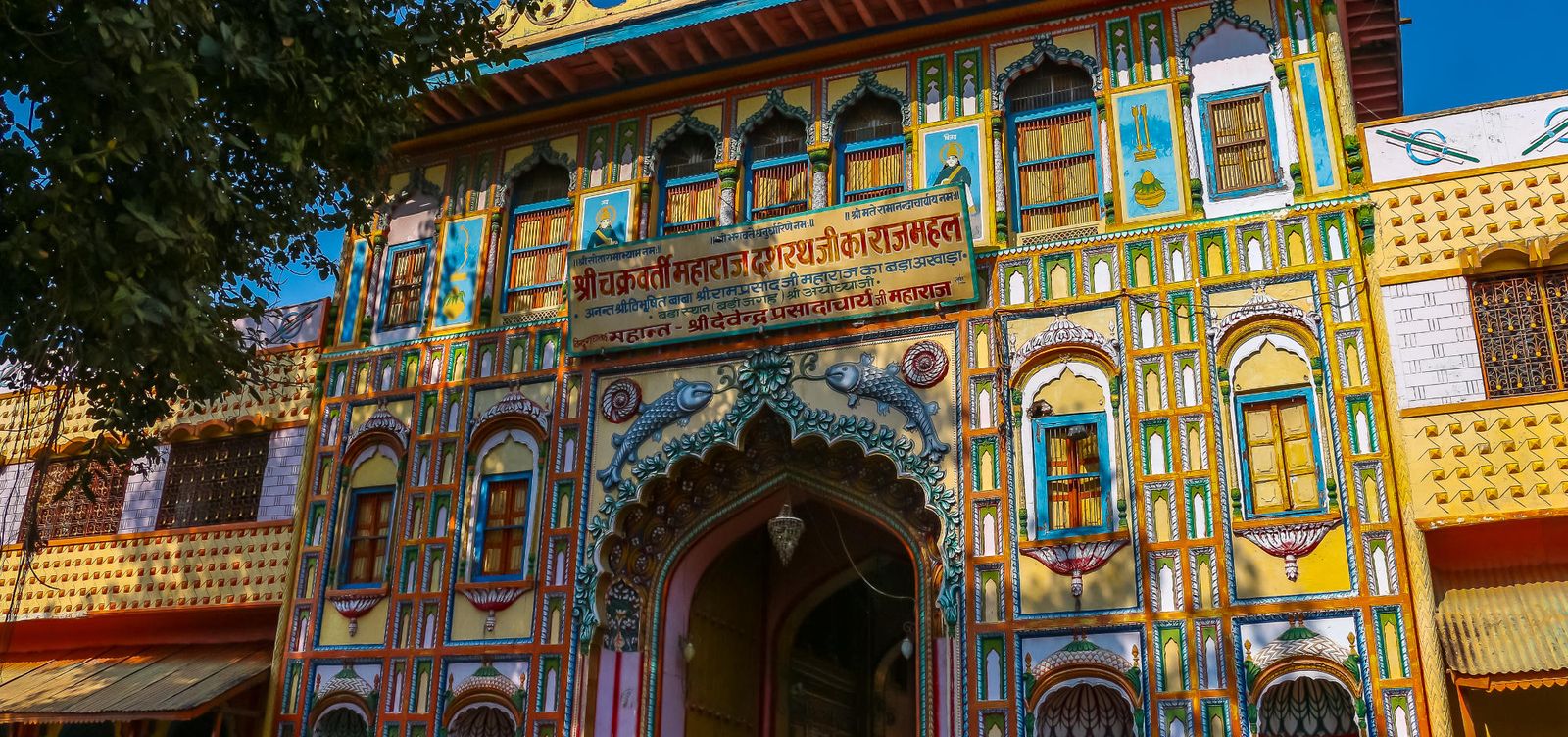
Somewhere behind the crowds and the loudspeakers of central Ayodhya, down a lane that smells of marigolds and frying batter, sits a small palace that claims to be the home of a king who ruled here in an age no calendar can pin down. Dashrath Mahal takes its name from the ruler of Ayodhya in the Ramayana — the father of Rama, the king whose grief, the epic tells us, undid him when his son was sent into exile. It's not large. It's not grand in the way the name suggests. But it holds a particular place in the devotional geography of a town that treats the Ramayana not as myth but as memory.
A Palace That Isn't Really One
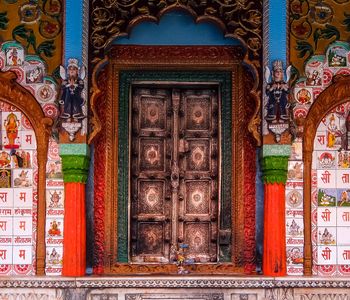
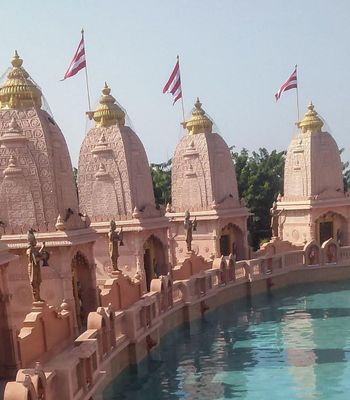
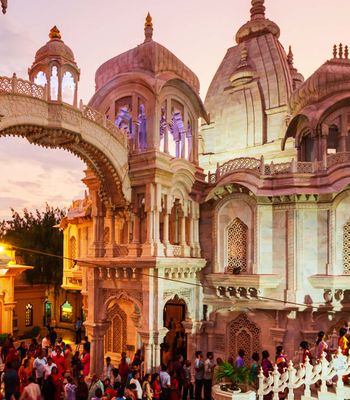
Don't arrive expecting ramparts and throne rooms. Dashrath Mahal is a temple complex built around the idea of a royal household rather than the remains of one. Saffron flags snap above the entrance. The walls carry murals of scenes from Rama's life, bright and unsubtle, the colours reapplied often enough that nothing looks its age.
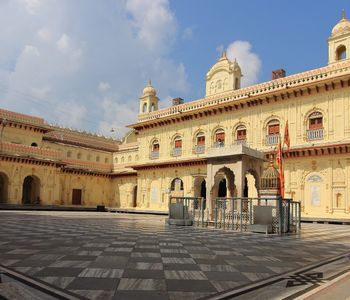
Step through the gate and the noise of the lane falls away. A modest courtyard opens, ringed by shrines, the floor worn smooth by bare feet.
The Family at the Heart of It
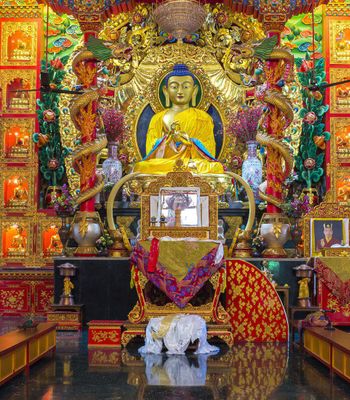
Inside the main sanctum sit the idols that matter most here — Rama, his wife Sita, and his three brothers, dressed and garlanded, attended through the day. Pilgrims come to see them not as gods in the abstract but as a household: a father's sons, a king's heirs. You'll hear people addressing the idols the way you might speak to family, a quiet familiarity that tells you more about Ayodhya's bond with Rama than any signboard could.
Priests keep the rhythms of a working temple — the waking, the dressing, the offering of food, the evening aarti when lamps circle before the idols. Bells ring, chanting rises, and devotees press shoulder to shoulder to lean in for a closer look.
Where the Chanting Never Stops
The complex doubles as a residence for sadhus and a centre for akhand kirtan, the unbroken recitation of Rama's name that, in Ayodhya, runs day and night. Here you'll often catch it live — a low rolling repetition that turns almost hypnotic if you sit with it long enough. Ochre-robed ascetics move through the courtyard, some in silence, some happy to talk.
During festivals the place transforms. Ram Navami, the spring birthday of Rama, brings the heaviest surge; the lanes clog with pilgrims, the idols wear their finest, and the chanting swells into something you feel in your chest. If you want intensity, come then. If you want room to breathe, come almost any other day.
Vivah Panchami is the stranger, softer occasion. The anniversary of Rama and Sita's wedding turns the temple into a marriage hall — priests dress the idols as bride and groom, and worshippers enact the ceremony with the real feeling of people marrying off their own kin. It is one of the odder, more moving things you can witness in Ayodhya, and it happens without a trace of irony.
One Stop on a Sacred Circuit
Dashrath Mahal sits close to the Ram Janmabhoomi complex, in the dense religious quarter where most of Ayodhya's important sites cluster within walking distance of one another. This is both its blessing and its limitation. You won't spend more than thirty or forty minutes here, and it works best as one stop on a longer circuit rather than a destination in itself.
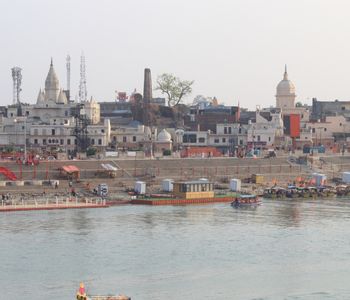
Pair it with the Hanuman Garhi temple up the road, its steps crowded with pilgrims and monkeys in equal number, and with a walk down to the Sarayu river at dusk. The whole quarter is compact enough to cover on foot, which is the only sensible way to do it — the lanes are too narrow and too busy for anything with wheels.
Timing Your Visit Right
Like most active temples in the region, Dashrath Mahal opens for morning darshan, shuts through the midday hours when the idols rest, and reopens for the evening. Aim for the morning or the evening aarti; the middle of the day offers little beyond a locked sanctum and a quiet courtyard.
Leave your shoes at the entrance and dress modestly, as you would for any working temple. Photography inside the sanctum is often restricted, so ask before you raise a camera.
The cooler months from October to February are the kindest time to walk Ayodhya's lanes; the summer here is brutal, and the pre-monsoon heat can flatten even the devout. Whatever the season, carry water and carry patience.
Why It Stays With You
Here's the counterintuitive thing about Dashrath Mahal: its smallness is its strength. In a town increasingly defined by monumental construction and enormous crowds, this modest complex keeps something the grand sites struggle to hold onto — a sense of the personal. The Ramayana here isn't a spectacle. It's a family you're visiting.
You watch an old woman press her forehead to the threshold, murmuring to Rama as though to a son who has finally come home. Sit through an aarti and let the chant work on you. Come without expecting stone and scale, and this small palace gives you something the larger monuments cannot — the quiet intensity of a town's oldest and most intimate devotion, still being lived, one lamp and one whispered word at a time.