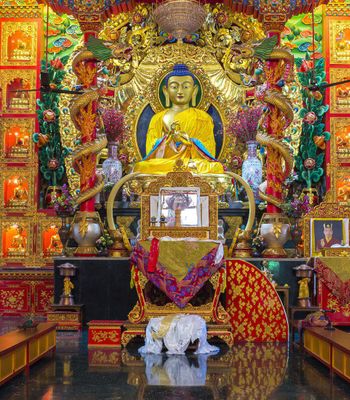
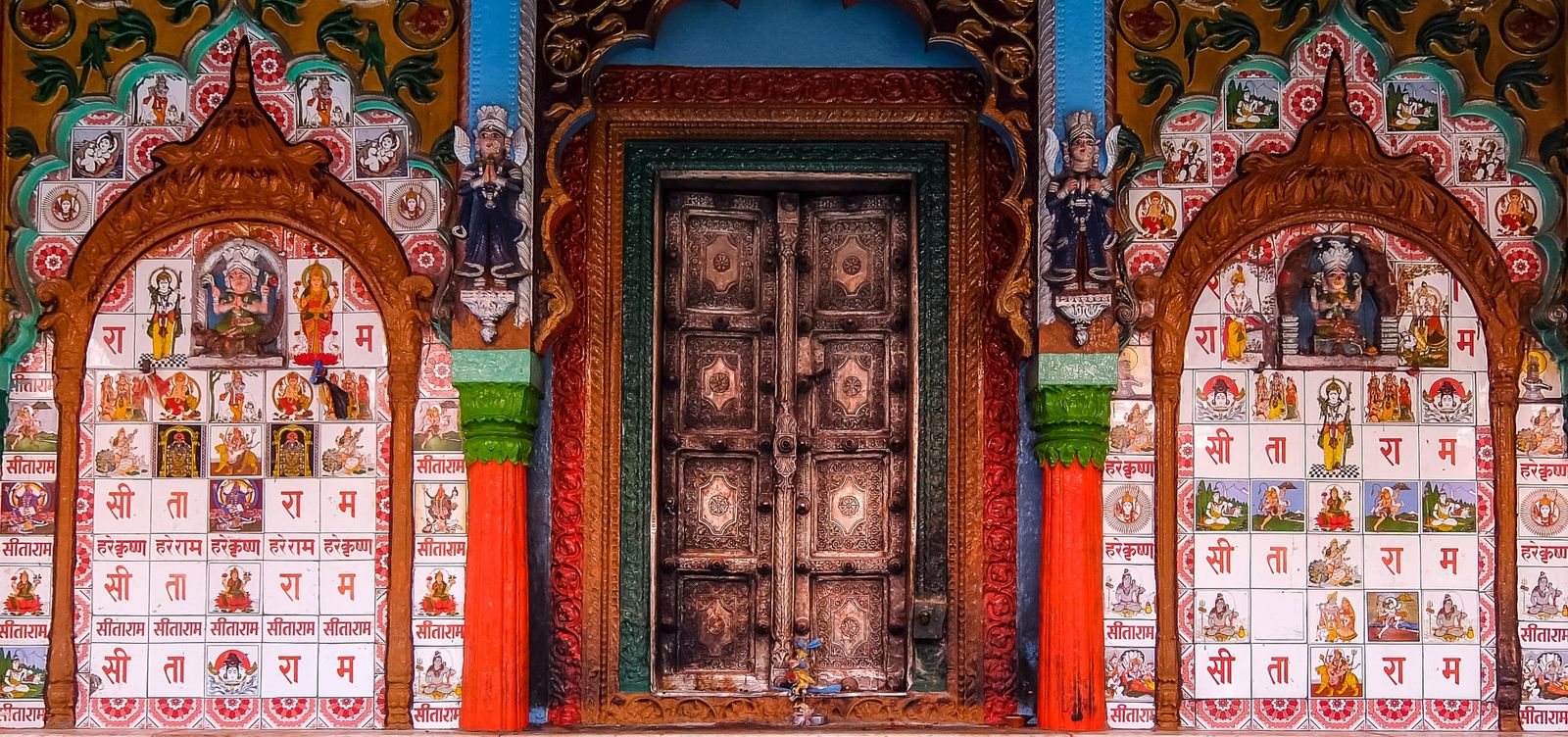
The steps rise steeply from the street, worn smooth in the middle where generations of feet have polished the stone, flanked by railings hot to the touch by mid-morning. Vendors line the climb — marigolds, coconuts, laddoos stacked in pyramids that sag in the heat. Hanuman Garhi crowns a low hill in the old quarter of Ayodhya, and it is dedicated not to Ram, the town's famous son, but to his most devoted servant. Monkey-faced, mace in hand, the god who leapt oceans. Here he is the landlord, and Ram is the guest.
Come before the day gets loud. The first hour belongs to the priests and the pilgrims who mean it.
A Fort That Became a Faith
The name gives it away. Garhi means fort, and this was one — a squat structure with round bastions at its four corners, built in the eighteenth century under the patronage of the Nawab of Awadh. That detail catches people off guard. A Muslim ruler funding a Hindu temple, in a town whose religious geography has since become the most contested in the country. History here is rarely tidy.
Those bastions still stand, their curved walls giving the complex the look of something defensive, which it was, before it was devotional. You climb into an enclosure rather than up to a shrine. This place was built to hold ground.
The Deity Who Never Left
Inside the main shrine sits the idol that pilgrims come for: Hanuman as a child, seated in the lap of his mother, Anjani. It's a tender image for a god usually shown mid-flight or tearing open his chest to reveal Ram and Sita within. Here he is small, cradled, human in a way the epics rarely allow him.
The chamber is close and warm. Oil lamps throw an unsteady light across faces streaked with vermilion. Bells hang low from the ceiling, and every worshipper reaches up to strike one on the way in — a rolling, arrhythmic clang that never quite stops. Priests move fast, pressing prasad into your palm before you've settled, dabbing tilak on your forehead with a thumb that has done it ten thousand times.
Believers hold that Hanuman lives here, guarding the town, and most people climb to him first, then go on to the Ram temple below. The order is deliberate. A courtesy to the doorkeeper.
The View You Didn't Climb For
Turn around at the top before you go in. The climb has lifted you above the rooftops, and Ayodhya spreads out below — a low, dun-coloured town of temple spires and tangled lanes, the Sarayu river a pale line beyond it. You don't come to Hanuman Garhi for the panorama. But it's there, the only place in the old quarter that offers one, and the breeze at the summit is the reward the climb owes you.
The courtyard itself hums. Sadhus in saffron sit against the fort walls. Families rest on the stone after the ascent, catching breath, sharing the sweets they bought below. Monkeys patrol the ramparts, quick-fingered and shameless, and they will take an unguarded offering without ceremony. Keep your prasad close.
When the Chalisa Never Stops
Tuesdays and Saturdays belong to Hanuman across India, and Ayodhya observes the calendar with force. The crowds on those days can turn the ascent into a single slow-moving body, shoulder to shoulder from bottom to top. If you want the temple to yourself, come on any other morning.
The great swell arrives at Hanuman Jayanti, the festival marking the god's birth, usually in spring. The complex fills past capacity, the bells never fall silent, and the whole hill seems to vibrate with recitation of the Hanuman Chalisa — the forty verses that devotees here know by heart and will chant at you if you slow down long enough to listen.
Finding the Foot of the Hill
Hanuman Garhi sits in the heart of old Ayodhya, walking distance from the main Ram Janmabhoomi complex and the ghats along the Sarayu. Most pilgrims fold all three into a single morning. The lanes leading to the base of the steps are too narrow for cars, so you'll finish the approach on foot regardless of how you arrive.
You'll leave your shoes with one of the stalls at the bottom — a few rupees, and worth every one, because the stone in summer will scald bare feet raw. Dress modestly, shoulders and legs covered. Nobody will hand you a robe, but you'll feel the disapproval if you turn up in shorts.
When the Weather Cooperates
Ayodhya bakes from April into the monsoon, and the climb becomes a genuine ordeal in the heat. The stone throws warmth back at you, and there's little shade until you reach the top. Come between October and March, when the mornings carry a chill off the river and the steps are cool underfoot.
Give the place an hour, no more. It isn't large, and the reward is compact: the clamour of the shrine, the child-god in his mother's lap, and that turn at the summit when the town drops away and the Sarayu catches the light.
Why the Doorkeeper Comes First
There's a lesson buried in the geography of this hill. Before you presume to reach Ram, you greet the one who never stopped serving him — the servant honoured above the master, the gatekeeper before the throne. Hanuman Garhi teaches humility through pure logistics, because the guardian sits between you and everything you came to Ayodhya to see.
Climb it early, when the bells are just starting and the light is still soft on the river. The monkey god has been waiting at the top of these steps for two and a half centuries. He can spare you an hour.