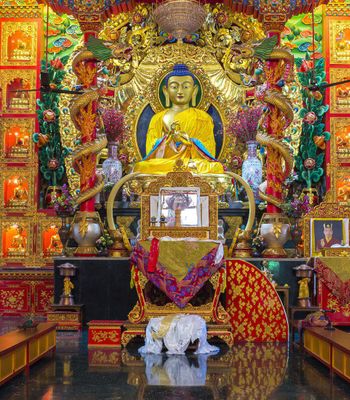
The idols wear real gold. Thin sheets of it, worked into crowns and ornaments, catching the oil lamps in the inner sanctum so that Ram and Sita seem lit from within. This is the first thing you notice about Kanak Bhawan, once you get past the crowd and the shoe stands and the flower sellers pressing marigold garlands into your hands. The name means golden house. It earns it.
Ayodhya is a town that lives on stories, and this temple carries one of the tenderer ones. Come in the morning, before the heat settles into the courtyard stone.
A Gift From a Mother-in-Law
The legend attached to Kanak Bhawan is domestic in a way most temple myths are not. Kaikeyi, one of King Dasharatha's queens, is said to have given this palace to Sita as a wedding present when she married Ram — a private residence rather than a shrine. That intimacy still hangs over the place. You come expecting a god's fortress and find, instead, the idea of a house.
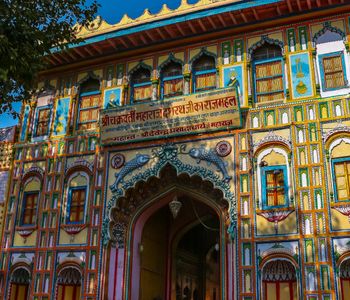
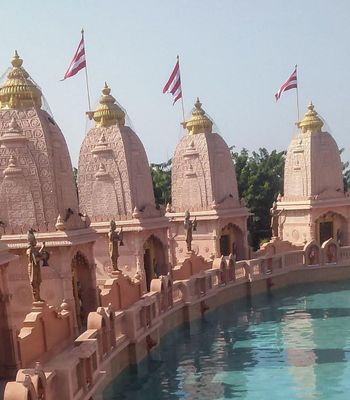
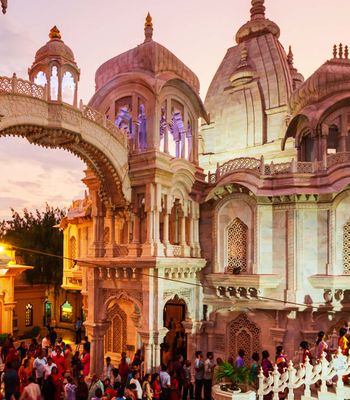
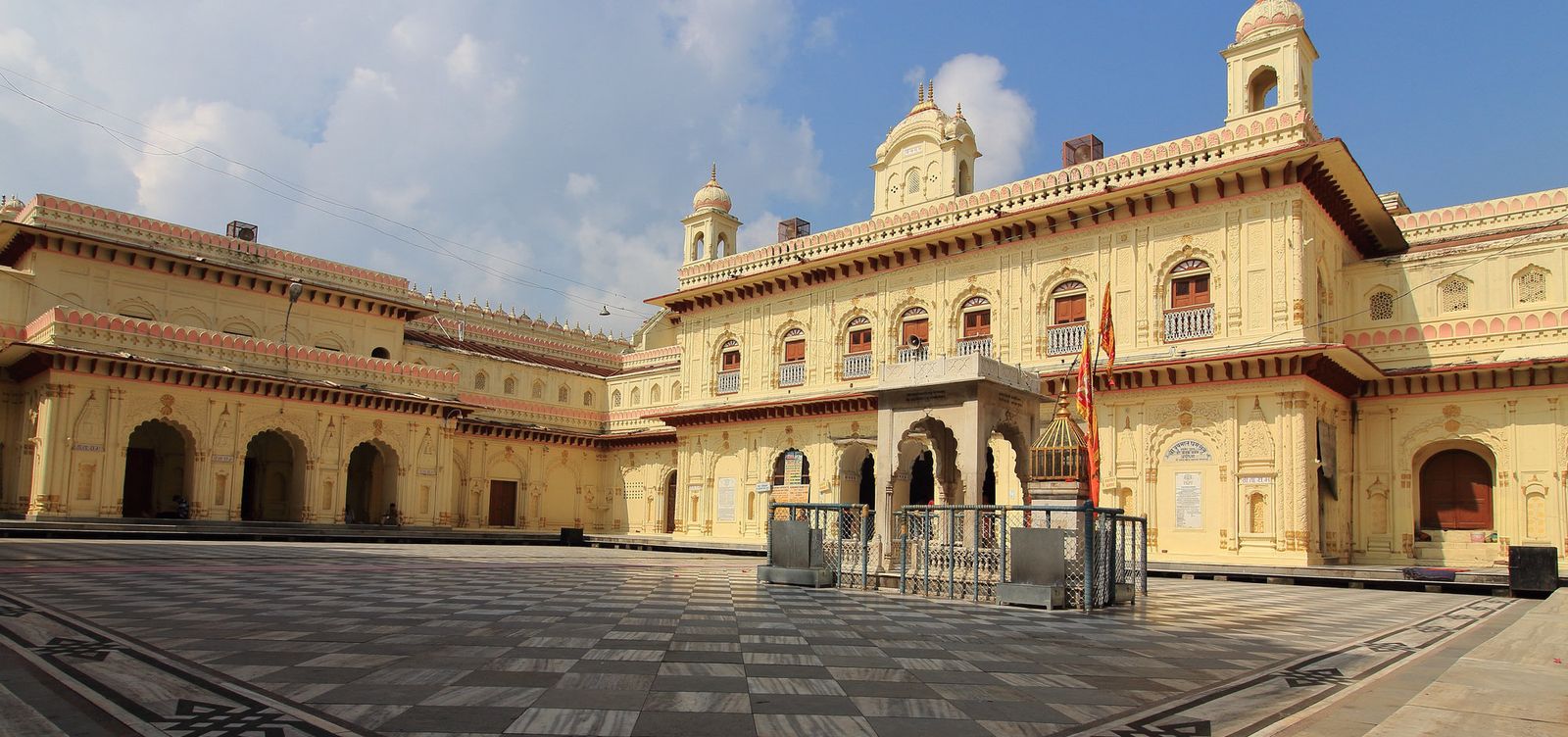
The building you walk through today is far younger than the legend. Vrishabhan Kunwari, the queen of Orchha, rebuilt it in the 1890s, and the architecture gives that away at once. The arches, the domes, the proportions — they belong to Bundelkhand. A Madhya Pradesh royal left her signature on a temple in Uttar Pradesh, and nobody bothered to hide it.
Gold, and the Faces That Wear It
Three pairs of idols stand in the sanctum. The main pair is the one everyone comes for — Ram and Sita, gold-crowned, standing side by side at eye level so the crush of pilgrims can see them clearly across the barrier.
Behind them sit two smaller, darker sets, older and less adorned, set back in the shadow where the lamplight barely reaches. Temple tradition holds that the smaller idols came from earlier installations, layered here over generations. You don't need to swallow the chronology whole to feel the effect of it — idols behind idols, each set a little more worn than the one in front.
The priests dress the deities in fresh clothes several times a day, and change the whole wardrobe with the seasons: cotton in the heat, heavier weaves through the Ayodhya winter. Time your visit for one of the aartis and you'll catch the ritual at full pitch — bells, the swing of lamp flames, the press of pilgrims chanting behind you. It's loud and close, nothing like quiet contemplation, and expecting anything gentler here would be a mistake.
Built to Serve the Gods, Not Outshine Them
Kanak Bhawan sits raised above the surrounding lanes, and you reach it by a flight of steps that funnels the crowd toward a single entrance. The main structure encloses a courtyard open to the sky, ringed by a colonnade where pilgrims rest between the morning and evening darshans.
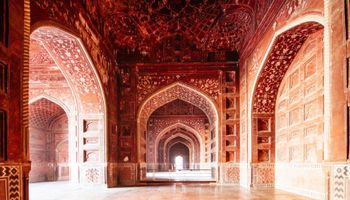
The stonework rewards a slow walk. Carved pillars run around the courtyard, and the domes above the sanctum carry the ornate, delicate detailing the Orchha builders favoured — a lightness the squat, fortress-like temples of the older Ayodhya lanes never attempt.
For a temple this famous, the interior is surprisingly plain in places, almost austere between the flourishes. The wealth is concentrated on the idols, not spread across every surface. The building serves the gods rather than competing with them, and that restraint gives the sanctum its punch when you finally reach it.
Where It Sits in Ayodhya's Web
You cannot understand Kanak Bhawan in isolation. It stands a short walk from Ram Janmabhoomi, the site at the centre of decades of national argument, and from Hanuman Garhi, the hilltop temple where pilgrims climb seventy-odd steps before they'll approach anything else. The whole town orbits the figure of Ram.
What Kanak Bhawan offers that the bigger sites don't is scale you can actually hold. Built on the idea of a married couple at home, it keeps something human even at its most crowded. The devotion here is affectionate rather than awestruck.
The lanes leading up are thick with the usual pilgrimage economy — brass Ram-Sita idols, boxes of pedha sweets, printed images sold from stalls barely wider than a doorway. Bargain if you buy. Nobody expects you to pay the first price.
Come in Winter, Skip the Midday Rest
The temple opens early, closes for a long midday break when the deities rest, and reopens in the afternoon through the evening aarti. Check the day's timings before you go, because they shift with the season and the ritual calendar. Turning up during the midday closure is the most common way to waste a trip.
The best months run November through February, when Ayodhya's heat relents and the mornings turn cool. Avoid high summer, when the courtyard stone burns through the soles of your feet and the queue sweats. Ram Navami, marking Ram's birth, brings enormous numbers and an electric charge — thrilling if you want the full intensity, punishing if you don't.
Leave your shoes at the stands outside; you'll enter barefoot like everyone else. The priests enforce photography rules inside the sanctum, and those rules vary, so watch what others do and follow their lead. Dress modestly. This is a working temple, and the pilgrims around you are here for reasons that have nothing to do with sightseeing.
Why It Stays With You
Kanak Bhawan won't overwhelm you the way some temples set out to. It has no towering gateway, no sprawling complex, no single view that fits neatly in a frame. What it has is a quieter idea — that the divine can live in a house given as a wedding gift, tended each morning by hands that treat gods like family. Stand in the sanctum as the aarti bells ring and the gold flares in the lamplight, and you understand why the pilgrims keep coming back. Not to worship a distant power, but to visit someone at home.