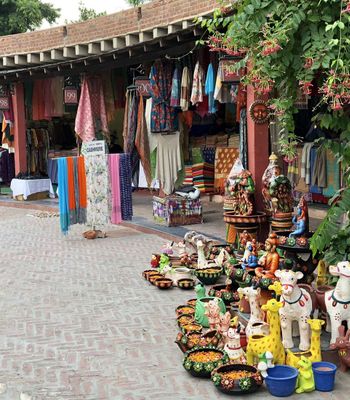
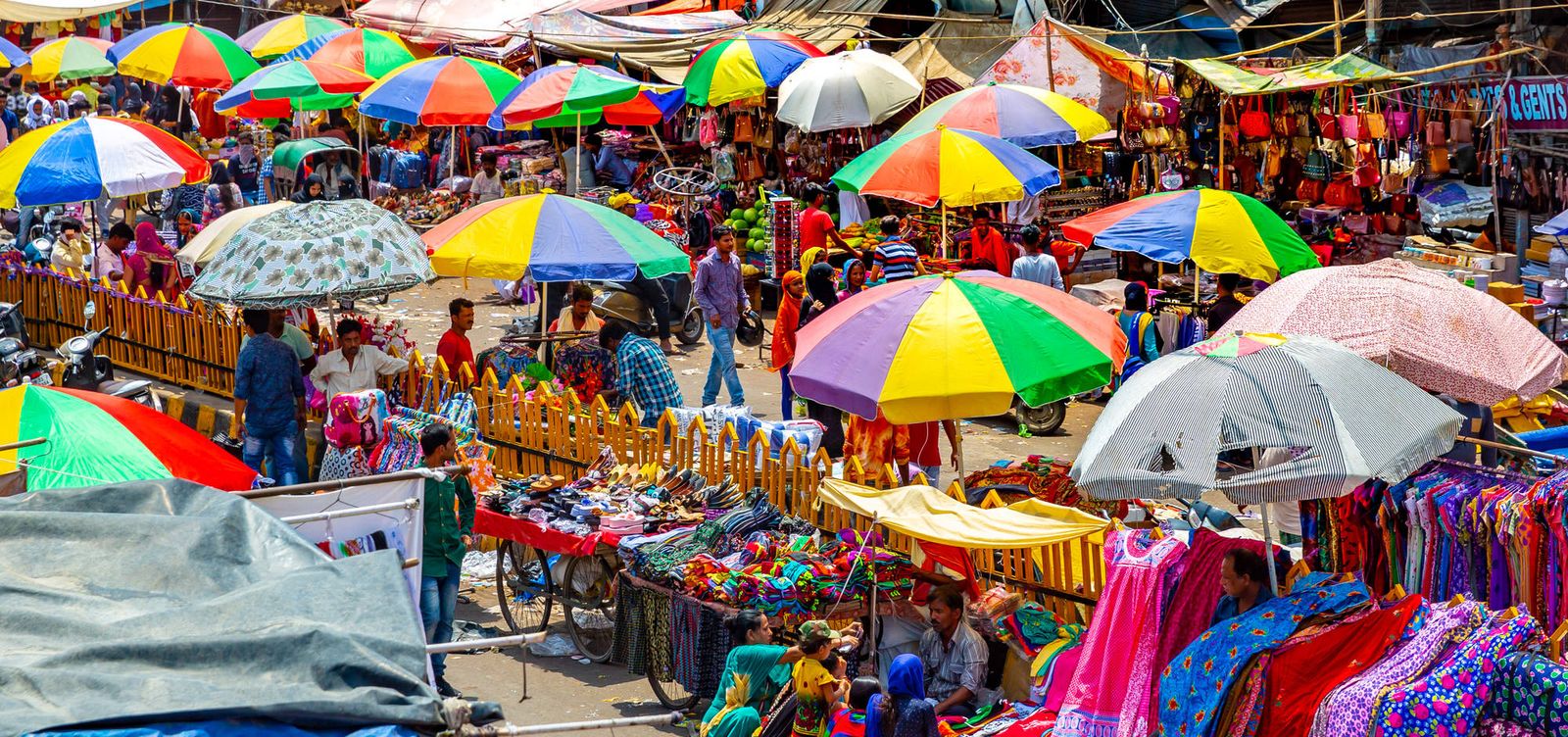
Most Delhi markets lead double lives — one for tourists, one for the people who actually live there. Tilak Nagar Market has only ever bothered with the second. Laid out across a grid of narrow lanes in West Delhi, this is where middle-class families have been buying wedding outfits, school uniforms, pressure cookers, and everything in between for the better part of fifty years. No heritage plaques. No guidebook entries worth the ink. No rickshaw driver will offer to bring you here on commission. That total indifference to outside attention is exactly what makes it worth showing up. If you want to see how an ordinary Delhi neighborhood feeds, dresses, and equips itself — without a single concession to spectacle — Tilak Nagar is the unedited version.
A Grid Born from Necessity
Forget the serpentine chaos of Chandni Chowk or the curated polish of Khan Market. Tilak Nagar runs on a rough grid pattern inherited from its post-Partition origins. The neighborhood went up in the 1950s to house families displaced from what became Pakistan, and that utilitarian DNA still governs its commercial logic. Shops pack tight against one another, signboards stacked vertically in Hindi and English, each fighting for a sliver of visibility above its neighbor.
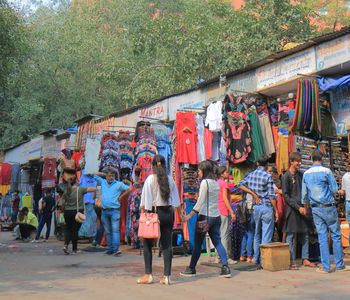
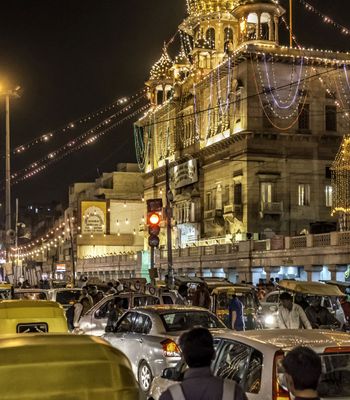
The main commercial stretch connects Tilak Nagar Metro station to the interior residential blocks. Step off the train, and within thirty seconds commerce has you surrounded. Bolts of cotton lean against doorframes. Electronics stalls blast competing Bollywood tracks at volumes that seem personal. The smell of fresh jalebi — syrupy, insistent — cuts through diesel fumes like a blade. It's sensory overload, yes, but the organized kind. Each lane tends to cluster around a single trade, so the chaos has a grammar if you stay long enough to read it.
Fabric Without the Theatre
Tilak Nagar's reputation, to the degree it extends beyond West Delhi at all, rests on its textile shops. Women from across the district travel here to source dress materials for occasions — weddings, festivals, the endless calendar of family functions. Shops along the main stretch stock everything from printed cotton for daily wear to heavily embroidered georgette meant for a sangeet ceremony. Prices begin where South Delhi boutiques wouldn't dare to tread.
What separates this market from a place like Lajpat Nagar is the absence of performance. Nobody stages an elaborate sales ritual for your benefit. A shopkeeper pulls the fabric, quotes a number, and expects you to know what you're holding. If you don't, he'll help — but without the theatrical charm. Bring someone who understands textiles, or at minimum spend ten minutes watching local women inspect a weave, test the fall of the cloth, and negotiate without once breaking into a smile. It's an education in efficiency.
Ready-made garments crowd the upper floors of many buildings — women's kurtas, men's shirts, children's clothing — all sold at volumes that keep margins thin and turnover relentless. You won't find cutting-edge design here. What you will find is solid everyday clothing at prices that haven't been inflated by the word "boutique."
Where the Market Gets Quiet
Push past the textile-heavy main road and Tilak Nagar shows its deeper layers. Side lanes host shops selling stainless steel kitchenware, pressure cookers stacked like silver towers, plastic storage containers in sizes you didn't know existed. One lane runs heavy on shoes — functional footwear, nothing aspirational — while the next specializes in costume jewelry glittering under fluorescent tubes.
Here's the thing nobody tells you: the deeper you walk into Tilak Nagar, the calmer it gets. The outer ring absorbs most of the foot traffic, but the interior lanes settle into an almost neighborly pace. Shopkeepers perch on low stools with chai, trading gossip with the vendor next door. Dogs sleep undisturbed between stalls. You'll catch yourself slowing down without deciding to.
Wedding season rewrites everything. Shops that seemed half-asleep are suddenly draped in sequined lehengas and sherwanis. Artificial flower garlands hang from every available hook. The mood shifts from idle to urgent, and the lanes fill with families on missions — lists in hand, budgets fixed, zero patience for browsing.
The Food Runs on Loyalty
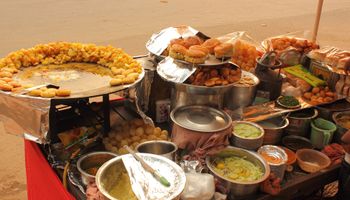
Tilak Nagar has no destination restaurants. What it has are food stalls and small eateries that have spent years perfecting the same three or four dishes. The chole bhature at several corner joints draw fierce, partisan followings — each version slightly different in spice heat and the crispness of the bhatura. Don't ask which is best. Find the one with the longest line of locals at lunchtime and surrender your judgment to theirs.
Street chaat vendors appear in late afternoon, offering golgappas loaded with tamarind water sharp enough to make your eyes prickle. By evening, momo carts materialize near the metro station, steaming in the half-light. A plate costs less than a bottle of water at the airport. For sweets, look for any of the older halwai shops where gulab jamuns sit in warm syrup behind glass cases — dark, glistening, almost obscenely rich. They taste better than they look. They look excellent.
How to Get There Without Losing Your Mind
The Delhi Metro's Blue Line stops directly at Tilak Nagar station, making this one of the easiest markets to reach in West Delhi. From the station exit, the market starts immediately — no auto rickshaw required. Coming from Central or South Delhi, the metro remains your fastest and least maddening option. Drive if you must, but expect the standard West Delhi parking ordeal; these narrow streets were never designed for the number of vehicles that now choke them.
Wear shoes you won't mourn. The lanes are paved but uneven, and during monsoon season, puddles collect in spots that seem engineered to ambush the careless. Mornings before eleven offer the most manageable crowds. By late afternoon on weekends, the market hits peak density — exhilarating or suffocating, depending entirely on your constitution.
Bargaining is expected at most shops, though not at established stores with printed price tags. The rule is simple: if the price isn't displayed, it's negotiable. Start at sixty percent of the quoted figure and settle somewhere around seventy-five. Politeness gets you further than aggression. Every time.
A Place That Carries On Regardless
Tilak Nagar Market will never land on a postcard. It won't trend on anyone's feed or draw photographers hunting for golden-hour magic. Its power lives in its stubborn ordinariness — a place where a city of twenty million people does the unglamorous work of daily life. Walk through it once, and you'll grasp something about Delhi that no monument or museum can convey. The city's true rhythm lives in markets exactly like this one: steady, unperformed, carrying on whether anyone's paying attention or not.