Stand at the intersection of Rani Jhansi Road and Pahar Ganj in West Delhi, and you'll hear it before you see it — the sharp, persistent clang of temple bells slicing through diesel fumes and traffic horns. Jhandewala Devi Mandir doesn't announce itself with grand architecture or towering gopurams. It asserts its presence the way Delhi itself does: loudly, unapologetically, and with a crowd that never seems to thin. This is one of Delhi's most frequented Hindu temples, yet it operates with the compressed intensity of a neighborhood shrine, every square foot charged with purpose. What makes it worth your time isn't spectacle. It's a living place of worship where ritual hasn't been sanded down for outsiders.
A Goddess on a Hill That No Longer Exists
The temple's name comes from "jhanda" — flag — a nod to the saffron pennants that have marked this site for centuries. Originally, the temple sat atop a small hillock, one of the natural ridges that once gave Delhi its contour before urbanization flattened and paved over most of them. That elevation is gone now, swallowed by roads and commercial blocks, but the temple held its ground. Its spiritual geography survived intact even as the physical landscape was redrawn around it.
Dedicated to the Goddess Durga in her form as Adi Shakti, the temple traces its origins to well before the Mughal period, though pinning an exact date is a fool's errand. What's certain is that the site has been continuously worshipped at for centuries, placing it among Delhi's oldest active religious sites. The current structure is modern — rebuilt and expanded over the twentieth century — but the deity it houses carries the full weight of that long continuity. The building is recent. The devotion is ancient.
Inside the Sanctum's Controlled Chaos
Step through the main gate and you're immediately funneled into a marble-floored courtyard that amplifies every footstep, every prayer, every child's wail into a single collective hum. The air is thick with marigold and camphor — that sharp, medicinal sweetness that clings to your shirt long after you leave. Shoes come off at the entrance, and the marble beneath your feet shifts from cool to scorching depending on where the sun falls, a tactile reminder that you're walking through open air despite the pressing density of bodies around you.
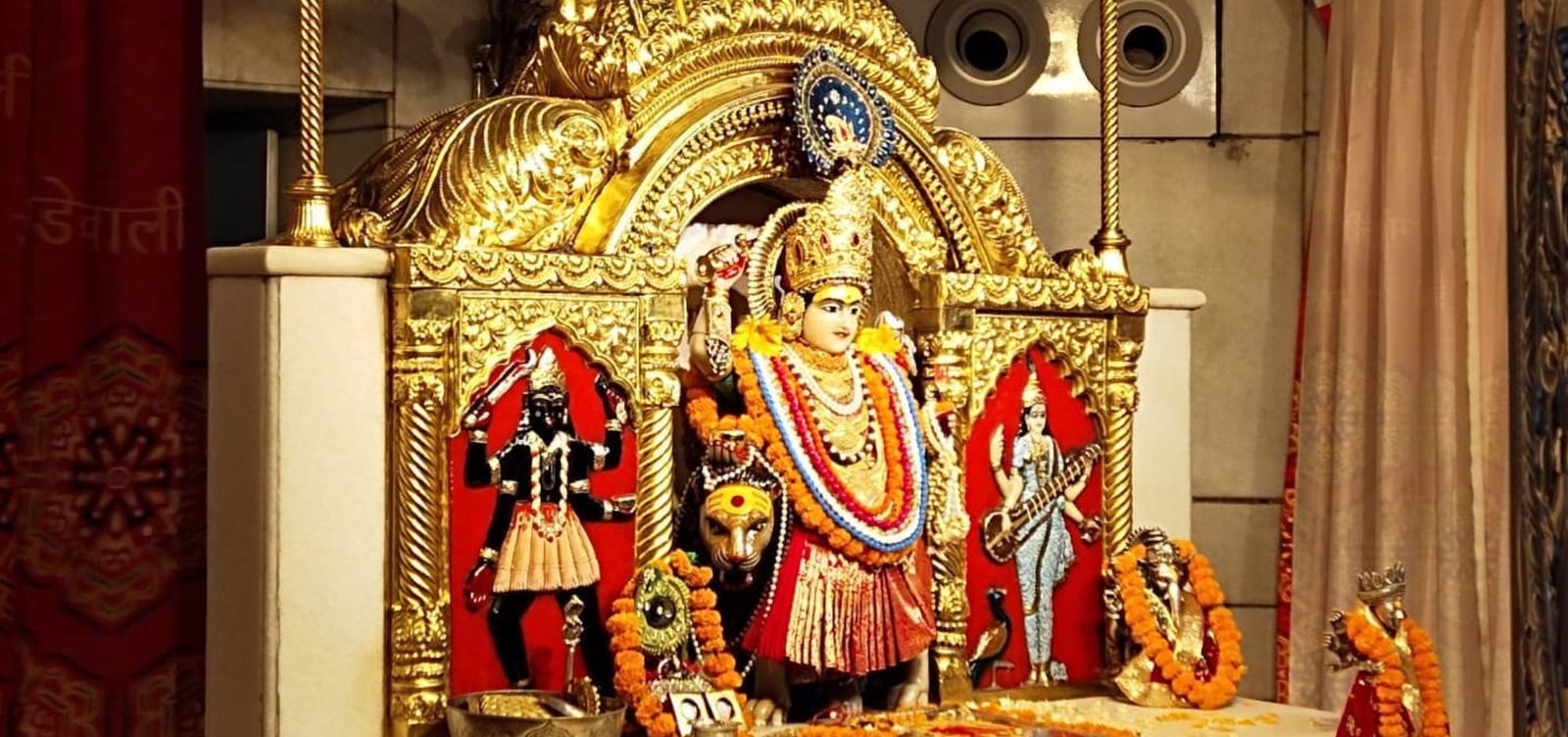
The main sanctum houses a striking idol of the goddess, heavy with gold jewelry and draped in red fabric. Priests perform aarti ceremonies multiple times daily, and during these moments the temple reaches its peak intensity. Brass lamps circle before the deity while devotees press forward, hands raised, voices merging into a single sustained note. It's overwhelming in the best sense — not orchestrated for effect, but simply the natural state of a temple that draws thousands every week.
Here's what most guidebooks won't tell you: the most compelling part of Jhandewala isn't the main shrine. It's the smaller subsidiary temples within the complex, dedicated to Lord Hanuman and Lord Shiva, where the crowds dissolve and the atmosphere shifts from communal fervor to something quieter, more personal. Watch an elderly woman place a single hibiscus flower before the Hanuman idol, unhurried, entirely private in a public space, and you'll understand what this temple means to its regulars far better than any plaque could explain.
When the Temple Transforms
During Navratri — the nine-night festival celebrated twice a year in spring and autumn — Jhandewala Devi Mandir becomes the gravitational center of West Delhi's religious life. Queues stretch several hundred meters down the road. The temple stays open well beyond its usual hours. Elaborate decorations cover every surface, and the goddess receives new garments and ornaments each night of the festival. The energy on those nights is electric, almost disorienting — a density of faith that makes the air feel thicker.
Tuesdays and Saturdays also draw significantly larger crowds, as these days hold special significance for Durga and Hanuman worship respectively. If you're coming for observation rather than devotion, a Wednesday or Thursday morning offers a more measured experience. You'll still encounter worshippers — this temple never truly empties — but you'll have room to look up, to notice the painted ceilings, to absorb architectural details that vanish when a crowd fills the frame.
Getting There Without Losing Your Mind
The temple sits near Jhandewala Metro Station on the Blue Line, making it one of Delhi's most accessible religious sites. Walk out of the station exit, turn left, and you're there in three minutes. This is genuinely the best way to arrive. Driving means fighting through some of Delhi's most congested arteries, and parking near the temple ranges from difficult to fictional, especially on festival days.
Auto rickshaws from New Delhi Railway Station or Connaught Place will get you here in fifteen to twenty minutes depending on traffic — which in this part of Delhi means depending on everything. If your driver doesn't immediately recognize the name, mention Rani Jhansi Road. That's the landmark everyone knows.
There's no entry fee. The temple operates on donations, and you'll find donation boxes placed discreetly throughout the complex. Prasad — the sacred food offering, usually sweets and fruit — is available near the entrance from vendors who've occupied permanent stalls for years. A small bag costs a few rupees and serves as both offering and snack.
What to Know Before You Walk In
Dress modestly. Nobody will stop you at the door, but it's respected by every regular visitor, and you'll feel conspicuous if you don't. Remove shoes at the designated area near the entrance, where an attendant keeps watch over the growing pile of footwear. The temple opens early, around 5 a.m., and closes by 10 p.m., though these hours stretch during festivals.
Photography inside the main sanctum is generally discouraged, and attempting it during aarti will earn you sharp looks from priests and devotees alike. The courtyard and exterior, however, are fair game. Summer temperatures in West Delhi routinely cross 40 degrees Celsius, which means the marble floors can burn bare feet by afternoon. Morning visits between 6 and 8 a.m. offer the most comfortable conditions and the finest light — incense smoke catches the low sun and turns the courtyard gold, the kind of atmosphere that no evening visit can replicate.
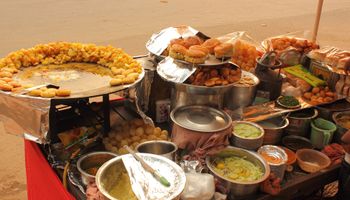
Food stalls line the streets outside, serving chaat, samosas, and milky chai in small clay cups that crack when you're done with them. These aren't tourist-facing establishments. They're priced for daily worshippers, which means you'll eat well for almost nothing.
A Temple That Earns Its Crowd
Jhandewala Devi Mandir doesn't compete with Delhi's grander monuments for your attention, and it doesn't need to. Its power comes from something no architectural marvel can replicate: an unbroken thread of daily devotion that hasn't paused for centuries, even as the hill beneath it disappeared and a metropolis rose in its place. Come here not for photographs or historical plaques, but for the rare experience of a sacred space that exists entirely for the people who use it. That honesty — in a city full of monuments performing for audiences — is what makes it worth crossing town for.