Rajouri Garden Market doesn't announce itself with grand arches or heritage plaques. It announces itself with noise — the metallic clatter of shop shutters rolling up at ten in the morning, the persistent honking of autos jockeying for curb space, and somewhere beneath it all, the low hum of a neighborhood that has been buying and selling with fierce loyalty for decades. This is West Delhi's commercial nerve center, a market that sprawls across several blocks without any apparent master plan, and that's precisely its appeal.
Unlike the curated shopping experiences that Delhi's malls have tried to impose on its residents, Rajouri Garden operates on an older logic. Relationships matter here. Repeat customers get better prices. The shopkeeper remembers your last purchase. It's transactional and personal in equal measure — a combination that air-conditioned retail corridors have never managed to replicate.
Where Concrete Meets Character
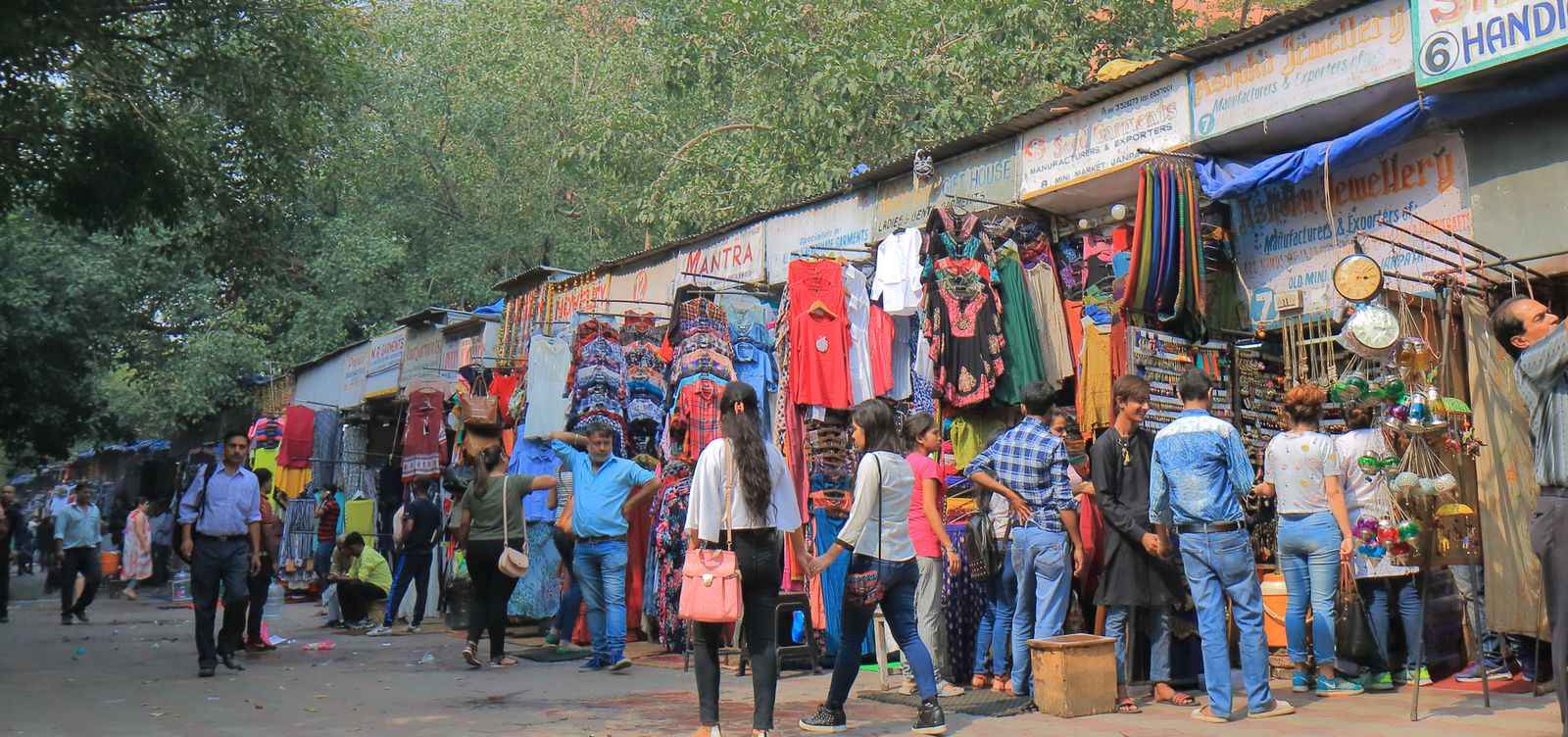
The market's layout tells you everything about a neighborhood that grew faster than anyone could plan for. The main road cuts through with shops stacked two and three stories high on either side, their signboards competing in size and color until the whole streetscape reads like a typographic argument. Step off the main drag into the narrower lanes, and the character shifts entirely — a corridor of phone repair stalls, a cluster of tailors, a row of sweet shops where jalebis are fried in wide iron kadhais right at the storefront, their sugar syrup crackling and sending a caramel sweetness drifting halfway down the block.
The architecture won't win awards. Most structures are utilitarian concrete blocks from the 1970s and 1980s, built when this part of West Delhi was pivoting from residential calm into commercial chaos. But look past the facades. The real architecture here is social — it's in the way vendors arrange their goods on the sidewalk with an almost gallery-like precision, or how a tea stall occupying four square feet of pavement somehow serves thirty people an hour without anyone raising their voice.
A Textile Obsession Running Deep
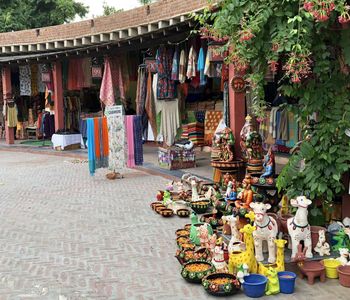
If Rajouri Garden has a signature, it's fabric. The market earned its reputation as a destination for wedding shopping long before destination weddings became a phrase. Bridal lehengas, embroidered dupattas, and pre-stitched sarees dominate the storefronts along the main stretch, their mannequins dressed in enough sequins and zardozi to illuminate a power outage.
What separates this place from Chandni Chowk's textile chaos or South Extension's polished boutiques is the middle ground it occupies. Prices here are negotiable but not rock-bottom. Quality is solid but not couture. You're buying from merchants who know their thread counts and can distinguish a machine-embroidered panel from a hand-worked one in seconds. Ask questions, and they'll answer with more detail than you bargained for. Try to bluff your way through a negotiation, and they'll see through you before you finish the sentence.
Here's the counterintuitive thing about Rajouri Garden's textile trade: the best deals often aren't on the ground floors facing the street. Climb the narrow staircase to a second-floor showroom, and you'll find calmer spaces with better stock and shopkeepers who have the patience to pull out fifty options without a single theatrical sigh.
Beyond the Fabric Stalls
Reducing Rajouri Garden to wedding shopping does it a disservice. The market's western end transitions into electronics shops, shoe stores, and optical retailers that do brisk business year-round. Cosmetics shops line one stretch, their counters crowded with brands both international and distinctly local. Farther in, you'll find luggage sellers, watch repair counters, and at least three shops that seem to sell nothing but hair accessories in every conceivable color.
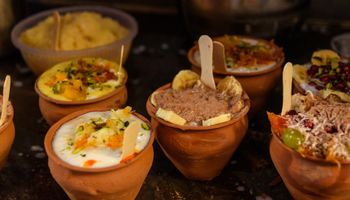
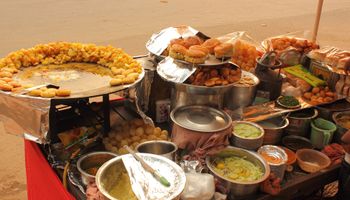
The food, though — the food is what keeps people lingering longer than their shopping lists require. Rajouri Garden's street food operates on a rotation that shifts with the clock. Morning brings chole bhature at corner stalls where the bhature puff up like small balloons in hot oil, their surfaces blistered and golden. By afternoon, chaat vendors take over — papdi chaat loaded with yogurt and tamarind, golgappas filled with spiced water sharp enough to make your eyes water and your tongue reach for more. Evening belongs to the kebab sellers and momos stands, their steam rising into the Delhi dusk like small distress signals from food you haven't eaten yet.
One particular stretch near the metro station has become an informal food court. No seating, no menus — just a row of vendors who've been standing in the same spots for years, each with a devoted following that would rather eat standing up in the dust than sit down somewhere with tablecloths. They're not wrong.
Getting There Without Losing Your Mind
The Delhi Metro's Blue Line delivers you directly to Rajouri Garden station, and this is unquestionably the smartest way to arrive. The station sits at the market's edge, which means you're shopping within two minutes of stepping off the platform. Driving here is possible but inadvisable — parking is a blood sport, and the lanes around the market were designed for an era when fewer people owned cars.
Auto rickshaws from nearby neighborhoods charge reasonable fares, though you'll want to agree on a price before climbing in. The ride from Karol Bagh takes about fifteen minutes without traffic, which in Delhi means it could take fifteen minutes or forty-five. Plan accordingly.
The market operates roughly from 10:30 a.m. to 9 p.m., though individual shops keep their own schedules with characteristic Delhi indifference to posted hours. Monday is the official weekly closure day — arrive then, and you'll find shuttered storefronts and confused tourists studying their phones. Weekday afternoons between Tuesday and Thursday offer the most breathing room. Weekends, particularly Saturdays, transform the market into a slow-moving river of humanity where personal space becomes a theoretical concept.
The Unwritten Rules
Bargaining isn't just accepted here — it's expected. A shopkeeper's first price is an opening position, not a final offer. That said, there's a line between negotiating and insulting. Offering half the quoted price on a well-made garment won't earn you a deal; it'll earn you a look that could curdle milk. Start at about seventy percent of the asking price and work from there. The whole exchange should take under three minutes. Anything longer, and you're both wasting time you could be spending with someone else.
Carry cash. Many shops accept digital payments now, but the smaller vendors and street food stalls still prefer rupee notes. Keep smaller denominations handy — asking a chaat vendor to break a two-thousand-rupee note is a reliable way to test the limits of human patience.
A Market That Earns Its Crowd
Rajouri Garden Market doesn't try to charm you. It doesn't need to. Decades of West Delhi families have built their wardrobes, furnished their kitchens, and fed their cravings along these congested lanes. The market survives because it delivers — not ambiance, not aesthetics, but value and variety in a density that borders on absurd. Walk its length once, and you'll understand why the malls nearby, for all their escalators and food courts, still can't pull the crowd away from these concrete blocks and hand-painted signs. Some places earn loyalty the old way. Rajouri Garden is one of them.