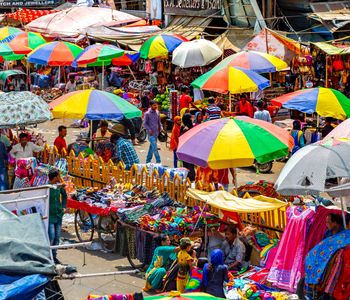
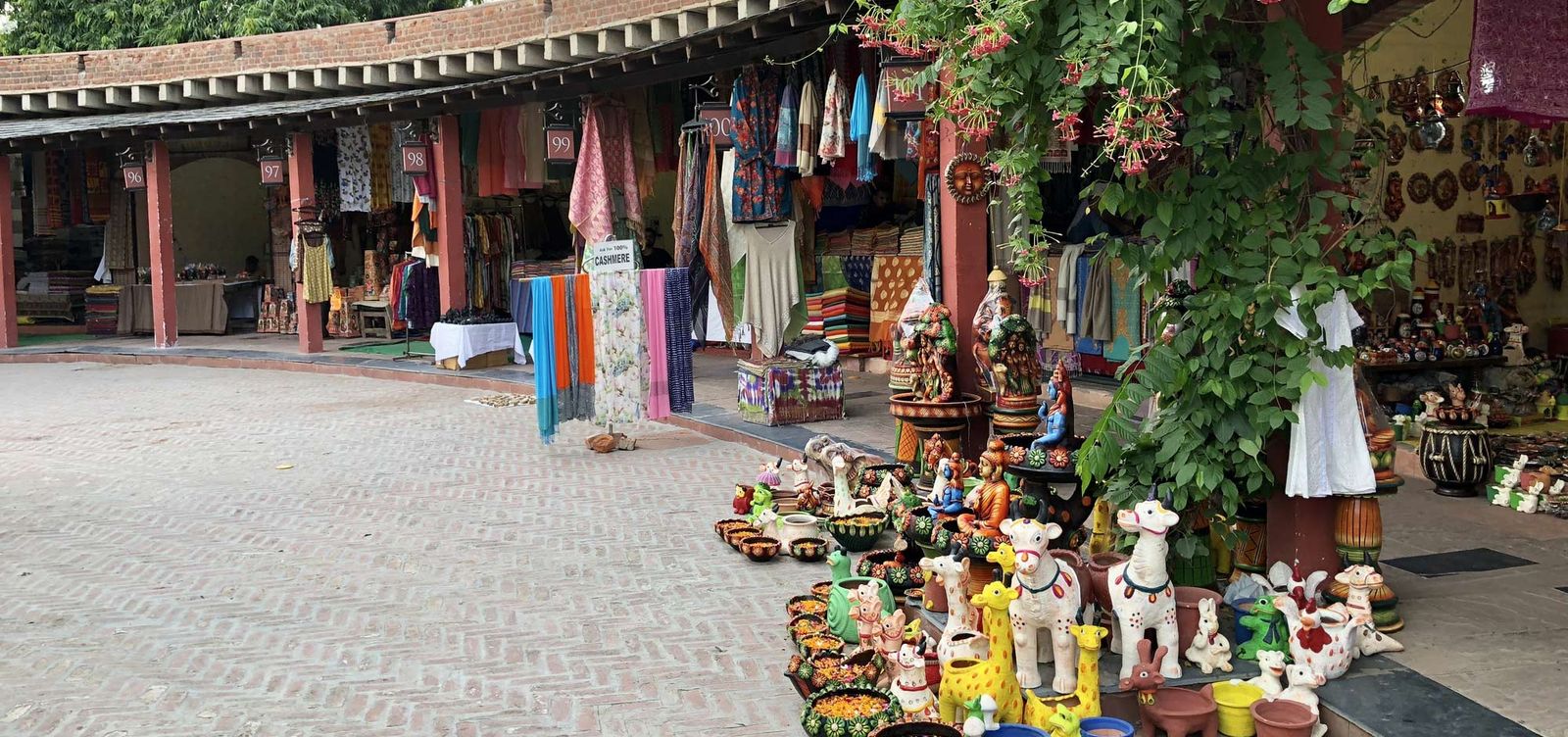
The scent of sizzling kebabs hits you before you even step through the gate. Somewhere to your left, a woman from Rajasthan unfolds a mirror-work tapestry that catches the afternoon sun. To your right, a Naga vendor stirs a pot of smoky pork that fills the air with dark, earthy warmth. This is Dilli Haat in Janakpuri — West Delhi's open-air bazaar where the entire subcontinent shows up in miniature, stall by colorful stall.
Operated by the Delhi Tourism and Transportation Development Corporation (DTTDC), this marketplace channels the spirit of India's centuries-old village haats — weekly markets where artisans and farmers gathered to trade — into a clean, walkable urban space. Forget the overwhelming crush of Old Delhi's narrow lanes. Here, wide pathways wind between open-air stalls, and the pace invites you to linger, touch, taste, and ask questions.
Whether you're on your first trip to the capital or your tenth, Dilli Haat compresses the artistic and culinary soul of an entire nation into a single afternoon.
A Village Market Reinvented for the City
For centuries, rural India has gathered at weekly haats — temporary markets where potters, weavers, and farmers spread their goods on dusty ground and barter until sundown. The Indian government bottled that magic in 1994 when it opened the first Dilli Haat at INA in South Delhi. Its success was immediate, and the Janakpuri branch followed to bring the experience closer to West Delhi's growing neighborhoods.
Here's what makes it genuinely different from any permanent market: artisans rotate every 15 days. One visit, you might find a Kashmiri woodcarver shaping walnut jewelry boxes. Return two weeks later, and a Gujarati block printer has taken the same spot, stamping indigo patterns onto raw cotton. No two visits ever feel the same.
That rotating model does more than keep things fresh — it gives craftspeople from remote villages direct access to city buyers, cutting out middlemen and putting money where it belongs: in the hands that made the art.
A Rainbow of Handmade Treasures
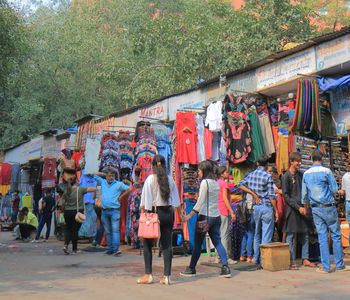
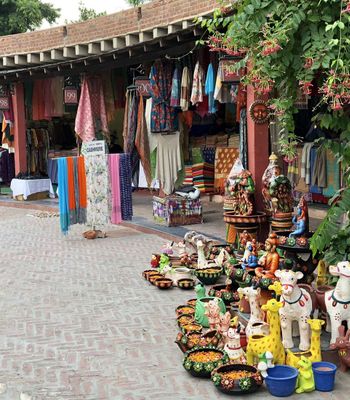
Step inside and let your eyes adjust to the sheer color. Row after row of open stalls overflow with handcrafted goods from Rajasthan, Kashmir, West Bengal, Gujarat, and the northeastern hill states. Butter-soft Pashmina shawls drape over wooden frames. Madhubani paintings — bold lines, mythic figures — lean against stall walls. Jaipur's signature blue pottery gleams in the light, and hand-loomed silk sarees ripple like liquid when the breeze catches them.
What elevates this beyond ordinary souvenir shopping is the human connection. You're buying directly from the person who carved, wove, or painted the piece. Ask them about their process and watch their faces light up — a block printer will show you how many layers of color go into a single bedspread; a woodcarver will flip a sculpture over so you can see the grain they followed with their chisel.
Bargaining is part of the dance here, gentle and expected. Prices are already reasonable since there's no retail markup, but a friendly negotiation often lands you a fair deal — and maybe a smile and a story thrown in for free.
Time your visit around a major festival and you'll find the stalls transformed. During Diwali, expect hand-painted clay diyas, glittering textiles, and gift-ready packaging. Holi season brings bursts of colored powder alongside festive clothing. These curated collections disappear quickly, so early birds win.
A Gastronomic Tour Without Leaving the Gate
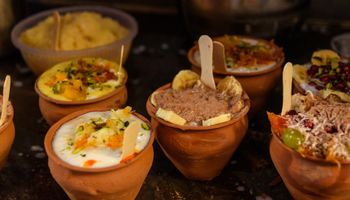
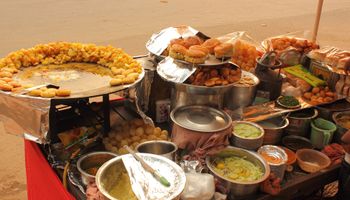
Halfway through browsing, your nose will hijack your plans. Follow it to the dedicated food section, where stalls representing nearly every Indian state line up side by side — a culinary map you can eat your way across in a single evening.
Dishes Worth Queuing For
- Momos from the northeastern stalls — plump dumplings bursting with spiced meat or vegetables, served with a fiery red chutney
- Rajasthani dal baati churma — crisp, ghee-soaked wheat balls crumbled into sweetened flour alongside earthy lentils
- Lucknowi kebabs and biryani — melt-on-your-tongue galouti kebabs paired with fragrant, slow-cooked rice
- Nagaland smoked pork — intensely savory, with a campfire depth that's hard to find anywhere else in Delhi
- Bengali sweets — spongy rasgulla and crumbly sandesh that dissolve into pure milky sweetness
Everything is priced to encourage grazing. Spend a few hundred rupees and you'll waddle away having tasted four or five states. Most stalls accept cash, though digital payments via UPI are increasingly common. Vegetarian and vegan options are plentiful, so nobody goes hungry here.
When the Stage Comes Alive
Just when you think you've seen it all, drums start up near the open-air stage. Dilli Haat regularly hosts folk performances, classical dance, and live music — and they're typically included in your entry fee. On a weekend evening, you might catch the sharp footwork of a Kathak dancer, the sculptural grace of Odissi, or the rhythmic storytelling of a Bharatanatyam recital, all performed against a backdrop of twinkling market lights.
Themed festivals celebrating specific states or cultural traditions occasionally take over the entire venue. Decorations change, exclusive craft exhibitions pop up, and special performances fill the stage. Visiting around Republic Day in January or Independence Day in August? Expect patriotic flair woven into the already vibrant programming.
Easy to Explore, Hard to Leave
Unlike Delhi's tangle of ancient bazaars, the Janakpuri branch is designed for comfort. Wide, flat, paved walkways separate the craft and food zones, so you always know where you're headed. Benches dot the pathways for when your feet need a break, and drinking water stations keep you hydrated as you wander.
Restrooms are clean and accessible within the complex. Visitors with mobility concerns will appreciate the level terrain — a welcome contrast to the uneven steps and cramped corridors of older Delhi markets.
Everything You Need to Know Before You Go
Entry Fees and Hours
A nominal fee — typically 20 to 30 rupees for adults — gets you through the gate. Children under a certain age often enter free. Confirm current pricing before you head out, as rates occasionally adjust. Gates open at 10:30 a.m. and close at 9 p.m. daily, giving you the flexibility to browse under bright afternoon skies or stroll through the atmospheric glow of a lit-up evening market.
When the Weather Works in Your Favor
Delhi's summer sun is no joke. From May through July, temperatures can push past 45°C, and since Dilli Haat is entirely open-air, the heat turns browsing into an endurance test. Visit between October and March instead, when crisp, cool air makes wandering a pleasure. Evening visits during these months are especially magical — lantern-lit stalls, cooling breezes, and the hum of a thousand conversations create an atmosphere no air-conditioned mall can replicate.
Weekdays draw thinner crowds, which means more elbow room and longer, unhurried chats with artisans. Weekends and holidays bring families in force. Photographers should aim for early afternoon, when the angled light makes the textiles and pottery glow with rich, saturated color.
Getting There Without the Headache
Delhi Metro's Blue Line is your best friend here. Hop off at Janakpuri West station, follow the signposted exit, and you're practically at the gate. From Central or South Delhi, the metro is faster and cheaper than any car ride through Delhi's traffic.
Auto rickshaws, Ola, and Uber can drop you right at the entrance if you prefer door-to-door convenience. Driving yourself? Limited parking is available nearby, but spaces vanish quickly on weekends. Honestly, the metro saves you the stress entirely.
Insider Tips to Make the Most of It
Carry cash in small denominations — ₹10, ₹20, ₹50 notes — because many artisans won't have change for a ₹500 bill. Wear shoes you can walk in for two to three hours without complaint; the browsing always takes longer than you expect. Toss a reusable tote bag in your backpack, since packaging varies wildly from stall to stall.
Most importantly, slow down and talk to the makers. Ask a weaver how long it took to finish that silk dupatta. Let a potter show you the coiling technique passed down through generations. These conversations are the heartbeat of Dilli Haat — they turn a shopping trip into a genuine cultural exchange that stays with you long after the souvenirs have found their place on your shelf.
Dilli Haat is a rare thing: a place where India's ancient craft traditions and its buzzing modern city life meet on equal ground. Every rupee you spend goes directly to sustaining artisan communities across the country. You might leave with a hand-block-printed scarf draped over your shoulder, a belly full of dal baati and momos, or simply a deeper understanding of how wildly diverse one nation can be. Whichever it is, this is an experience no shopping mall on earth can touch.