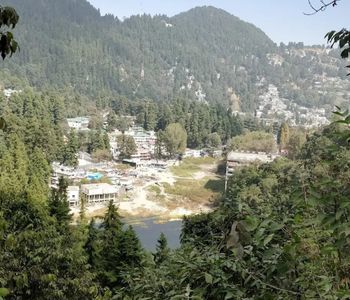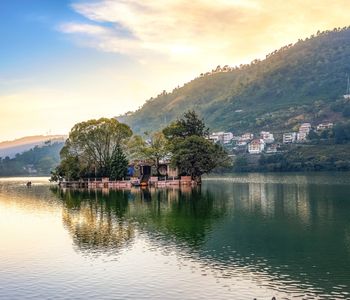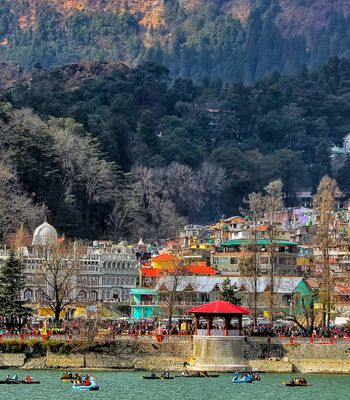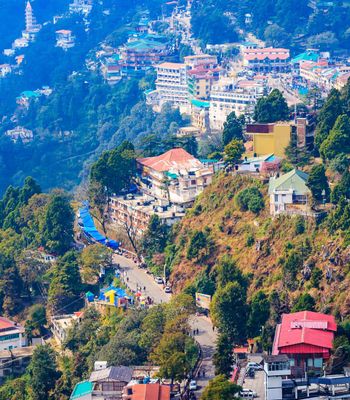
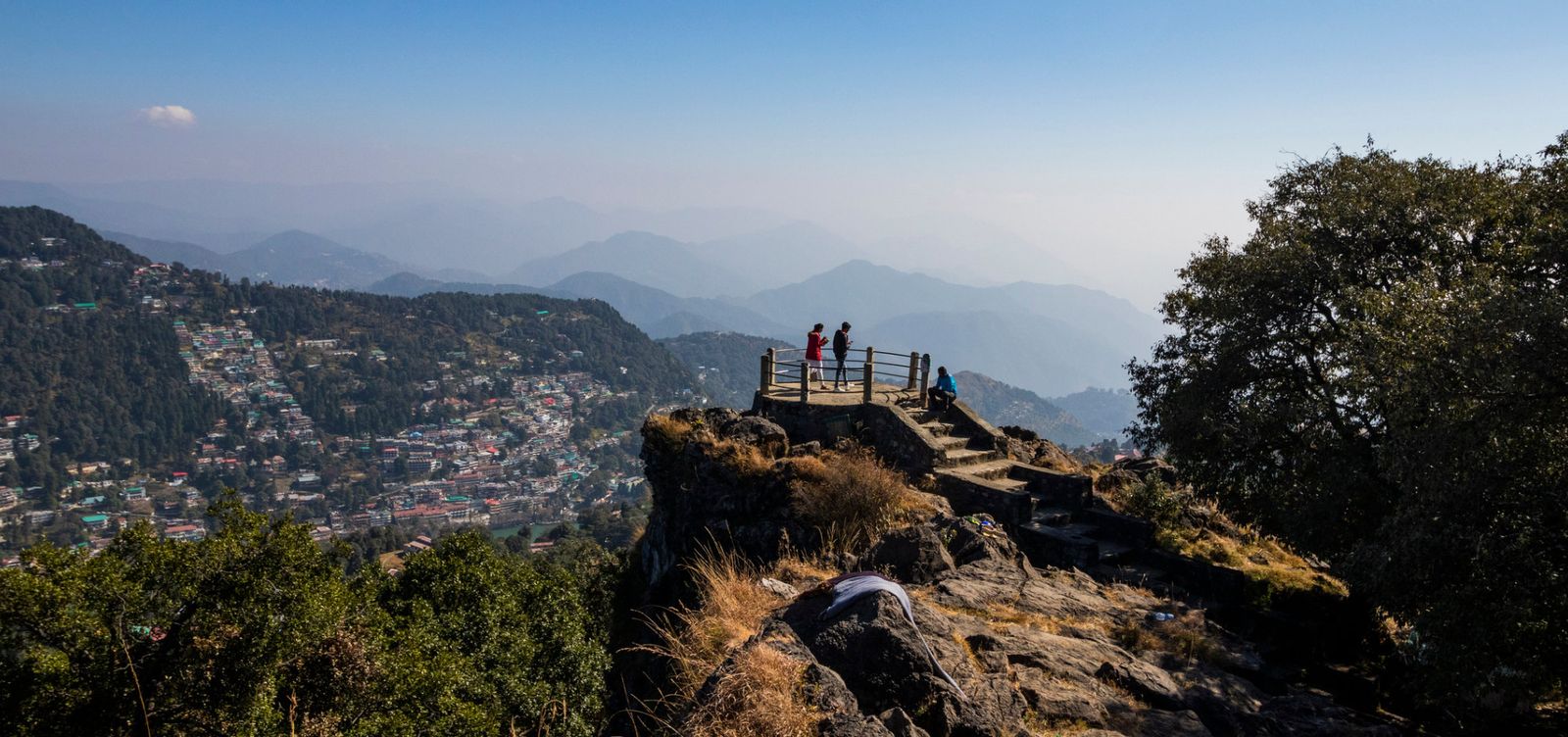
At around 7,500 feet above sea level, a flat clearing opens up on Dorothy's Seat — better known as Tiffin Top — and the reason British colonials hauled their lunch baskets up here becomes immediately obvious. The panorama of Nainital's lake district spreads below in a way that makes every sandwich taste better. Kumaon's snow-capped peaks line the northern horizon, and on a clear day the white ridge of Nanda Devi, India's second-highest mountain, appears close enough to sketch in detail. The hike itself takes roughly 40 minutes from Nainital town, which means you arrive just winded enough to feel you've earned the view. Tiffin Top isn't dramatic or grand. It's something rarer — a place that rewards you with proportion and quiet.
A Painter's Perch With a Colonial Footnote
The name Dorothy's Seat traces back to a British army officer, Colonel J.P. Kellet, who built a stone bench here in memory of his wife Dorothy. She was an artist, reportedly fond of painting the Kumaon landscape from this exact vantage point. The memorial seat still exists, though it's been repaired so many times it barely resembles its original form.
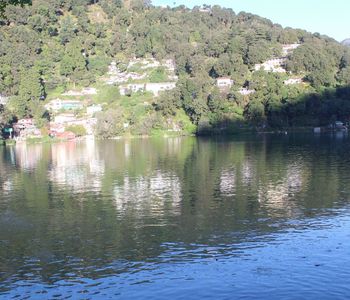
What hasn't changed is the light. Morning sun catches the surface of Naini Lake and turns it into a white slash between the green hills. By afternoon, the lake darkens to a deep blue-green, and the town's corrugated rooftops throw off tiny sparks of reflected light. You begin to understand why Dorothy chose this spot over any other — the composition practically paints itself.
The colonial connection runs deeper than one memorial bench. Nainital was a summer retreat for the British Raj, and Tiffin Top was where officers and their families picnicked to escape the already-pleasant weather of the hill station for something even cooler. The tradition stuck. Even now, locals climb here on weekends with packed meals and thermoses of chai, sitting exactly where imperial administrators once spread their tablecloths.
Steeper Than You'd Think
Most people begin at Bara Pathar, the large rock formation on Nainital's northern edge. From there, a well-worn path winds uphill through oak and deodar cedar forest. The trail isn't paved in any formal sense — expect packed earth, exposed roots, and loose stones on the steeper sections. Sturdy shoes matter more than fitness here.
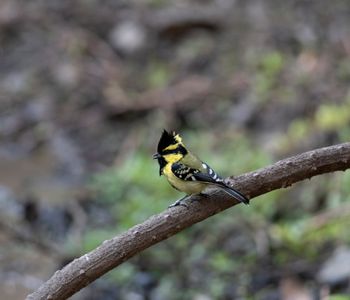
The forest canopy closes overhead within the first ten minutes, and the temperature drops noticeably. Birdsong replaces traffic noise. You'll hear laughing thrushes before you see them — grey birds with rust-colored wings that sound genuinely amused at something. Rhododendrons bloom red along the trail from March through May, adding a sharp punch of color against the otherwise muted greens and browns.
Ponies are available for hire at the trailhead for those who'd rather ride. The going rate fluctuates, but expect to negotiate somewhere around 300 to 500 rupees depending on the season and your bargaining stamina. The ponies know the route better than their handlers, picking their way over roots with an indifference that borders on boredom. For children or older travelers, they make the hilltop accessible without the cardiovascular commitment.
What the Summit Actually Looks Like
Don't expect a dramatic peak. Tiffin Top is, true to its name, a flat grassy area roughly the size of a cricket pitch. A few stone benches dot the clearing, and the Dorothy's Seat memorial occupies one corner. Small vendor stalls appear during peak season, selling Maggi noodles and bottled water at predictable markups.
The real spectacle is directional. Face north, and the Himalayan range fills your entire field of vision. Turn south, and Naini Lake sits below like a green eye between forested ridges. On clear winter mornings — December through February — the snow peaks are so sharply defined against the blue sky that photographs look retouched. During monsoon months, clouds roll through the clearing itself, and you find yourself standing inside a cloud rather than looking at one. It's disorienting. Strangely intimate.
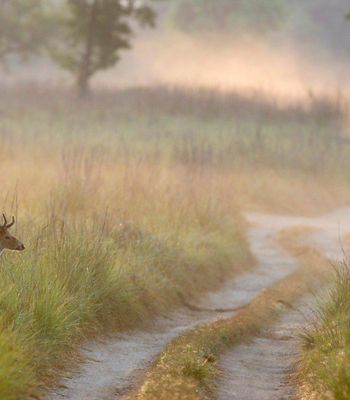
Here's the counterintuitive thing about Tiffin Top: the worst weather produces the best experience. When mist swallows the valley and you can't see twenty feet ahead, the hilltop becomes eerily private. The sounds of the forest amplify. Your own breathing becomes the loudest thing around. Most tourists avoid these conditions, which is precisely why they're worth seeking out.
When to Go — and When It Actually Matters
Nainital's peak tourist season runs from April through June, when the plains below become unbearable and hill stations fill with families escaping the heat. During these months, the trail to Tiffin Top can feel crowded, particularly on weekends. Early morning starts — before 7 a.m. — buy you a window of relative solitude before the pony trains begin their steady procession uphill.
Autumn offers the clearest skies. October and November strip away the monsoon haze, and the Himalayan panorama reaches its sharpest definition. Temperatures hover around 10 to 15 degrees Celsius during the day, comfortable enough for a leisurely lunch on the hilltop without shivering through it.
Winter brings frost and occasional snowfall to the higher ridges around Nainital, though Tiffin Top itself rarely accumulates significant snow. The trail can turn slippery, however, and shorter daylight hours mean you should plan your descent well before 4 p.m. There's no lighting on the path, and navigating exposed roots in the dark is a reliable way to twist an ankle.
Getting There Without the Hassle
Nainital sits about 300 kilometers from Delhi, reachable by overnight bus or a six-hour drive that passes through Haldwani. The nearest railway station is Kathgodam, roughly 35 kilometers downhill from Nainital town. Shared taxis and local buses connect Kathgodam to the lake in about an hour, climbing through switchbacks that test even seasoned hill travelers.
Once in Nainital, reaching the trailhead requires no special transport. Walk along the Mall Road toward the northern end of the lake, follow signs toward Bara Pathar, and the trail presents itself without ambiguity. No entry fee applies — the hilltop is open public land, accessible from dawn until you decide to leave.
Pack water, sunscreen, and something to eat. The vendor stalls at the top are seasonal and unreliable. A light jacket serves you well even in summer, as the altitude keeps the breeze cool enough to raise goosebumps once you stop moving.
Worth the Climb, Worth the Quiet
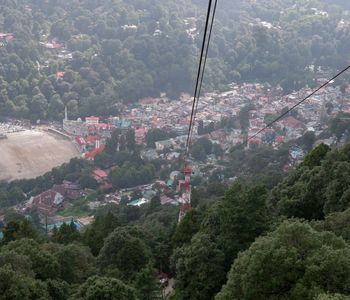
Tiffin Top doesn't compete with Nainital's more commercial attractions — the cable car, the boat rides, the overcrowded Mall Road. It offers something those places can't. Forty minutes of walking buys you a silence that feels earned, a panorama that changes with every passing cloud, and a flat patch of grass where a British painter once sat doing exactly what you're doing — looking at mountains and feeling, briefly, that the world has arranged itself just for you. Bring lunch. Dorothy would approve.