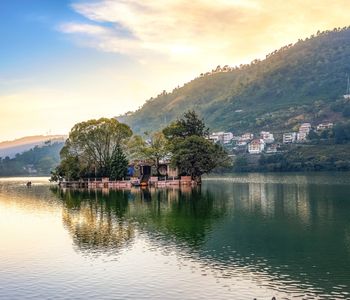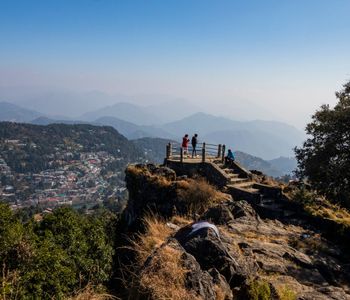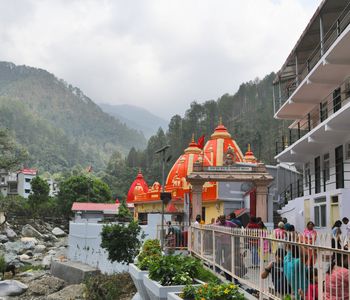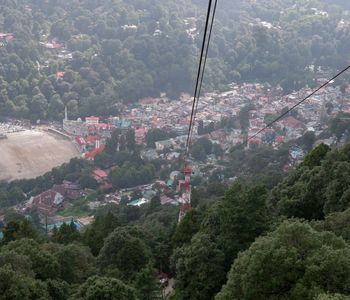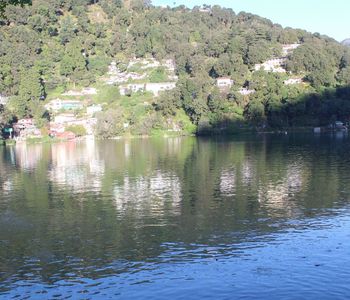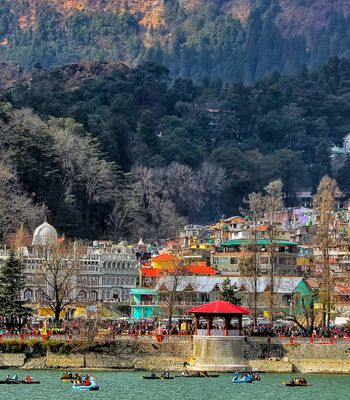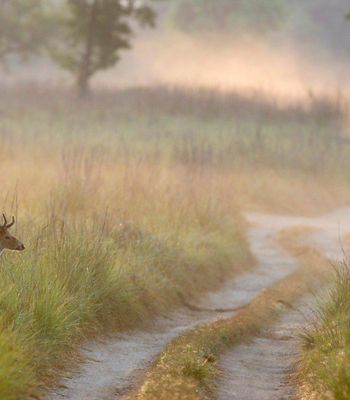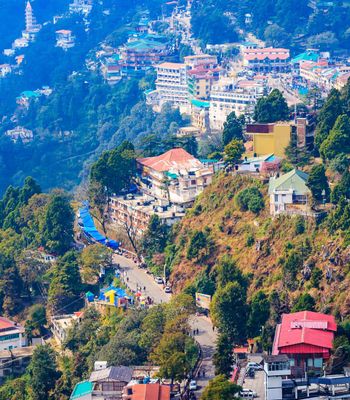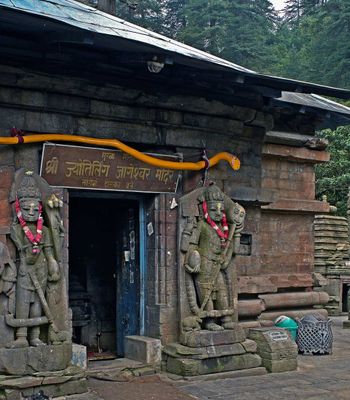
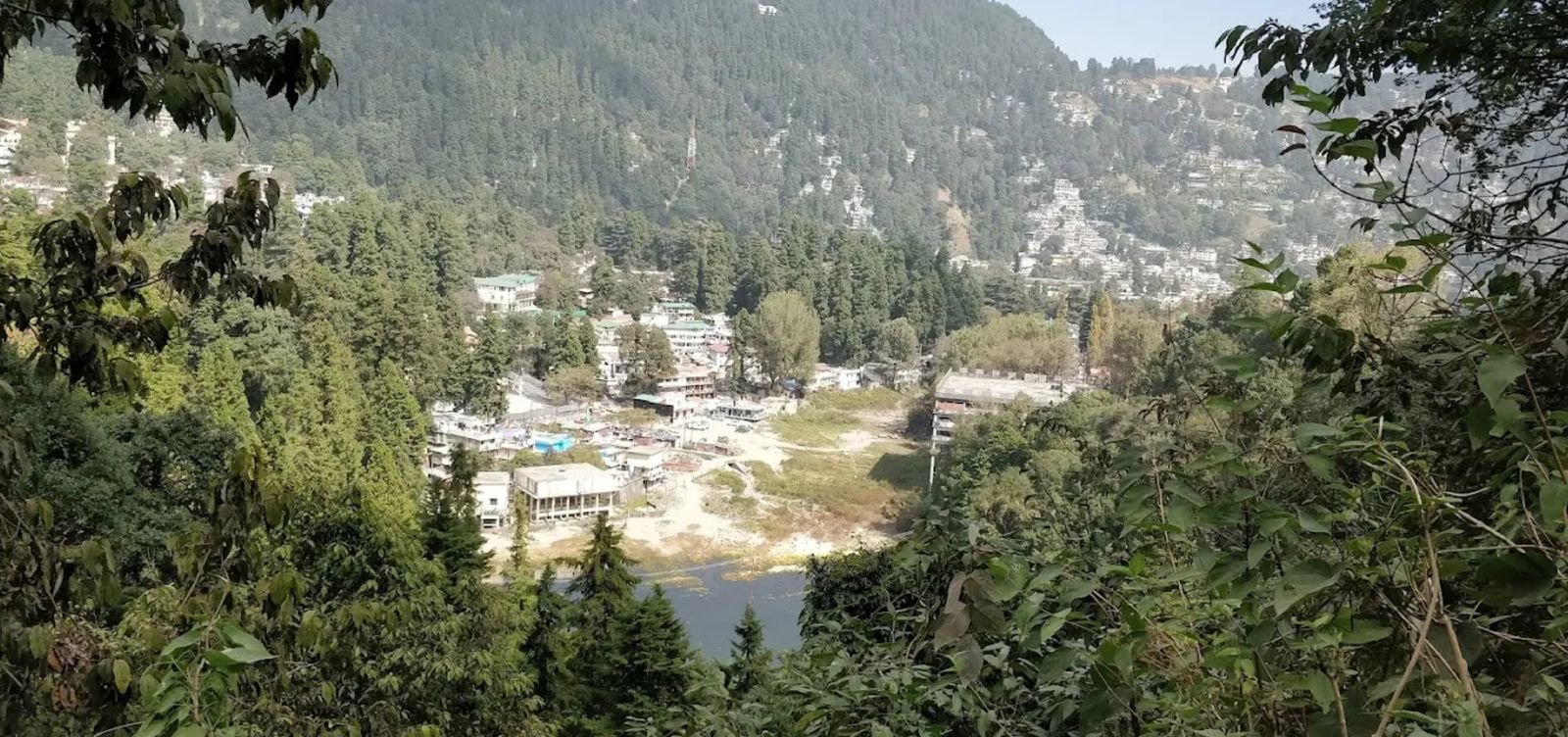
Everyone who visits Nainital gravitates toward Naini Lake. They hire boats, crowd the Mall Road, and photograph the same crescent of water backed by the same ridge of mountains. Meanwhile, less than two kilometers away, Sukha Tal sits in relative quiet — a freshwater lake that once served as Nainital's primary drinking water source and now exists in a strange limbo between neglect and rediscovery. The water here is still, almost unnervingly so, reflecting the oak and pine forests that slope down to its edges without the interruption of paddle boats or souvenir hawkers. If Naini Lake is the performer, Sukha Tal is the understudy who never got the curtain call it deserved. That imbalance, oddly, is precisely what makes it worth your time.
A Reservoir with a Complicated Past
Sukha Tal translates loosely to "dry lake," which sounds like a contradiction until you learn its history. During the British colonial period, this was the body of water that kept the hill station alive — its primary drinking source as the town's population swelled with administrators and their entourages. Then Nainital outgrew it. Municipal infrastructure shifted its sourcing to Naini Lake and other systems, and Sukha Tal lost its reason for being.
The water level dropped. Encroachment crept along the banks. For a while, the name threatened to become prophecy.
Local conservation groups and the Uttarakhand government have since intervened with varying degrees of commitment. Desilting efforts and boundary markings have slowed the encroachment, though the tension between development pressure and preservation remains visible — literally. Walk the southern edge and you'll see it in the awkward collision of cleared marshland and creeping construction, a territorial argument playing out in concrete and reeds.
What the Water Tells You
Sukha Tal doesn't perform for you the way Naini Lake does. It doesn't try. The surface runs dark green, fed by natural springs and monsoon runoff collecting in a depression ringed by forested slopes. On a windless morning, deodar cedars produce a near-perfect mirror image in that water, broken only by the soft concussion of a water bird landing.
The shoreline is marshy in places, firm in others. Walking the unpaved paths that trace the perimeter, you'll hear more than you see — the low two-note call of a cuckoo, the rustle of something small and quick vanishing into undergrowth. This isn't a manicured lakefront experience. It's raw, a little unkempt, and all the better for it.
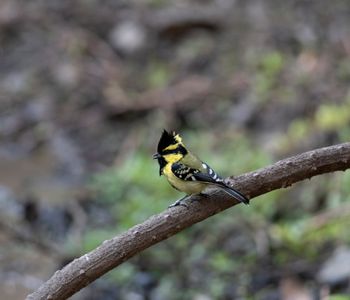
Here's the thing nobody tells you: the lake's partial neglect has been its ecological rescue. Birders have documented species at Sukha Tal that long ago abandoned the more famous lake down the road, driven off by constant boat traffic and surrounding commercial noise. The loss of civic importance may have been the best thing that ever happened to this water.
The Forest That Frames Everything
The land around Sukha Tal belongs to the oak-pine belt that defines the Kumaon Hills between 1,900 and 2,100 meters. Trees grow dense enough to block out significant portions of sky, and the temperature near the lake drops noticeably even on warm spring afternoons. You feel it on your arms — that sudden cool shift — the moment you step off the main road and onto the descending trail.
Unlike the engineered, heavily trafficked paths circling Naini Lake, the trails near Sukha Tal are informal things, worn into the hillside by local feet rather than designed for tourists. Some are steep and demand decent footwear. Others meander along the water's edge, close enough that you could trail your fingers through the surface without bending much. Carry water and a light jacket regardless of the season. The shade deceives. It hides both your thirst and the chill until they arrive together.
Getting There Without the Hassle
From Naini Lake's Tallital end, Sukha Tal is roughly a twenty-minute walk along a road that climbs gently before dropping toward the smaller lake. An auto rickshaw from the main town center costs next to nothing and leaves you at the approach road. From there, you walk. There's no formal parking area or grand entrance — just a road that narrows, a tree line that thickens, and then water.
If you're arriving in Nainital by train, Kathgodam station sits about 35 kilometers away. Shared taxis and buses run frequently between Kathgodam and the main town. Once you're settled in Nainital, reaching Sukha Tal requires no special planning. It's close enough to feel convenient, far enough to feel separate.
When the Lake Gives Its Best
The monsoon months from July through September fill Sukha Tal to its most impressive levels. The surrounding forest turns almost absurdly green, and the air carries that particular petrichor the Kumaon Hills do better than nearly anywhere else in India. But the trails go slick and leeches emerge with real enthusiasm, so tread accordingly.
October through March offers the clearest skies and the most rewarding walking. Early mornings in December bring frost to the grass along the banks and a thin mist that lifts off the water like slow smoke. This is the photographer's window — soft winter light turns the dark water silver at its edges.
Avoid holiday weekends if you can. Sukha Tal doesn't draw Naini Lake's crowds, but Nainital's overall tourist surge during peak seasons sends overflow to every accessible corner of the area. A Tuesday morning in November will give you something close to solitude.
What You Won't Find Here
There are no boating facilities at Sukha Tal. No restaurants line the shore. No ticket counters, no guided tours, no entry fees as of recent visits. This absence of infrastructure is both its limitation and its honesty. You come here for the lake itself — for the quiet, for the birds, for the particular quality of light that filters through canopy and lands on dark water.
Bring what you need, and carry out what you bring. The lake's fragile recovery depends partly on people treating it as something worth protecting rather than consuming.
A Lake Worth Knowing
Sukha Tal won't compete with Naini Lake for your attention, and it shouldn't have to. Its value lies in what it offers without spectacle — a still body of water surrounded by forest, quietly recovering from decades of indifference, alive with birdsong and the smell of wet earth. In a hill station built entirely around tourism, Sukha Tal is the rare place that asks nothing of you except that you pay attention. Give it an hour. Give it a morning. You'll leave Nainital understanding it more completely than if you'd only ever seen the lake on every postcard.