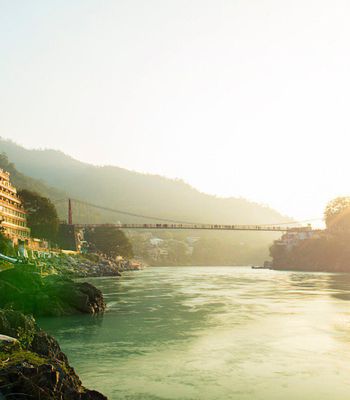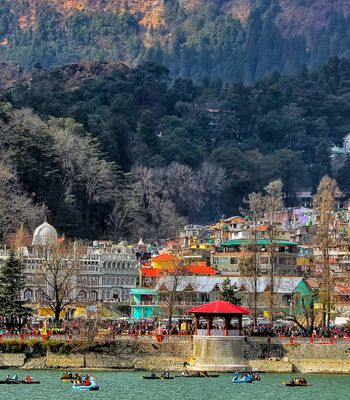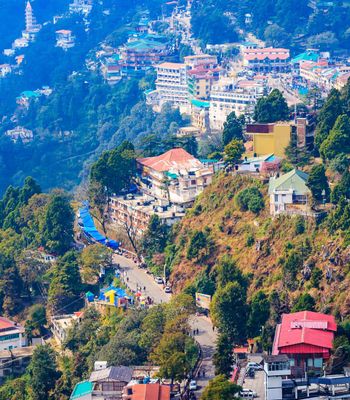
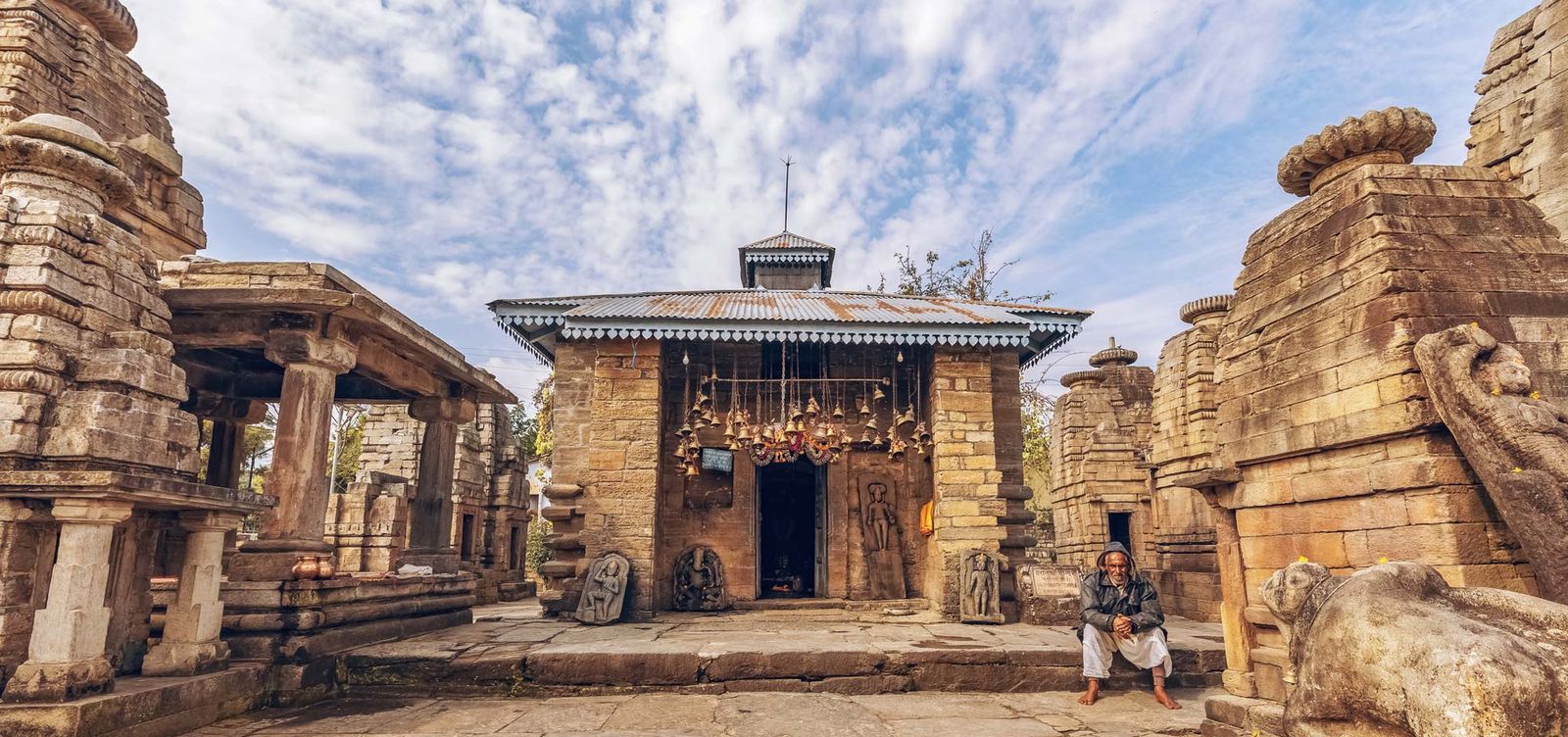
Two rivers meet in a valley cradled by the Himalayas, and where their waters merge, a stone temple has stood for centuries — its bells ringing out each morning before the mist has fully lifted. This is Bageshwar, a small Kumaoni town in Uttarakhand perched at roughly 3,000 feet, where devotion runs as deep as the Saryu and Gomti rivers that define its geography. No neon-lit promenades, no overpriced souvenir arcades — just clean mountain air, unhurried days, and the kind of authenticity that crowded hill stations traded away long ago.
A Valley That Changes Its Wardrobe Every Season
Lush hillsides rise straight from the riverbanks, draped in pine and deodar forests that darken with altitude until they meet snow-dusted summits on the horizon. Spring and early summer scatter wildflowers across the meadows — bright yellows, purples, and whites that glow against the green like scattered confetti.
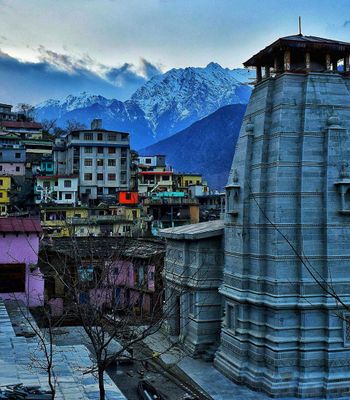
Come autumn, those same valleys trade their emerald cloak for warm amber and gold. But winter mornings? That's when Bageshwar delivers its most breathtaking gift. Step outside on a clear January dawn and the panorama of Nanda Devi and Chaukhamba materializes so sharply against the blue sky, you'll forget your hands are freezing.
Where Bells Echo Over Sacred Waters
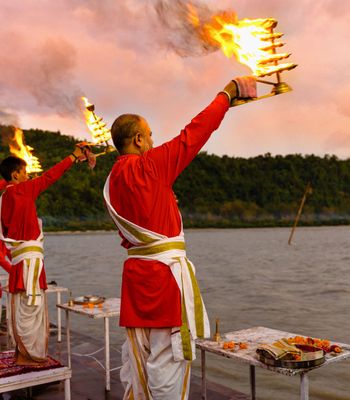
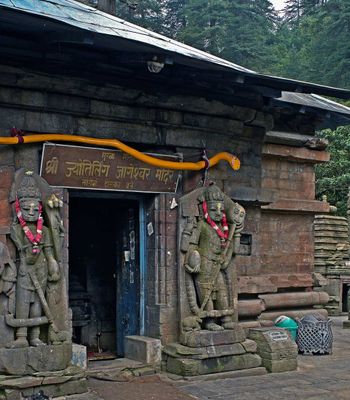
The Bagnath Temple sits exactly where the Saryu and Gomti converge — a location chosen not by architects but by faith. Dedicated to Lord Shiva and built in the elegant Nagara style, this temple is the spiritual heartbeat of Bageshwar, drawing pilgrims year-round with its carved stone walls and smoky incense that drifts across the ghats.
Every January, the town erupts into something extraordinary. The Uttarayani Mela transforms quiet riverbanks into a swirling carnival of music, barter, and ritual. Villagers from the surrounding hills pour in wearing traditional Kumaoni dress, their laughter mixing with the clang of brass utensils being traded. Brave souls wade into the icy river for holy dips while drumbeats echo off the valley walls. If you can time your visit for this fair, do it — you'll witness a raw, joyful slice of mountain culture that no curated tourist experience can replicate.
Tea, Wool, and Unhurried Conversations
Wander through the central market on any given afternoon and the pace of life here becomes immediately clear — gloriously slow. Tiny shops spill over with hand-spun woolen shawls, bags of locally ground spices that prick your nose with cardamom and turmeric, and handmade goods you won't find online.
Narrow lanes funnel you toward tea stalls where a steaming cup of chai costs almost nothing and buys you a conversation about everything. The locals are warm, curious, and genuinely happy to see visitors. Hindi flows freely, and enough English gets spoken to help you find your way. Pull up a wooden bench, wrap your hands around a hot glass, and let the town talk to you.
The Gateway to Uttarakhand's Wildest Trails
Serious trekkers already know Bageshwar's name. The town serves as the launchpad for some of the most legendary routes in the Kumaon Himalayas:
- Pindari Glacier — a classic Himalayan trek through dense forests and alpine meadows
- Sunderdhunga Glacier — remote, rugged, and stunningly beautiful
- Kafni Glacier — quieter than Pindari, with equally jaw-dropping scenery
- Roopkund — the mysterious "skeleton lake" at 16,500 feet, where hundreds of ancient human bones lie scattered along the shore
Each route pulls you deeper into a landscape that feels increasingly untouched — past villages where wood smoke curls from stone houses and children wave from terraced fields. Trekking permits and experienced local guides can be arranged right in Bageshwar, keeping logistics refreshingly simple whether you're a seasoned mountaineer or lacing up your boots for the first time.
Hidden Corners Worth the Detour
Not a trekker? Bageshwar still has plenty to reveal. A short drive uphill brings you to Chandika Temple, perched on a hilltop where the valley unfolds below in a sweeping green carpet stitched with silver rivers. The silence up here is almost tangible.
A few kilometers out of town, the Gauri Udiyar caves hide ancient rock paintings believed to be thousands of years old — faded ochre figures etched by hands that predated the temples, the trails, even the town itself. These quieter discoveries give you every reason to linger an extra day or two.
When to Go and How to Get There
March through June brings warm sunshine and open trails — ideal for both sightseeing and trekking. September to November offers crisp autumn light and thinner crowds, with the mountains freshly washed by the retreating monsoon. Avoid July and August unless you enjoy landslide alerts and waterlogged roads; heavy monsoon rains can shut down trekking routes and make travel unpredictable.
Regular bus services and shared taxis connect Bageshwar to Almora, Kausani, and Kathgodam, the nearest major railhead. The roads wind through some of the most scenic valley corridors in Kumaon, so even the journey here feels like part of the adventure.
Simple Stays, Lasting Impressions
Accommodations lean toward modest guesthouses and government-run rest houses — clean beds, hot water (usually), and mountain views from the window. You won't find infinity pools or spa menus, and that's exactly the point.
Bageshwar rewards a different kind of traveler: the one who'd rather sit by a river watching the light shift across snow peaks than scroll through a resort's amenity list. Come for the ancient temples, the glacier treks, or simply the privilege of breathing deeply in a place where the Himalayas still feel wild and close. Whatever draws you here, you'll carry it home long after the journey ends.