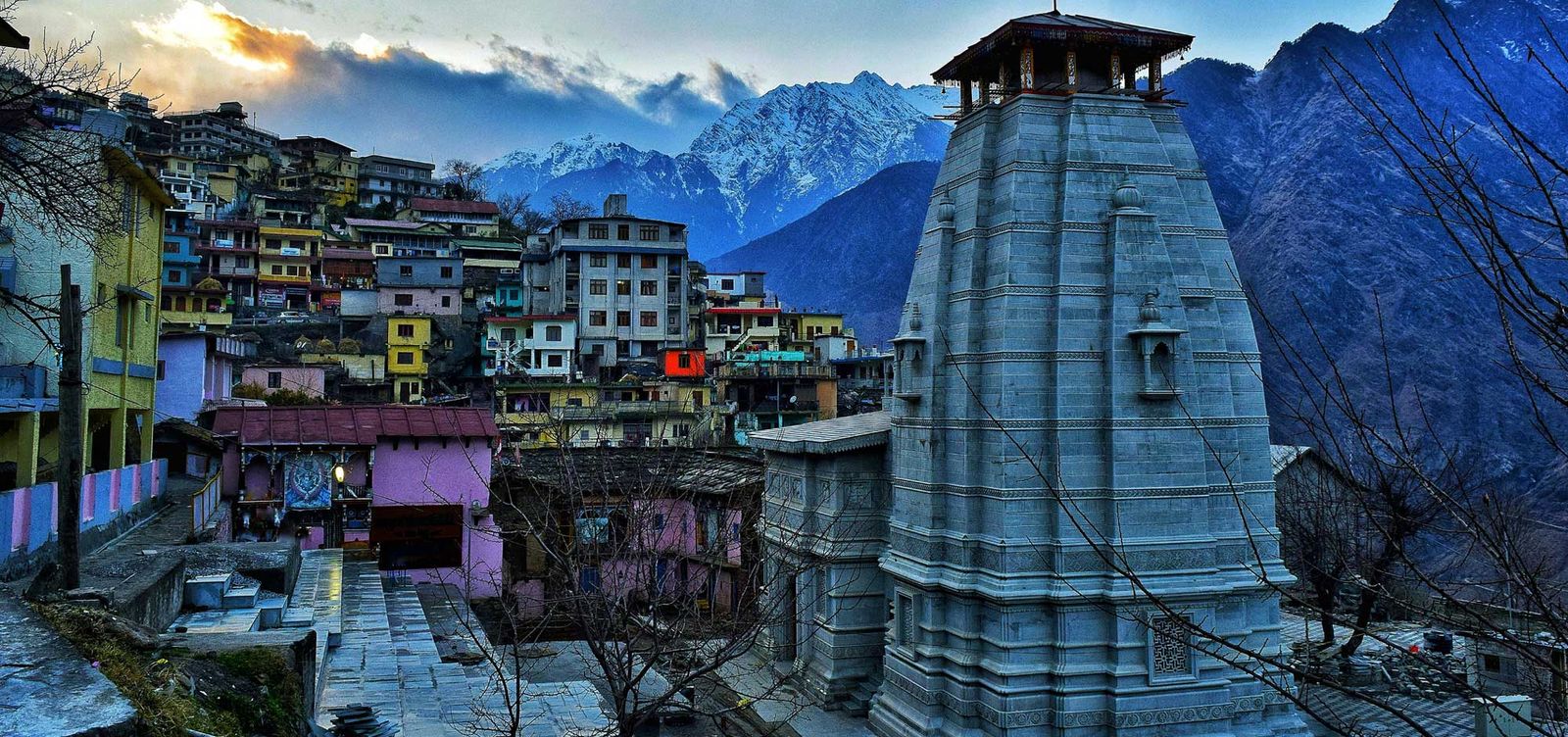
The morning air bites your cheeks as you step out onto the narrow street, and then you see it — a wall of Himalayan peaks, impossibly close, their snow-capped ridges catching the first golden light while the Alaknanda valley below still sleeps under a blanket of mist. Welcome to Joshimath, a town that has been humbling travelers for centuries.
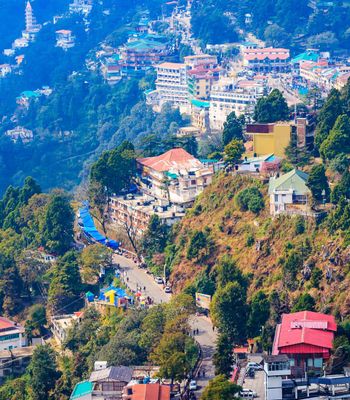
Perched at roughly 6,000 feet on a steep slope in Uttarakhand's Chamoli district, this ancient settlement sits at the confluence of two sacred rivers, guarding the gateway to some of the most revered destinations in the Indian Himalayas. It's part pilgrim town, part mountaineer's base camp, part living museum of Hindu philosophy — and entirely unlike anywhere else you've been.
Where Faith Took Root in the Mountains
Over twelve hundred years ago, the philosopher-saint Adi Shankaracharya climbed to this very ridge and established one of his four cardinal monasteries — the Jyotir Math. It still stands, still active, still radiating a quiet gravity that draws worshippers and the simply curious alike.
Step through its gates and you'll find a mulberry tree that has been rooted here for over a thousand years, its gnarled trunk a living witness to centuries of prayer and pilgrimage. The bark feels cool and impossibly ancient under your fingertips.
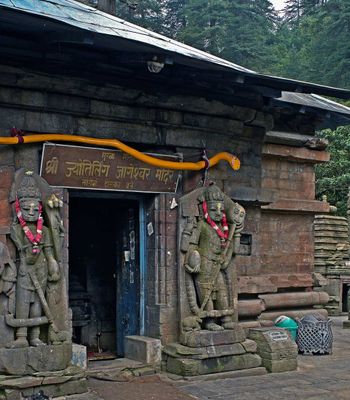
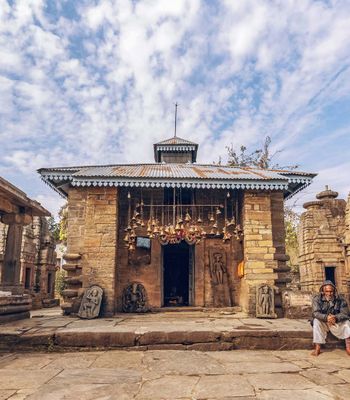
Beyond the math, temples punctuate the town like spiritual landmarks on a map. The Narasimha Temple houses a deity whose form, locals say, is slowly shrinking — and when it disappears entirely, the mountains will close the path to Badrinath forever. Whether you take the legend literally or not, standing before that idol sends a shiver down your spine. Nearby, the Vasudeva Temple adds another layer to Joshimath's deeply woven spiritual tapestry.
A Front-Row Seat to the Garhwal Giants
No photograph fully prepares you for the panorama. The snow-laden peaks of the Garhwal Himalayas don't just frame the horizon — they dominate it, sharp ridgelines slicing into a sky so blue it almost hurts to look at.
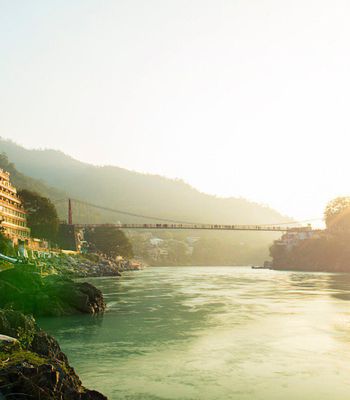
Below, the Alaknanda River carves its silver thread through the valley, its roar a constant, comforting bass note beneath the town's daily rhythms. Surrounding forests of oak, deodar, and rhododendron shift their palette with the seasons — deep green in summer, fiery crimson in autumn, skeletal and frost-kissed through winter.
Every clear morning here feels like a private audience with the Himalayas.
The Gateway That Opens Worlds
Most travelers arrive in Joshimath on their way to somewhere extraordinary — and the options read like a greatest-hits list of Himalayan adventures:
- Badrinath — one of the sacred Char Dham pilgrimage sites, just a winding drive further up the valley
- Valley of Flowers National Park — a UNESCO World Heritage Site carpeted in alpine blooms from July through September
- Hemkund Sahib — a glacial lake and Sikh shrine sitting at a breathtaking 15,200 feet
- Auli — India's premier skiing destination, connected by one of Asia's longest cable cars
- Kuari Pass — a classic trek route offering some of the best ridge-walking in Uttarakhand
During pilgrimage season, roughly May through November, the town hums with energy. Devotees in saffron scarves jostle alongside trekkers in Gore-Tex, convoys of vehicles inch along mountain switchbacks, and the chai stalls do a roaring trade from dawn until well after dark.
Soaring Above the Clouds to Auli
A gondola ride that would make your stomach flip and your camera work overtime — that's the cable car linking Joshimath to Auli. As the cabin climbs, the world drops away and the great peaks reveal themselves one by one: Nanda Devi, Kamet, Mana Parvat, each more staggering than the last.
Between January and March, Auli's slopes transform into a pristine white playground for skiers and snowboarders. But even if you've never touched a pair of skis, simply standing in those high meadows surrounded by 360 degrees of Himalayan grandeur is worth every rupee of the ticket.
Come summer, the same slopes burst into rolling green expanses — perfect for unhurried hikes, wildflower spotting, and the kind of photography that fills up memory cards embarrassingly fast.
Bazaar Strolls and Mountain Meals
Life in Joshimath refuses to be rushed. The main bazaar threads along a narrow road where shopkeepers beckon from stalls piled high with thick woolen shawls, bags of dried apricots, bundles of local herbs, and garlands of marigolds destined for temple offerings.
Duck into one of the small eateries and warm yourself with a plate of Garhwali dal — lentils slow-cooked with local spices — alongside thick rotis and a bowl of fiery red chutney that'll clear your sinuses at altitude. The food here is simple, hearty, and built for mountain appetites. Conversations in Hindi and the melodic lilt of Garhwali drift between tables, and locals are genuinely happy to point you toward the best trailhead, the oldest temple, or the perfect sunrise viewpoint.
Timing Your Visit Just Right
May through June brings warm days, wildflowers beginning to bloom, and roads freshly opened after winter. September and October deliver crystal-clear skies, thinner crowds, and autumn color blazing through the forests. Either window is ideal.
Avoid July and August unless you're comfortable with heavy monsoon rains and the occasional landslide blocking road access — the mountains play by their own rules during this season. Winter visits reward you with Auli's snow-covered slopes, but expect limited services in Joshimath itself as temperatures plunge and some guesthouses shutter until spring.
A Note on Current Conditions
Honesty matters more than hype. Joshimath has faced serious challenges from land subsidence in recent years, with some neighborhoods experiencing visible structural damage. Before you book, check the latest local advisories and road conditions. Travel responsibly, support local businesses, and stay informed — the community here is resilient, and your visit genuinely helps.
Despite these concerns, Joshimath continues to welcome travelers and remains a fully functioning gateway to the high Himalayas.
The Kind of Place That Stays With You
There are hill towns you visit and forget by the time you unpack back home. Joshimath isn't one of them. Something about the collision of ancient faith, raw mountain grandeur, and the quiet warmth of its people lodges itself somewhere deep — in the memory of mist burning off a valley at dawn, in the echo of temple bells against granite peaks, in the taste of mountain air so clean it almost stings.
Whether you're here for a single night on the pilgrim road or a full week of trekking and exploration, this town at the edge of the high Himalayas leaves a mark that lingers long after the journey home.