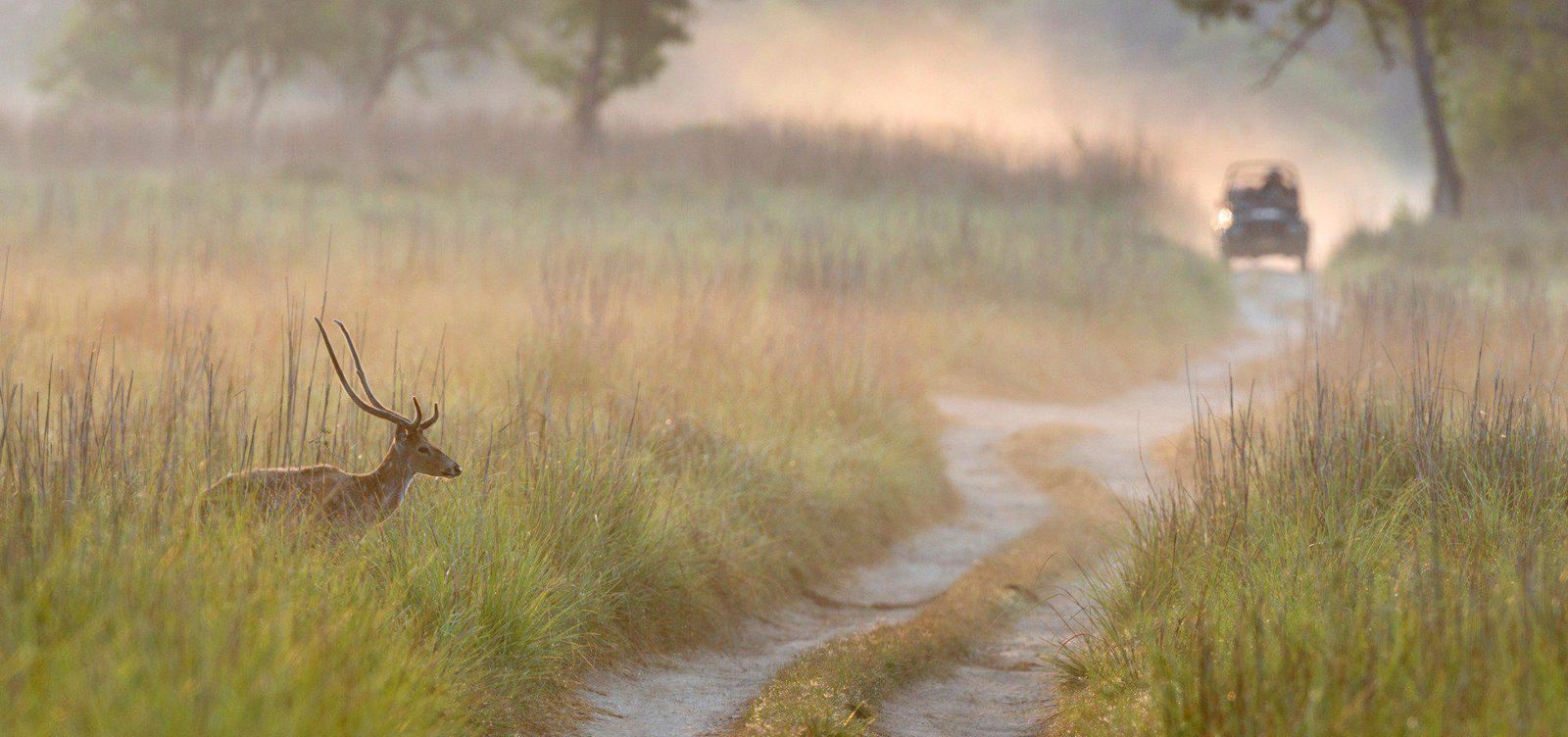
A rustle in the tall grass. Your jeep rolls to a stop. The naturalist raises a silent hand, and your heart hammers against your ribs. Somewhere in that sea of golden-green, a Bengal tiger is watching you back. This is Jim Corbett — India's oldest national park and one of the most electrifying wildlife experiences on the planet.
Sprawling across more than 500 square kilometers of Himalayan foothills in Uttarakhand, this legendary reserve has been drawing wildlife lovers since 1936, when it was first established as Hailey National Park. It was later renamed for Jim Corbett himself — the hunter-turned-conservationist who traded his rifle for a camera and spent his life fighting to save the Bengal tiger. Nearly a century on, his legacy breathes through every sal tree and river bend.
A Landscape That Shapeshifts Around Every Bend
One moment you're deep inside cathedral-like sal forests, sunlight filtering through the canopy in shimmering green-gold coins that dance across the forest floor. The next, the trees fall away and you're staring across the Patli Dun valley — a vast sweep of grassland where spotted deer lift their heads beneath wide, cloud-streaked skies.
The Ramganga River is the park's lifeblood, carving through its heart and spilling into marshlands that hum with birdcall. And then there's Dhikala — the crown jewel. From the elevated ridges of this iconic zone, the river, forest, and snow-dusted mountains merge into a panorama so pristine it feels like peering into a world before human footprints existed.
The Tiger — And Everything Else That Moves
Let's be honest: you're here for the tiger. As part of India's pioneering Project Tiger initiative, Jim Corbett supports a thriving population of these magnificent cats. Spotting one isn't guaranteed — it takes patience, quiet, and a generous pinch of luck. But that's exactly what makes the anticipation so intoxicating. Every snapped twig, every alarm call from a langur, sends electricity through the jeep.
Even on a "no tiger" day, the park delivers in spades. Wild elephants crash through the undergrowth with a grace that defies their size. Leopards melt into dappled shadow on rocky outcrops. Sloth bears shuffle along forest paths, and jackals trot boldly through the grasslands at dusk. Herds of chital and the larger, darker sambar graze alongside the river.
Birdwatchers, bring extra memory cards. More than 600 avian species have been recorded here — from crested serpent eagles spiraling on thermals to jewel-bright kingfishers dive-bombing the Ramganga's shallows.
Five Zones, Five Different Adventures
The park is divided into distinct zones, each with its own personality and requiring a separate permit:
- Dhikala — The largest and most famous zone. Sweeping grasslands, the best tiger odds, and that jaw-dropping river valley view.
- Bijrani — Perfect for first-timers. Easier access, reliable sightings, and a gentler introduction to the wild.
- Jhirna — The only zone open year-round, making it your go-to option during shoulder seasons.
- Durga Devi — Tucked into the northeastern corner, this quieter zone is a birder's paradise with fewer crowds and forested trails.
- Sitabani — A buffer zone that doesn't require a park entry permit — ideal for a more relaxed, self-paced exploration.
Book your jeep safari well in advance, especially during peak months. Competition for Dhikala permits can be fierce. And set that alarm for an ungodly hour — the early morning drives, when mist still clings to the grasslands and animals are at their most active, are worth every lost minute of sleep.
Ramnagar: Your Basecamp With Soul
The dusty, bustling town of Ramnagar is your gateway, and it's more than just a place to sleep. Accommodation ranges from no-frills guesthouses to polished wildlife resorts with verandas overlooking the forest edge. What makes this town special are its people — local guides and naturalists whose eyes light up when they talk about "their" tigers, calling them by name and recounting encounters like family stories.
After a long day on safari, sink into a plate of hearty North Indian food. Many resorts weave in regional Kumaoni flavors — fragrant dals slow-cooked with local spices, fresh rotis pulled from a tandoor, and simple vegetable dishes that taste extraordinary when you're ravenous from hours in the open air.
When to Go (This Matters More Than You Think)
Timing can make or break your Corbett experience. The park partially shuts down during monsoon season — roughly mid-June through mid-November — when torrential rains turn roads into rivers.
November through June is the golden window. March to May is prime tiger-spotting season: the vegetation thins, water sources shrink, and animals congregate at predictable points, dramatically improving your chances. Winter visits (December–February) offer crisp, cool mornings and gorgeous light, though the denser foliage can play hide-and-seek with your sightings.
The Moments That Follow You Home
Dawn breaks over Dhikala, and the forest holds its breath. A distant elephant trumpet rolls across the valley like a declaration. Somewhere in the tall grass, a flash of orange and black — there, then gone — leaves your pulse racing and your hands trembling around your binoculars.
Whether you're a seasoned wildlife photographer, a wide-eyed first-timer, or a family craving something raw and real far from the noise of city life, Jim Corbett National Park doesn't just meet expectations. It rewrites them. These are the moments that lodge themselves deep in your memory — the ones you'll still be talking about years from now, voice dropping to a whisper, as if the tiger might hear you.