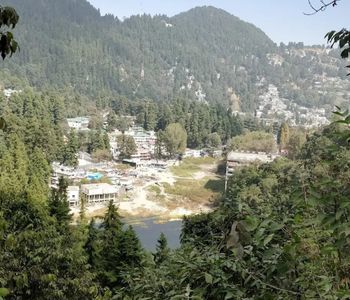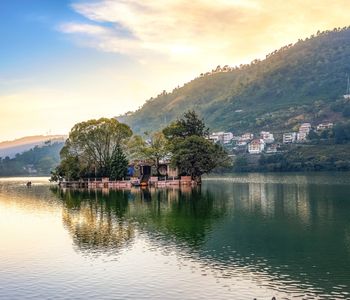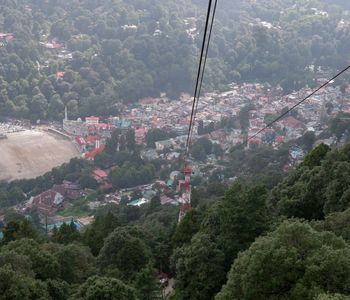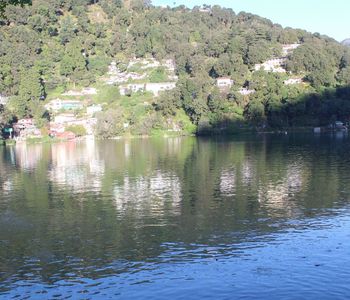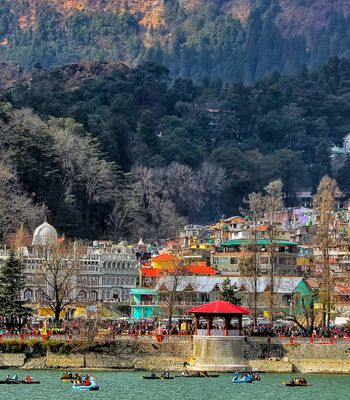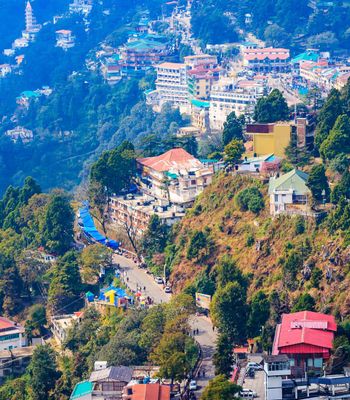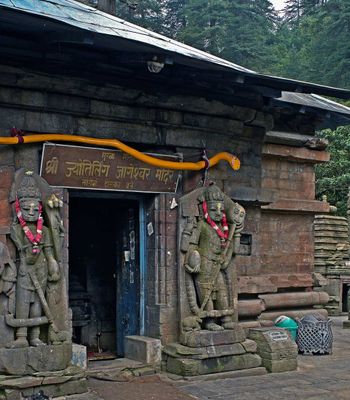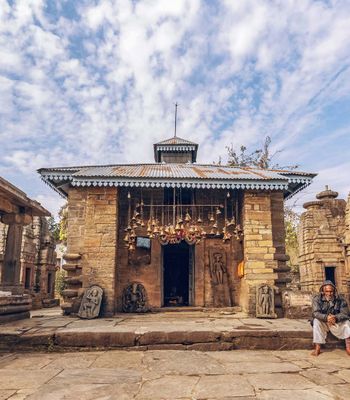
At the northern edge of Naini Lake, where the water turns dark beneath the press of surrounding hills, a temple sits on flat ground that feels almost too plain for the weight of what it holds. The Naina Devi Temple doesn't compete for your attention with soaring towers or gilded facades. It pulls you in differently — through the relentless clang of brass bells, the dense perfume of marigold garlands crushed between devotees' palms, and a quiet gravity that's been accumulating here for centuries. The town itself takes its name from this shrine. "Naini" refers to the eyes of the Goddess Sati, which according to Hindu belief fell at this precise spot. Every road in Nainital, every lake-facing hotel, every switchback trail climbing the surrounding ridges eventually traces its identity back to this unassuming structure at the water's edge.
Where Myth and Geography Conspire
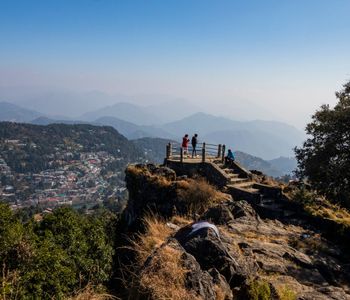
The temple belongs to the network of Shakti Pithas — those sacred sites scattered across the subcontinent where parts of Goddess Sati's body are said to have fallen after Lord Vishnu's Sudarshana Chakra dismembered her corpse. In Nainital's case, it was her eyes. The connection isn't merely theological. The lake itself, viewed from the ridgeline above, is shaped roughly like a human eye. Too convenient? Perhaps. But stand there and tell me it isn't convincing.
Inside the sanctum, two stone eyes represent the fallen naina. They're small, unpolished, nothing like the jewel-heavy idols you'd expect at a site of this stature. That austerity is the point. Devotees don't come here to admire craftsmanship. They come to kneel before something they consider genuinely ancient and alive.
What Fire Took and Faith Rebuilt
The temple you see today isn't the original. A devastating forest fire in 1880 leveled much of the structure, along with a significant portion of Nainital's colonial-era buildings. What stands now was reconstructed shortly after — the architecture carries that late-nineteenth-century functionality, simpler and more direct, lacking the layered ornamentation of temples that survived the centuries unscathed.
The rebuild preserved what mattered. The sacred eyes came through undamaged, and the temple's position at the lake's edge was maintained to the inch. Inside the main shrine, alongside the Naina Devi idol, you'll find representations of Maa Kali, Lord Ganesha, and Lord Hanuman. The arrangement is intimate rather than imposing — each deity close enough that incense smoke drifts freely between them.
Here's what most people walk past without knowing: the temple survived not only that fire but a catastrophic landslide in the same year that killed over 150 people in the area. Among locals, this double survival has hardened into a conviction that the place is, in some essential way, indestructible. Whether you share that belief or not, it charges the air inside with a seriousness that goes well beyond routine worship.
The Hours That Matter
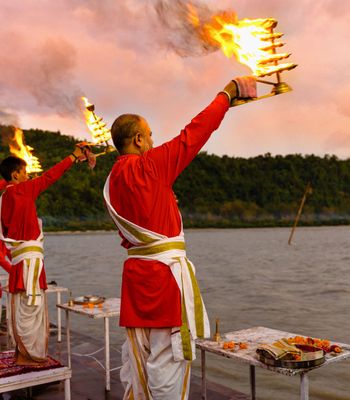
Morning aarti begins at dawn, and arriving early puts you in the temple at its most concentrated. A handful of priests chant in the inner sanctum while the lake behind you holds perfectly still, glassy and silent. Bell tones carry across the water with startling clarity — no competing noise from paddle boats or tourist chatter yet. Just metal, voice, and cold air.
By mid-morning, the mood fractures. Pilgrims and tourists merge into a single stream flowing through the compact interior. Vendors outside sell prasad — coconut, sweets, bright red cloth — and the narrow lane approaching the entrance thickens with foot traffic. The evening aarti draws another surge, this time accompanied by oil lamps whose reflections tremble on the lake surface in a way that no amount of municipal lighting can reproduce.
Early afternoon, between those two tidal surges, the temple empties considerably. That's your window if you want to study the carvings in peace, sit in the courtyard without being jostled, or simply observe the Rhesus macaques that patrol the grounds with the confidence of landlords. They're bold and fast-fingered — keep your offerings secured until you're ready to present them.
Getting There Without the Runaround
The temple sits at the northern end of Mall Road, Nainital's main pedestrian thoroughfare running along the lake's northern shore. From most hotels in Tallital or Mallital, you can walk there in fifteen to twenty minutes along the lakefront promenade. Cycle rickshaws cover the flat stretches if an earlier hillside trek has left your legs rubbery.
Coming from Delhi, the nearest railway station is Kathgodam, roughly 35 kilometers downhill. Shared taxis and local buses wind up the mountain road from there in about ninety minutes. There's no entrance fee — the temple is open to everyone regardless of faith. You'll leave your shoes at the entrance, where attendants manage the sprawl of footwear with surprising order given the volume.
Dress modestly, as you would at any active Hindu temple. Between November and February, when Nainital's temperatures drop near freezing, the stone floors bite through bare feet. Bring thick socks you don't mind walking in.
Eight Days in September
Each September, during Nanda Ashtami, the temple becomes the spiritual axis of the entire Kumaon region. Processions snake through Nainital's narrow lanes carrying the idol of Nanda Devi, accompanied by drums, folk songs in Kumaoni dialect, and crowds dense enough to halt all vehicular movement. The festival runs eight days. The temple compound overflows with offerings, ritual fires, and the kind of collective devotion that quiets even the most determined skeptic.
Attending during this period means accepting the crush as inseparable from the experience. Book accommodation well ahead — Nainital's hotel inventory visibly strains during the festival. Outside of Nanda Ashtami, the broader Navratri celebrations in spring and autumn also bring heightened energy to the temple, though at a scale you can navigate without planning a military campaign.
What Surrounds You
Because the temple sits directly on Naini Lake, you're already at the geographic center of Nainital. A short walk south brings you to the Nainital Boat Club, one of the oldest rowing clubs in India. Hire a boat and look back at the temple from the water. From there, with Naini Peak rising behind it, the temple's relationship to the lake — eye to eye, if you will — becomes impossible to miss.
The Tibetan Market stretches along a road nearby, its stalls selling wool shawls, carved wooden boxes, and brass pieces that make genuinely decent souvenirs — a rare claim for any hill station. When hunger hits, grab a plate of steaming momos from one of the smaller stalls. They're cheap, filling, and carry enough chili heat to push back against the mountain cold.
The Temple That Named a Town
Most temples carry the name of the place they sit in. Naina Devi reversed that arrangement entirely — the town carries the temple's name. That single fact tells you everything worth knowing about scale of significance here. You don't come for architecture or photo opportunities. You come because the entire identity of Nainital radiates outward from this one stone floor, these two unpolished stone eyes, and the lake that mirrors them. Stand at the entrance during evening aarti — lamplight shivering on black water behind you, bell tones filling the cold air above — and you'll understand why the town never considered calling itself anything else.