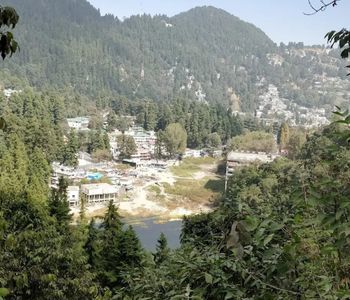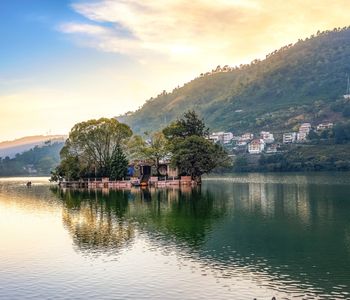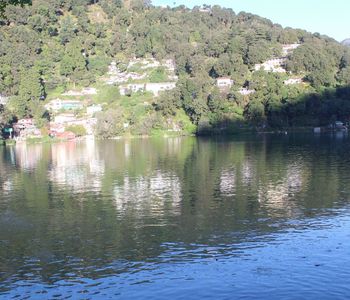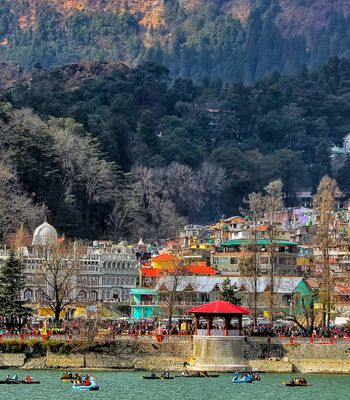
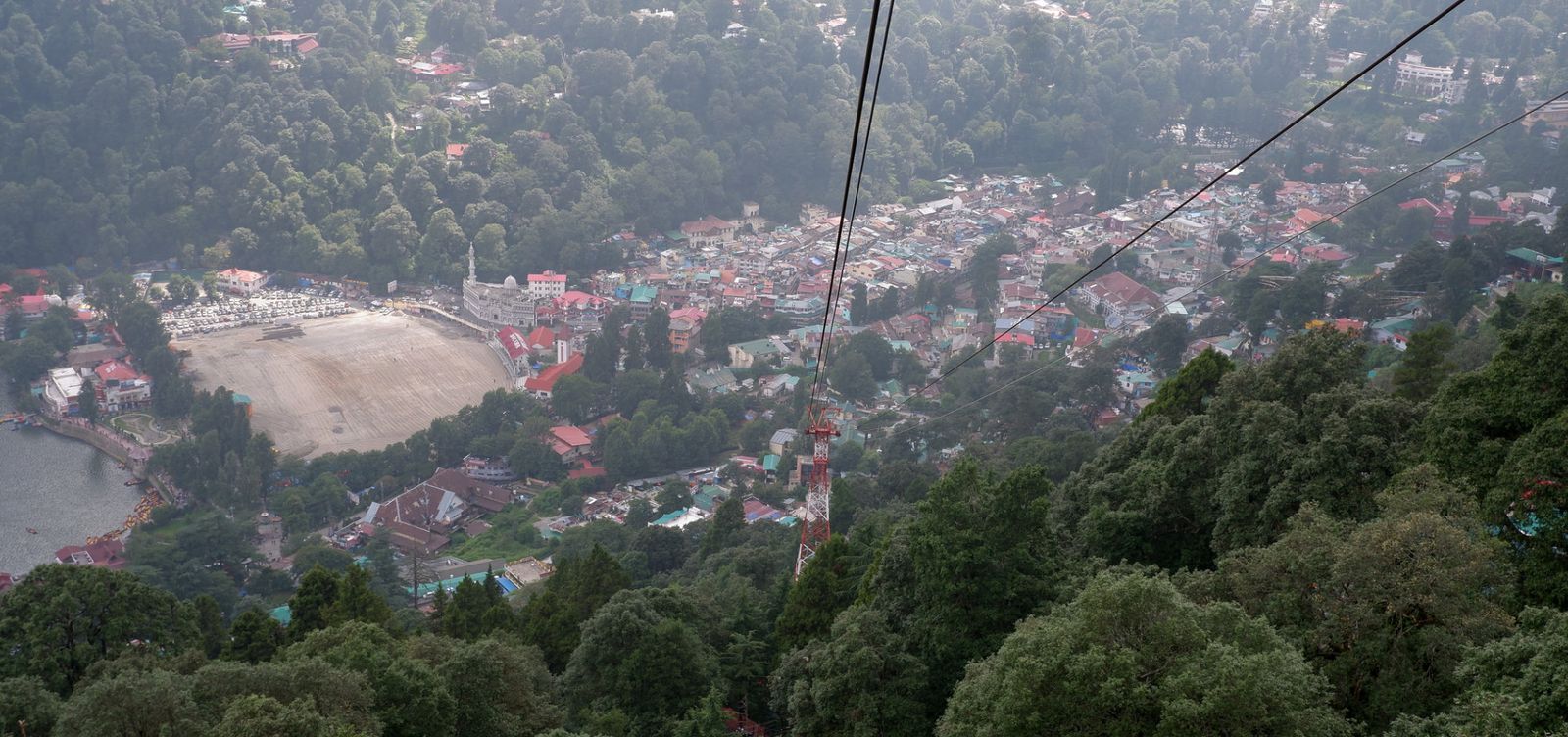
The cable car lurches forward, and within seconds the ground drops away. Below you, Naini Lake shrinks into a crescent of green glass pressed between ridges of oak and pine. The town itself — all stacked rooftops and narrow lanes — looks improbable from up here, a hill station clinging to the mountainside as though it might slide into the water at any moment. This is the Nainital Aerial Ropeway, and it does something no lakeside stroll or hilltop drive can replicate: it lifts you clean out of the town's cheerful chaos and delivers you, in under five minutes, to a vantage point where the entire Kumaon Hills arrange themselves before you like a topographic map made real. The ride is short. The perspective it offers is not.
A Cable Car With a Specific Job
The ropeway connects Mallital, the lower station near the edge of Naini Lake, to Snow View Point at roughly 2,270 metres above sea level. That's an elevation gain of about 200 metres in a ride that covers just under half a kilometre. The cabins are compact — each holds a handful of passengers — and they move at a pace leisurely enough that you don't feel rushed past the scenery. You feel suspended in it.
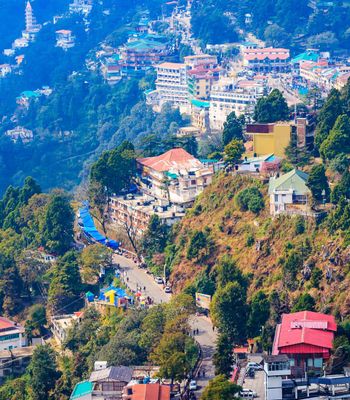
What earns this ropeway its reputation isn't engineering ambition. Plenty of cable cars climb higher and faster. It's the geometry. The trajectory carries you directly over Nainital's densest stretch of habitation, so you're staring straight down at corrugated tin roofs, temple spires, school courtyards, and the occasional monkey balanced on a water tank with the territorial confidence of a landlord. Then the buildings thin out, the forest closes in, and suddenly you're stepping onto a concrete platform where the Himalayas reveal themselves in stacked layers of blue and white.
What the Summit Actually Delivers
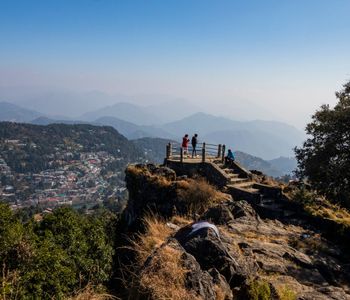
Snow View Point earned its name honestly. On a clear day — and this is the caveat that governs everything — you can spot Nanda Devi, Trisul, and Nanda Kot, three of the region's most imposing peaks, their summits white even when the valleys below bake in warmth. The view is panoramic in the truest sense: you turn slowly and the mountains keep going. A small telescope mounted on the observation deck lets you pick out individual ridges and glaciers, though the lens carries the scars of a few thousand hands and offers more atmosphere than precision.
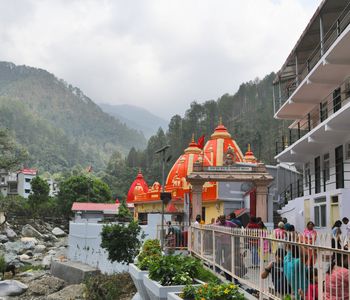
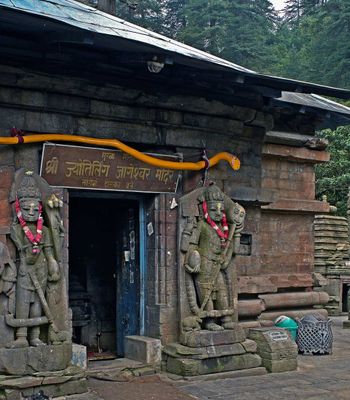
A temple dedicated to Durga sits at the summit, modest in scale but busy with devotees who've made the ascent for reasons that have nothing to do with scenery. Beside it, food stalls sell tea, maggi noodles, and roasted corn. The tea is worth having. It arrives scalding in a small glass, and at this altitude the warmth cuts through something the cold alone didn't explain. A few souvenir shops round out the scene — wool shawls, miniature prayer bells that you'll hear clinking all the way back down the ropeway.
Here's the thing nobody tells you: don't come only on a perfectly clear morning. An afternoon visit, when clouds roll in at eye level and the peaks vanish behind shifting curtains of mist, transforms Snow View Point into something more atmospheric than any calendar photograph. The clouds move fast here. One moment there's nothing but grey; thirty seconds later, a snow-capped summit appears in a gap like a stage curtain pulled aside by an unseen hand. That drama is harder to capture on a phone but far easier to remember years later.
The Practical Side of Getting Airborne
The ropeway operates daily, generally from 10 a.m. to 4 p.m., though hours shift with weather and season. Strong winds or heavy rain shut it down without ceremony — the operators don't negotiate with physics, which is reassuring rather than inconvenient. Ticket prices hover around 300 rupees for an adult round trip, though these figures get revised periodically. Children receive a discount. Pay at the lower station's ticket window, where a queue forms quickly after midday.
The wait can stretch to 30 or 40 minutes during peak season, which runs from April through June and again in October. Weekends compound the problem considerably. Arrive by 10 a.m. on a weekday and you'll likely walk straight onto a cabin. Carry a light jacket regardless of the month — the temperature at Snow View Point sits noticeably below whatever warmth you left at the lakeside.
Finding Your Way to the Lower Station
The Mallital end of the ropeway sits close to the northern shore of Naini Lake, within walking distance of the Naina Devi Temple and the Tibetan Market. If you're staying in the Mall Road area, it's a ten-minute walk at most. Auto rickshaws and cycle rickshaws circulate constantly around the lake, and any driver will know the ropeway station — it's been operating here since the 1960s, which makes it one of Nainital's oldest mechanical attractions and one of its least controversial conversation topics.
From Kathgodam, the nearest railway station about 35 kilometres away, shared taxis and buses run frequently up the winding road to Nainital. The drive takes roughly 90 minutes, depending on traffic and the driver's personal interpretation of speed limits. Delhi lies about 300 kilometres to the south, a six-to-seven-hour drive that most people break up with a stop in Haldwani for fuel and food.
When the Ride Truly Earns Its Keep
Timing matters more than you'd expect. Winter visits, between December and February, deliver the clearest Himalayan views but also the coldest temperatures at the summit — expect single digits in Celsius, sometimes lower. The ropeway may close briefly during heavy snowfall. Spring brings rhododendrons blooming across the hillside below the cable line, splashes of red against deep green that look almost deliberate, as if someone planned the route with aesthetics in mind. Monsoon months, July through September, are the least predictable; the clouds thicken, the rain persists, and the ropeway's operating hours become a matter of optimism rather than schedule.
The sweet spot falls in October and early November. The monsoon has scrubbed the atmosphere clean, the peaks stand sharp against a deep blue sky, and the tourist crowds have thinned just enough that the queue at the lower station stays manageable. The light at this time of year turns golden by three in the afternoon, and everything — the lake, the town, the distant snowfields — takes on that particular warmth that makes you reach for your camera even though you know the photo won't capture what your eyes are actually seeing.
More Than a Gondola Ride
Nainital's Aerial Ropeway won't redefine your understanding of cable car technology. The cabins are functional, not luxurious. The ride is measured in minutes, not hours. But what it does, with quiet efficiency, is peel away the town's ground-level personality — the honking, the haggling, the press of bodies on Mall Road — and replace it with altitude and silence and a horizon that belongs to a different scale entirely. You step into the cabin as a tourist in a busy hill station. You step out at the top as someone standing on the spine of the mountains. That shift alone is worth the ticket.