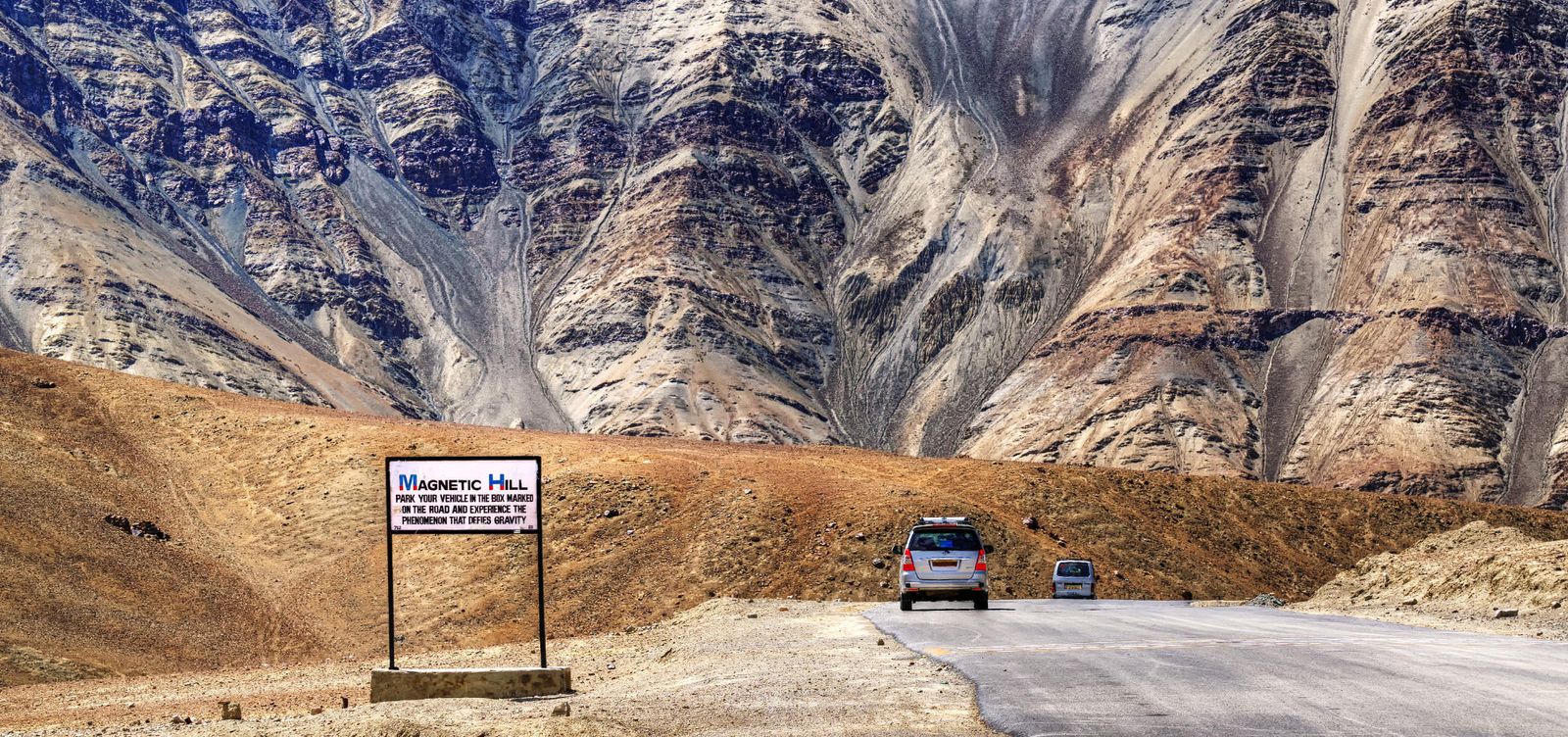
About thirty kilometers from Leh, on the Leh-Kargil highway, there's a stretch of road where your car appears to roll uphill on its own. You park at the white marking painted on the asphalt, shift to neutral, release the brake, and watch the vehicle creep forward — seemingly climbing the slope ahead without any assistance. The engine is off. Nobody's pushing. And for a moment, the laws of physics feel negotiable.
Magnetic Hill is one of those places that trades entirely on a single trick, and that trick lasts roughly ninety seconds. Yet thousands of travelers pull over here every year, and the Indian Air Force once posted a sign warning pilots of magnetic interference in the area. The truth behind the phenomenon is more interesting than the myth — and the landscape surrounding it is worth far more of your attention than the road itself.
The Illusion That Launched a Thousand Detours
Here's what's actually happening. The terrain around Magnetic Hill creates an optical illusion. The road that appears to slope upward is, in fact, sloping gently downward. The surrounding hills and the horizon line conspire to deceive your spatial perception, turning a slight descent into what looks like a steady climb. Your car isn't defying gravity. Gravity is doing exactly what it always does — pulling your vehicle downhill.
Knowing this doesn't entirely kill the fun. There's something deeply satisfying about experiencing the illusion firsthand, feeling your rational brain quarrel with your eyes. You sit in the driver's seat, hands off the wheel, watching the speedometer tick up to five or six kilometers per hour, and your gut insists the car is climbing. It isn't. But your gut is very convincing.
Similar gravity hills exist across the world — in Scotland, South Korea, Australia, parts of the American Midwest. Magnetic Hill happens to sit at roughly 11,000 feet above sea level on one of the most dramatic highways in Asia, which gives it an unfair advantage in the atmosphere department.
Where the Real Spectacle Begins
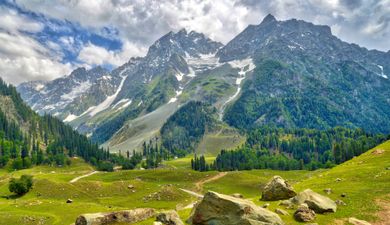
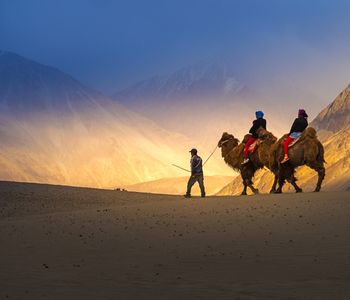
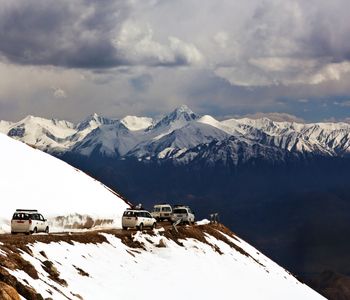
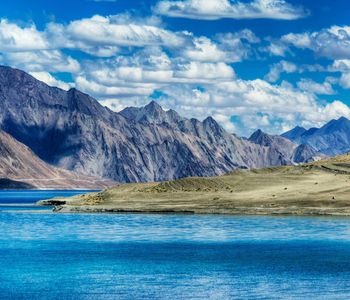
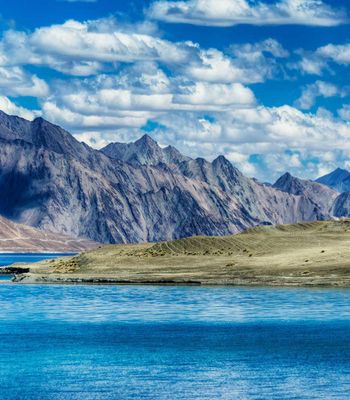
The road trick takes less than two minutes. The landscape takes your breath in a more literal way — the altitude sees to that. On every side, the Zanskar Range unfolds in shades of rust, charcoal, and pale gold. Vegetation is sparse. The rock faces are bare and folded, exposing geological layers that look like the earth was pressed between giant palms and squeezed.
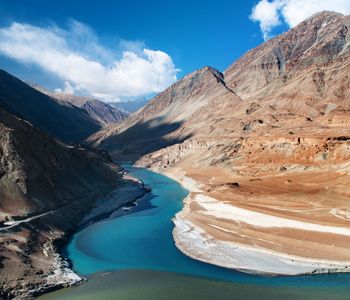
The Sindhu River, more commonly known as the Indus, runs nearby. Its water is a startling blue-green against the brown desert terrain, and the confluence with the Zanskar River lies not far south. If you've driven from Leh, you've already passed through some of the most austere mountain scenery on the subcontinent. Magnetic Hill sits in the middle of this emptiness like a roadside curiosity at the edge of the world.
What strikes you most is the silence. Step away from the parked cars and the other travelers fumbling with their handbrakes, and the quiet at this altitude is total. Wind moves across the valley floor without rustling anything because there's almost nothing to rustle. It's the kind of silence that makes your own heartbeat feel intrusive.
A Gurudwara Worth More Than the Hill
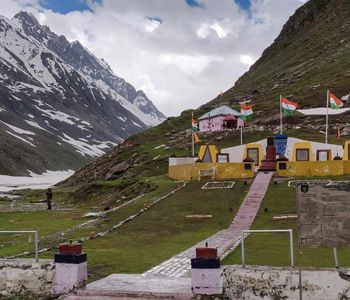
Just a few hundred meters from the road sits Gurudwara Pathar Sahib, a Sikh temple built in 1517 to honor Guru Nanak's journey through Ladakh. The story goes that a demon hurled a boulder at the meditating guru, but the rock softened upon contact with his body. Inside the gurudwara, you can see a large stone with what devotees believe is the imprint of Guru Nanak's back.
The Indian Army maintains this gurudwara, and soldiers serve langar — the communal meal offered freely to all who walk in, regardless of faith. You remove your shoes, cover your head, and sit cross-legged on the floor alongside truck drivers, soldiers, and fellow travelers. The dal and chapati are simple and warm, and at 11,000 feet after hours on a winding highway, they taste better than they have any right to.
Frankly, Gurudwara Pathar Sahib deserves more of your time than the magnetic road. The building is modest, but the combination of devotion, military discipline, and open generosity at such a remote altitude creates an atmosphere that lingers long after any optical illusion has faded from memory.
Getting There Without Losing Your Mind
Magnetic Hill lies along the Leh-Kargil-Srinagar highway, about a thirty-minute drive west of Leh town. Most travelers reach it by hired car or motorcycle, and nearly every taxi driver and tour operator in Leh includes it on a standard day itinerary alongside the Sangam confluence and Gurudwara Pathar Sahib.
The road from Leh is well-paved and relatively flat by Ladakh's standards. If you're riding a motorcycle — and plenty of travelers on the Manali-Leh or Srinagar-Leh route do exactly that — the stretch is easy. Just watch for military convoys. They have right of way, and arguing with a column of army trucks at altitude is a battle nobody wins.
No formal entry fee exists for Magnetic Hill itself. A small parking area and a few signboards mark the spot, and vendors nearby sell tea, instant noodles, and snacks at predictably inflated prices. There's no ticket counter, no guided tour, no visitor center. You park, you experience the roll, you take a photo with the sign, and you move on.
When to Show Up
Ladakh's tourist season runs from June through September, when the mountain passes are open and the weather is dry. Magnetic Hill is accessible during this window without difficulty. Temperatures hover between 15 and 25 degrees Celsius during the day but drop sharply after sunset, so carry a jacket even in July.
Morning visits work best. The light is softer, the crowds thinner, and the air still carries a bite that reminds you how high you actually are. By midday, tour buses from Leh start arriving in clusters, and the parking area fills with vehicles queuing for their turn at the white line. The illusion doesn't improve with an audience.
The Honest Verdict
Magnetic Hill is a fifteen-minute curiosity on a highway full of genuinely extraordinary scenery. It won't change your life. It won't even change your afternoon. But paired with Gurudwara Pathar Sahib and the drive along the Indus, it becomes part of a half-day loop that captures Ladakh's strange beauty — a place where rivers run turquoise through desert valleys and the road itself seems to forget which way is up. Stop for the trick. Stay for everything around it. The land here doesn't need illusions to astonish you, but it throws one in anyway, almost as a joke.