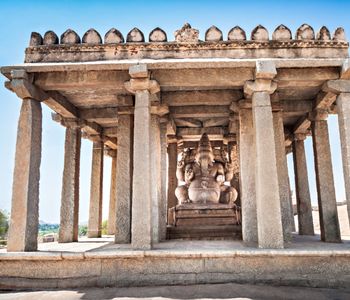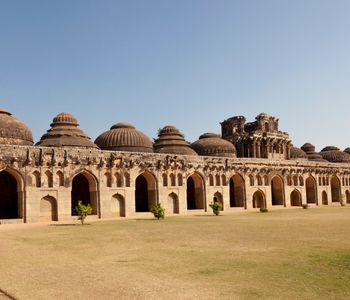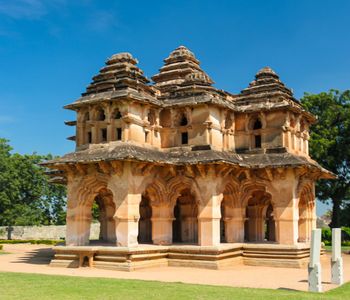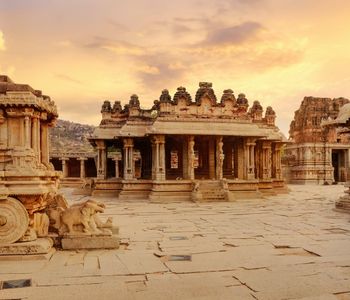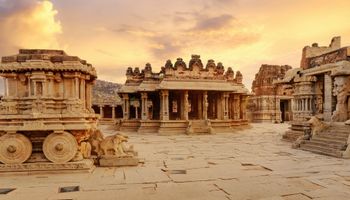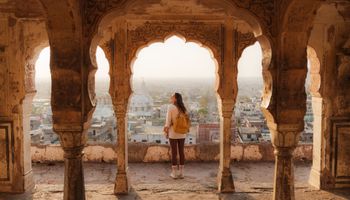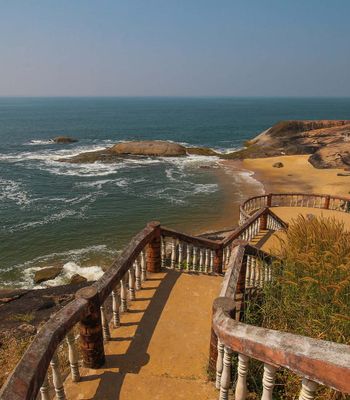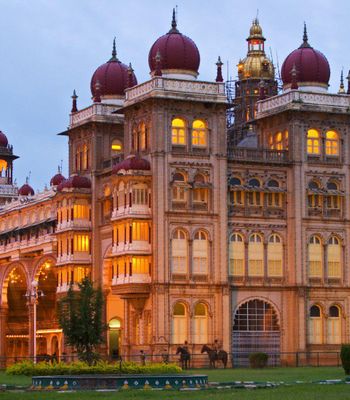
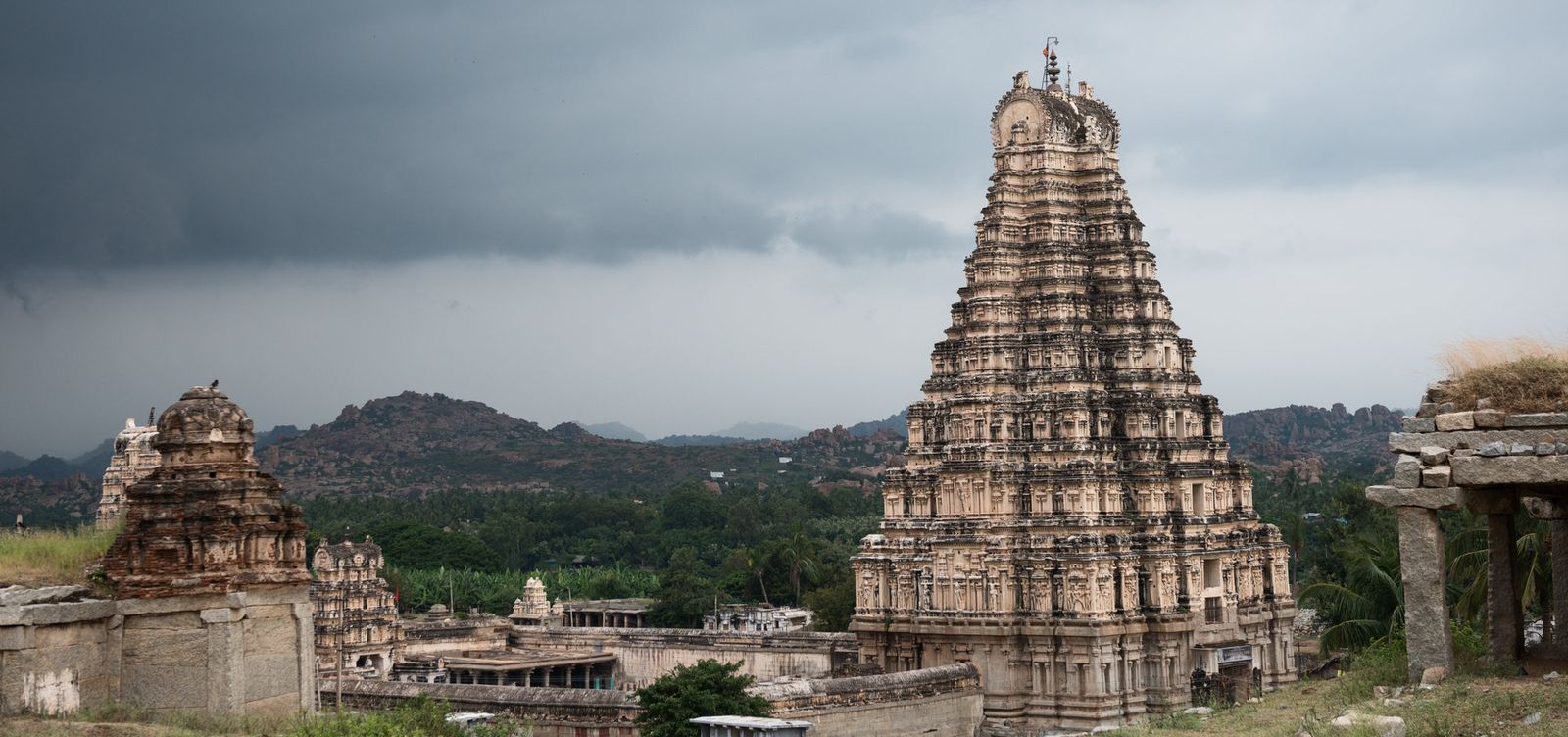
Everything else in Hampi is a ruin. The royal enclosures, the Elephant Stables, the great bazaar — all reduced to beautiful wreckage by the armies that sacked the Vijayanagara Empire in 1565. But Virupaksha Temple still functions. Priests still perform rituals inside its sanctum. Devotees still queue at dawn to offer coconuts and flowers to Lord Shiva. While the rest of this UNESCO World Heritage site exists as an open-air museum of collapsed walls and headless statues, Virupaksha alone carries a pulse. That unbroken continuity — stretching back to at least the seventh century — is what makes this temple extraordinary. Not its size. Not its carvings. The stubborn fact that it never stopped being a temple.
Older Than the Empire It's Famous For
Most people associate Hampi with the Vijayanagara Empire, which rose in the fourteenth century and turned this boulder-strewn landscape into one of the wealthiest cities on earth. But Virupaksha predates that empire by several hundred years. Inscriptions trace the earliest shrine here to the seventh century, during the rule of the Chalukya dynasty. What the Vijayanagara kings did was expand it dramatically — adding the towering gopuram, the pillared halls, the sprawling courtyard complex.
The result reads like geological strata. Walk through the main gateway and you're passing beneath sixteenth-century stonework. Step into the inner sanctum and you're standing in a space that Chalukyan hands shaped a thousand years ago. The layers don't clash. They accumulate, each dynasty adding its own architectural dialect to a conversation that never broke off.
A Tower That Pins the Whole Landscape in Place
The eastern gopuram rises approximately 50 metres above the dusty lane below — the most prominent vertical structure in Hampi's otherwise horizontal sprawl of boulders and banana groves. Nine tiers of sculpted figures crowd its surface with such density that from a distance the tower appears to ripple. Gods, demons, mythical animals, all jostling for space. Up close, individual scenes from Hindu mythology emerge: episodes from the Ramayana and Mahabharata rendered in stucco with a specificity that rewards patience and a decent zoom lens.
A smaller gopuram marks the inner entrance. Between the two stretches a long courtyard that once served as the starting point for Hampi's famous chariot processions. Even now, during the annual Virupaksha Car Festival in February, a massive wooden chariot rolls through these grounds. The stone columns lining the courtyard still bear the wear marks of centuries of ceremonial traffic — grooves polished smooth by the sheer repetition of sacred movement.
Inside the Walls, a Working Universe
Step past the inner gopuram and the atmosphere shifts. The noise of tuk-tuks and hawkers dies. Incense hangs in the air, sweet and insistent, tangling with the faintly mineral smell of old stone. To your left, a pillared hall stretches into shadow, its columns carved with rearing horses and yalis — those composite lion-like creatures that guard every significant Dravidian temple as though contractually obligated.
The sanctum itself houses a Shiva lingam, continuously worshipped for over a millennium. Priests apply sandalwood paste and vermillion several times daily, following a ritual schedule that hasn't fundamentally changed in centuries. There's something almost defiant about it — this insistence on continuity in a place where everything else was smashed.
One detail catches most people off guard. In a darkened corner of the temple's northern hall, a small opening in the wall projects an inverted image of the gopuram onto the interior surface — a natural pinhole camera. Nobody designed this. It's a pure accident of architecture and light. But the effect is eerie: an upside-down shadow of the tower floating on stone, as though the temple were quietly observing itself.
Lakshmi's Morning Ritual
The temple elephant, Lakshmi, has become something of a local celebrity. She lives on the temple grounds, bathed each morning in the Tungabhadra River just a short walk away. If you arrive early enough — around 7:30 or 8 a.m. — you can watch her walk back through the streets, still dripping, trunk swinging with an unhurried authority that parts the foot traffic effortlessly. Inside the temple, she offers blessings in exchange for a coin or a banana, gently tapping the top of your head with her trunk.
A tourist moment, certainly. But Lakshmi has been part of this temple's daily rhythm for years, and her presence connects to a much older tradition of temple elephants in South Indian religious life. She isn't performing for you. You're simply present for her routine.
The River, the Rocks, and the Light
Virupaksha sits at the western end of Hampi Bazaar, a long, now-derelict avenue that once thrummed with trade in gems, spices, and textiles. Behind the temple, the Tungabhadra River bends around massive granite boulders that look as though some careless god dropped them across the valley and never came back for them. Early morning light turns these boulders amber, and the river reflects the temple's gopuram in long, warped stripes of colour.
Cross the river by coracle — those circular, basket-like boats that spin lazily in the current — and you reach the northern bank, where rice paddies and coconut groves spread out beneath more boulder fields. From here, Virupaksha's tower rises above the treeline like an anchor point. The one fixed reference in a landscape that otherwise feels prehistoric and untethered from any century you could name.
Getting There and Getting In
Hampi is roughly 350 kilometres from Bangalore. The nearest railway station is Hospet Junction, about 13 kilometres away, where auto rickshaws and taxis line up for the short ride into the ruins. Buses from Bangalore, Goa, and Hyderabad reach Hospet regularly, though the overnight services from Goa tend to deposit you at ungodly hours when nothing is open and no one is sympathetic.
The temple opens from approximately 6 a.m. to 6 p.m., with exact hours shifting slightly by season. Entry is free — remarkable given the temple's significance. The broader Hampi ruins require a separate ticket, currently around 600 rupees for international visitors, but Virupaksha operates independently as an active place of worship. Dress modestly. Remove your shoes before entering. These aren't suggestions.
October through February offers the most tolerable weather. Summer temperatures in this part of Karnataka regularly exceed 40 degrees Celsius, and the exposed boulder landscape amplifies the heat without mercy. Mornings are best regardless of season — the light is gentler, the crowds thinner, and Lakshmi is freshly bathed.
What Endures
Hampi is a place of magnificent destruction. Everywhere you turn, something beautiful has been broken. Columns lie toppled in fields. Royal platforms stand empty under open sky. It's precisely this context that makes Virupaksha so striking — not because it survived intact through luck, but because people chose to keep it alive. Century after century, dynasty after dynasty, invasion after invasion, someone kept lighting the lamps inside that sanctum. In a landscape defined by what was lost, Virupaksha is the record of what refused to disappear.