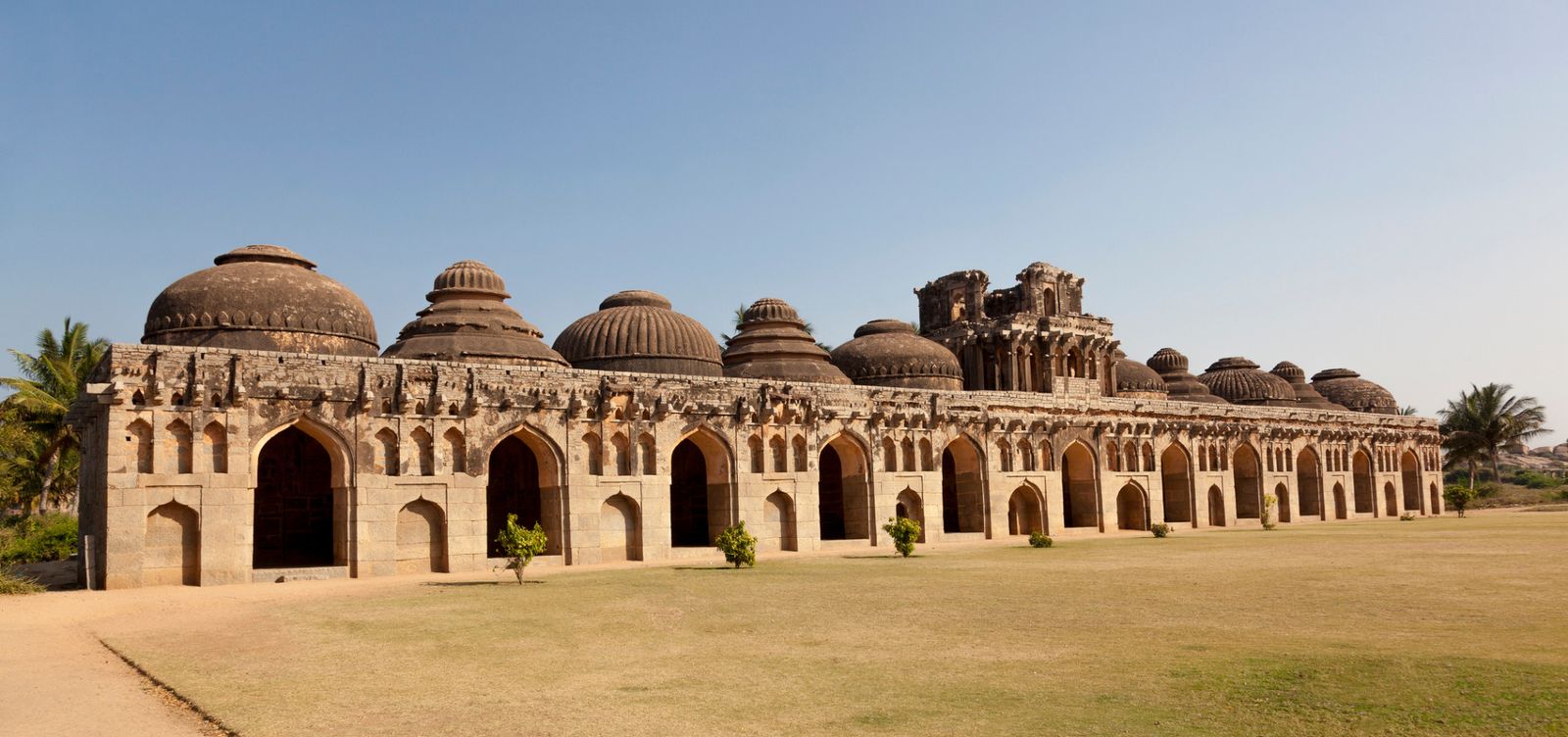
Most palaces were built for kings. This one was built for elephants. The Elephant Stables in Hampi are eleven domed chambers in a symmetrical row, each tall and wide enough to shelter a royal war elephant. The structure has survived five centuries, the collapse of the Vijayanagara Empire, and the relentless Deccan sun — and it remains one of the most architecturally intact buildings in the entire Hampi ruins complex. Let that sink in. In a city where temples and palaces were ground to rubble by invading armies in 1565, the building designed for animals endured almost perfectly. Walk along its facade, and you'll find yourself confronting an uncomfortable truth about empires: sometimes what they valued most wasn't their gods or their thrones, but their weapons.
A Building That Can't Make Up Its Mind — On Purpose
The first thing that strikes you isn't the scale, though it is substantial. It's the architectural confusion. Each of the eleven domes follows a different style. Some are distinctly Islamic — ribbed, onion-shaped, borrowed straight from the Sultanate traditions to the north. Others are rounded and Hindu in character. One sits somewhere in between, as though the architect simply shrugged.
This wasn't indecision. The Vijayanagara kings, often cast as the last great Hindu dynasty of South India, were far more cosmopolitan than that tidy narrative suggests. They employed Muslim architects, fielded Muslim cavalry units, dressed in Sultanate-style clothing. The Elephant Stables are physical proof of that cultural fluidity — carved into granite, impossible to argue away.
Stand back far enough to take in the full length — roughly 120 meters from end to end — and the alternating domes create a rhythm. It's almost musical. The central chamber rises higher than the rest and carries a more elaborate tower, possibly used as a viewing gallery or ceremonial gathering point for the mahouts who tended the animals.
Behind the Arched Entrances
Step through one of those arches, and the interior temperature drops noticeably, even during Hampi's brutal April heat when the mercury pushes past 40 degrees Celsius. Thick granite walls and high ceilings function like natural air conditioning — a necessity when you're housing animals that weigh several tons and throw off enormous body heat.
Each chamber is roughly the same size, with openings at the rear that once allowed the elephants to be chained in place. Iron rings and hooks embedded in the walls remain visible in several stalls, rusted but still firmly set. The floors are worn smooth in places. Whether that's from centuries of foot traffic or the original weight of the elephants, nobody can say for certain, but it lends the space a quiet heaviness that photographs never capture.
Here's the thing that catches people off guard: there's no ornamentation inside. Not a trace. The exterior is elaborate — carved stucco, decorative moldings, lotus medallions. Inside, it's stripped bare. Functional. The builders understood that the elephants didn't care about aesthetics. The beauty was for the humans walking past on the royal procession route. The practicality was for the animals and their keepers. That division tells you everything about Vijayanagara priorities in a single building.
The Tanks of Medieval South India
Understanding this structure requires understanding what elephants meant to the Vijayanagara Empire. These weren't ceremonial pets. They were armored, trained to charge enemy lines, capable of crushing cavalry formations whole. A well-trained war elephant could shift the outcome of an entire battle, and the empire maintained hundreds of them.
Housing them near the Royal Enclosure, within the fortified inner city, was strategic. The stables sit just meters from the palace grounds and the Zenana Enclosure, placing the empire's most devastating military asset within immediate reach of its rulers. In wartime, elephants could be mustered and deployed rapidly. In peacetime, they served in royal processions that projected the king's power to visiting dignitaries and common citizens alike.
The proximity also meant that the mahouts — skilled elephant trainers who often passed their craft through generations — lived and worked in the empire's most protected zone. Their knowledge was treated as a state asset, not unlike a modern defense contractor with top-secret clearance. Lose your mahouts, and your armored elephants became very expensive, very dangerous liabilities.
Spared by Greed, Not Reverence
When the combined forces of the Deccan Sultanates sacked Vijayanagara in 1565, they spent months systematically dismantling the city. Temples were defaced. Palaces were torn apart. The destruction was thorough and deliberate. Yet the Elephant Stables survived largely intact.
Historians offer a bluntly practical explanation. The invading armies had their own elephants. A ready-made stable of this quality was simply too useful to demolish. So while ideology drove the destruction of temples and royal symbols, pragmatism saved the Elephant Stables. It's a peculiar kind of preservation — spared not out of respect, but out of utility. The building's survival is, in its own way, another act of war.
Finding It, Paying For It, Timing It Right
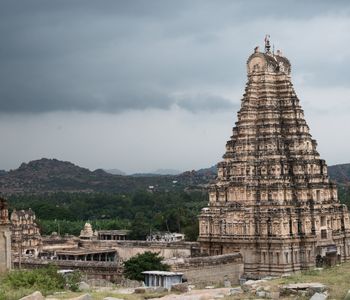
The Elephant Stables sit within the Royal Enclosure area, about two kilometers south of the main temple complex around Virupaksha. If you're staying near the Hampi Bazaar, rent a bicycle or hire an auto rickshaw. The roads are flat, dusty, and straightforward. Walking is possible but inadvisable during the hotter months — shade is scarce along this stretch, and the sun is unforgiving.
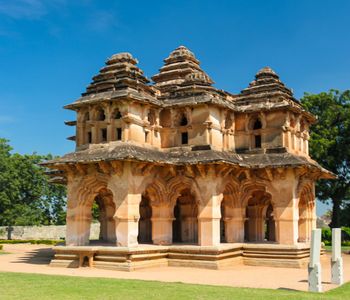
Entry to the Royal Enclosure area, which includes the Elephant Stables, requires a ticket. Indian nationals pay 40 rupees, international visitors 600 rupees. The same ticket grants access to several nearby structures, including the Lotus Mahal and the Queen's Bath. Hold onto it — guards check at multiple points.
Morning visits before 9 a.m. offer the best conditions. The eastern-facing facade catches early light in a way that turns the stone warm and golden, and you'll have the place largely to yourself. By midmorning, tour buses disgorge guided groups whose competing loudspeakers shatter whatever atmosphere the place has built over five hundred years of silence.
Why You Should Give It Twenty Minutes
Many people treat the Elephant Stables as a photo stop — a quick snap of the symmetrical facade, then on to the next ruin. That's a mistake. Spend twenty minutes here. Walk the full length slowly. Step inside each chamber and notice how the acoustic quality shifts as you move from one to the next. Find the iron rings. Run your hand along the stone where the stucco has flaked away, revealing the granite skeleton beneath.
The Elephant Stables aren't Hampi's most sacred site, and they don't carry the spiritual weight of Virupaksha Temple or the Vittala complex. But they tell you something those places don't — that the Vijayanagara Empire was as much a military machine as a cultural achievement, and that its builders cared enough about their war elephants to house them in a structure more beautiful than most human dwellings of the era. That contradiction — extravagance in the service of warfare — says more about the nature of empire than any temple inscription ever could.