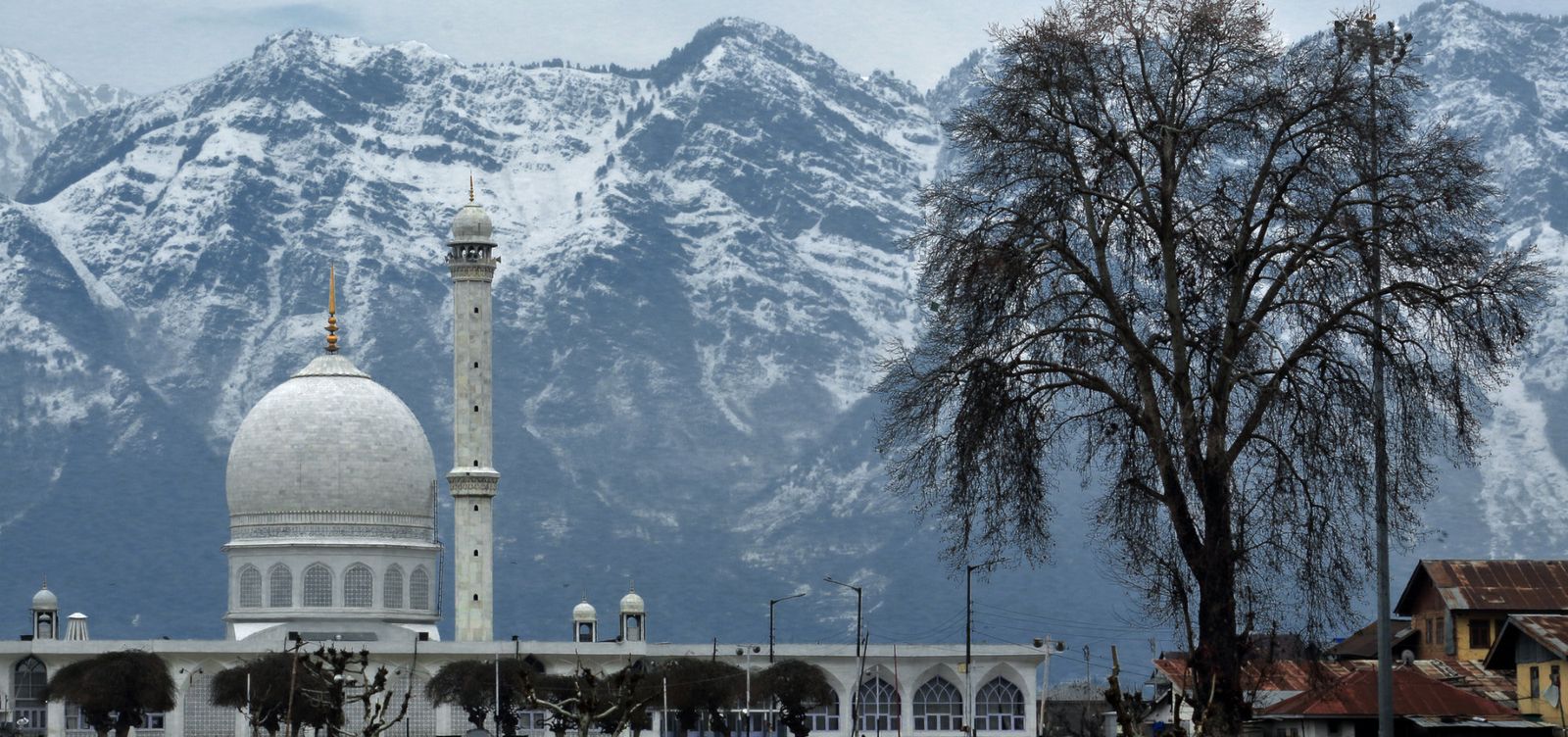
On the western shore of Dal Lake, where the water shifts from tourist-postcard turquoise to a deeper, more honest grey, a white marble mosque commands the skyline with quiet authority. Hazratbal Masjid doesn't compete with Srinagar's other landmarks. It doesn't need to. Inside its walls rests what many believe to be a single hair from the beard of the Prophet Muhammad — the Moi-e-Muqaddas — and that relic alone draws hundreds of thousands of devotees each year. The mosque's power isn't in its architecture, though the structure is striking. It's in the hush that falls over the crowd when the relic is displayed, a silence so total you can hear the lake lapping against the shore. No other site in Kashmir carries this particular weight.
A Relic's Long Journey to the Lake
The story of how a single hair traveled from Medina to the edge of Dal Lake reads like a subplot from a historical novel — improbable, winding, studded with figures whose motives have been argued over for centuries. The relic reportedly passed through several custodians before arriving in Kashmir in the mid-17th century. A Kashmiri merchant named Khwaja Nur-ud-Din Ishbari is traditionally credited with bringing it to Srinagar, where it was eventually enshrined at this site.
In 1963, the relic vanished. The disappearance triggered protests so massive they convulsed the entire Kashmir Valley. Its mysterious return didn't settle things — it became a political flashpoint that reshaped Kashmiri politics for decades afterward. That a single strand of hair could paralyze a region tells you everything about what this mosque means to the people here. It's not simply a place of worship. It's an emotional anchor, a thread connecting identity to geography to faith.
White Marble Against Grey Water
The current structure dates to the 1960s and early 1970s, replacing older constructions on the same ground. Unlike many of Kashmir's traditional wooden mosques with their layered, pagoda-like roofs, Hazratbal speaks a distinctly Mughal visual language — white marble walls, a central dome, a single minaret rising sharply against the Zabarwan mountain range behind it.
That contrast hits you first. The white facade set against dark mountains and grey-green water creates a composition so clean it almost looks staged. Walk closer and the marble reveals itself — smooth, cool to the touch even in summer, with none of the ornate floral inlay you'd find at Mughal monuments in Delhi or Agra. Hazratbal's beauty is restrained. Almost austere. The architects seemed to understand that the relic inside would always overshadow the building itself, so they built a vessel rather than a spectacle.
Step through the main entrance and the interior opens into a large prayer hall — high ceilings, natural light pouring through arched windows, prayer mats covering every inch of floor. The acoustics carry even a whispered prayer across the room. On most days, the atmosphere is contemplative rather than crowded, a sharp departure from the frenzy of festival occasions.
When the Hair Is Shown
The Moi-e-Muqaddas isn't on permanent display. The relic is shown to the public on specific occasions — most notably during Eid-e-Milad-un-Nabi, the celebration of the Prophet's birthday, and on certain Fridays. These are the days Hazratbal transforms entirely. Thousands gather inside the mosque and across the surrounding grounds, spilling onto the lakefront. The relic is displayed from a raised platform, encased in a glass container, and the crowd strains forward as one body — some weeping, others murmuring prayers with palms open to the sky.
Visit on an ordinary weekday and you won't see the relic. But you'll sense its presence in the reverence with which people move through the space. Even teenagers go quiet here. That's the counterintuitive thing about Hazratbal — its most powerful moments may be its emptiest ones, when the relic is locked away and all that remains is faith filling the silence.
The Approach the Mosque Was Built For
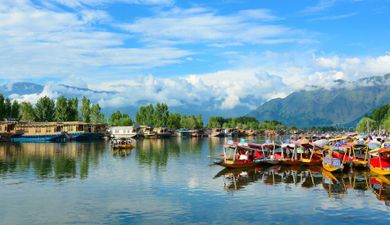
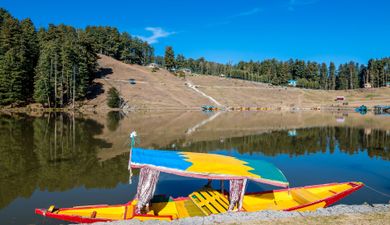
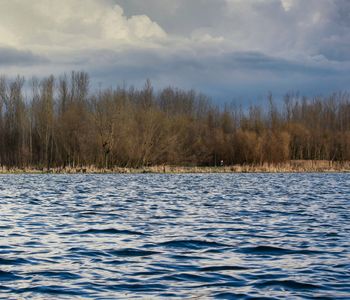
Most descriptions of Hazratbal mention its location on Dal Lake as an afterthought. That's a mistake. The mosque's relationship with the water is fundamental to how you experience it. Approach by shikara — one of the traditional wooden boats that ply the lake — and you get the perspective the building demands. The white dome materializes gradually through morning mist, growing larger with each stroke of the boatman's paddle. From the water, the mosque appears to float.
The surrounding grounds include a well-maintained garden sloping gently toward the lakeshore. Chinar trees — Kashmir's iconic plane trees with their broad, hand-shaped leaves — throw shade during warmer months. Come autumn, their foliage turns deep copper, and the mosque against that backdrop becomes something genuinely arresting. Locals gather on the lawns after prayers. The boundary between sacred space and public park dissolves here without anyone having to decide where one ends and the other begins.
Respecting the Space
Hazratbal is an active place of worship, not a museum. Dress modestly — covered arms and legs for all, and women should carry a headscarf. Remove your shoes before entering the prayer hall. Photography is generally acceptable in the exterior grounds and gardens, but put your camera away inside the mosque itself. During festival days the crowds are dense and security is tight; arrive early if you want any proximity to the main hall.
Non-Muslim visitors are welcome, but awareness matters more here than it does at heritage-site mosques where tourism has worn the religious atmosphere thin. At Hazratbal, every person around you is likely there to pray. Match their energy. Sit quietly. Watch. You'll learn more from five minutes of observing genuine devotion than from any guidebook entry — this one included.
Finding Your Way There
Hazratbal sits roughly eight kilometres from Srinagar's Lal Chowk city center, on the western edge of Dal Lake near the University of Kashmir campus. Auto rickshaws and taxis cover the distance in about twenty minutes, depending on traffic. If you're already on Dal Lake — staying on a houseboat, say — a shikara ride to the mosque is the far more memorable approach, taking roughly thirty to forty-five minutes from the central lake area.
There's no entry fee. The mosque is open daily, with prayer times dictating the rhythm of access. Friday afternoons draw the largest regular crowds. Early mornings, particularly weekdays, offer the most contemplative experience. Along the surrounding Hazratbal road, a few small shops and tea stalls sell noon chai — the pink salt tea Kashmiris drink with an almost ceremonial devotion of its own. Order one. The salty warmth makes more sense here, by this lake, than it ever could anywhere else.
What Stays With You
Srinagar has its Mughal gardens, its houseboats, its famous old city where wooden balconies lean over narrow lanes. Hazratbal Masjid doesn't fit neatly into that tourist circuit, and that's precisely its value. It's not a monument to power or conquest. It's a monument to belief — belief in a single hair, in a tradition handed across centuries, in the idea that the sacred can inhabit the smallest possible object. Stand on the lakeshore as the evening call to prayer rolls across the water, and you'll understand why Kashmiris don't just visit this mosque. They belong to it.