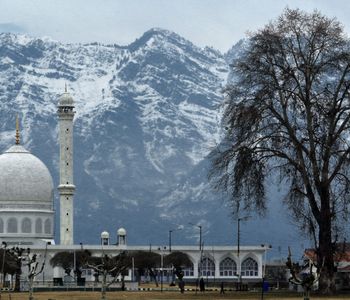
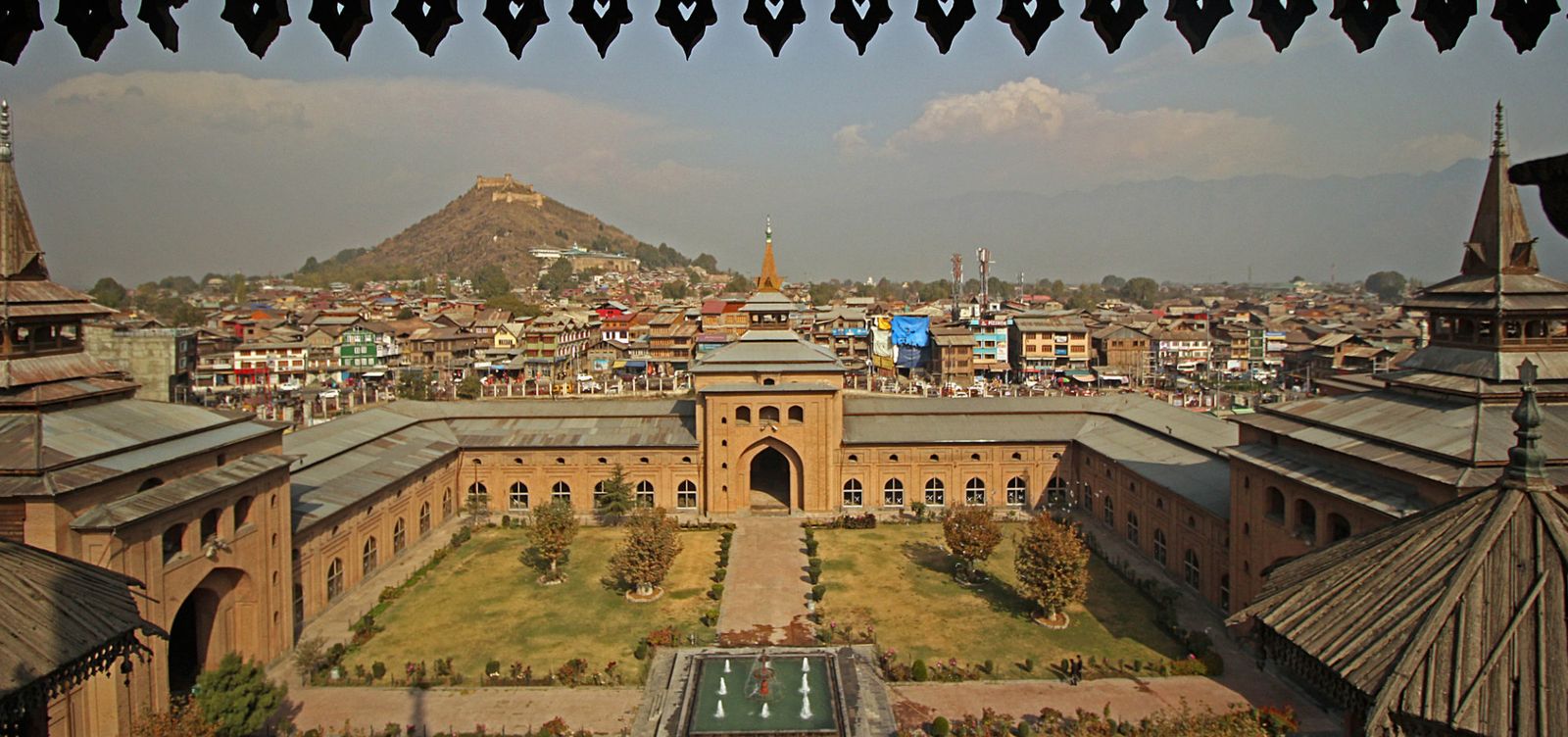
Three hundred and seventy wooden pillars hold up the Jamia Masjid, and not one of them is ornamental. Each column, carved from deodar cedar, bears the actual weight of the structure — and the faint, resinous scent of that wood greets you the moment you step inside. This is Srinagar's largest mosque, commissioned in 1394 by Sultan Sikandar, and it occupies an entire city block in the old Nowhatta quarter. On Fridays, thousands of worshippers fill the courtyard, their prayer mats laid edge to edge across worn brick. On quieter mornings, the building settles into a kind of silence that feels deliberate, as though the mosque itself chose to stop speaking. If you want to understand Srinagar beyond its houseboats and shikara rides, you start here.
Built, Burned, and Built Again
The Jamia Masjid has been destroyed and rebuilt three times. That single fact carries more of Kashmir's turbulent past than any museum placard ever could. Sultan Sikandar commissioned the original structure at the close of the fourteenth century, intending it as the centerpiece of his campaign to establish Islam in the valley. Fire consumed it. His son Zain-ul-Abidin rebuilt it. Flames came again.
What stands today dates largely to the seventeenth century, reconstructed under the Mughal emperor Aurangzeb. Each rebuilding preserved the original Indo-Saracenic design rather than discarding it for whatever style happened to be ascendant at the time. That stubbornness is the mosque's defining characteristic — not just architecturally, but spiritually. It refuses to become something else.
Where Wood Outranks Marble
Most grand mosques in South Asia declare themselves through domes clad in marble or walls sheathed in glazed tile. The Jamia Masjid does neither. Its four imposing entrance portals rise in brick and wood, not stone and inlay. The courtyard — a vast open rectangle — is anchored by a fountain for ablutions and bordered on all four sides by covered cloisters. Above those cloisters, the roofline is distinctly Kashmiri: pitched and gabled, built to shed snowfall rather than dazzle from a distance.
Walk beneath one of the arched entryways and you'll notice immediately how the interior light changes. The deodar columns, darkened by centuries of smoke and weather, absorb rather than reflect. Latticed windows strain the sunlight into thin geometric patterns on the floor. The effect is one of compression — the mosque pulls you inward, narrows your attention, quiets whatever noise you carried in from the street.
Here's the thing nobody tells you: despite its enormous footprint, the Jamia Masjid feels intimate. The low ceiling of the prayer hall, supported by those closely spaced pillars, creates a forest-like enclosure. You're never gazing up at a distant dome. You're enclosed. The architecture doesn't try to make you feel small before God — it tries to make you feel held.
The Rhythm of Nowhatta
You can't separate this mosque from the neighborhood that wraps around it. Nowhatta is one of Srinagar's oldest quarters, and the streets feeding into the mosque's four gates are narrow, loud, and aromatic. Vendors sell noon chai — that pink, salt-laced Kashmiri tea — from cramped stalls just steps from the western entrance. The smell of fresh lavasa bread drifts from bakeries that have occupied the same storefronts for generations.
On Fridays, the surrounding lanes flood with worshippers and overflow prayer mats extend beyond the mosque gates into the road. Traffic halts. The neighborhood adjusts without complaint, because the mosque's weekly rhythm is the neighborhood's rhythm. This is a living religious site, not a heritage exhibit behind a velvet rope. You're welcome here, but the mosque operates on its own terms.
What You'll Actually See Inside
Enter through the southern gate, the most ornate of the four, and you'll face the central courtyard directly. The open space spans roughly 384 feet on each side — large enough that the ambient city noise fades before you reach the fountain at the center. Along the perimeter, arched cloisters offer shade and a place to sit. The brickwork underfoot is uneven in places, patched and re-laid over the centuries — a physical record of the mosque's repeated resurrections.
The prayer hall on the western side is the spiritual heart. Rows of deodar pillars recede into shadow, and the mihrab — the niche indicating the direction of Mecca — is carved with restrained floral motifs. No gold leaf. No precious stone inlay. The craftsmanship is in the joinery, in the way wood meets wood without nails in certain sections, a technique borrowed from Kashmiri houseboat construction. Spend a few minutes studying the column bases where they meet the floor. The wear patterns show exactly where worshippers have placed their hands during prayer for hundreds of years.
What You Need to Know Before Going
The Jamia Masjid sits in the heart of old Srinagar, roughly two kilometers from Dal Lake. Auto rickshaws from Lal Chowk, the city's commercial center, reach the mosque in about ten minutes. Walking from Dal Gate takes closer to thirty, but the route passes through the old bazaar district — worth the extra time if you aren't in a hurry.
There's no entrance fee. Dress modestly: long sleeves and covered legs for both men and women, and a headscarf for women. Remove your shoes before entering the prayer areas. Photography is generally permitted in the courtyard but frowned upon inside the prayer hall, particularly during worship hours. Respect that boundary.
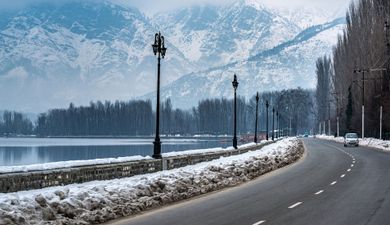
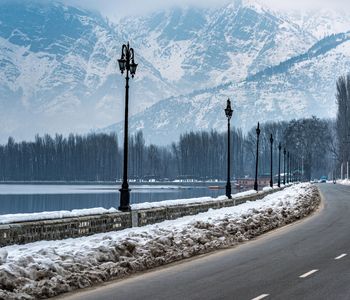
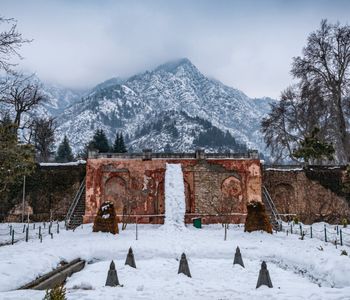
Fridays between noon and 2 p.m. draw the heaviest crowds, and the mosque may restrict casual visitors during congregational prayers. Early mornings on weekdays offer the most undisturbed experience. The soft light filtering through the latticed screens at that hour is reason enough to set an alarm. Winter visits bring a different atmosphere entirely — snow collects on the courtyard bricks, and the deodar pillars darken further in the cold air, smelling sharper and more alive.
More Than Its Walls
The Jamia Masjid has served as a political gathering point, a site of protest, and occasionally a flashpoint in Kashmir's complicated modern history. Authorities have periodically restricted Friday prayers here during periods of unrest. That context matters. To walk through these gates is to enter a space where faith, identity, and politics have been inseparable for six centuries. The mosque doesn't ask you to take sides. It asks you to pay attention.
Leave Srinagar without visiting the Jamia Masjid and you've seen the postcard version of the city — lakes, gardens, mountains. Step inside this courtyard, stand among its wooden pillars, and you've touched something closer to the actual pulse of Kashmiri life. The deodar columns will outlast whatever headlines are written next. They've survived fire three times already.