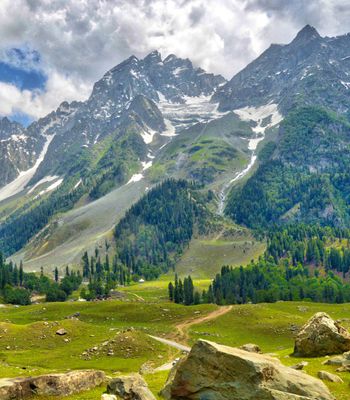
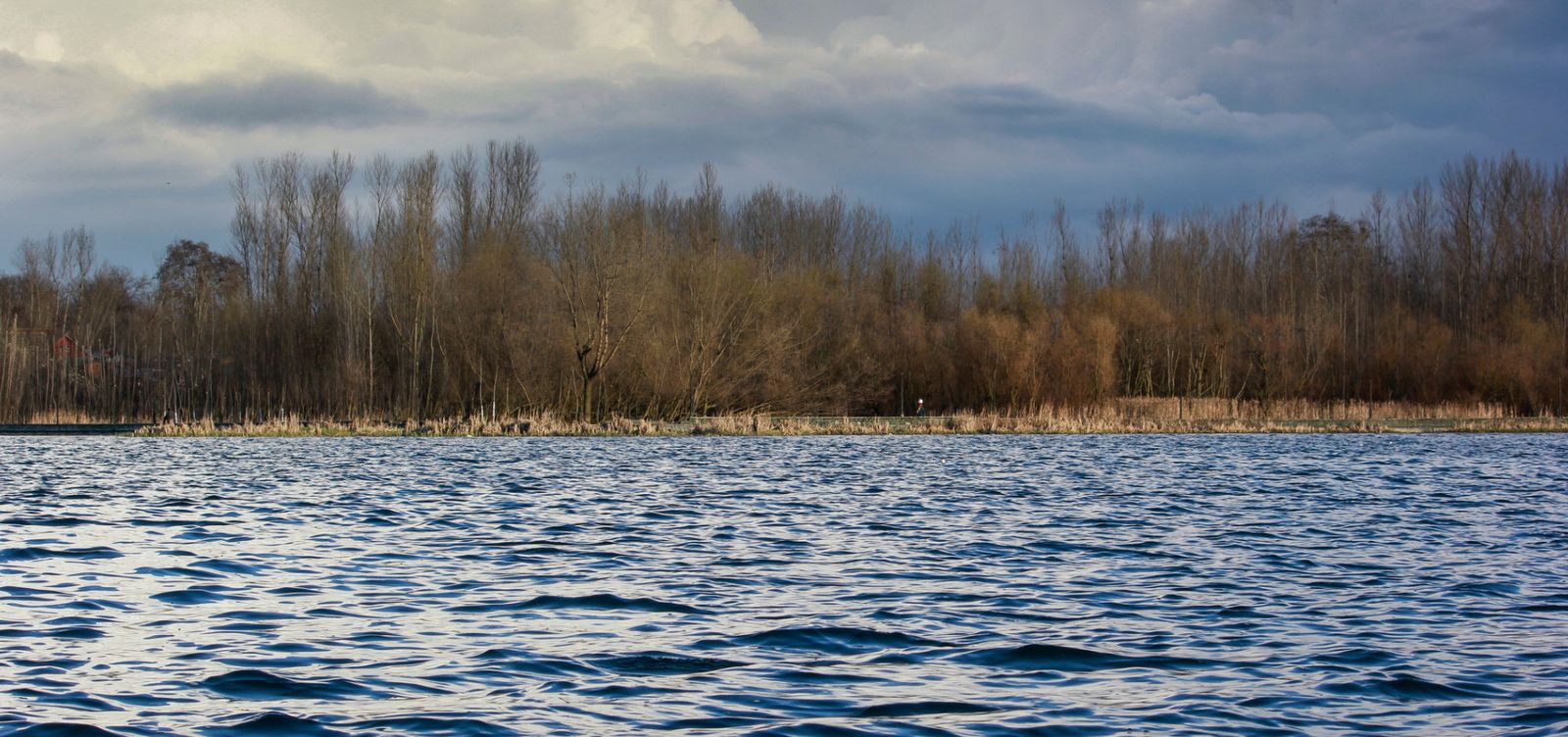
About thirty kilometers north of Srinagar, where the tourist traffic thins and the road narrows between walnut orchards, Manasbal Lake holds still. Not the stillness of emptiness — the stillness of a place so saturated with life that it seems to vibrate at a frequency just below hearing. Lotus flowers cover nearly a third of the lake's surface from July through September, their pink heads rising on thick stems above dinner-plate leaves so dense you could almost mistake them for solid ground. Almost. The water beneath is up to thirteen meters deep in places, making Manasbal the deepest lake in the Kashmir Valley. That single fact — deeper than Dal, deeper than Wular — changes everything about its character. Where other Kashmir lakes shimmer and scatter light, Manasbal absorbs it. The surface turns a shade of blue-green that feels less like water and more like pigment.
A Mirror That Refuses to Lie
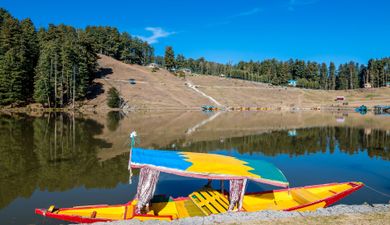
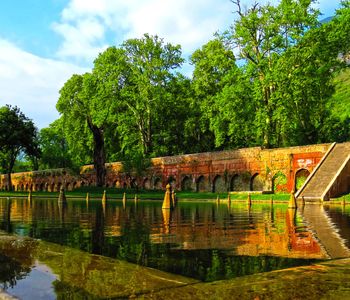
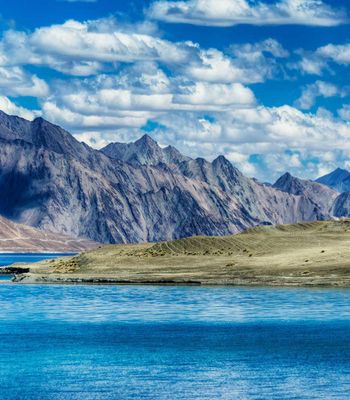
What makes Manasbal distinct isn't just its depth. It's the reflection. On calm mornings — and mornings here are almost always calm — the surrounding Aharbal hills drop perfectly into the water, inverted with such precision that photographs taken here genuinely confuse the eye. The Balapur ruins on the eastern shore appear twice: once crumbling gently into the grass, once dissolving downward into turquoise.
Local Kashmiri families have long called Manasbal the "supreme gem of all Kashmir lakes," a phrase attributed to Mughal-era travelers who reached this shore and reportedly refused to leave for weeks. Whether that's embellishment or fact hardly matters. The impulse is real. You arrive intending to spend an hour and find yourself still sitting on the bank three hours later, watching kingfishers work the shallows.
When the Lotus Speaks — and When It Doesn't
Timing matters here more than at most lakes. Visit between late June and early September, and you'll encounter the lotus bloom — a carpet of Nelumbo nucifera stretching across the northern and eastern sections. The flowers open in the morning and close by afternoon, so early arrivals see the lake at its most extravagant. By midday, the petals fold shut and the whole scene retreats into green.
Outside lotus season, Manasbal takes on a different personality entirely. Autumn strips the surface bare, and the water turns nearly black under overcast skies. Migratory birds arrive in serious numbers through the winter months — herons, kingfishers, various species of duck colonizing the reeds. Anyone with patience and decent binoculars can spend a productive morning along the southern bank without seeing another soul.
Here's the thing nobody tells you: the off-season is arguably the better visit. Without the lotus, you actually see the lake — its depth, its color, the way it holds the mountain reflections with startling fidelity. The flowers are spectacular, certainly. But they obscure the very thing that makes Manasbal remarkable.
Ruins, Rice Paddies, and What Time Left Behind
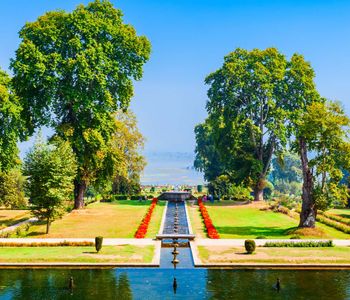
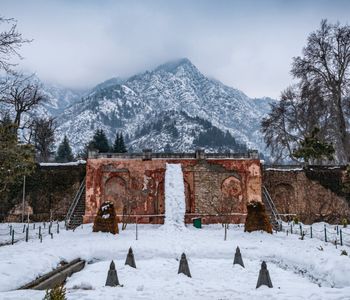
The eastern shore holds the remains of a Mughal-era garden and pavilion at Jaroka, largely unrestored and largely unvisited. Crumbling stone terraces descend toward the water through overgrown grass, and you can trace the bones of what was clearly an ambitious pleasure garden. Compared to Srinagar's immaculately maintained Mughal gardens, Jaroka feels honest — a place where time has been allowed to do its work without interference.
On the southeastern bank, the village of Balapur contains the remnants of a fort associated with the Mughal governor's administration. Little remains standing, but the stone foundations give a sense of the structure's original footprint. More compelling than the ruins themselves is the walk to reach them — through terraced rice paddies where farmers still work knee-deep in flooded fields. Wet earth and paddy water mingle with a faint sweetness drifting off the lake. That particular combination of smells belongs only to this valley.
Kondabal, on the western side, offers slightly elevated ground and the broadest perspective across the water. Come in late afternoon. The lake's surface catches the lowering sun and turns the lotus leaves into dark silhouettes against gold.
Drifting Through the Silence
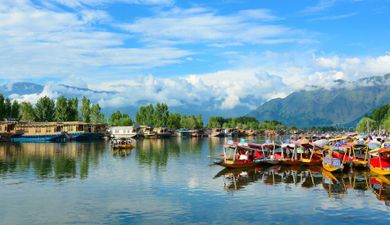
Shikaras operate on Manasbal, though in far fewer numbers than on Dal Lake. The experience differs accordingly. There's no floating market, no one paddling alongside your boat trying to sell you saffron or papier-mâché. Your shikara driver might talk. He might not. Either way, you'll drift through channels cut between lotus beds, close enough to touch the stems, which are thicker and more fibrous than you'd expect — almost woody.
A full circuit of the lake takes roughly an hour and a half at a leisurely pace. Negotiate the fare before boarding. Rates run lower than in Srinagar, but they fluctuate with the season and your apparent familiarity with local pricing. Thirty minutes in, when you're deep among the lotus and the only sound is the paddle entering the water, you'll understand why this lake has survived centuries without needing a marketing campaign.
The Practical Details
From Srinagar's city center, Manasbal sits about an hour's drive north along the Srinagar-Bandipore road. Shared cabs and local buses run the route regularly, though a hired car gives you the flexibility to stop at roadside orchards along the way. The approach is flat, passing through several small villages before the lake appears suddenly on your left — no dramatic reveal, just a quiet opening in the landscape.
Accommodation near the lake is limited. A handful of guesthouses operate along the southern shore, offering basic rooms with lake views. Most people visit as a day trip from Srinagar, which works well enough if you start early. Bring food. A few small tea stalls exist near the main access point, but options are sparse. A thermos of kahwa — the saffron-and-almond Kashmiri tea — and some bread from a Srinagar bakery make the right kind of lakeside meal.
No entry fee. Dawn to dusk, the banks are open, and nobody checks a ticket or stamps a pass. This absence of infrastructure is part of the appeal — and possibly its future vulnerability.
Worth the Quiet
Manasbal rewards a certain kind of traveler — the one willing to trade spectacle for subtlety. There are no houseboats, no neon-lit boulevards, no souvenir shops lining the shore. What exists instead is a body of water so deep and so clear that it reflects not just the hills above it but something of your own stillness back at you. In a valley where tourism has reshaped nearly every famous lake, Manasbal persists on its own terms. Go before that changes.