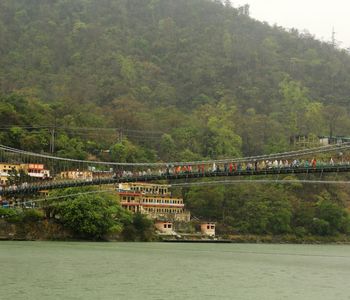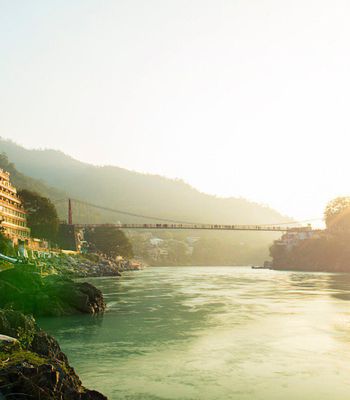
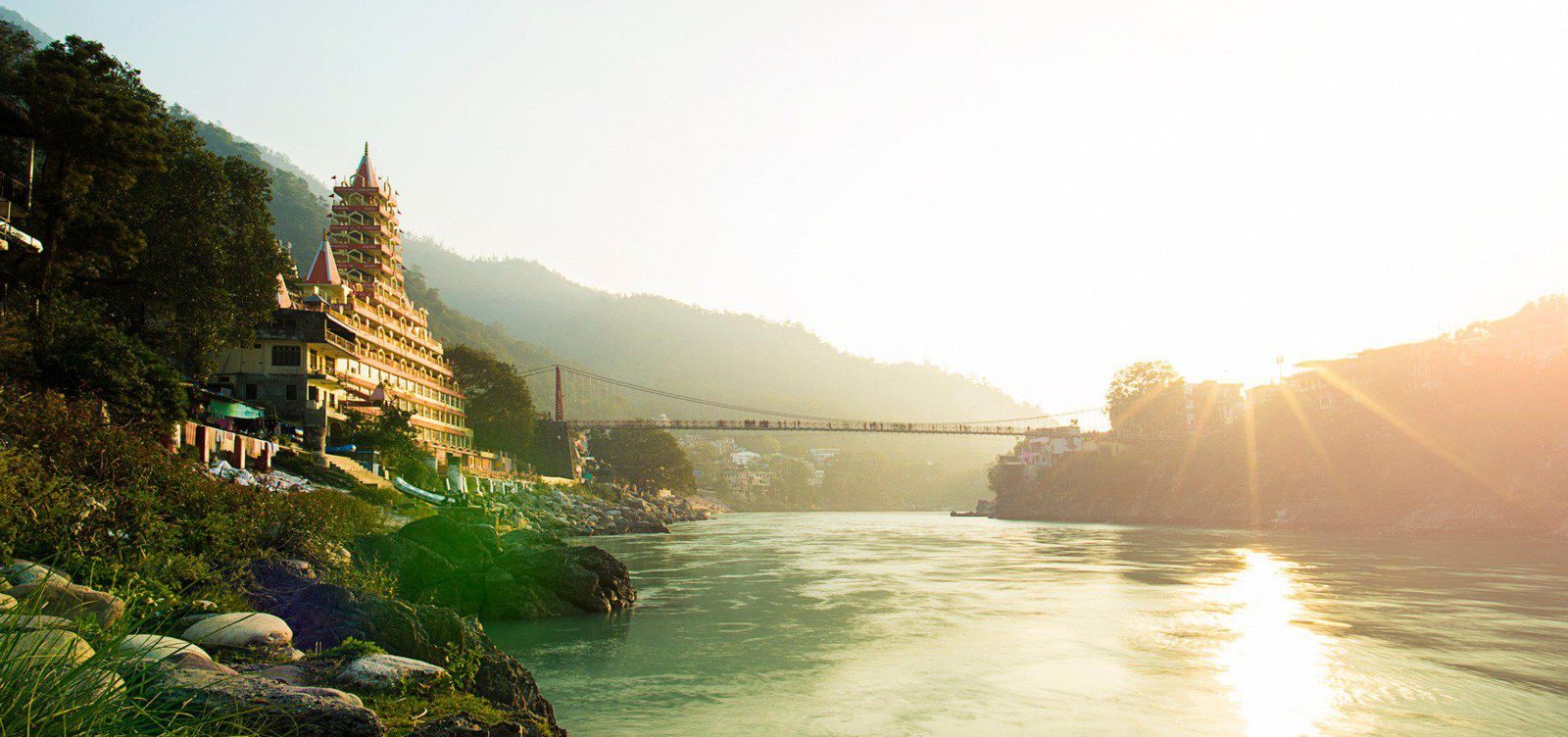
The iron cables catch the morning light, stretching across the Ganges like a prayer suspended between two worlds. Lakshman Jhula has stood here since 1929 — an unmistakable silhouette against the forested hills of Rishikesh — and even though you can no longer walk its narrow, swaying deck, its pull is magnetic. This pedestrian bridge once connected the village of Tapovan on the west bank to Jonk on the east, carrying pilgrims, backpackers, and wandering sadhus high above the river's turquoise rush. Closed to foot traffic in 2020 due to structural concerns, it remains the spiritual and visual heartbeat of Rishikesh. Stand on either bank, breathe in the incense-tinged air, and you'll understand why this landmark anchors every Northern India itinerary worth its salt.
A Rope Bridge, a God, and Nearly a Century of Crossings
Long before iron and engineering arrived, there was a story. Hindu mythology tells of Lord Lakshmana — Lord Rama's fiercely devoted younger brother — crossing the Ganges at this exact spot on nothing more than a jute rope bridge. That ancient tale gave this place its name and turned a river crossing into sacred ground.
Pilgrims traced Lakshmana's path for centuries before the British colonial administration strung an iron suspension bridge across the gap in 1929, its span stretching roughly 450 feet from cliff to cliff. Overnight, the bridge became a lifeline — villagers hauled goods across it, devotees streamed toward the ashrams on the far shore, and by the mid-20th century, word had reached travelers halfway around the globe. Rishikesh and Lakshman Jhula became inseparable.
Decades of heavy foot traffic and the relentless rattle of motorbikes eventually wore the structure down. Engineers declared it unsafe, and in October 2020, the bridge officially closed. A new crossing has since been built nearby for commuters, but the original Lakshman Jhula still hangs above the current — weathered, dignified, and impossible to ignore.
Iron, Sway, and a View That Stops You Mid-Step
Two tall pylons anchor the bridge on either bank, their iron cables disappearing into the rocky hillside like roots. At its highest point, the deck hovers roughly 70 feet above the water — high enough that the Ganges below looks like a ribbon of jade carving through the valley.
Those who crossed during its operational years remember the sway. Every footstep sent a gentle tremor through the narrow walkway, barely wide enough for two people side by side. Thrilling for some, knuckle-whitening for others, that rhythmic motion was part of the experience — a physical reminder that you were suspended between earth and sky, between one world and the next.
Today, you can still admire the engineering from both riverbanks. Early morning is best, when mist clings to the water and the bridge's silhouette floats against a soft grey sky — one of the most photographed scenes in all of Uttarakhand.
Two Banks, a Thousand Discoveries
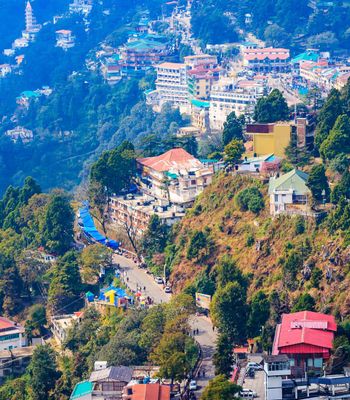
Not being able to cross the bridge itself hardly matters when the neighborhoods flanking it overflow with life. On the eastern bank, a tangle of narrow lanes pulls you deeper with every turn — past tiny cafés brewing masala chai strong enough to wake the gods, past bookshops stacked with dog-eared copies of the Bhagavad Gita, past vendors whose tables spill over with handmade silver jewelry and amber bottles of Ayurvedic oils. The scent of sandalwood and fresh naan mingles in the air. Backpackers and sadhus share the same cramped staircases, and somehow, it all works.
Temples That Rise Like Prayers
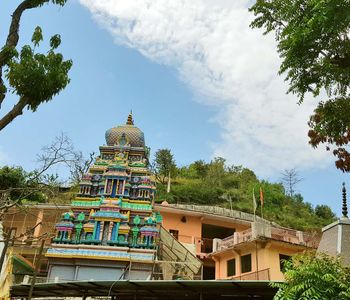
Right beside the bridge on the east bank, Tera Manzil Temple demands your attention — a 13-story technicolor tower climbing dramatically above the riverfront. Each floor houses a different shrine dedicated to a different Hindu deity. Climb through the levels slowly; pause at the wall paintings, the small statues tucked into alcoves, the scent of fresh marigold garlands left as offerings. From the upper floors, the Ganges sprawls below you and Lakshman Jhula stretches across the frame like a postcard you'll never forget.
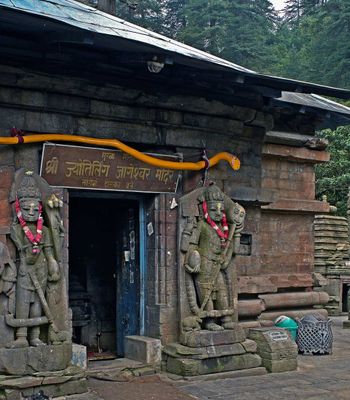
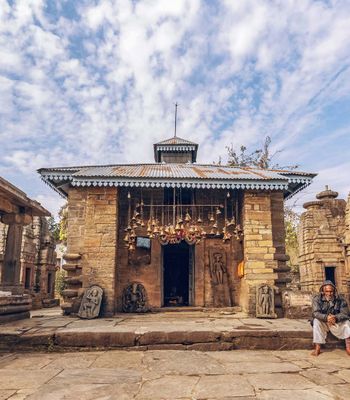
Over on the west bank, the quieter Lakshman Temple draws devotees honoring Lord Lakshmana at his legendary crossing point. Smaller shrines and meditation halls dot the surrounding hillside — tucked-away spaces where the only sound is birdsong and the distant murmur of the river. Seek them out when the market lanes feel overwhelming.
Where the World Comes to Breathe
Rishikesh earned the title "Yoga Capital of the World" not through marketing, but through generations of practice. Near Lakshman Jhula, several well-established ashrams open their doors to visitors — drop in for a single morning yoga class or commit to a multi-week retreat that reshapes how you move through the world. Dawn sessions often begin before the sun crests the hills, with the sound of the Ganges serving as the only soundtrack you need.
River Thrills and Firelit Prayers
The Ganges doesn't just inspire contemplation here — it gets your heart pounding. White-water rafting is Rishikesh's signature adventure, and outfitters near Lakshman Jhula run trips on stretches ranging from gentle Class II ripples to Class IV rapids that drench you head to toe. First-timers and seasoned rafters alike find a run that matches their nerve.
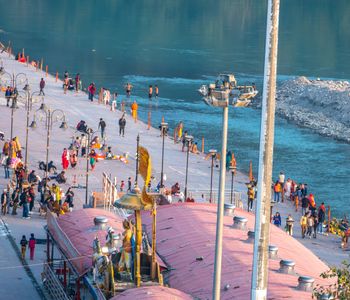
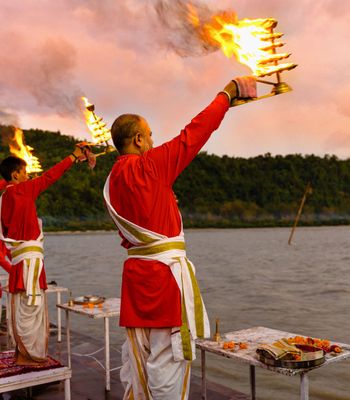
When the sun dips behind the hills, a completely different energy takes over. The evening Ganga Aarti ceremony draws crowds to the riverbank, where priests move in synchronized rhythm, lifting brass lamps heavy with flame while chanting rises and falls like the current itself. Firelight dances across the water's surface, and for a few suspended minutes, every stranger around you feels like family. The ceremony is free to attend — just arrive early to claim a spot near the front.
Between the adventures and the rituals, don't overlook the simplest pleasure of all. Sandy stretches along the river invite you to sit, breathe, and watch the Ganges slide past without a single item on your agenda. During the cooler months, these quiet banks become the best seats in Rishikesh.
Getting There Without the Hassle
Jolly Grant Airport in Dehradun is only about 20 miles from Lakshman Jhula — a 45-minute taxi or shared cab ride through winding Himalayan foothills. Prefer trains? Both Rishikesh and Haridwar railway stations connect to Delhi, Mumbai, and other major cities. Budget-friendly buses operated by Uttarakhand Transport Corporation shuttle between Delhi and Rishikesh throughout the day, and the journey doubles as a scenic drive through the Shivalik range.
Once in town, hop into an auto rickshaw or shared tempo to reach Lakshman Jhula from the main center. Vehicles can only get so close — the lanes near the bridge are narrow, steep in places, and gloriously pedestrian. Wear shoes you trust on uneven stone, and leave the rolling luggage behind.
When to Time Your Trip
September through November delivers golden light, comfortable temperatures in the mid-60s to low 80s Fahrenheit, and post-monsoon rivers running strong and emerald green. February through April is equally lovely, with wildflowers beginning to dot the hillsides. Avoid the monsoon months of July and August, when heavy downpours can wash out roads and shut down river activities. May and June push well above 100°F — fine for an early-morning temple visit, but punishing for anything longer under the sun.
More Than Iron and Cable
Lakshman Jhula is a bridge, yes — but it's also a threshold. Between legend and lived experience, between the rush of rapids and the stillness of meditation, between the clamor of market lanes and the hush of a hilltop shrine. You don't need to set foot on its deck to feel what it holds. Spend time on both banks, lose yourself in the winding streets, let the Ganga Aarti wash over you at dusk, and you'll leave understanding why millions keep returning to this small corner of Uttarakhand — where history and devotion flow as steadily as the river below.