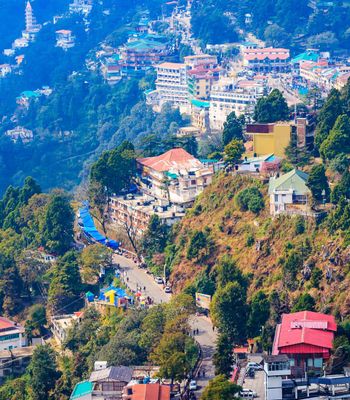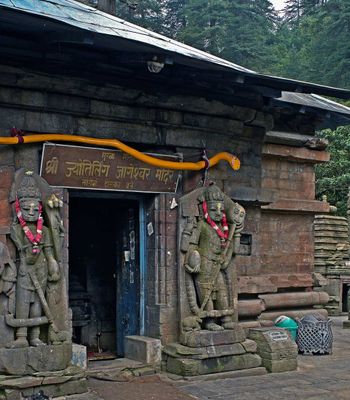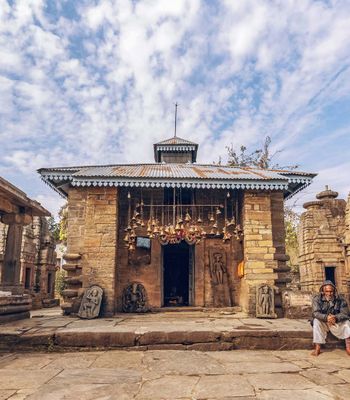
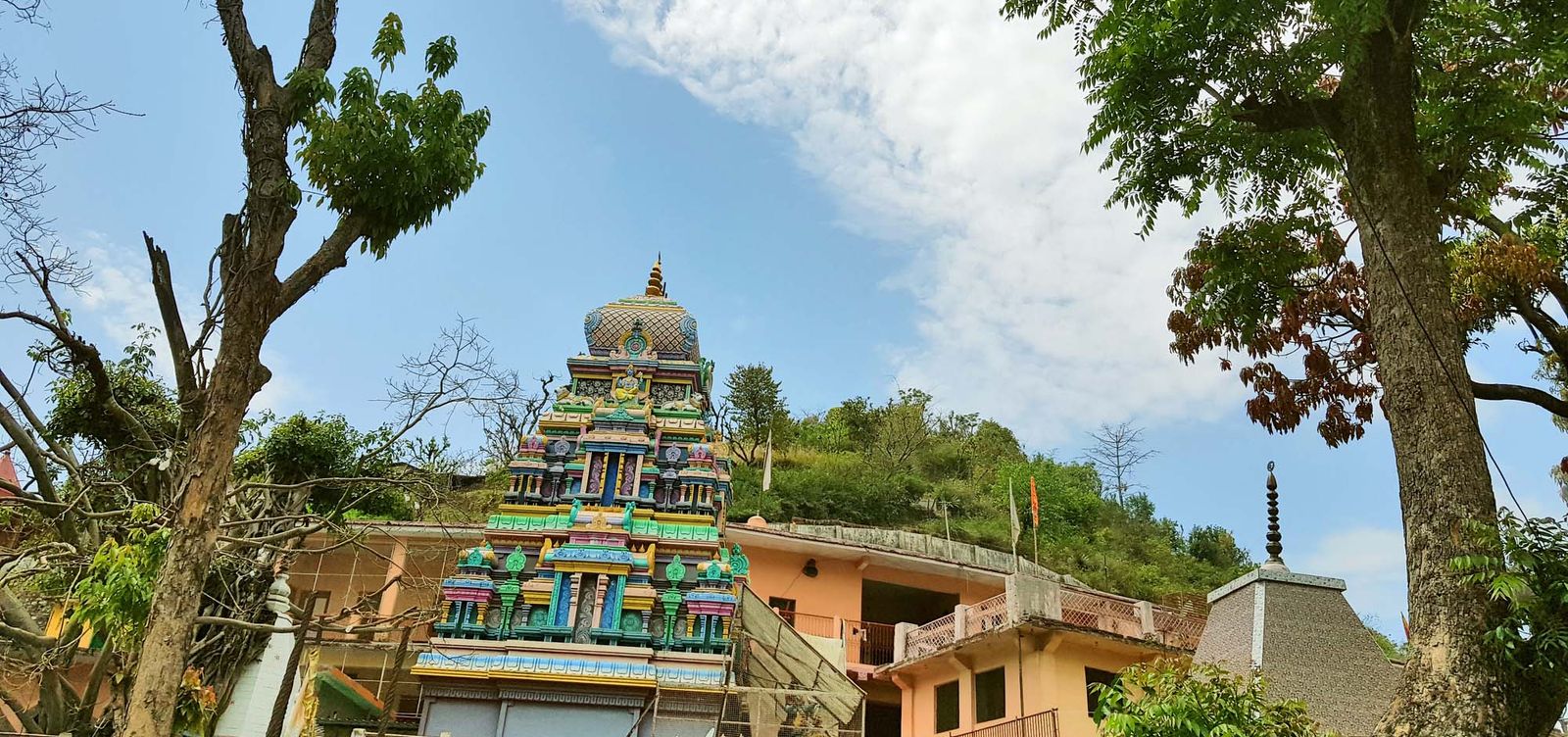
The mountain air hits you first — cool, pine-scented, carrying the faint sound of temple bells somewhere above the treeline. At 1,330 meters above sea level, the Neelkanth Mahadev Temple doesn't just sit in the Himalayas; it feels like it grew out of them. Dedicated to Lord Shiva, this ancient shrine takes its name from one of Hinduism's most dramatic legends — the moment Shiva swallowed a world-ending poison and his throat blazed blue. "Neelkanth" means "blue throat," and the story reverberates through every stone here. Dense forests press close on all sides, fed by the converging streams of Pankaja and Madhumati, their waters rushing over mossy rocks just steps from the temple entrance. Thousands of devotees and curious travelers wind their way here each year — some by jeep along hairpin roads, others on foot through jungle trails — and every single one arrives to something that feels far larger than a hilltop shrine.
A Poison That Saved the World
Long before this temple existed, the gods and demons struck an uneasy alliance. They churned the cosmic ocean — the legendary Samudra Manthan — desperate to extract the nectar of immortality from its depths. But the ocean had other plans.
Before any nectar surfaced, a poison called Halahala boiled up from the deep, so lethal it threatened to annihilate all of creation. No god, no demon dared touch it. Only Shiva stepped forward, lifting the poison to his lips and drinking every last drop.
Goddess Parvati, watching in horror, clamped her hand against his throat to stop the poison from spreading further. It worked — but the venom stayed trapped there, staining his throat an unearthly blue. According to local tradition, this very hillside is where Shiva performed that selfless act. Walk the temple grounds, and you can feel how the myth seeps into the landscape — the blue-tinged twilight, the rushing water, the hush that falls over pilgrims as they approach the inner sanctum.
Walls That Tell Stories Before You Step Inside
Forget the soaring gopurams of South India. The Neelkanth Mahadev Temple follows a North Indian style that's more intimate, more unassuming — and somehow more arresting because of it. The first thing that stops you in your tracks is the multicolored exterior, blazing with hand-painted and carved depictions of the Samudra Manthan. Gods strain against serpents. Demons pull in the opposite direction. The cosmic ocean swirls between them in striking blues and golds.
Step through the entrance and the scale shifts. At the heart of the temple sits the Shiva Lingam, smooth and dark, perpetually glistening from offerings of water, milk, and honey poured by steady hands. A modest shikhara rises above the sanctum, its tower framed against a backdrop of forested ridgelines. Grander temples exist across India, certainly. But few can match what happens here — the way the forest canopy, the sound of streams, and the mountain mist fold themselves into the architecture, as if the Himalayas themselves are part of the design.
When Devotion Shakes the Valley
During ordinary weeks, the temple hums quietly. During the holy month of Shravan — typically July through August — it erupts. Thousands of Kanwariyas flood the mountain road and trails, their decorated pots of sacred Ganges water glinting in the sun, their chants rolling through the valley like distant thunder. They've walked for miles, some barefoot, to perform the abhishek — the ritual bathing of the Shiva Lingam. The energy is electric, exhausting, and deeply moving all at once.
Maha Shivaratri takes things even further. On this one night dedicated entirely to Lord Shiva, the temple blazes with oil lamps. Incense smoke drifts through the cold air like low-lying clouds. Devotees fast, chant mantras, and refuse sleep — their voices weaving into a chorus of devotional songs that echo off the hillsides until dawn. Even if you don't share the faith, standing among those flickering flames and rising voices connects you to something ancient and unmistakably alive.
Getting There Is Half the Adventure
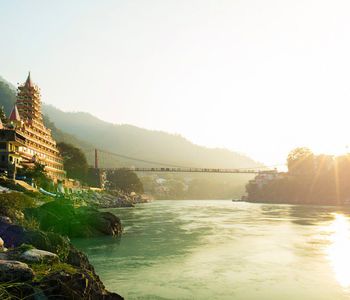
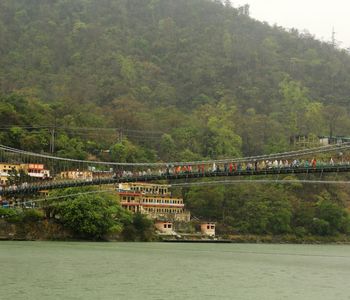
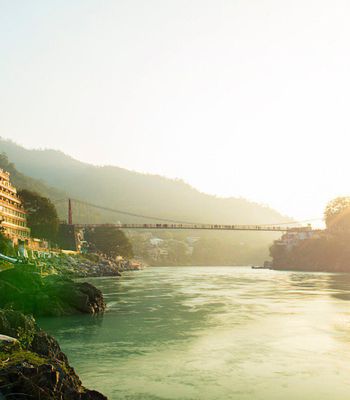
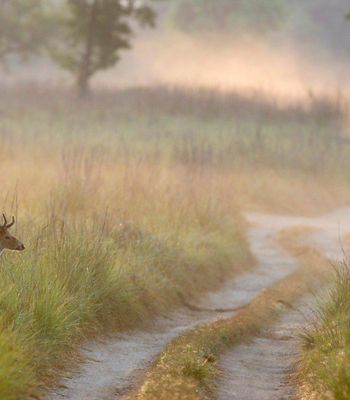
Nobody just "arrives" at the Neelkanth Mahadev Temple. You earn it. The shrine sits roughly 32 kilometers from Rishikesh by road, and most visitors set out from the Lakshman Jhula or Ram Jhula areas. Shared jeeps and taxis cluster near the bridges, their drivers familiar with every blind curve on the mountain road. The route threads through the buffer zone of Rajaji National Park, and if you keep your eyes on the treeline, you'll spot langur monkeys leaping between branches, flashes of colorful birds, and thick stands of sal forest stretching endlessly uphill.
On Foot Through the Forest
A far more rewarding way to reach the temple starts at your own two feet. A trekking route near Lakshman Jhula bridge covers 10 to 12 kilometers through forested terrain — and those kilometers will change the way the temple feels when you finally arrive. You'll splash across shallow streams, pass through hamlets so quiet you can hear your own heartbeat, and walk beneath a canopy so thick the sunlight only reaches you in scattered coins of gold. Budget four to five hours depending on your pace. Bring plenty of water, wear shoes with real grip, and expect a few steep, uneven stretches that'll make your thighs burn. Many pilgrims choose this route deliberately, believing the physical struggle deepens the devotion. They're not wrong — there's something about arriving winded, sweaty, and slightly humbled that opens you up to what waits at the top.
Finding Your Way from Delhi and Beyond
Coming from Delhi? Rishikesh is roughly 250 kilometers away. Uttarakhand Transport Corporation runs daily buses between the two cities, and the journey takes about six to seven hours depending on traffic. Haridwar, just 25 kilometers from Rishikesh, offers the nearest railway station — from there, auto rickshaws, taxis, and local buses shuttle you the rest of the way. Flying in? Jolly Grant Airport in Dehradun is your closest option, approximately 35 kilometers from Rishikesh.
What to Know Before You Go
Temple doors open daily around 6 a.m. and close by 7 p.m. There's no entrance fee — just a donation box that keeps the shrine running. Because the temple perches noticeably higher than Rishikesh, the air can turn surprisingly cool, especially in the early morning and as shadows lengthen in the evening. Toss a light jacket or shawl into your bag.
Timing matters more than you might think. Shravan and Maha Shivaratri bring staggering crowds and snarled traffic on the mountain road. For stillness, aim for a weekday morning outside festival season. Monsoon months (July through September) paint the surrounding forest an almost impossibly vivid green, but the trekking trail gets slippery and treacherous in places. Between October and March, the weather turns crisp and clear — ideal for both the drive and the hike.
Small stalls near the temple sell prasad (religious offerings), along with chai, biscuits, and bottled water. Don't count on much variety, though — pack your own snacks and a full water bottle, especially if you're trekking. One more thing: dress modestly, covering shoulders and knees, out of respect for the temple's sacred atmosphere.
Linger a Little Longer
Don't rush back the moment you've offered your prayers. Where the Pankaja and Madhumati rivers meet near the temple grounds, flat rocks line the water's edge — perfect for sitting, breathing, and letting the quiet settle into your bones. The sound of the current mixing with distant bells is the kind of thing that stays with you long after you leave.
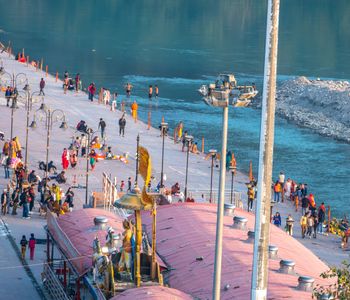
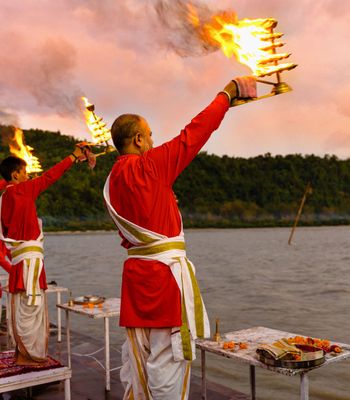
Photography lovers, take note: the contrast between the temple's explosion of color and the deep green wall of forest behind it is extraordinary in soft morning light. And once you descend back to Rishikesh, the day doesn't have to end. Catch the famous Ganga Aarti ceremony at Triveni Ghat as fire and chanting rise above the river. Wander through the ashrams and yoga centers that have made this city a spiritual landmark for generations.
Weave the Neelkanth Mahadev Temple into a broader Rishikesh itinerary, and you'll find yourself moving between adventure, devotion, and discovery in a rhythm that feels completely natural. Whether you come as a pilgrim carrying sacred water or a traveler carrying nothing but curiosity, this place leaves a mark — the kind that sharpens rather than fades with time.