The first thing that hits you isn't the sight of the river — it's the sound. A low, resonant hum of Sanskrit mantras rolling across the water, blending with the clang of temple bells and the soft murmur of hundreds of voices in prayer. Welcome to Triveni Ghat, the oldest, largest, and most sacred bathing ghat in Rishikesh, where the spiritual pulse of India beats loudest at the water's edge.
Every day, thousands of devotees and curious travelers descend these ancient stone steps to the banks of the Ganges. What draws them here is more than scenery — it's the belief that three sacred rivers converge at this very spot: the Ganges, the Yamuna, and the mythical Saraswati, said to flow unseen beneath the earth. For Hindus, a single dip in these braided currents is believed to dissolve lifetimes of sin. For everyone else, it's a raw, unfiltered encounter with devotion that leaves you quietly changed.
And then there's the evening Ganga Aarti — a fire ceremony so hypnotic you'll forget to blink. But more on that in a moment.
Where Three Rivers Become One — The Sacred Story Behind Triveni Ghat
Break down the name and the meaning unfolds like a map. "Tri" is Sanskrit for three. "Veni" means braid or confluence. This isn't just a riverbank — it's a spiritual crossroads where visible and invisible waters intertwine, giving this ghat a significance that towers above the dozens of others lining the Ganges.
Pilgrims journey from every corner of India to bathe here, especially during auspicious occasions like Makar Sankranti and the enormous Kumbh Mela gathering. Families arrive carrying marigold garlands and copper vessels, performing rituals for departed ancestors under the guidance of priests who have sat on these steps for generations. Their voices rise and fall in Vedic chants that haven't changed in thousands of years.
Whether you're a believer or simply an observer, there's something undeniably powerful about watching faith move through a place this ancient. Triveni Ghat functions as a living temple — no walls, no ceiling, just open sky and flowing water and the steady rhythm of human devotion.
Fire on the Water — The Ganga Aarti You Won't Forget
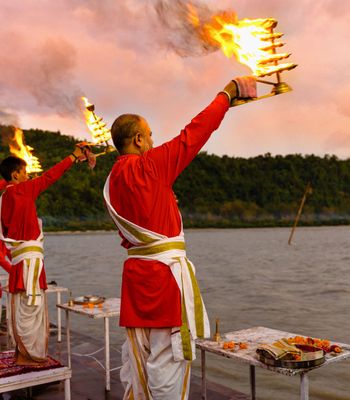
Sunset here doesn't just fade — it ignites. As the last golden light slips behind the hills, a line of priests takes position at the river's edge, each holding enormous brass lamps that blaze with fire. The chanting begins low, almost a whisper, then builds into a full-throated chorus that vibrates in your chest.
Flames arc through the darkening air in synchronized patterns, their reflections splintering across the surface of the Ganges like scattered amber. Hundreds of people pack the wide stone steps, faces lit orange by the firelight, absolutely still. The scent of camphor and sandalwood incense drifts thick and sweet through the crowd.
During the ceremony, you can purchase a small leaf boat cradling fresh flowers and a tiny oil lamp — a diya. Whisper a prayer, set it on the water, and watch it float downstream among dozens of others, each one a flickering wish carried away by the current. That image — all those tiny lights drifting into darkness — stays with you long after you leave.
The whole aarti lasts about 30 to 45 minutes. If you want a front-row seat (and trust me, you do — the reflections on the water are extraordinary for photos), arrive at least half an hour early.
One thing travelers consistently notice: unlike the famous Varanasi aarti, this ceremony feels intimate. Less spectacle, more soul. People of every faith describe it as deeply moving, and even the most skeptical traveler tends to go quiet.
Stone Steps, Submerged Gods, and Winding Lanes
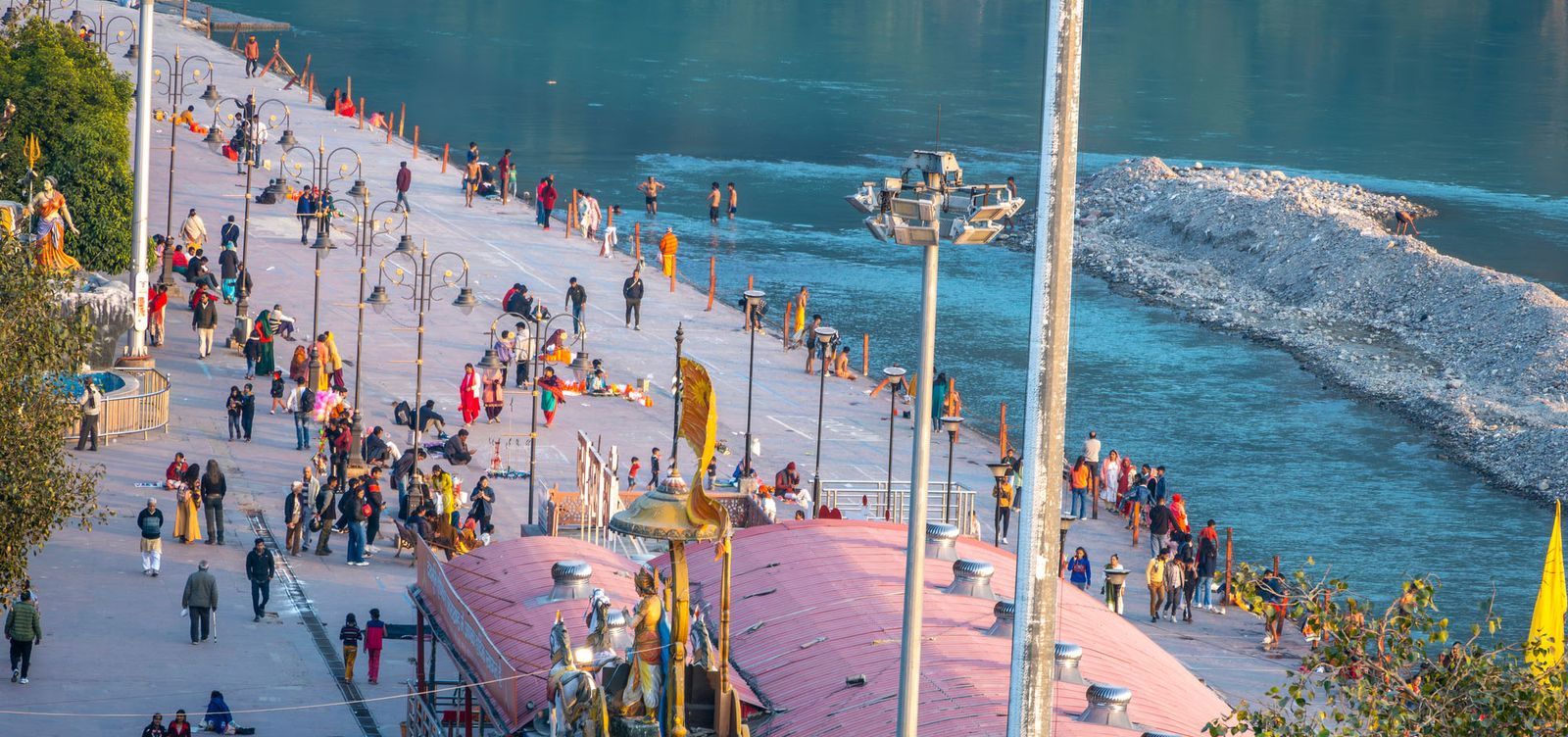
The ghat itself is built on a grand scale — broad stone steps cascading down to the river, wide enough to hold festival-sized crowds without feeling cramped. Along the upper terraces, small temples and shrines dedicated to various Hindu deities tuck into every corner. Wander freely between them; the smell of fresh jasmine garlands and smoldering incense trails you wherever you go.
Down at the waterline, something unexpected catches your eye — stone statues of deities and mythological figures standing partially submerged in the river. During the dry season, the water level drops and reveals more of these sculptures, creating an almost otherworldly landscape where gods seem to rise from the current itself.
Step back from the river and you'll find yourself in a tangle of narrow lanes buzzing with life. Vendors call out from stalls heaped with marigolds, coconuts, packets of vermillion, and bundles of incense. The fragrance of chai brewing in battered aluminum pots mingles with the earthy sweetness of temple flowers. Small food shops serve steaming plates of aloo puri and crispy pakoras — perfect fuel between visits to the water. Several ashrams and meditation centers sit within easy walking distance, making Triveni Ghat a natural launchpad for exploring Rishikesh's entire spiritual quarter.
Taking the Plunge — Rituals, Bathing, and What to Expect
You don't need to be Hindu to step into the Ganges here — bathing at Triveni Ghat is open to everyone. That said, a few things are worth knowing before you wade in.
The current can surprise you, especially during monsoon months from July through September when the river swells and moves fast. Stick to the designated bathing areas marked with chains and metal railings — they're there for good reason.
Curious about the rituals? Local priests are generally warm and eager to explain. You might learn to offer flowers to the river, receive a tilak — a dot of sacred paste applied to your forehead — and recite a simple prayer before entering the water. Respectful participation is genuinely welcomed, not just tolerated.
Not keen on getting wet? No problem. Some of the richest moments happen when you simply sit on the sun-warmed steps and watch the daily theater of life unfold — a grandmother wringing water from her sari, a child releasing a leaf boat, two old friends deep in conversation while the Ganges rushes past their ankles.
Your Game Plan — When to Go, How to Get There, and What to Know
The Sweet Spot on the Calendar
October through March is prime time. Daytime temperatures settle into a comfortable 50 to 75°F range — perfect for long hours outdoors without wilting. Summer (April to June) can spike past 100°F, and monsoon season brings torrential rain that makes the ghat slippery and the river unpredictable. For maximum energy, time your visit around Diwali, Makar Sankranti, or the Kumbh Mela — the ghat practically vibrates with color, sound, and ceremony during these festivals.
Hours and Cost
Triveni Ghat never closes, and there's no entrance fee — it belongs to everyone. Early birds who arrive between 5 and 7 a.m. find a beautifully quiet ghat: mist on the water, soft chanting, and the gentle splash of morning bathers. Evenings are the opposite — joyful chaos as crowds gather for the Ganga Aarti, which kicks off around 6 to 7 p.m. depending on sunset. Stake out your spot at least 30 minutes ahead.
Finding Your Way
Centrally located in Rishikesh, the ghat is easy to reach from almost anywhere in town. An auto rickshaw from the main bus stand takes roughly 10 minutes. Taxis and shared autos run the route constantly. Flying in? Dehradun's Jolly Grant Airport sits just a 35- to 45-minute drive away. Once you're in Rishikesh, many hotels and ashrams are a short walk from the ghat's steps.
A Few Things to Tuck in Your Pocket
Dress modestly — this is sacred ground, and locals appreciate the gesture. Slip off your shoes before descending toward the water. Keep your phone and wallet close; peak hours bring big crowds. Bring a small towel if you plan to bathe. And please — no plastic in the river. The Ganges has enough to carry.
Triveni Ghat isn't a single-note experience — it shifts and breathes with the hours. Dawn brings whispered prayers and pale river light. Midday hums with quiet devotion and the shuffle of pilgrims. Dusk erupts in fire and song. Each version of this ghat tells a different story, and together they reveal the spiritual heartbeat of Rishikesh. Add it to your itinerary, and you'll touch a tradition that has pulled seekers to these waters for centuries — one that, quite likely, will pull you back too.