Forty-eight songs. Six weeks. One quiet ashram perched above the Ganges. When John, Paul, George, and Ringo traded the chaos of Beatlemania for the forested stillness of Rishikesh in 1968, they didn't just find inner peace — they wrote nearly an entire double album that would reshape rock and roll. The Beatles Ashram, formally known as Chaurasi Kutia, sits on 18 acres of jungle-draped hillside where Maharishi Mahesh Yogi once guided the world's most famous band through Transcendental Meditation. For decades, the ashram lay abandoned, swallowed slowly by monsoon rains and banyan roots. Now reopened as part of the Rajaji Tiger Reserve, it pulls in music pilgrims, spiritual seekers, and wanderers who feel the tug of a place where history and magic genuinely collided. If Rishikesh is on your radar, this is the stop that will stay with you longest.
From Meditation Retreat to Musical Legend
Maharishi Mahesh Yogi carved this retreat out of the forested hillside in the early 1960s, long before any Liverpudlian set foot on its grounds. Spiritual seekers arrived quietly, drawn by the promise of Transcendental Meditation and the deep calm that settles over the Ganges at dawn.
Then February 1968 happened. The Beatles checked in — partners in tow, alongside Donovan and Mike Love of the Beach Boys — and the ashram's anonymity evaporated overnight. For weeks, the group meditated, strummed acoustic guitars on sunlit terraces, and let melodies pour out in an environment blissfully free from screaming fans and studio deadlines.
After the band departed, the Maharishi kept the ashram running for several more years. By the early 1980s, a bitter land dispute between his organization and the Indian government forced the gates shut. Vines crept through doorways. Roofs buckled under monsoon weight. Time did what time does. It wasn't until 2015 that the Uttarakhand Forest Department reclaimed the property and opened it to visitors — preserving both its spiritual roots and its rock-and-roll soul.
Stone Domes, Crumbling Halls, and the Ghosts of Great Songs
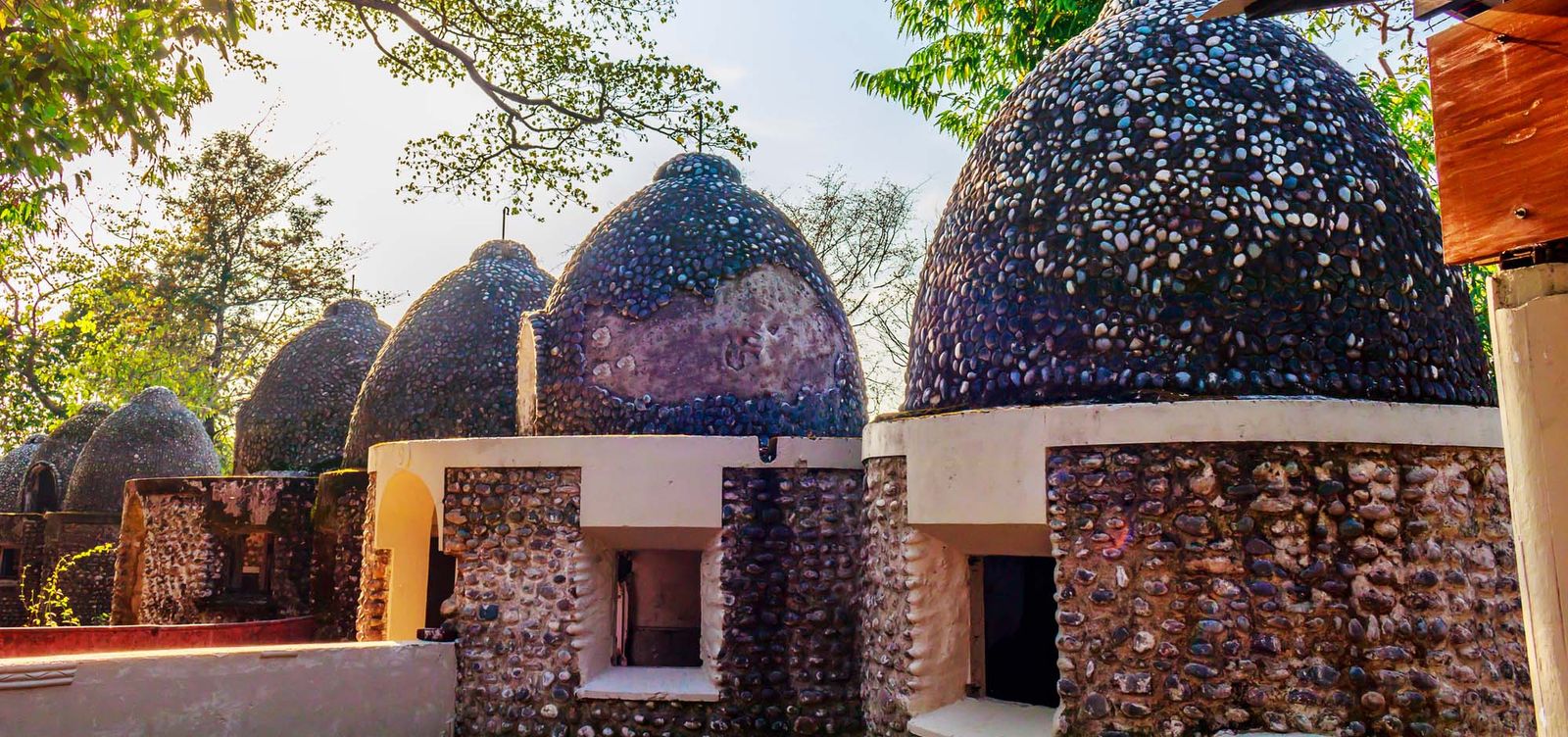
Step through the entrance and the first things to catch your eye are the meditation pods — dozens of igloo-shaped stone structures scattered across the grounds like something out of a dream. Known as kutias, each one was built for solitary meditation: a low, narrow doorway, a cool domed interior, and absolute silence. Eighty-four of these cells once dotted the property, giving the ashram its formal name — Chaurasi Kutia, "84 huts."
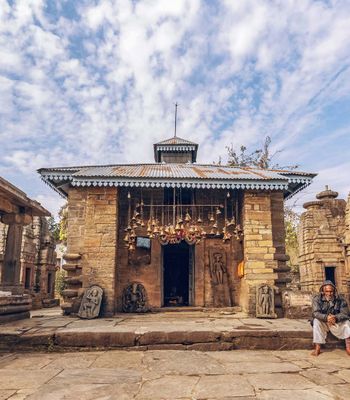
Beyond the pods, larger buildings sprawl through the trees. The main lecture hall still stands, its arched windows framing green curtains of forest and, if you crane your neck, a silver sliver of the Ganges far below. Roofs have partially caved in on several structures, but stone staircases still climb to upper levels where the canopy opens up and the river breeze hits your face. There's a strange beauty in the collapse — nature and architecture locked in a slow, respectful wrestle.
Walls That Sing in Color
Nothing quite prepares you for the murals. Over the years, artists from India and beyond have blanketed the ashram's crumbling walls with explosions of color — psychedelic swirls, peace signs, and towering portraits of John Lennon peering out through his signature round glasses. Lyrics from "Across the Universe" curl around doorframes. A huge painted George Harrison gazes serenely from a wall half-consumed by jungle creepers.
The effect is electrifying: street art layered over decay, bright pigment against moss-stained concrete, contemporary creativity honoring a 1960s moment. Every turn reveals a new composition — a photographer's paradise where you'll burn through your camera roll without even trying.
The Ripple That Became a Wave
What happened inside these walls didn't stay inside these walls. Before 1968, yoga and meditation were exotic curiosities in the West — fringe practices most Europeans and Americans had never encountered. The Beatles' highly publicized stay changed that almost overnight. Thousands of Westerners booked flights to India, seeking the same spiritual awakening. Rishikesh earned the title "Yoga Capital of the World," a reputation it wears proudly half a century later.
And the music? Staggering. "Dear Prudence," "Ob-La-Di, Ob-La-Da," "Back in the U.S.S.R." — all written or sketched out on these very grounds, in the shade of these very trees. The stripped-down acoustic environment pushed the band toward a rawer, more eclectic sound that defined the White Album. Standing in the rooms where those chords first rang out connects you physically to one of rock history's most fertile creative bursts. You don't have to be a superfan to feel it — just human.
Your Visit: What to Know Before You Go
The ashram operates under the Rajaji Tiger Reserve and opens its gates daily from 9 a.m. to 4 p.m. Budget at least ninety minutes to two hours — you'll want to linger. Indian nationals pay 50 rupees per person; international visitors, 600 rupees. Children under five enter free.
Just past the entrance, a small exhibition greets you with faded photographs, newspaper clippings, and panels detailing the Beatles' stay and the Maharishi's teachings. From there, shaded pathways wind through the forest to the meditation pods, lecture halls, and residential quarters. Signboards along the route lay out the history clearly, so you can explore independently. That said, hiring a local guide at the gate is worth every rupee — they'll share stories, anecdotes, and small details no signboard can capture.
When the Light and Weather Are Just Right
Timing matters here. Between October and March, temperatures hover between a pleasant 50 and 75 degrees Fahrenheit, and dry skies make the open-air site a joy to wander. Summer brings punishing heat, while the July-to-September monsoon turns pathways slick with mud and drapes everything in a steamy haze.
For the most magical visit, arrive early morning. Mist lifts off the Ganges in slow, ghostly ribbons. Birdsong fills the canopy overhead. The crowds haven't materialized yet. It's just you, the stones, and the lingering echo of something extraordinary.
Getting There Without the Hassle
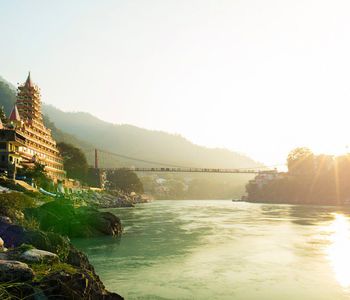
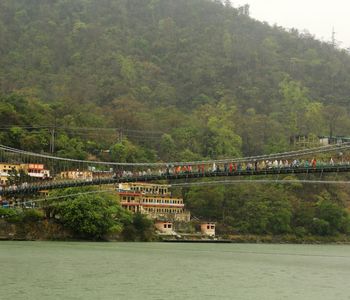
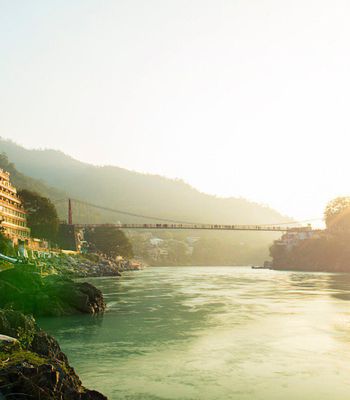
You'll find the ashram on the eastern bank of the Ganges in Rishikesh's Swargashram area. From the city center, cross the Ram Jhula or Lakshman Jhula suspension bridges — an experience in themselves, swaying gently above the turquoise river — and follow the riverside path. Auto rickshaws and taxis zip over from Rishikesh's main market for a modest fare.
Coming from Delhi? Fly into Jolly Grant Airport in Dehradun, roughly 35 kilometers away, where taxis and shared cabs run regularly to Rishikesh. Overnight buses and trains also connect Delhi to Haridwar, just 25 kilometers south. The well-maintained NH58 highway makes the road journey smooth and genuinely scenic — green hills unfolding outside your window the closer you get.
Beyond the Ashram Gates
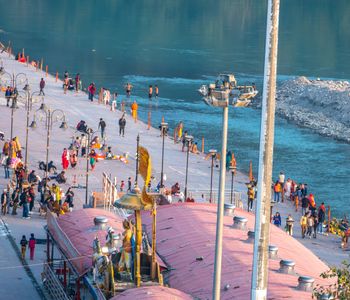
Once you've soaked in the ashram, let Rishikesh pull you deeper. Walk along the Ganges as the sun drops and join the crowds at Triveni Ghat for the evening Ganga Aarti — a mesmerizing ritual of fire, chanting, and flickering oil lamps reflected on dark water. The sound alone — bells, drums, hundreds of voices rising together — vibrates in your chest.
Craving adrenaline after all that stillness? Book a white-water rafting run through the Ganges' rapids or sign up for a yoga class at one of the city's countless schools. Rishikesh has a way of balancing the sacred and the adventurous without breaking a sweat.
Back inside the ashram grounds, a few practical notes: bring a water bottle, wear sturdy walking shoes (the terrain is uneven and shade thins out by midday), and keep your eyes on the treetops. Langur monkeys swing between branches, peacocks strut through the undergrowth, and dozens of bird species flit through the canopy. Carry your litter out with you — no waste bins exist inside the reserve.
Rock-and-roll history, spiritual heritage, and the slow, beautiful spectacle of nature reclaiming what humans built — the Beatles Ashram weaves all three into a single, unforgettable visit. Whether you come clutching a dog-eared copy of the White Album, chasing a quieter mind, or simply following your curiosity down a jungle path, this place rewards you with a hush that settles deep and a wonder that follows you home.