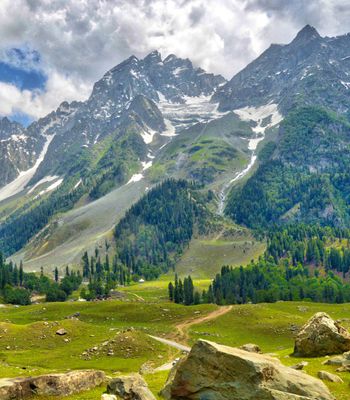
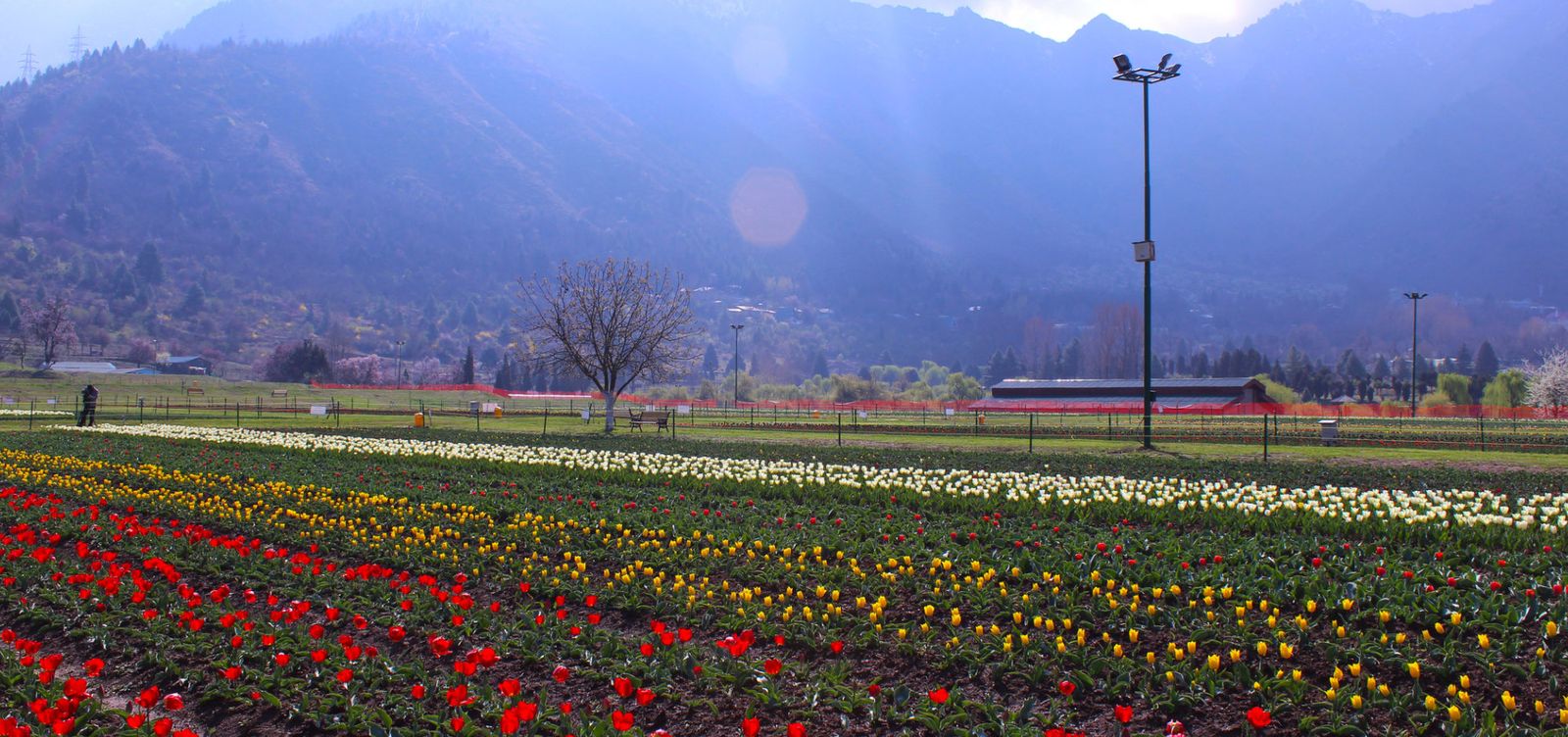
For roughly three weeks each spring, the foothills below the Zabarwan Range do something almost preposterous. Somewhere between 1.5 and 2 million tulip bulbs detonate simultaneously across a terraced hillside above Dal Lake, and subtlety is nowhere in the equation. Crimson rows bleed into banks of yellow, which give way to corridors of purple so deep they look manufactured. They're not. This is the Indira Gandhi Tulip Garden in Srinagar, Asia's largest tulip garden — born from the moment someone in the Jammu and Kashmir government looked at Holland and thought, "We can do that against a Himalayan backdrop." They were right. Since opening in 2007, the garden has reshaped Srinagar's spring tourism almost single-handedly. But the window to see it is merciless. Miss it, and you'll find nothing but empty green terraces and gardeners already thinking about next year.
Sixty Varieties of Excess, Carved into a Mountainside
Seven terraces step up the lower slopes of the Zabarwan hills at roughly 1,600 metres elevation. That altitude matters — it pushes the tulips into a later bloom than their European cousins, typically mid-March through mid-April, though the exact dates shift with snowmelt and overnight cold. The Srinagar municipal authorities announce the opening each year like a court ruling. Once they do, the clock starts.
Walking bottom to top takes you through more than sixty tulip varieties. Some are familiar: the classic Darwin hybrids with their goblet-shaped heads, the fringed parrot tulips that look ripped apart by hand. Others catch you off guard — pale green varietals streaked with pink, bicolour specimens that seem individually painted. The layout follows a deliberate colour-blocking strategy, so each terrace reads as a single overwhelming stripe when viewed from above or below.
Here's the thing nobody tells you: the garden is at its most extraordinary not at peak bloom but roughly two days before it. The buds are fat and half-open, the colours run deeper and more saturated, and the crowds haven't yet massed. If you can thread your visit into that narrow gap, you'll see something more intimate than the spectacle most photographs capture. Patience and luck, in equal measure.
Supporting Cast
The tulips dominate, but they don't perform alone. Daffodils and hyacinths fill the gaps between the main beds, layering in white and blue so the eye never quite finds a resting place. Muscari — those dense little grape hyacinths — line several pathways in tight violet borders. A handful of ornamental cherry trees anchor the upper terraces, their pale blossoms offering a reprieve from the relentless saturation below.
Near the eastern edge, a small nursery section grows roses and other perennials, though these feel like an afterthought — a polite nod to the rest of the botanical calendar. The garden knows what it is. It doesn't pretend to be a year-round operation. That single-mindedness is its engine. Rather than spreading itself thin across seasons, it channels everything into one concentrated detonation. The result hits harder than any year-round botanical garden you've walked through.
Turn Around
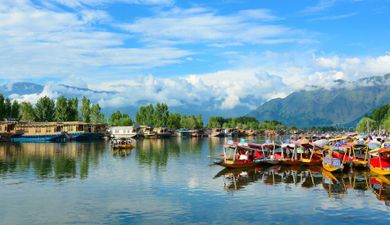
Most people arrive with their eyes aimed downward, locked on the flower beds. Understandable. But at the top terrace, stop and pivot. Dal Lake stretches below in silver-grey stillness, its houseboats reduced to small geometric shapes on the water. Beyond the lake, old Srinagar sprawls in low, dense blocks. On clear days, the Pir Panjal range rises behind everything, still carrying snow well into April.
This vantage point — flowers in the foreground, lake in the middle distance, mountains stacked behind — is precisely why the garden was built here and not on flatter, easier ground. The terracing wasn't just aesthetic ambition; it was strategic. Every step upward adds another layer to the panorama. Bring a wide-angle lens, though even that won't contain the full scale. Some views simply refuse to fit inside a rectangle.
The Festival and Its Beautiful Disorder
Each year, the Jammu and Kashmir government hosts a Tulip Festival timed to peak bloom. Cultural performances unfold on a stage near the main entrance — Kashmiri folk dances, live music, the occasional Sufi recital that feels genuinely transportive rather than performed for cameras. Food stalls line the lower pathways selling noon chai, that peculiar pink salt tea found nowhere outside the Kashmir Valley, alongside kebabs and lotus root chips fried to a sharp crunch.
During festival weekends, the garden absorbs enormous crowds. Pathways narrow. Selfie sticks multiply. Weekday mornings remain the smarter play if you want to see flowers rather than the backs of other people's heads. Gates open at 7:30 a.m., and those first ninety minutes are genuinely peaceful — cool air, low-angled light, tulips still beaded with overnight moisture. By ten o'clock, it's a different place entirely.
The Logistics
The garden sits along the boulevard road running between Dal Lake and the Zabarwan foothills, about eight kilometres from Srinagar's Lal Chowk city centre. An auto rickshaw from downtown takes roughly twenty minutes outside of festival traffic. During peak bloom weekends, double that. Taxis know the route instinctively — say "Tulip Garden" and they'll deliver you to the main gate without haggling over directions, though you'll still haggle over the fare.
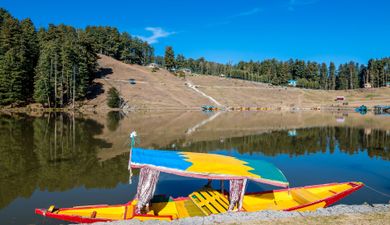
From Srinagar's Sheikh ul-Alam International Airport, the garden is about eighteen kilometres southwest. A prepaid taxi runs directly there. Some people pair a morning among the tulips with an afternoon shikara ride on Dal Lake — the proximity makes this a natural sequence rather than a logistical stretch.
The Practical Stuff That Actually Matters
Entry fees are modest — typically around 50 rupees for Indian nationals and a few hundred rupees for international visitors, though rates adjust slightly each season. Verify current pricing before you arrive. Paved pathways connect the terraces, but the incline is real. Comfortable walking shoes matter far more here than at any flat garden. Benches dot the upper terraces for those who need to catch their breath, and the reward for reaching the top is that long view over Dal Lake.
No food or beverages are sold inside the garden itself, though vendors cluster near the entrance gates. Carry water. The spring sun at 1,600 metres is deceptively fierce, and shade between the open terrace beds is scarce. A hat isn't a suggestion. It's equipment.
Gone in Days
The Indira Gandhi Tulip Garden asks you to accept its terms. You cannot visit whenever it suits you. You cannot linger across months or promise yourself you'll come back next weekend. It opens for a few weeks each spring, delivers something overwhelming, and then quietly shuts its gates until the following year. That impermanence isn't a flaw — it's the entire point. The flowers don't wait, and that urgency, the knowledge that all of this will be gone in days, makes the colours land harder, the air taste cleaner, each terrace more worth the climb. Plan around the bloom, not around your schedule. Kashmir has never adjusted itself for anyone's convenience, and it's not about to start now.