Most national parks in India sell you the promise of a tiger. Dachigam doesn't bother. This 141-square-kilometre stretch of wilderness rising from Dal Lake's watershed exists for a different reason entirely — to protect the hangul, the Kashmir stag, one of the rarest deer species on Earth. Fewer than 300 survive in the wild, and nearly all of them live here, in steep valleys thick with willow and birch. The park's name translates to "ten villages," a nod to the communities displaced when the Dogra rulers first designated the area as a royal game reserve. That displacement echoes strangely through the empty meadows today, where human silence has allowed something fragile to hold on. Dachigam isn't a spectacle. It's a quiet, serious place doing serious work.
Two Landscapes Wearing One Name
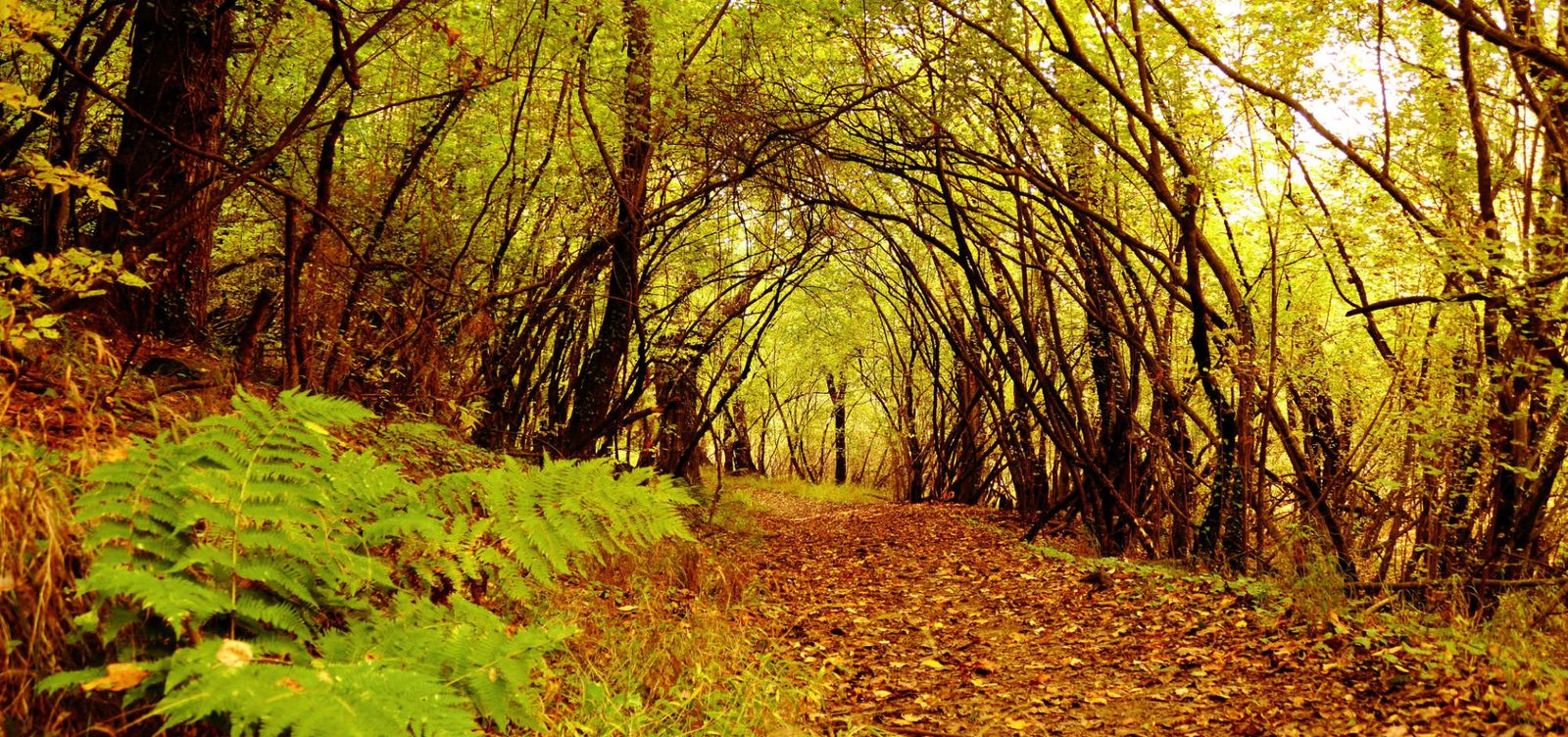
The park splits into a lower and upper zone, and the two behave like different countries. The lower portion — roughly 1,700 to 2,400 metres in elevation — is a river valley where the Dagwan stream runs cold and fast over smooth rock. Himalayan elm, walnut, and poplar crowd the banks so tightly that the canopy closes overhead in places, turning the trail into a green tunnel.
Come autumn, this lower zone sheds its subcontinental identity altogether. Amber and rust canopies against granite-grey slopes, the air carrying the sharp tang of decaying leaves — you'd swear you were in the Carpathians, not Kashmir.
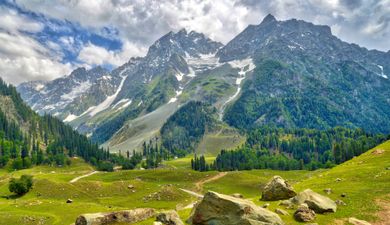
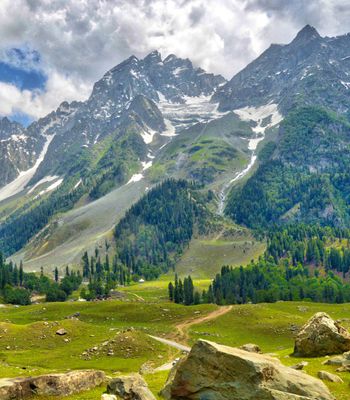
The upper zone climbs steeply to nearly 4,000 metres, entering alpine meadows where snow lingers well into May. Getting there demands a committed trek, and permits are harder to secure. But this is where the hangul retreats in summer, grazing on high pastures that feel more Central Asian than Indian. The contrast between the two zones isn't gentle — it's geological, botanical, and atmospheric, all compressed within a single park boundary.
The Stag That Refuses to Disappear
The hangul is the sole surviving subspecies of the European red deer in Asia. That single fact deserves to stop you mid-stride. In the 1970s, the population cratered below 150 individuals, hammered by habitat loss, military activity, and poaching. Conservation efforts inside Dachigam have coaxed the numbers back upward since then, though recovery remains agonizingly slow — the kind of slow that can't be graphed on a tourist brochure's timeline.
Spotting one takes patience and luck. Early mornings in the lower zone during spring offer the best odds, when males step from the forest to feed along the stream banks. Their antlers — carrying up to eleven or twelve points — look disproportionately grand for the animal's frame, as though nature poured all its extravagance into one feature to compensate for the species' precariousness. A park guide is mandatory, and most of them have spent decades tracking these animals through undergrowth. Trust their instincts over your own. They'll read a bent branch the way you'd read a road sign.
Everything Else the Forest Keeps
Dachigam supports a cast of wildlife that would headline any other park's marquee. Himalayan black bears are common in the lower zone, particularly in autumn when they gorge on walnuts with a single-mindedness that borders on comic. Leopards patrol both zones, though sightings are rare — usually limited to pugmarks pressed into soft mud, proof they were there five minutes before you. Musk deer, with their peculiar downturned fangs, inhabit the higher elevations alongside serow and langur.
The birdlife repays attention generously. Koklass pheasants call from dense cover in the mornings — a sharp, staccato burst that sounds like a domestic argument overheard through a wall — while bearded vultures ride thermals above the upper meadows. During migration season, the Dagwan stream corridor becomes a flyway for warbler and flycatcher species moving between Central Asia and the subcontinent. Bring binoculars. This park rewards anyone willing to slow down and shut up.
Getting Past the Gate
Dachigam sits roughly 22 kilometres from Srinagar's city center — an easy drive through the outskirts past the Mughal Gardens. But easy to reach does not mean easy to enter. Permits are issued by the Jammu and Kashmir Wildlife Protection Department, and they aren't always straightforward to obtain. Foreign nationals face additional paperwork. Group sizes are restricted.
Arrange permits at least a few days in advance through the wildlife warden's office in Srinagar. Showing up at the gate without documentation will get you nothing but a polite refusal. The lower zone is generally accessible from April through November, while the upper zone has a tighter window — typically June through September, once snow has cleared the higher passes. No private vehicles are allowed inside. You walk, accompanied by an assigned guide and, in some areas, a wildlife guard.
When the Valley Cooperates
Timing depends on what you're after. Spring — particularly late March through April — brings wildflowers to the lower meadows and draws the hangul out of dense cover. The weather is fickle: mornings can be crystalline, afternoons drowned in cloud. But the forest carries an electric charge in spring that later months can't replicate.
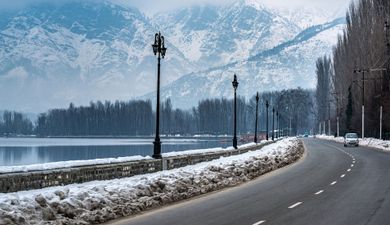
Autumn is the other prime window. October paints the lower zone in colors so saturated they look artificial, and cooler temperatures make the hiking genuinely pleasant. This is also the hangul's rutting season, when males turn vocal and territorial. Their call — a deep, resonant bellow — rolls across the valley at dawn, a sound that pins you to the spot. Summer works for the upper zone, though afternoon rain is almost guaranteed. Winter shuts most of the park entirely; heavy snowfall makes access impractical.
What You Won't Find Here
There are no safari jeeps bouncing through Dachigam. No canteen hawking overpriced samosas from a watchtower. No gift shop. The park's infrastructure is deliberately skeletal, which is both its limitation and its finest quality. You carry your own water. You walk quietly. The absence of commercial apparatus means the forest sounds like a forest — wind through chinar branches, water over stone, the occasional alarm bark of a deer ricocheting off a slope.
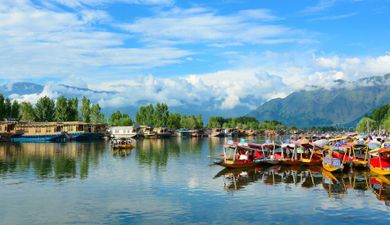
This austerity startles visitors accustomed to India's polished tiger reserves. No luxury lodges line the boundary. No evening wildlife documentaries screen for guests over gin and tonics. Your base is Srinagar — likely a houseboat on Dal Lake or a guesthouse in the old city — and Dachigam becomes a day trip from there. The disconnect between Kashmir's lakeside tourism and this wild valley twenty minutes away is jarring. And that gap is precisely what keeps the place intact.
A Place That Has Earned Its Silence
Dachigam will never compete with Ranthambore or Jim Corbett for attention. Its purpose is narrower, its pull more specific. You come here to witness a conservation story still being written — one whose ending remains genuinely uncertain. Standing in the lower valley at first light, watching mist lift off the Dagwan stream while a forest guard gestures silently toward movement in the trees, you understand something that no tiger selfie can teach you: some places matter not because they dazzle but because they endure.
The hangul is still here. Barely. Dachigam is the reason it has a chance at all.