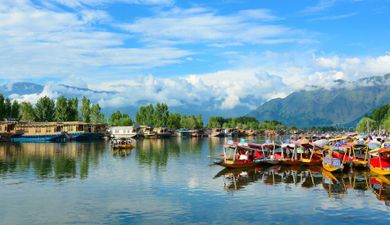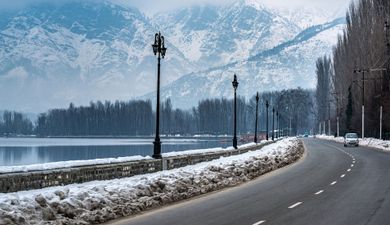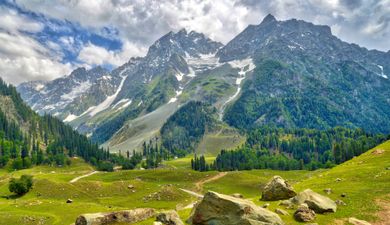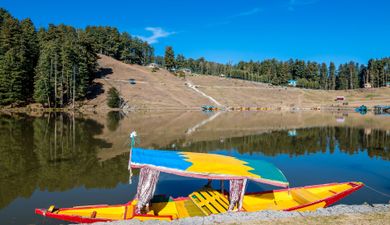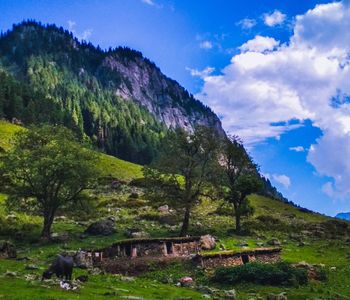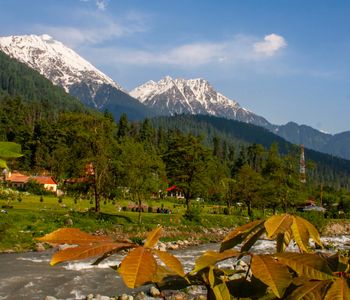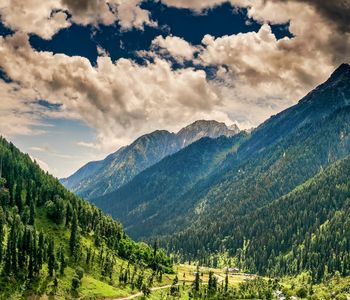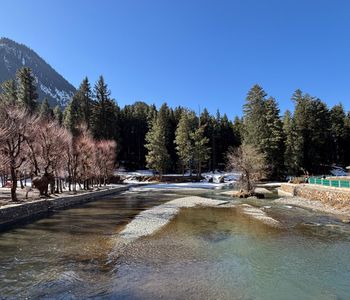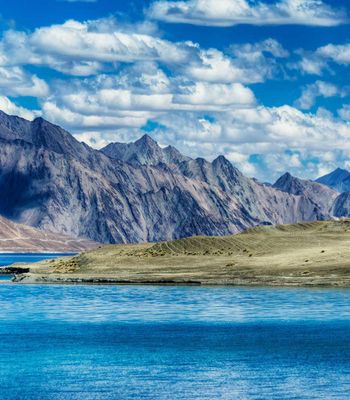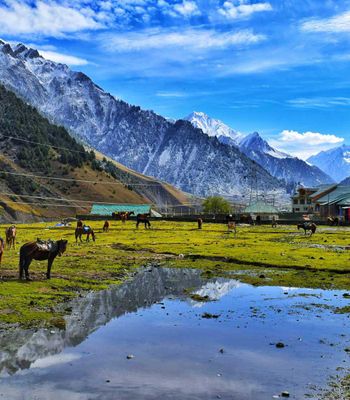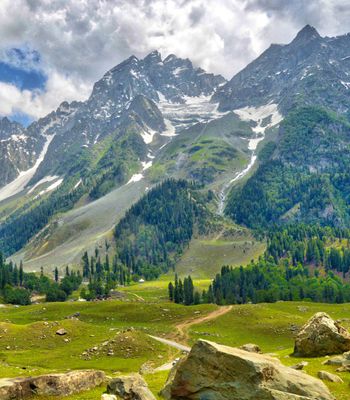
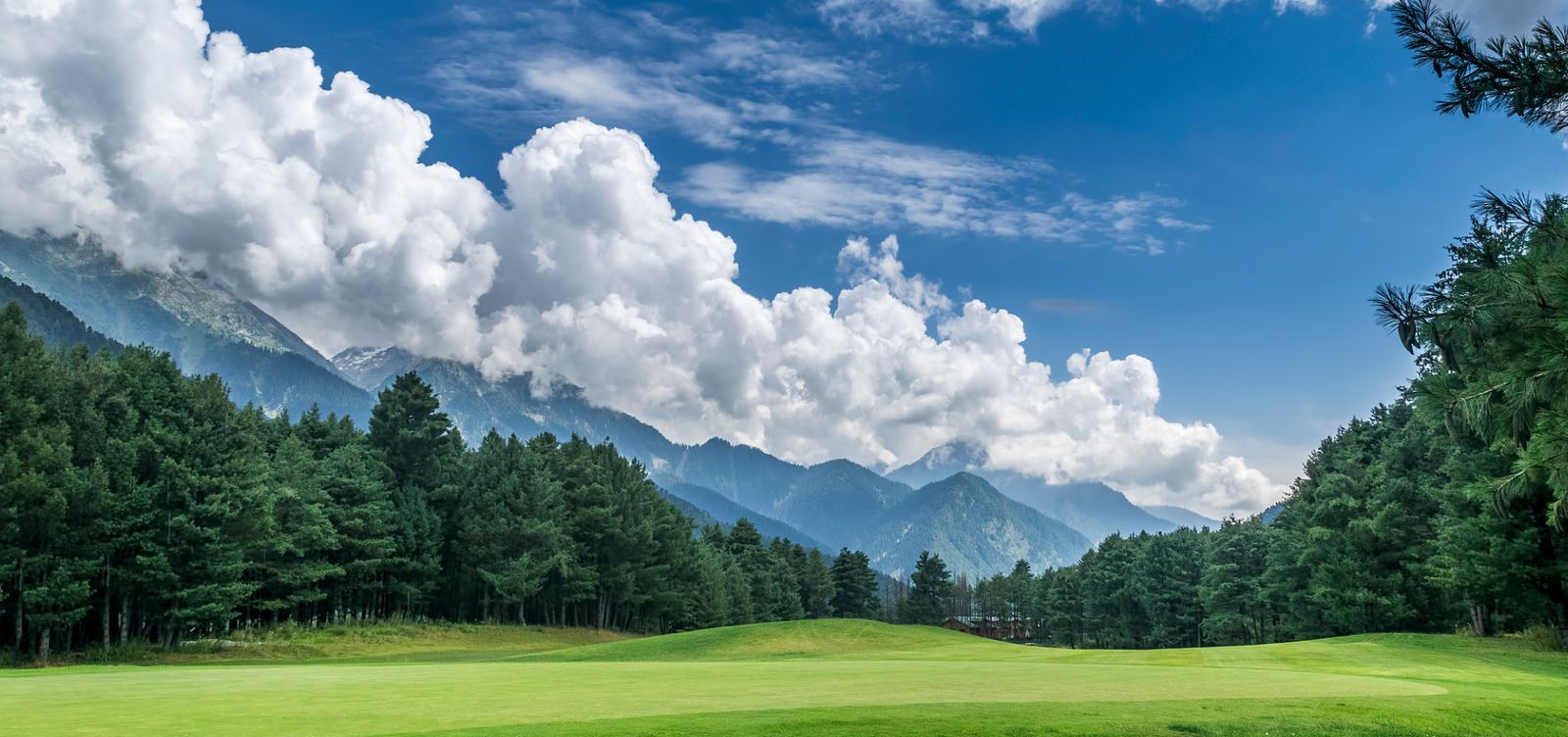
At 7,200 feet above sea level, the Pahalgam Golf Course doesn't need to impress you with its scorecard. The Lidder River does the heavy lifting, carving through the valley floor just beyond the fairways, its glacial water running so clear you can count stones on the riverbed from thirty yards away. The course itself is modest — eighteen holes spread across a meadow that, in June, erupts with wildflowers no groundskeeper planted. Deodar and pine forests frame every hole like a living gallery wall, and the Himalayas rise behind them with the kind of indifference only mountains possess. This isn't a golfer's pilgrimage for the sport. It's a place where the game becomes an excuse to stand still in a landscape that makes you forget you were keeping score.
A Course That Didn't Ask to Be Beautiful
Most golf courses are designed. Pahalgam's feels discovered. The layout follows the natural contours of the Lidder Valley, and the terrain hasn't been bulldozed into submission the way resort courses tend to be. Fairways roll unevenly, the grass shifting between manicured patches and sections that feel closer to highland pasture. That unevenness is the appeal.
Altitude changes everything about how a ball travels. Thinner air means longer drives, which sounds like a gift until you realize the same physics makes uphill approaches deceptive. A shot you'd land confidently at sea level sails past the green here, vanishing into rough that smells of pine needles and damp earth. Club selection becomes guesswork for the uninitiated.
What catches you off guard is the silence between shots. No highway noise, no construction din, no loudspeaker announcements. Just wind through conifers and the persistent murmur of the river. On an early morning round, with mist still clinging to the treeline, the course feels less like a sporting venue and more like a meadow that tolerates golf.
A Colonial Inheritance, Reimagined
The British established this course during the colonial era, drawn to Pahalgam for the same reason Mughal emperors were drawn to Kashmir centuries before — the cool summers. While the rest of the subcontinent baked under May heat, officers in Pahalgam played nine holes in sweaters. The original layout was compact, designed more for leisure than competition, and that unhurried character persists.
After independence, the Jammu and Kashmir Tourism Development Corporation took over management. Expansions came gradually, but the course never chased prestige. Nobody installed irrigation systems borrowed from desert resort towns or flattened the terrain for tournament standards. The result is something increasingly rare in modern golf — a course that feels handmade rather than engineered.
Here's the counterintuitive part: that relative simplicity is precisely what makes it memorable. A professional golfer might find it underwhelming on paper. But nobody who has played a round at Pahalgam remembers it for the par rating. They remember the ninth hole with the river bending alongside it, or the way a sudden cloud shadow turned the surrounding mountains from green to charcoal in three seconds flat.
The Life Around the Fairways
Pahalgam Golf Course functions as more than a place to play. Locals use the surrounding grounds for morning walks. Shepherds from the Gujjar community occasionally pass the periphery with their flocks, seemingly unbothered by the concept of a tee time. Children from nearby villages treat the open stretches as their personal playground during off-hours. The course isn't sealed off from its community — it breathes with it.
During autumn, the place transforms entirely. Surrounding chinar trees turn a deep, theatrical red, and the fairways take on a golden hue as the grass dries. Fewer tourists visit in October and November, which means you might play an entire round without encountering another group. The air bites cold by late afternoon, and the mountains carry their first dusting of snow. It's a completely different experience from the lush green of summer — and arguably the more atmospheric one.
The Road In
Pahalgam sits roughly 90 kilometers south of Srinagar, and the drive takes about two and a half hours depending on traffic and road conditions. Most travelers fly into Sheikh ul-Alam International Airport in Srinagar and arrange a taxi or shared vehicle from there. The road follows the Jhelum River before branching toward the Lidder Valley, and the scenery compounds with every kilometer — saffron fields give way to apple orchards, then dense forest.
From Pahalgam town, the golf course is a short walk or a five-minute auto rickshaw ride. You won't need directions. Ask anyone, and they'll point you toward the open meadow visible from most vantage points in town. The course sits at the heart of Pahalgam's geography — one of the few golf courses in the world you can locate simply by looking for the largest flat stretch of green in a mountain valley.
What to Know Before You Play
Equipment rental is available on-site, though the selection is basic. If you're particular about your clubs, bring your own. Green fees are modest compared to metropolitan courses — a round costs a fraction of what you'd pay in Delhi or Mumbai. The clubhouse is functional rather than luxurious, offering tea and light snacks but not the kind of post-round dining you'd expect at a private club.
The best months to play are May through September, when the weather holds steady and daylight extends well into the evening. Mornings start cool, often around 10 to 15 degrees Celsius, warming to a comfortable mid-twenties by midday. Carry a light jacket regardless — weather in the valley shifts without warning, and a clear sky at the first tee doesn't guarantee sunshine at the ninth.
One detail worth noting: the course occasionally closes during heavy snowfall months, typically December through February. Verify availability before planning a winter visit, as schedules depend on conditions rather than a fixed calendar.
After You Put Down the Clubs
Pahalgam itself rewards lingering. The Lidder River offers trout fishing for those with permits, and the Aru Valley — about 12 kilometers upstream — provides one of Kashmir's finest day hikes. Betaab Valley, named after a Bollywood film shot there in the 1980s, sits even closer and delivers alpine meadows without requiring serious trekking. After a round of golf, these side trips fill an afternoon without exhausting your legs.
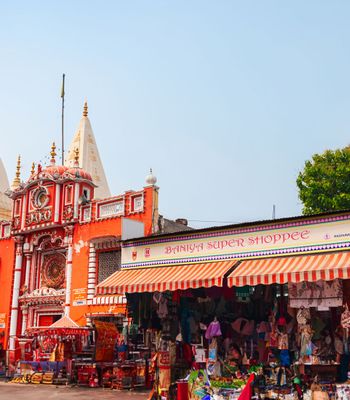
The town's market area sells Kashmiri saffron, walnut wood carvings, and pashmina shawls. Bargaining is expected. For meals, seek out local restaurants serving rogan josh and dum aloo — the Kashmiri versions carry a warmth and depth of spice that their imitations elsewhere never quite replicate.
Altitude and Attitude
Pahalgam Golf Course won't appear on any list of the world's most challenging layouts. It doesn't host tournaments that make international headlines. What it offers instead is something no championship course can manufacture — a setting so absorbing that the game itself becomes secondary. Play a round here not to improve your handicap, but to stand on an open fairway at dawn, frost melting under your shoes, the Himalayas filling every direction you turn, and remember why you started playing outdoors in the first place.