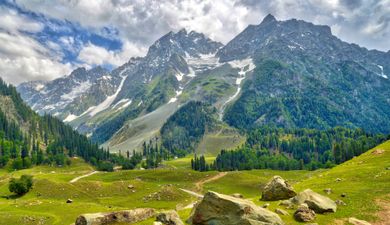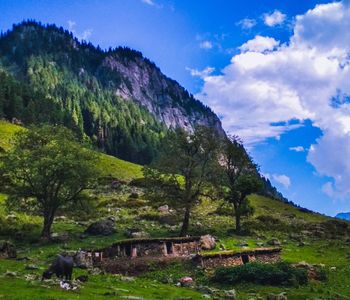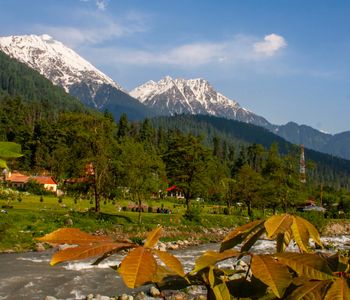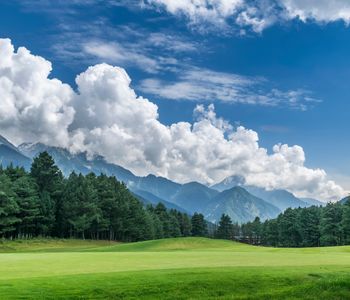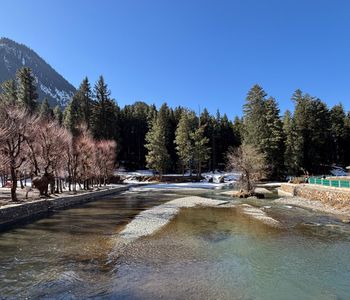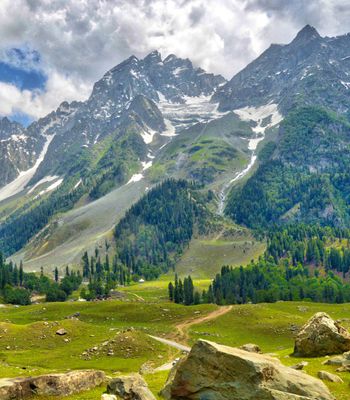
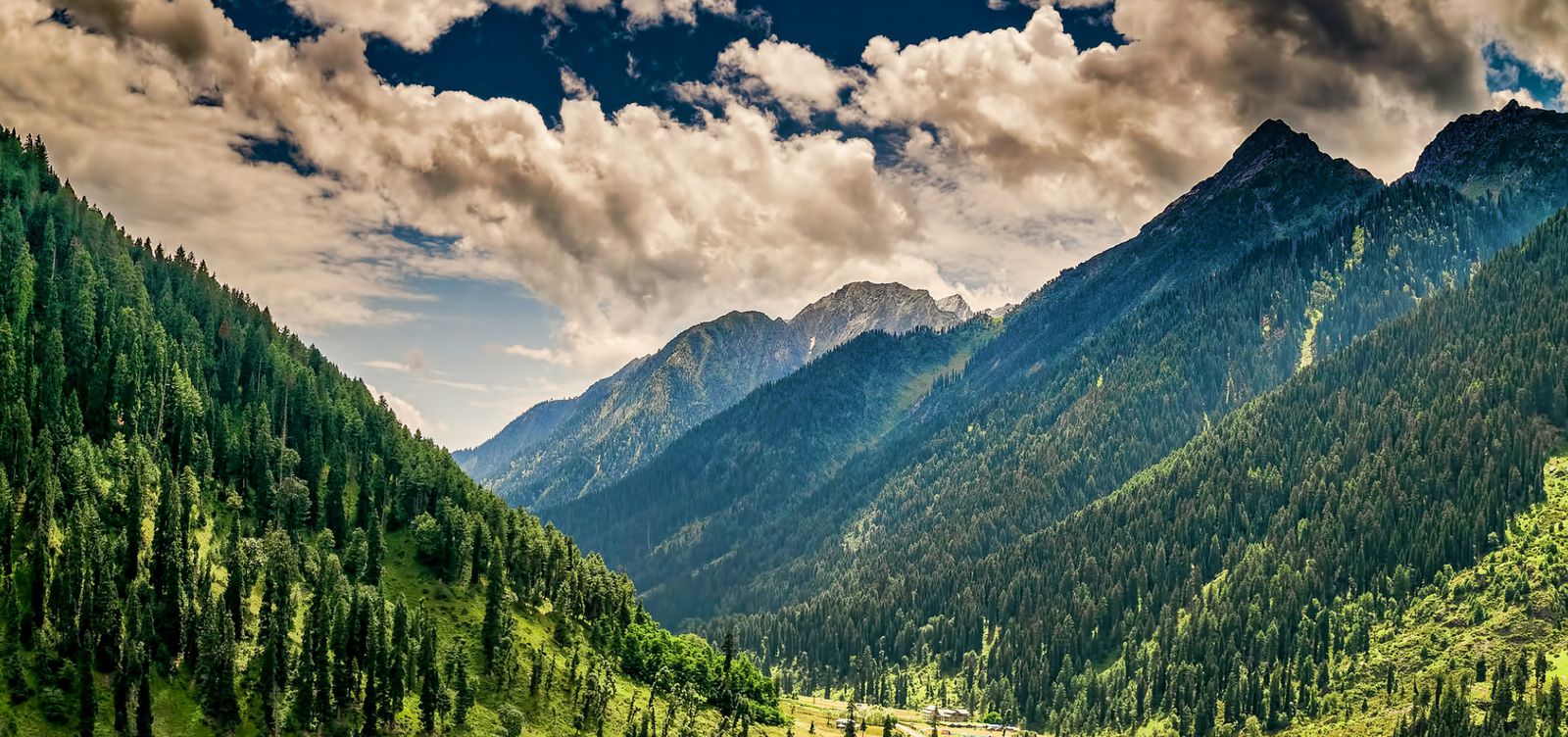
Eleven kilometers from Pahalgam, where the tourist buses thin out and the road narrows to something barely wider than a suggestion, Aru Valley opens up like a secret someone forgot to keep. At roughly 2,400 meters above sea level, the air carries a sharpness that wakes you in a way coffee never could. Pine and birch forests frame meadows so green they look digitally enhanced, though nothing here has been touched by anything more sophisticated than snowmelt and sheep hooves. This is Kashmir's quieter answer to the crowded slopes of Gulmarg — fewer selfie sticks, more actual sky.
What makes Aru distinct isn't grandeur. It's restraint. The valley doesn't shout at you with spectacle; it pulls you in through an accumulating stillness most travelers don't realize they've been craving until they're standing in it, boots damp, lungs full, phone forgotten in a jacket pocket.
Where the Mountains Do the Talking
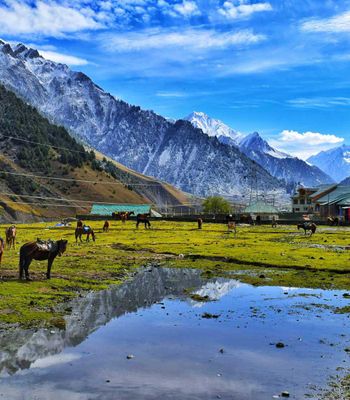
The Lidder River's younger tributaries cut through these meadows with a cold, determined energy. You hear them before you see them — a constant low rush beneath birdsong and wind. Surrounding peaks, still carrying snow well into June, form a jagged amphitheater that blocks cell signals and most of the modern world's noise along with them.
Horses graze untethered across the meadowlands. Gujjar shepherds move their flocks through seasonally, and their temporary wooden huts dot the landscape like punctuation marks in an otherwise unbroken sentence of grass and wildflowers. During late spring and early summer, the meadows erupt in purple, yellow, and white — wild irises, buttercups, and daisies that nobody planted and nobody tends. The colour isn't arranged. It simply happened.
Here's the counterintuitive part: Aru is more interesting in its quietest months. Most travelers arrive in summer, and rightly so, but a visit in late September or October, when the birch trees turn gold against slate-grey skies and the valley empties of visitors, reveals a landscape so raw and unperformed it feels almost private. You walk for an hour without encountering another soul. The silence isn't absence — it's presence, thick and deliberate.
A Basecamp With Ambitions
Aru isn't just a destination. It's a departure point. The valley serves as the starting basecamp for the Kolahoi Glacier trek, one of Kashmir's most respected multi-day routes. The glacier sits at about 4,700 meters, and reaching it from Aru requires three to four days of steady walking through alpine meadows, dense forest, and increasingly sparse terrain where the treeline surrenders to rock and ice.
For those less inclined toward glacier ambitions, the trek to Tarsar and Marsar lakes begins here too. These twin alpine lakes — one turquoise, one darker and deeper — sit in high basins surrounded by scree slopes, and reaching them takes two solid days of hiking from Aru. Local guides are essential for both routes, not because the trails are dangerous in fair weather, but because weather in Kashmir's highlands shifts with the kind of abruptness that turns a clear morning into a whiteout by lunch.
Even a short walk rewards you disproportionately. Follow the Aru stream uphill and within forty minutes, you've left every other visitor behind. The meadow opens wider. The silence thickens. Your own breathing becomes the loudest sound — and that recalibration, that forced return to your own body, is worth more than any summit photograph.
Getting There Without Losing Your Mind
From Pahalgam, the drive takes roughly thirty minutes on a road that oscillates between paved and aspirational. Shared taxis and local vehicles make the run frequently during tourist season, April through September. The road follows the Lidder River for most of the journey, and the scenery through the window makes the occasional pothole forgivable.
Coming from Srinagar, the trip to Pahalgam itself takes about two and a half hours by car, covering roughly 95 kilometers of gradually ascending highway. From Pahalgam's main taxi stand, negotiate a fare to Aru — expect to pay somewhere between 800 and 1,200 rupees for a return trip, depending on your bargaining stamina and the season. Union rates are posted at the stand, which helps anchor the negotiation. Use them. Drivers respect someone who's done the homework.
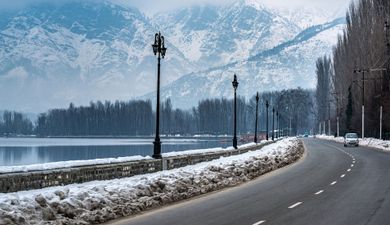
One practical note: the road to Aru occasionally closes during heavy snowfall between December and early March. Check conditions locally before attempting a winter visit, though the valley under fresh snow is a sight that justifies some logistical inconvenience.
Sleeping and Eating at the Edge of Things
Accommodation in Aru is modest, and that's part of its appeal. A handful of guesthouses and small hotels line the approach road, offering wood-paneled rooms with thick blankets and uneven hot water. Don't expect luxury. Do expect waking up to a view that would cost four hundred dollars a night in Switzerland.
Several guesthouses serve home-cooked Kashmiri meals — rogan josh with oil that pools red at the surface, dum aloo with a slow-creeping heat, and fresh naan baked in tandoor ovens blackened by decades of use. Tea stalls near the meadow's edge sell kahwa, the Kashmiri green tea brewed with saffron, cardamom, cinnamon, and crushed almonds. One cup on a cold morning changes your relationship with tea permanently. You'll remember the warmth reaching your fingers through the metal cup long after you've forgotten grander meals elsewhere.
Camping is the other option, and arguably the better one. Several operators in Pahalgam arrange tent stays in the valley, complete with meals and basic bedding. Falling asleep to the sound of river water over stone, with no artificial light competing against the stars — that's Aru stripped of everything except what actually matters.
When the Valley Is at Its Best
The ideal window runs from May through early July, when the snow has retreated enough to open the meadows but the monsoon hasn't yet arrived to soften the trails into mud. Wildflowers peak in June. Trekking conditions are optimal in late June and July, though afternoon clouds often roll in after noon, making early starts wise.
August brings rain, sometimes heavy, and the meadows can turn boggy underfoot. September clears again, and the autumn colours that follow are understated but genuine — nothing like New England's theatrical display, more a quiet shift that feels earned rather than performed. Winter transforms Aru into a white, windswept bowl where only the shepherds and a few hardy travelers venture.
Regardless of season, mornings belong to the valley. Arrive early. Stay still. Let the cold air settle on your skin before the sun crests the eastern ridge and floods everything gold. That transition — from shadow to light, from cold to warmth — lasts about seven minutes. It's the best show in Kashmir, and there's no ticket.
A Place That Doesn't Perform
Aru Valley doesn't compete with Kashmir's more famous postcards. It doesn't have a gondola or a Mughal garden or a houseboat fleet. What it has is space — physical and psychological — that most of the Kashmir Valley has traded away for tourism infrastructure. The meadows here still belong to the shepherds and the horses and the river. You're a guest in their landscape, not a customer in a theme park.
That distinction matters more than any travel brochure can convey. Come to Aru with patience, good shoes, and nowhere else to be. The valley will meet you halfway.