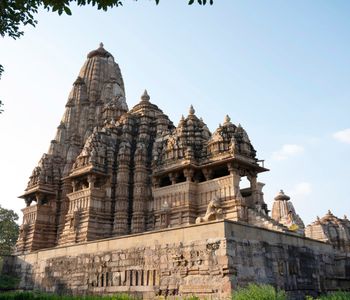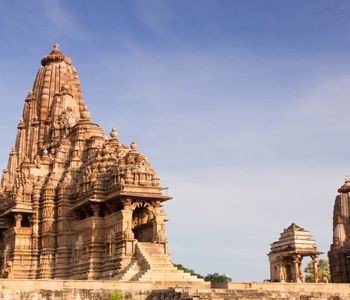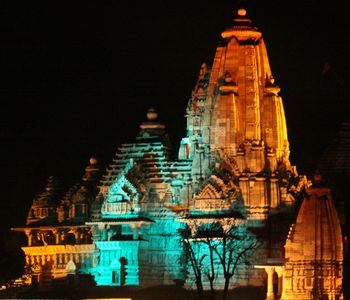
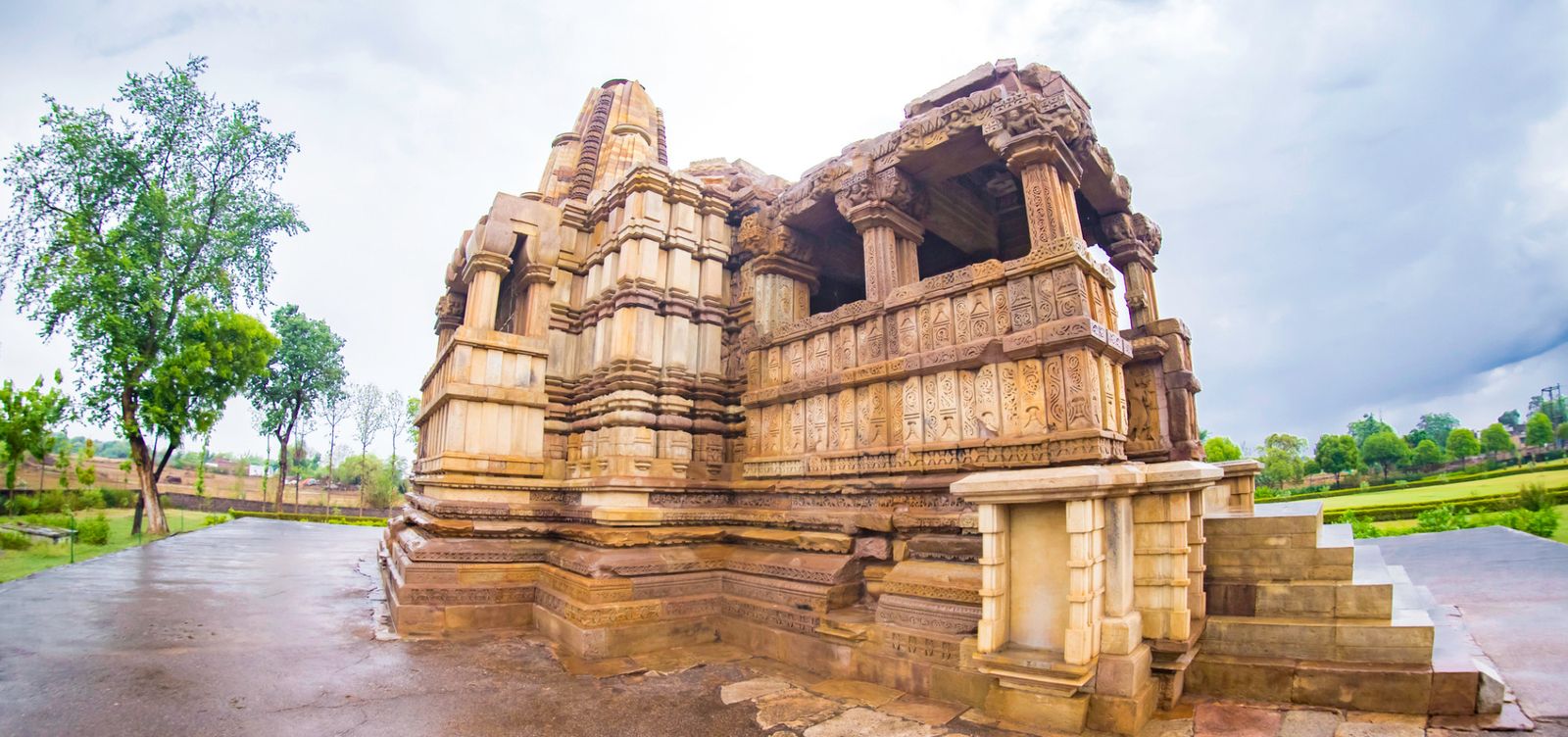
Every architectural tradition has a last word. At Khajuraho, that word is Dulhadev Temple. Built around 1130 CE, it's the final temple raised during the Chandela dynasty's reign — the era that produced some of India's most technically audacious stone sculpture. By the time its foundations were cut, the creative energy that had burned across Khajuraho for more than two centuries was guttering. What survives is a temple that feels quieter than its famous neighbors. Less assertive, yes. But no less worth your time, if you bring patience.
Dulhadev sits in the Southern Group, roughly a kilometer from the more celebrated Western Group, and it receives a fraction of the foot traffic. That solitude is the point. You can stand before its carved exterior for twenty minutes without another visitor brushing past your shoulder. In Khajuraho, that kind of stillness is almost impossible to buy.
The Last Thing a Dynasty Built
Between the 10th and 12th centuries, the Chandela rulers erected around 85 temples across this landscape. Only about 25 still stand. Dulhadev, dedicated to Lord Shiva, arrived at the very end of that campaign, and you can feel it — the confidence of a mature tradition, and the faint exhaustion that precedes a decline, living side by side in the same stone.
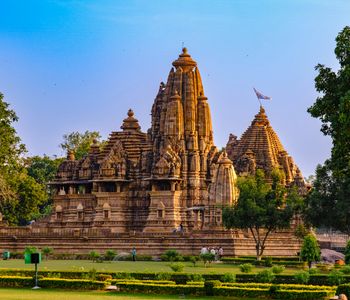
Its construction is attributed to the Chandela king Madanavarman, though historians argue over the exact patronage. The craftsmanship, however, isn't up for debate. The temple follows the Nagara architectural style — the signature grammar of North Indian sacred building — with a curvilinear shikhara tower rising above the sanctum. That tower isn't as tall or as extravagantly ornamented as the one crowning Kandariya Mahadeva in the Western Group, but its proportions carry a discipline the grander temple doesn't bother with. Sometimes the quieter sibling has better posture.
Stone That Won't Hold Still
The exterior walls demand slow looking. Carved panels depict amorous couples, celestial musicians, figures caught in varying degrees of embrace — the erotic sculpture that made Khajuraho's reputation worldwide. Here, though, the eroticism has a different register. Less theatrical. The figures are slightly smaller, the compositions gentler, as though the sculptors were whispering instead of declaiming from a stage.
Move your eyes along the southern facade and you'll find apsaras — celestial women — frozen mid-gesture, adjusting an anklet, glancing over one shoulder with an expression that's half-coy, half-indifferent. The sandstone has weathered to warm ochre, and in late afternoon light the carved surfaces throw shadows that make the figures seem to shift their weight. Geometry and erosion conspiring together. These aren't decorations pinned to a wall. They inhabit it.
Inside, the sanctum holds a Shiva lingam, the aniconic representation of Lord Shiva that serves as the temple's devotional center. The interior is dim and spare compared to the busy exterior — a deliberate contrast found throughout Hindu temple architecture, where the journey inward mirrors a passage from the sensory world toward something stripped of ornament. Bare. Essential.
What Gets Left Off the Itinerary
Most people who come to Khajuraho spend their hours at the Western Group, buy a ticket, see Kandariya Mahadeva and Lakshmana, and leave satisfied. Fair enough — those temples are extraordinary. But Dulhadev gives you something they can't: an ending. Stand here, at the chronological close of Khajuraho's temple-building era, and you understand the arc of an entire artistic movement. The ambition that peaked with Kandariya Mahadeva still pulses through Dulhadev's carvings, but there's a reflective quality running underneath, as if the builders sensed they were writing a final paragraph.
There's a practical advantage too. The Southern Group has no ticketed enclosure, which means you can visit Dulhadev freely and at any hour the site is open. No queues. No guided groups shuffling through on a fixed schedule. Just you, the sandstone, and whatever birds have colonized the shikhara's crevices.
The Walk South
Khajuraho is a small town, and most of its temples sit within a few square kilometers. From the Western Group, an auto rickshaw gets you to Dulhadev in about ten minutes; on foot, it's roughly twenty-five if you don't mind the walk. The road south passes through open scrubland and modest residential blocks — not scenic in a postcard sense, but real, which is better. A bicycle rented from one of the shops near the main temple complex makes the trip easier still, and lets you stop at the nearby Chaturbhuj Temple on the way — a worthwhile detour.
Khajuraho's civil airport connects directly with Delhi and Varanasi, flights under an hour from either city. From the airport, the town center is a brief auto rickshaw ride. If you're coming by train, Khajuraho railway station sits about five kilometers from the temple zone, with regular connections from Jhansi, which links to Delhi and Agra on the major rail lines.
Chasing the Right Light
Timing matters here more than at most temples. The carvings face multiple directions, and what you actually see depends entirely on where the sun is. Morning light hits the eastern panels cleanly, and that's fine. But the real revelation comes late afternoon, when the western and southern facades catch the lowering sun and the sandstone shifts from pale gold to deep amber. Shadows fill the carved recesses, and details that looked flat at noon become almost three-dimensional. The sculptors designed for this light. You should too.
October through March offers the most bearable conditions. Khajuraho summers push well past 40 degrees Celsius, and the monsoon months bring a humidity that makes extended outdoor exploration feel punitive. Winter mornings can be cool enough for a light jacket, the air clear — ideal if you're carrying a camera.
Where the Volume Drops
Dulhadev Temple won't overwhelm you. It doesn't compete with the scale of Khajuraho's headline attractions, and it doesn't try. What it offers instead is proximity — a chance to study 12th-century sculpture at arm's length, at your own pace, with no crowd setting your rhythm. The carvings speak to a civilization that understood pleasure, devotion, and artistry as interlocking forces rather than competing ones. Stand before those ochre walls in the fading afternoon light, with no one else around, and you may find that the last temple built at Khajuraho has the most to say — precisely because it doesn't raise its voice.