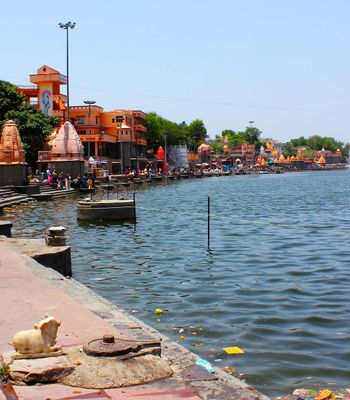
The Narmada River doesn't just flow through Jabalpur — it sculpts it, carving its way through towering marble cliffs with the patience of millennia. This is a city where nature puts on a show so dramatic, it feels almost theatrical. Yet somehow, Jabalpur remains one of central India's best-kept secrets, tucked away in the heart of Madhya Pradesh while travelers flock to flashier destinations. Their loss, honestly. Because once you set foot here — amid the mist-drenched gorges, crumbling hilltop forts, and bazaars fragrant with frying jalebi — you'll wonder how this place stayed off your radar for so long.
Marble Walls, Moonlit Water, and the Roar of Dhuandhar
Nothing quite prepares you for Bhedaghat. Your boat slips into the gorge, and suddenly the world narrows to a corridor of white marble rising nearly a hundred feet on either side, streaked with volcanic black and honey-gold. Sunlight catches the pale stone and throws liquid reflections across the water's surface — everything shimmers, everything glows.
Time your visit for a full moon night, and the experience shifts into something almost sacred. Silver light pours over the cliffs, turning the gorge into a luminous cathedral. Locals will tell you it's the most beautiful sight in all of Madhya Pradesh. They're not exaggerating.
Just downstream, Dhuandhar Falls announces itself long before you see it. A deep, percussive thunder rolls through the air, and then the mist hits your face — cool, fine, relentless. The name means "smoke cascade," and standing at the viewing platform, watching the Narmada hurl itself over the edge in a furious white curtain, you understand why. The ground vibrates beneath your feet. Your lungs fill with the clean, mineral-sharp scent of churning water. It's raw, elemental, and absolutely thrilling.
Wild Trails and Tiger Country
Beyond the gorge, Jabalpur's landscape unfolds in layers. Sitting roughly 1,300 feet above sea level, the city is ringed by rocky hills, tropical forest, and fertile river plains that shift in color with every season.
South of town, the Dumna Nature Reserve offers a quieter kind of wild. Follow the well-maintained trails through dappled sunlight and you'll likely spot deer freezing mid-step in the underbrush, peacocks fanning their iridescent tails, and more bird species than you can reasonably photograph in a single morning. Bring binoculars — you'll need them.
Feeling ambitious? Both Kanha National Park and Bandhavgarh National Park — two of India's most celebrated tiger reserves — sit within striking distance of Jabalpur. Whether you go for a day trip or settle in for an overnight safari, the chance to track Bengal tigers through sal forests and golden grasslands is the kind of experience that rearranges your priorities.
Forts That Defy Gravity, Temples That Defy Time
Wander into the older quarters of Jabalpur and history layers itself around you — Hindu, Mughal, British colonial — each era leaving its fingerprints on stone and streetscape.
The eleventh-century Madan Mahal Fort clings to a rocky hilltop like it grew there. Climb up, catch your breath, and take in the panoramic sweep of the city spreading out below — rooftops, temple spires, green canopy. Just nearby sits the famous Balancing Rock, a geological oddity so improbable it looks like a prank: one massive boulder resting on another at an angle that seems to mock the laws of physics. It survived a 6.5-magnitude earthquake. Let that sink in.
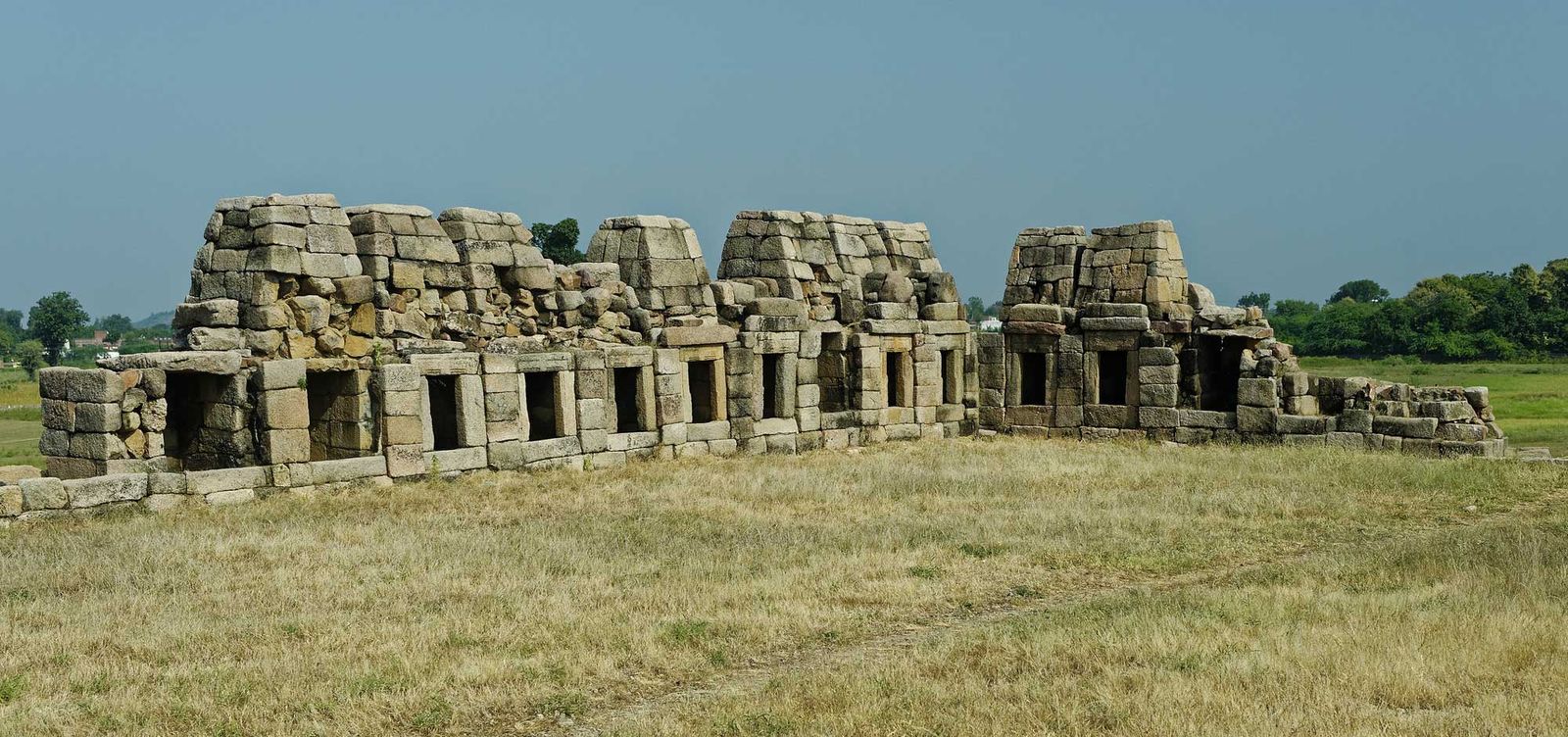
Then there's the Chausath Yogini Temple — one of India's rare circular temples, built during the tenth century on a granite hilltop. Step through its entrance and you're standing in an open-air ring of sixty-four stone shrines, their ancient carvings weathered but still telling stories. Wind moves through the structure freely. There's no roof, no enclosure — just sky above and centuries of devotion carved into rock. The stillness here feels earned.
Bazaar Wanderings and Breakfast Worth Waking Up For
Jabalpur's soul lives in its markets. Push into the bustling lanes of Sadar Bazaar or Rani Bazaar, where silk fabrics catch the light in jewel-toned cascades and marble handicrafts — carved right here from local stone — line the stalls. Vendors call out, chai wallahs pour steaming cups in practiced arcs, and the air hums with a commerce that feels centuries old.
But the real revelation is the food. Start your morning the way locals do:
- Poha and jalebi — flattened rice tossed with turmeric, mustard seeds, and crunchy peanuts, paired with spirals of syrup-soaked jalebi still hot from the oil. Sweet meets savory in the most addictive way possible.
- Malpua — golden, pan-fried pancakes drenched in cardamom-scented sugar syrup, crisp at the edges and pillowy inside.
- Dal-bafla — think of it as dal-baati's heartier, more rustic cousin. Dense wheat dumplings dunked into rich, slow-cooked lentils. It's the kind of meal that makes you want to cancel your afternoon plans and just sit for a while.
Hindi is the language of everyday life here, but warm smiles and generous gestures need no translation. Most locals are genuinely curious about visitors and happy to point you toward hidden spots that don't appear in any guidebook.
When to Go (and How to Get There)
October through March is the sweet spot. Temperatures cool to a comfortable range, skies stay clear, and the light over Bhedaghat turns positively golden. These are prime months for gorge boat rides, fort explorations, and long, unhurried walks through the bazaars.
Summers — April through June — can be punishing, with mercury regularly climbing past 40°C. If you do visit in the heat, shift your schedule: dawn and dusk become your best friends, and the midday hours are for cold lassi and ceiling fans.
Monsoon season, July through September, is a different kind of magic. The landscape explodes into impossible greens, and Dhuandhar Falls transforms into a thundering spectacle of such force that the mist cloud rises high enough to see from the road. It's dramatic, it's muddy, and it's unforgettable.
Getting here is straightforward. Jabalpur is a major railway junction with excellent connections to Bhopal, Nagpur, and Delhi. Well-maintained highways link it to surrounding cities, and Jabalpur Airport handles domestic flights for those short on time.
The Real Reward? Authenticity Without Pretense
Here's what makes Jabalpur different from so many destinations clamoring for attention on your feed: it hasn't been packaged, polished, or stripped of its rough edges for tourist consumption. There are no selfie-stick armies blocking your view of the gorge. No overpriced souvenir shops selling mass-produced "local" crafts. No velvet ropes between you and the experience.
What you get instead is a city that simply is — generous with its wonders, unhurried in its rhythms, and quietly confident that what it offers is enough. From moonlit marble cliffs to ancient open-air temples, from the roar of falling water to the sizzle of jalebi hitting hot oil, Jabalpur is central India at its most genuine. And once you've been, you'll carry a piece of it with you — the kind of place that doesn't just fill your camera roll, but shifts something inside you.